
Navigating the turbulent waters of growing up has never been a walk in the park, but let’s be honest–doing it in the 2020s feels like playing a video game on the hardest difficulty setting without a tutorial. Between the relentless pressure of social media, the lingering aftershocks of a global pandemic, and the age-old cocktail of hormonal chaos, today’s youth are facing a unique set of challenges that can leave even the most well-meaning parents and professionals scratching their heads. It’s not just about “mood swings” anymore, it’s about navigating a world that demands perfection while simultaneously stripping away the quiet moments needed to build resilience.
I remember my own transition to adulthood as a series of awkward stumbles, but at least I could leave the drama at the school gate. Today, the always-on culture means the noise follows young people into their bedrooms, their pockets, and their dreams. That’s why finding the right resources–books that don’t just preach but actually understand–is more critical than ever. Whether you are a teenager trying to make sense of your own brain, or an adult trying to be the anchor in their storm, the right book can act as a lighthouse, cutting through the fog of anxiety and expectation to offer something we all desperately crave: validation.
In this list, I’ve pulled together eight of the most impactful books released in recent years that tackle this exact intersection of youth transitions and mental healing. We aren’t just talking about dry textbooks here; these are compassionate, deeply researched, and often beautifully creative works that bridge the gap between clinical psychology and the messy, real-world experience of growing up. From graphic novels that visualize the struggle to manifestos on reclaiming childhood from technology, these reads offer a roadmap for healing, connection, and ultimately, flourishing.
What are the top Books for Navigating Youth Transitions and Mental Healing?
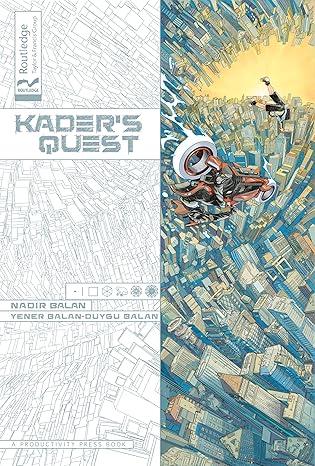
Kader's Quest, by Nadir Balan (2026)
The journey from childhood to adulthood is often described as a path, but for many young people, it feels more like a precipice. This is exactly where we meet Kader, a middle school student standing on the edge of his own turbulent coming-of-age story. In this visually arresting graphic novel, readers are invited to walk alongside him through a landscape that is as symbolic as it is emotional. The story delves deep into the universal search for identity and belonging, exploring the heavy themes of family dynamics, anxiety, and the scars of the past, all while maintaining a narrative that is accessible and deeply human.
What sets this book apart is how it translates complex psychological concepts into immediate, visceral experiences. Created by an award-winning artist, Nadir Balan, in collaboration with psychiatrist Dr. Yener Balan and psychotherapist Duygu Balan, the book serves as a bridge between the clinical and the creative. It doesn’t just tell you what Kader is feeling; it shows you through dazzling art replete with puzzles, hidden images, and moments of profound silence. This approach allows readers–especially teens who might struggle to articulate their own messy emotions–to see their internal struggles reflected on the page, validating their experiences in a way that standard text rarely can.
Beyond its gripping narrative, the book functions as a powerful therapeutic tool. It addresses the specific, modern struggles of today's youth–from the sting of bullying to the disorientation of major life transitions–grounding them in evidence-based principles without ever feeling clinical or cold. It offers a safe space for reflection, allowing readers to process their own feelings of displacement and anxiety through the safety of Kader’s journey. It’s a story about the courage it takes to heal and the realization that while the path to adulthood is lonely, no one has to walk it entirely alone.
I was honestly blown away by how effectively the graphic novel format captures the feeling of anxiety. Sometimes, words just aren't enough to describe that tight-chested feeling of not fitting in, and the artwork here does the heavy lifting in a way that hits you right in the gut. I think it’s a brilliant resource for anyone who finds traditional self-help books too dense or preaching. It felt like a puzzle I was solving alongside the protagonist, which made the ultimate message of healing feel earned rather than given. It’s rare to find a book that works equally well for a confused teenager and a seasoned therapist, but this one absolutely nails it.

The anxious generation, by Jonathan Haidt (2024)
This book has sparked a massive, necessary conversation about what exactly happened to childhood in the early 2010s. The premise is startlingly simple yet devastating: we have overprotected our children in the real world while simultaneously underprotecting them in the virtual one. The author, a renowned social psychologist, meticulously charts the sudden collapse of youth mental health that coincided with the widespread adoption of smartphones and social media. He argues that we have fundamentally rewired childhood, moving from a play-based upbringing, where kids learned resilience through scraped knees and face-to-face conflicts, to a phone-based one, defined by algorithmic comparison, sleep deprivation, and fragmented attention.
The text dives deep into the mechanisms of this shift, explaining how the constant connectivity of the modern digital age interferes with the natural developmental processes of the adolescent brain. It covers everything from the loss of independent exploration to the toxic loops of social validation that trap so many teens today. But it’s not just a doom-and-gloom analysis; it provides a concrete framework for how we can roll back this great rewiring. The book calls for a collective effort to restore a more humane childhood, proposing new norms that prioritize real-world independence and delay the onset of a fully digital life.
For parents and educators, this is less of a parenting guide and more of a societal wake-up call. It challenges the assumption that the digital status quo is inevitable or harmless. By laying out the data so clearly, it empowers adults to set firmer boundaries–not out of fear, but out of a desire to give young people the space they need to grow into healthy, capable adults. It’s a comprehensive look at the environment our youth are swimming in and why the water has become so toxic.

The Emotional Lives of Teenagers, by Lisa Damour (2023)
If you have ever felt like the teenager in your life is speaking a different language–or operating on a completely different emotional frequency–this book is the translator you have been waiting for. The central thesis here is incredibly liberating: mental health isn't about feeling good all the time; it's about having the right feelings at the right time and being able to manage them. The author, a clinical psychologist, dismantles the myth that our job is to fix every negative emotion a teen experiences. Instead, she argues that distress is a natural, even essential, part of growing up, and that our goal should be to help teens weather the storm rather than trying to stop the rain.
The book offers a deep dive into the neuroscience and psychology of adolescence, explaining why their highs are so high and their lows so cavernous. It provides practical scripts and strategies for how to respond to emotional outbursts–not by dismissing them or overreacting, but by becoming a steady container for their chaos. It addresses the common pitfalls of modern parenting, such as the urge to helicopter or solve problems immediately, and instead advocates for a supportive presence that fosters autonomy.
This is a book that respects the intelligence and the intensity of teenagers. It covers topics ranging from academic pressure and romance to the complex dynamics of peer groups, all with a tone that is empathetic and non-judgmental. It helps adults distinguish between normal adolescent friction and signs of genuine crisis, providing a clear compassionate framework for fostering connection when it feels like the doors are slamming shut.
I loved how this book takes the pressure off. There is this pervading idea that if a kid is unhappy or anxious, the parents have failed, but this book flips that script entirely. The concept of emotional regulation is explained so clearly–it’s not about suppression, but about expression in a safe way. I found the specific examples of what to say (and what not to say) incredibly practical. It felt like having a wise mentor whispering in my ear, reminding me to stay calm when the emotional temperature in the room starts rising. It’s a deeply reassuring read.

Never Enough, by Jennifer Breheny Wallace (2023)
In high-achieving communities, there is a silent epidemic brewing, one that this book exposes with startling clarity: toxic achievement culture. We often assume that kids who get good grades, play sports, and fill their resumes with extracurriculars are doing fine, but this investigation reveals the crushing weight of anxiety and depression that often accompanies the relentless drive for success. The author explores how the economic and social pressures of modern life have trickled down to our children, convincing them that their worth is entirely contingent on their performance.
The narrative is built on extensive research and interviews with families, educators, and psychologists, painting a picture of a generation that is running on a hamster wheel of expectation. The book identifies the root cause of this distress as a lack of mattering–the feeling that one is valued for who they are, deep down, rather than just for what they achieve. It offers a critique of the resume-arms-race that defines so much of youth today, where every hobby is a means to a college acceptance letter rather than a source of joy.
However, the book is not just a diagnosis of the problem; it is a guide to resistance. It offers a framework for how parents and communities can push back against these pressures to create environments where kids feel seen and secure. It emphasizes the importance of rest, play, and intrinsic motivation, arguing that the best way to ensure a child's future success is to prioritize their current well-being. It is a crucial read for anyone trying to raise a healthy child in a hyper-competitive world.
The idea that we are treating our children like projects rather than people is a hard pill to swallow, but necessary. I was particularly moved by the concept of mattering as a protective shield against anxiety. It made me reflect on how I praise the young people in my life–am I praising the ‘A' on the test, or the effort and the person behind it? It’s a powerful, necessary check on the values we are unintentionally transmitting to the next generation.
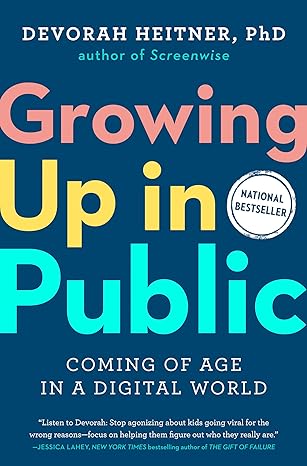
Growing Up in Public, by Devorah Heitner (2023)
Navigating puberty is hard enough without a permanent digital record of every awkward phase, mistake, and emotional outburst. This book tackles the uniquely modern challenge of coming of age when privacy is almost nonexistent. The author focuses on the concept of the “digital footprint,” but she moves beyond the standard scare tactics about future employers checking Facebook. Instead, she looks at the immediate emotional toll of living life on display, where “sharenting” (parents oversharing about their kids) and peer surveillance are the norms.
The book provides a nuanced look at how teens use technology to form their identities, often in ways that adults misunderstand. It argues that the common parental strategy of intense monitoring–tracking apps, reading texts, constant surveillance–often backfires, eroding trust and driving kids to be more secretive. Instead, the author advocates for mentoring over monitoring. It’s about teaching kids to be the editors of their own lives, helping them understand the difference between public and private, and fostering the judgment they need to navigate a world where the “delete” button doesn't always work.
This is an essential guide for bridging the digital divide between generations. It encourages open, non-judgmental conversations about sexting, cancelling culture, and group chat dynamics. It empowers parents to stop trying to control the technology and start supporting the child using it, focusing on character development rather than just digital hygiene.
I found the section on sharenting incredibly convicted. It really made me think about how we, as adults, violate our kids' privacy before they even have a say. The book is refreshing because it doesn’t demonize technology or the kids who use it. It treats the digital world as just another environment where kids need guidance, not a war zone to be feared. I loved the practical advice on how to handle mistakes–because they will happen–focusing on repair and learning rather than shame and punishment.

Why Has Nobody Told Me This Before?, by Julie Smith
Sometimes, you don't need a deep dive into the history of trauma; you just need a toolkit to get through a Tuesday. This book is exactly that–a practical, no-nonsense manual for mental health that feels like sitting down with a therapist who skips the jargon and gets straight to the solutions. Written by a clinical psychologist who gained massive popularity on social media for her bite-sized advice, the book is structured to be dipped into as needed, covering everything from anxiety and low mood to self-confidence and grief.
The beauty of this book lies in its accessibility. It breaks down complex psychological concepts–like cognitive behavioral therapy (CBT) techniques–into simple, actionable steps that a young adult can apply immediately. It uses visual metaphors and clear language to explain why our brains react the way they do, normalizing feelings that often feel isolating. It’s not about fixing yourself because you are broken; it’s about understanding the machinery of your mind so you can drive it better.
For a young person in transition, who might be feeling overwhelmed by new responsibilities or emotional volatility, this book is empowering. It teaches the skills of emotional regulation and resilience in a way that feels doable. It’s a resource that encourages self-agency, reminding readers that while they can’t control everything that happens to them, they have profound influence over how they respond.
Why I liked it: I loved the format of this book. You don't have to read it front-to-back; you can just flip to the section on motivation or stress when you need it. It feels very respectful of the reader's time and energy. The visual aids are fantastic–simple drawings that explain complex feelings in seconds. It’s the kind of book I wish I had in my early twenties. It demystifies therapy tools that are usually locked behind a professional’s door and puts them right in your hands. It is incredibly validating and practical.

The Pivot Year, by Brianna Wiest (2023)
Transitions are, by definition, the space between who we were and who we are becoming. They are uncomfortable, confusing, and often lonely. This book is a collection of 365 daily meditations designed specifically for those pivot periods. Unlike a traditional narrative, it is a companion for the days when you don't know the answer. The author has a unique talent for articulating the vague, aching feelings of change, offering words that feel like they were written specifically for the reader's current struggle.
The focus here is on the internal work of changing your life. It speaks to the fear of the unknown, the pain of letting go, and the quiet courage required to start over. For a young adult graduating college, ending a first serious relationship, or just feeling lost in the drift of their twenties, these short passages offer a daily anchor. It encourages a mindset of gentle curiosity rather than rigid planning, helping to reframe the uncertainty of the future as a space of potential rather than a void of anxiety.
It is a book about trusting the process. It doesn't offer a step-by-step plan for success, but rather a philosophical grounding for emotional survival. It teaches that the discomfort of the “pivot” is not a sign that things are going wrong, but a sign that growth is happening. It is a quiet, steady voice in a loud world.
Why I liked it: I am a sucker for a good quote, and this book is basically hundreds of them strung together. It’s perfect for the bedside table. I found it incredibly soothing during my own recent periods of change. It doesn't demand much from you–just a minute or two a day–but it leaves you with a thought that resonates for hours. It feels less like self-help and more like poetry for the soul. It validates the confusion of the in-between times in a way that feels deeply personal and kind.

What Happened to You?, by Oprah Winfrey (2021)
This book represents a fundamental paradigm shift in how we understand behavior and mental health. The core question it asks–shifting from “What is wrong with you?” to “What happened to you?”–is revolutionary, especially for understanding youth who might be labeled as acting out or troubled. Through a conversational format between the world’s most famous interviewer and a renowned brain and trauma expert, the book explores how our earliest experiences shape our physical brain structure and our emotional responses.
It dives into the science of trauma, neglect, and healing, but does so with incredible warmth and storytelling. It explains why we react the way we do to stress, why certain patterns repeat in our lives, and how relationships are the key to healing. For young adults trying to understand their own triggers or family history, this book provides a compassionate biological explanation that removes shame. It frames resilience not as grit, but as the result of having supportive, regulating relationships.
The book is deeply hopeful. It acknowledges the deep scars of the past but emphasizes the brain's plasticity–its ability to change and heal. It provides a roadmap for repairing relationships and building a sense of safety. It is a foundational text for anyone interested in the “why” behind human behavior, offering a lens of empathy that changes how you see everyone, including yourself.
Why I liked it: I found the conversational format between Oprah and Dr. Perry to be incredibly engaging. It didn't feel like a lecture; it felt like listening in on a fascinating discussion between two wise friends. The shift in perspective from judgment to curiosity is so powerful. It helped me look at my own quirks and the behaviors of others with much more compassion. It’s a heavy topic, but the book handles it with such grace that you leave feeling uplifted and understood, rather than weighed down by the trauma it discusses.
Final Thoughts
Reading these books won't magically solve the complex puzzle of growing up, nor will they instantly erase the anxiety that seems to hum in the background of modern life. However, what they do offer is something arguably more valuable: perspective. When we are in the thick of a transition–whether it’s the awkward jump from middle to high school, or the terrifying leap into adulthood–our vision tends to tunnel. We feel like we are the only ones struggling, the only ones failing to keep up. These authors remind us that the chaos is not a bug in the system, but a feature of the human experience.
I think the biggest takeaway from diving into this literature is the power of naming our experiences. Whether it's labeling the toxic achievement culture or recognizing the symptoms of a digital rewiring, putting a name to the invisible forces shaping our lives strips them of their power. It turns a vague, overwhelming feeling of dread into a specific problem that can be understood, managed, and eventually, overcome. It allows us to step back and say, “Oh, this isn't just me being broken, this is my brain reacting to a crazy world.”
So, if you pick up just one of these books, let it be the one that speaks to your current pain point. Maybe you need the gentle daily reminders of The Pivot Year, or maybe you need the hard data of The Anxious Generation. Whatever you choose, know that the act of reading itself is a form of healing. It is a quiet declaration that you are worth the time it takes to understand yourself better. And in a world that is constantly screaming for your attention, taking that time for yourself is a radical, beautiful act.
Feel free to also check our child psychology book collection for parents.


My profession is online marketing and development (10+ years experience), check my latest mobile app called Upcoming or my Chrome extensions for ChatGPT. But my real passion is reading books both fiction and non-fiction. I have several favorite authors like James Redfield or Daniel Keyes. If I read a book I always want to find the best part of it, every book has its unique value.







 English (US) ·