

Women’s History Month is here, and there’s no better time to share some feminist books from women throughout modern history. Writers from bell hooks to Ruby Hamad have shared their wisdom with readers across the world and taught the next generation of feminists, preparing them to take up the cause for women’s rights.
Far too often, discussion around feminism is reduced to catchy slogans or flimsy “girl boss” energy. It lacks the depth of understanding of the community work needed to truly be a feminist. Intersectional feminist literature reminds us that feminism isn’t just ideas that we agree with, and it’s certainly not just cute slogans on t-shirts and buttons. Feminism is action. It looks like researchers analyzing women’s rage. It looks like providing childcare for other community members while they attend a support group. It looks like Indigenous activists protesting pipelines. It looks like advocating for healthcare for everyone. It looks like communities preserving their culture in the face of colonization.
From backlist favorites to more recent titles, these books span generations of feminist writers for perspectives everyone can learn from. These powerful figures share their stories, bringing an intersectional approach to discussions of what feminism looks like across communities around the world.
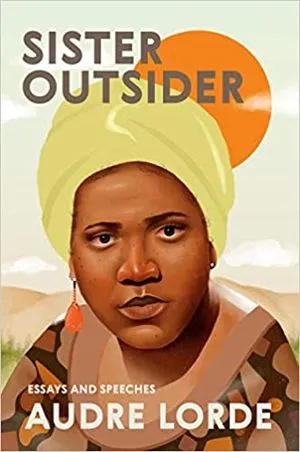
Sister Outsider by Audre Lorde
Who better to start with than Audre Lorde’s Sister Outsider? In this modern classic, Lorde examines her life as a queer Black woman and pulls out universal truths for every reader to learn. Essay after essay is a home run, tackling topics like parenting as a queer person, intersectional feminism, and the importance of supporting marginalized women writers.
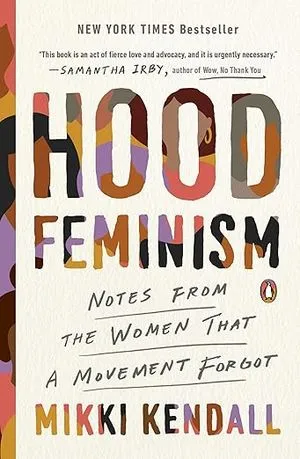
Hood Feminism: Notes from the Women That a Movement Forgot by Mikki Kendall
Mikki Kendall discusses how modern-day feminist movements continue to have huge gaps in their organizing efforts. Kendall argues that white feminism fails to address issues like food insecurity, safe housing, disability, access to education, and the ability to earn a living wage. Each essay discusses a different area that modern feminism could improve upon, providing an intersectional approach to her writing. If feminism is to continue to improve the lives of women, it must evolve.
True Story
Sign up for True Story to receive nonfiction news, new releases, and must-read forthcoming titles.
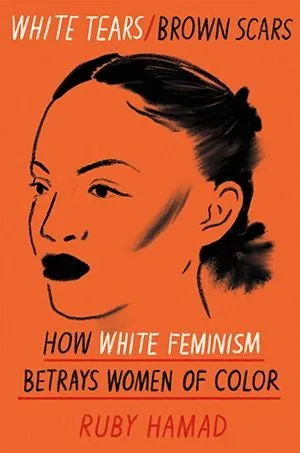
White Tears/Brown Scars: How White Feminism Betrays Women of Color by Ruby Hamad
In White Tears/Brown Scars, Ruby Hamad points out the harm caused by white feminism and the role white women play in white supremacy. Using examples from around the world, Hamad tackles the topic from several different angles, giving readers a wide range of perspectives. In particular, she challenges Western feminists to decenter themselves and decolonize their perspective.
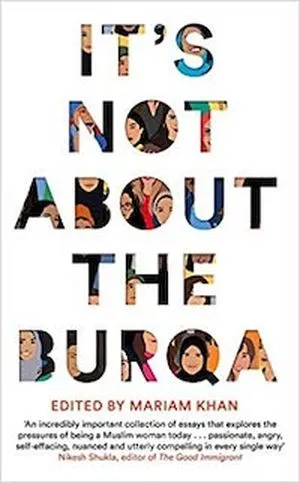
It’s Not About the Burqa: Muslim Women on Faith, Feminism, Sexuality, and Race edited by Miriam Khan
In 2016, Miriam Kahn heard David Cameron had linked the radicalization of Muslim men to the “traditional submissiveness” of Muslim women. Appalled, Khan decided to push back with a collection of essays by Muslim women from around the world. They discuss issues around Muslim women’s approach to women’s rights and what that looks like in their everyday lives.

Eloquent Rage: A Black Feminist Discovers Her Superpower by Brittney Cooper
Eloquent Rage by Brittney Cooper discusses the role of Black women’s anger in American culture. She also gives examples of what role her anger played in her own life and in the lives of Black women icons of popular culture. Her writing is full of the wisdom given to her by older Black women and what she wants to share with the next generation.

Rage Becomes: The Power of Women’s Anger Her by Soraya Chemaly
In her take on women’s anger, Chemaly looks at different aspects of women’s rage and how they have been treated throughout history. Each chapter looks at a different topic around women’s anger—how it affects women’s health, how angry women have been treated throughout history, and more. Her writing is so clear and well-researched; there’s something new to learn in every chapter.

Feminism Is for Everybody: Passionate Politics by bell hooks
bell hooks never shied away from hard truths, like the fact that white women can’t truly support the feminist movement without first divesting from white supremacy. She declares that there’s no love without justice. You can’t go wrong with whichever of hooks’ books that you read first, but Feminism Is for Everybody is a great place to start.
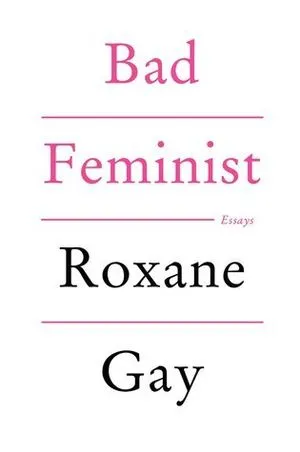
Bad Feminist: Essays by Roxane Gay
When Bad Feminist hit shelves, people across the country saw themselves in Gay’s essays. Sometimes you do laugh at that joke, love make up, or love an male author who turns out to be terrible. None of us is perfect, and Gay’s approachable essays truly hit a chord. “I’d rather be a bad feminist than no feminist at all.”

La Lucha: Latin American Feminism Today, edited by Carolina Orloff
Thirty contributors from across Latin America share their perspectives on a range of topics around feminism. From discussions of femicide to class struggle to colonization, these writers share their wisdom and vital perspectives on issues impacting women today. Contributors include Isabel Allende, Selva Almada, Gabriela Cabezón Cámara, Valeria Luiselli, Lina Meruane, Claudia Piñeiro, and Cristina Rivera Garza.

Colonize This!: Young Women of Color on Today’s Feminism, edited by Daisy Hernández and Bushra Rehman
Colonize This! features writers discussing how women of color have changed the conversation around modern feminism. For decades, women of color have been pointing out that white feminism lacks intersectionality. Mainstream feminism that still supports white supremacy and a colonial mindset does not liberate anyone. We are not free until we all are free.
These 10 books are just the start! For more books by feminist writers, check out “8 Great Feminist Micro Histories” and “40 of the Best Feminist Books.”





 English (US) ·