
Humans have been telling stories through illustrations since we were painting on cave walls. In this modern era of comics, we are blessed with an art form that explores every aspect of our lives—from superhero comics that have reflected our politics and shaped pop culture for decades to nonfiction comics that use singular art styles to showcase the human experience.
We made sure our list of the best comic books of the century so far encapsulates that range. These comics, graphic novels, and graphic nonfiction include coming-of-age tales set during revolutions, ones that use fabulism to explore queer realities, and others that tell stories entirely through illustration. There are manga from Japan that have taken the world by storm, and even relatable comics geared towards younger readers that have ushered them into a lifetime of reading.
These comics have made bestseller lists, been adapted into million-dollar franchises, and even been banned. No matter where they’ve landed, one thing is for sure: the best comic books of the century so far have made their mark on our collective psyche.
Here are our picks for the best comic books of the century so far.

All-Star Superman
by Grant Morrison, Frank Quitely
Superman is tricky, as the slew of film adaptations shows. How do you write great stories about a man with such a true North Star? How do you create drama for a man with godlike power? The answer, so often, is by focusing on hope. In a wicked twist, Luthor is responsible for Superman getting a new power, but one that will finally kill him. But Superman never loses hope, never loses his drive to help people. All-Star Superman is still widely considered one of the best Superman stories ever because it leans into his hopefulness.
- Chris M. Arnone

Aya of Yop City
by Marguerite Abouet, Clément Oubrerie, translated by Helge Dascher
I still haven't seen another graphic novel like Aya of Yop City. It takes place in 1978 in the Ivory Coast, during a golden time when the country was experiencing affluence and stability. Nineteen-year-old Aya and her friends are plagued with meddlesome neighbors, low-stakes drama, and silly romances endemic to their age. The line work and color palette work brilliantly together to bring to life a 1970s version of an African nation that is full of joy and life—and hardly ever portrayed.
- Erica Ezeifedi

Bitch Planet, Volume 1: Extraordinary Machine
by Kelly Sue DeConnick, Valentine De Landro
A lot of people have an "NC" tattoo because of this graphic novel and how it represented noncompliance during a time when the country was becoming more right-wing. Bitch Planet shows a dystopian view of a future patriarchy where women who are deemed non-compliant in any way are placed in a women's prison housed on another planet, i.e. Bitch Planet. With visceral, gritty, powerfully charged art, it quickly became a rallying cry to be like the woman on the cover—double middle-finger saluting—forever non-compliant.
- Jamie Canaves

Black Panther
by Ta-Nehisi Coates, Brian Stelfreeze
By the time Black Panther: A Nation Under Our Feet was published, Ta-Nehisi Coates had already established himself, not just as a bestselling author, but as one of the most widely read cultural critics of our generation, and the news of his being the next to write the story of T'Challa reverberated well past the comics world. His era of Black Panther explored the technologically advanced African nation, its leader, T'Challa, and a terroristic threat with the same cultural context and intellectualism he is known for.
- Erica Ezeifedi


Blankets
by Craig Thompson
Still among the most banned comics, Thompson's semi-autobiographical work brings readers into the cold of a midwest winter. Craig's grown up in a fundamentalist Christian household, and while at winter church camp, he and Raina begin to fall in love with one another. Little by little, they grow closer as they talk about their struggles with faith; little by little, they move apart as they realize their personal struggles doom their romance. Blankets is a literary exploration of first love, deep yearning, and discovering who you really are. Evocative art captures what it is to be a teenager and wrestle with what it is to feel everything.
- Kelly Jensen

Boys Weekend
by Mattie Lubchansky
This is a satirical horror graphic novel about Sammie, a transfemme person who is invited to an old friend’s bachelor party as the "best man." Lubchansky blends together over-the-top elements of this dystopian capitalist world with grounded emotions; Sammie experiences both the supernatural horrors of the cult everyone around them seems oblivious to and the more realistic horrors of misgendering and anti-trans aggression. Sammie is a defiant character who refused to be swept up in the cult of cisheteromasculinity around them. As Carmen Maria Machado put it, this is a "witty, tender romp through the cosmic horror of being alive."
- Danika Ellis
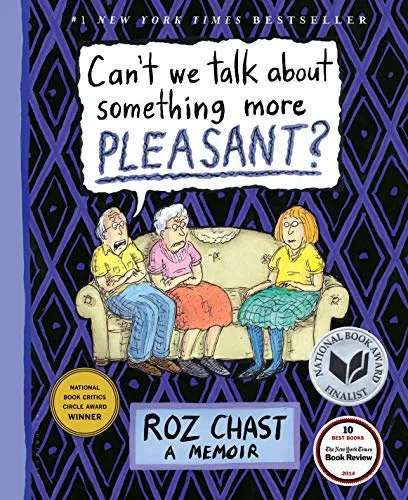
Can’t We Talk About Something More Pleasant?
by Roz Chast
I read cartoonist Roz Chast's graphic memoir on her elderly parents' final years just after losing a grandparent, and the reading experience left me somewhere between deeply triggered and tenderly affirmed. In her signature humor and artistic style, Chast lays out the particulars of caring for the elderly—parenting your parents, navigating dementia, the wild cost of care facilities versus the burden of taking the care on yourself, the guilt of hiring strangers to do the job when it's more than you're equipped to handle—all while preemptively grieving the loss of people you've never known a world without. It's funny, it's sweet, and it's honest about an experience most of us are woefully unprepared for.
- Vanessa Diaz

Check, Please!
by Ngozi Ukazu
There was a rare, lightning-in-a-bottle moment when Ngozi Ukazu created a romance that gives that ultimate swoon/obsession so many romance readers are forever chasing. Check, Please started as a webcomic that broke a Kickstarter record in 2021 for being the most funded. From the vibrant artwork to the incredibly adorable Bitty, a baking enthusiast and college hockey player, this graphic novel duology will make you laugh while also filling you with pure delight as you root for love (and friendships). It’s also impossible to only read it once, so plan for at least a yearly reread.
- Jamie Canaves
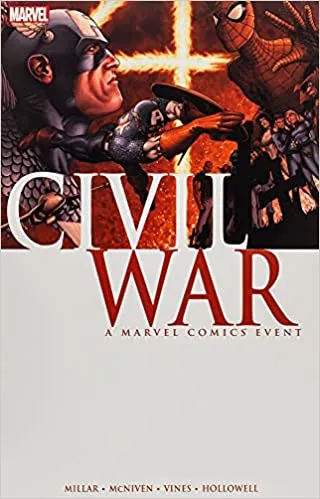
Civil War
by Mark Millar, Steve McNiven
Pitting heroes against heroes is nothing new in comics. Civil War was something different, though. It began with a terrible tragedy followed by new legislation requiring all super-powered individuals to register with the government. Ideological lines were drawn, with right answers on both sides and every team in the Marvel universe splitting. This book fundamentally changed how heroes and villains are defined in comics, and it inspired the MCU film of the same name.
- Chris M. Arnone

Descender
by Jeff Lemire, Dustin Nguyen
This Eisner Award-winning series is as heart-wrenching as it is epic in scope. A very human story unfurls as TIM-21, a young robot boy, and his friends try their best to survive in a world where androids have been made illegal, and bounty hunters are around every corner.
- Erica Ezeifedi

Fruits Basket
by Natsuki Takaya, Lys Blakeslee, translated by Sheldon Drzka
When manga exploded onto the U.S. scene, Fruits Basket was among the most popular and widely read–and it gained a devoted following. The story follows young Tohru Honda, who, after a family tragedy, decides to move into a tent and camp. She doesn't realize she is living on land owned by popular classmate Yuki Sohma's family and they soon discover her secret. But the Shomas have secrets, too: each is possessed by spirits of the Chinese zodiac and transform into their zodiac animal at inopportune moments. The series balances heaviness with humor and art that's detailed and emotive. The shoujo manga remains among the best-selling of all time.
- Kelly Jensen

Fullmetal Alchemist
by Hiromu Arakawa, translated by Akira Watanabe
This manga, and its subsequent anime adaptation, feature some of the best-paced and nuanced storytelling ever seen in shounen. Two alchemist brothers risk it all to engage in the ultimate taboo of bringing back their mother from the dead, and they nearly lose everything else—one brother sacrifices two limbs, while the other's soul becomes bound to a suit of armor. They journey to recover what they've lost, and the result is a steampunky world where ethics and the cost of war are fully examined.
- Erica Ezeifedi
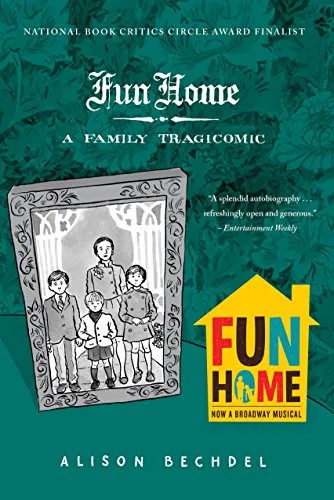
Fun Home
by Alison Bechdel
Alison Bechdel (for whom the Bechdel Test is named) reshaped the graphic memoir landscape with this bestselling and award-winning tragicomic chronicling her childhood in rural Pennsylvania and complex relationship with her closeted father. She weaves humor into heartache as she recalls reckoning with her father's sudden death (which was likely a suicide) when she was 19 years old, just weeks after coming out as a lesbian and finding out he was gay, too. It took her seven years to finish Fun Home (a reference to the sardonic name for the funeral home where her father was director), meticulously rendering illustrations of actual photographs to create this family portrait. It is a work of art in every sense of the word.
- Vanessa Diaz

Gender Queer: A Memoir
by Maia Kobabe
You can feel the relief–and joy–Kobabe feels at the end of eir coming-of-gender identity memoir. This moving and dynamic comic is the story of Kobabe navigating the confusion of eir gender in a world that too often sees the world in binaries. What happens when you don't fit that? Where and how do you explain who you are to your family, your friends, and to the broader community, especially if the knee-jerk reaction is "huh?" rather than "rad!" Kobabe's memoir is a reminder that self-identity is a journey and one that matters to finding your place in the world–even and especially when that world wants to push back. Eir voice and art shine.
- Kelly Jensen

Giant Days
by John Allison, Max Sarin, Lissa Treiman
Giant Days began as a webcomic before being traditionally published, and really showed how successful and celebrated slice-of-life comics could be. Susan, Esther, and Daisy start university in the UK, and are primed to figure out who they really are as adults. There are heartwarming queer experiences and all manner of university-level hijinks, as the girls' friendship deepens.
- Erica Ezeifedi
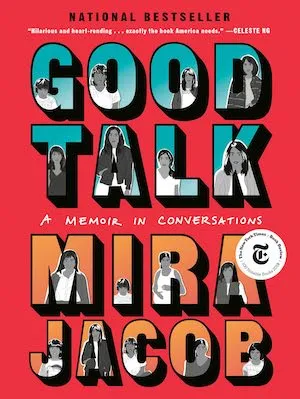
Good Talk: A Memoir in Conversations
by Mira Jacob
Whenever I recall how Jacob learned to draw to pen this heartfelt bestseller, wonder floods my body. Urgency radiates from this debut graphic memoir. Spanning from 2014 to 2017 while juxtaposing the author’s past, it compiles discussions with Jacob’s beloveds, especially hard ones with her inquisitive Indian and Jewish son, Z. While exploring community, identity, parenthood, and race, the memorable art features paper doll-like illustrations with unchanging expressions atop photographs, album covers, cityscapes, and more. With such focus on conversations, the dialogue-less moments—like mother and child touching foreheads at bedtime—moved me extra.
- Connie Pan

Hawkeye, Vol. 1: My Life as a Weapon
by Matt Fraction, David Aja, Javier Pulido
While superhero comics are usually about world-shattering stakes, this character-defining 2012 run explored Clint Barton outside of his role as an Avenger, battling depression, everyday annoyances, and oh yeah, Tracksuit Draculas. By turns laugh-out-loud funny and gut-wrenching, Aja’s spare, evocative art and Fraction’s deft touch with dialogue are a master class in what comics can do at their best. The nearly dialogue-free “Pizza Dog” issue (#11) and “deaf issue” (#19, rendered largely in ASL, half-comprehensible lip-reading, and simply…silence) are the famous standouts, but the whole run has more than earned its iconic status.
- Jessica Plummer

Identity Crisis
by Brad Meltzer, Rags Morales, Michael Turner
While most crises in DC Comics are big, multiverse-spanning events, Identity Crisis was something different. It was part murder mystery, part examination of how far heroes will go to be heroes, and part meditation on grief. The book was actually pretty divisive at the time, but its story, from Brad Meltzer, has stood the test of time. It absolutely rocked DC Comics. Perhaps most importantly, it put Michael Turner's gorgeous covers at the forefront near the end of his too-short life.
- Chris M. Arnone

March
by John Lewis and Andrew Aydin, illustrated by Nate Powell
Do I even need to state the importance of this autobiographical trilogy about the civil rights movement or the person behind the stories? Congressman John Lewis will forever be memorialized as an integral member of the movement and March is a testament to his unwavering dedication to the pursuit of freedom and equality. Through the comics medium, this educational trilogy drew awareness to and made more accessible the history of the civil rights movement, contemporary politics, and key events like Selma all told through Lewis's invaluable perspective. Through March, Lewis, Aydin, and Powell gave us a priceless keepsake of U.S. history.
- S. Zainab Williams

Monstress
by Marjorie M. Liu and Sana Takeda
By far the most beautiful and intricate ongoing comic series being published today! Set in alternate matriarchal 1900s Asia, Monstress is the story of a young woman's quest to uncover the truth behind what happened to her mother during a magical war. It's full of dark mythological storytelling and an art deco style that sets it apart from anything else I've ever read. If you haven’t started it yet, truly what are you doing?
- Rachel Brittain

Ms. Marvel, Vol. 1: No Normal
by G. Willow Wilson, Adrian Alphona
Superhero comics have an unfortunate habit of endlessly focusing on the same couple of dozen white guys from the 1930s-'60s to the exclusion of all else. So the fact that one of the breakout characters of the century is a Muslim, Pakistani American teenage girl from Jersey City is saying something. Kamala Khan burst into the comics scene like a firework, as funny and dorky and heroic and utterly relatable as Peter Parker was half a century before her. Her original run—and the 2015 run that follows immediately after—absolutely sparkles, issue after issue. Small wonder Ms. Marvel made it to the big and small screens within a decade of her debut.
- Jessica Plummer
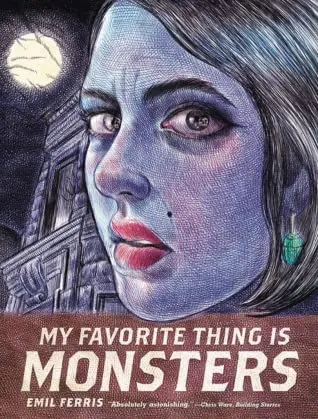
My Favorite Thing is Monsters, Vol. 1
by Emil Ferris
In Emil Ferris's debut, the scenes of a young, awkward girl coming of age in 1960s Chicago are drawn in intricate pen on composition paper. Told in the form of 10-year-old Karen's creative and vulnerable diaries, the book explores her discoveries about her wide range of neighbors, including a Holocaust survivor; the people (and pulp monsters) she finds herself identifying with as an outcast, including a ghostly girl and a burgeoning Black drag queen; and the landscape of 1960s Chicago. She draws herself as a young wolf-girl in this massively ambitious graphic novel that for the art alone should be considered one of the century's best.
- Leah Rachel von Essen

My Friend Dahmer
by Derf Backderf
When you hear the name "Jeffrey Dahmer," you have a series of associations pop into your head: gruesome, serial killer, disturbed, ill. For Backderf, the associations are more complicated, as he grew up with "Jeff." Jeff was weird, but he was also a friend. As Jeff's behavior became more disturbing, though, Backderf found himself stepping further and further away. This graphic memoir is one that doesn't make any apologies for Dahmer nor his behavior, but it adds nuance and complexity to who he was as a young person. Highly decorated and revered by readers, Backderf's book got a movie treatment in 2017.
- Kelly Jensen
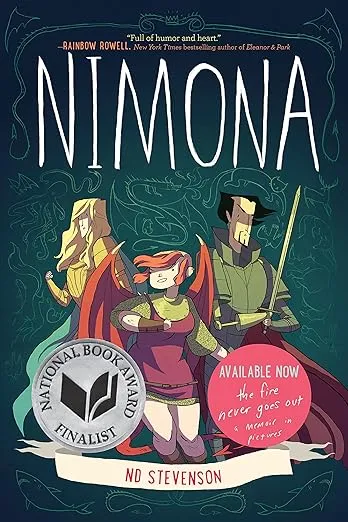
Nimona
by N.D. Stevenson
In the 2010s, N.D. Stevenson posted doodles on Tumblr of a story he wasn't sure what to do with, one about a shapeshifter with a penchant for villainy and a villain with a vendetta for a sidekick. Little did he know that those doodles would become a widely acclaimed webcomic, an Eisner Award and a Cybils Award-winning graphic novel, and an Academy Award-nominated film, all with a loyal and passionate fan base. Nimona is embraced as a classic of queer comics despite not being canonically queer, as Editor Danika Ellis explored last year. And if you needed any more reasons to be impressed by N.D. Stevenson, here's your reminder that he would go on to be part of the team that gave us Lumberjanes.
- Vanessa Diaz

On a Sunbeam
by Tillie Walden
Walden is one of our generation's biggest talents, and in this science-fiction epic drawn in gorgeous blacks, reds, and blues, she gives us a story of queer longing in the midst of the space age. Two young girls have their romance cut short; many years later, Mia decides she deserves to find her lost love again and sets out with her found family to track her down. Originally crafted as a webcomic, this novel takes bold chances with its storytelling, depicting real character backstory and growth and complex relationships alongside gorgeous shots of space, as well as with its art, doing a wordless chapter, or using color to differentiate timelines.
- Leah Rachel von Essen

Persepolis
by Marjane Satrapi
Already on our "Best of the Century: Historical Fiction" list, Satrapi's work also earns its spot here. Toeing the line between memoir and fiction, readers experience life under the Islamic Revolution in Iran. Satrapi shows what it's like growing up and navigating the challenges of youth and emerging adulthood while simultaneously experiencing the costs of war and political repression. The art is unforgettable, and the book helped usher in what has been a rich era of graphic memoir. It's sparked countless discussions, too, about what makes a work fact or fiction—and the reminder that all fact includes fiction and all fiction, some fact.
- Kelly Jensen

Radioactive: Marie & Pierre Curie: A Tale of Love and Fallout
by Lauren Redniss
Lauren Redniss built the collage artwork in this book with hand-colored cyanotype prints, which aligned with her subject Marie Curie because the process was sensitive and involved X-rays. This portrait of Curie makes sense of her obsession with radium, and you can feel the love through the pages that she has for her lab and for Pierre. The beauty of this comic is talent and innovation in comics artists. It also proves that the divide between the brain and the heart is not so rigid. We all fall in love, and some of us fall in love with chemical reactions as well as people. It’s a treat for the overlap of science, history, and art nerds.
- Julia Rittenberg
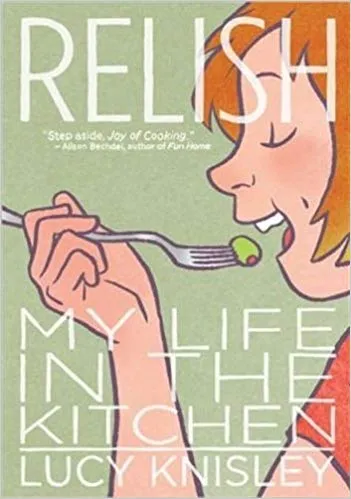
Relish
by Lucy Knisley
When I think of books and comics for foodies, Relish is always near the top of my list. Each chapter of this very funny and very tasty memoir opens with a recipe, followed by drawings and descriptions of the dishes and how they tie in to formative memories. With a chef and a gourmet as parents, Knisley comes by her culinary appreciation honestly, and her reflections on everything from tamales in Mexico to McDonald's fries really capture the pleasures of a perfect bite and how food connects us to each other. It's a celebration of food from beginning to end, and a treat for anyone who, as the comic itself says, ever felt more passion for a sandwich than is strictly speaking proper.
- Vanessa Diaz

Saga
by Brian K. Vaughan, Fiona Staples
Comics have long been at the forefront of species-based diversity. In a field populated with mutants, aliens, gods, and not-your-average humans, Saga's depictions of ethnic and gender diversity remain notable, and at the center of the story's conflict. Alana and Marko are two soldiers on opposite ends of an endless galactic war. They fall in love and start a family, risking everything, including their place in the world. This is a masterpiece of a space opera.
- K.W. Colyard

Shadow Life
by Hiromi Goto, Ann Xu
Leave it to a poet to cleverly tackle a topic most people ignore, in a graphic novel that feels as unique as it is gorgeous and hilarious. I can’t say that I’ve come across many graphic novels following a septuagenarian bisexual woman running away from Death’s shadow while fighting to keep her independence after her children place her in a living facility. Now that she’s found an apartment and is living life on her own terms, she only has to deal with the pesky intrusion of Death’s shadow.
- Jamie Canaves

Smile
by Raina Telgemeier
Few capture the ups and downs of being in the middle place—not still a kid but not yet a teenager—the way that Telgemeier does. Any of her bright, energetic comics could be included on this list of the best. The marriage of her storytelling, her voice, and her art has made her a staple in middle grade comics for a reason. Smile is a tremendous example of this, centering on sixth-grade Raina's desire to fit in with her classmates amidst a parade of dental challenges and mishaps that lead her to braces, headgear, and more. But this isn't just about teeth. It's a memoir of navigating friendships, first crushes, and even Mother Nature.
- Kelly Jensen

Spy X Family
by Tatsuya Endo
There is no shortage of spies in the crime genre, which is why it always feels like a breath of fresh air when a new twist or element is added. That is what Tatsuya Endo has done with his manga series, which follows a spy, yes, but also his fake family that he assembled to get closer to his target. What he doesn’t know is that his adopted daughter, Anya, reads minds, and his fake wife, Yor, is an assassin. So we have a found family, a spy on a mission, and everyone keeping a secret from each other. It’s as fun as it sounds!
- Jamie Canaves

Supergirl: Woman of Tomorrow
by Tom King, Bilquis Evely, and Matheus Lopes
The all-around best superhero comic of the century so far in my estimation. So few writers have gotten Supergirl right, much less in a way that tells an epic spacefaring story while giving weight to the trauma of her backstory as well as her general badassery and attitude. Tom King just gets it. Likewise, Evely's art has a mythological feel that is just right for Supergirl and for this story in particular. What else can I say? This graphic novel is a work of art.
- Rachel Brittain

Superman Smashes the Klan
by Gene Luen Yang, Gurihiru
In 1946, two Chinese American teens, Roberta and Tommy Lee, find themselves in the crosshairs of the Klan. Luckily, Superman is here to help—but he’s struggling too, both with the question of where he came from, and with a mysterious green rock that’s sapping his powers. This bright, brilliant standalone story is inspired by the 1940s Superman radio show story, “The Clan of the Fiery Cross,” in which the Man of Steel battled anti-Asian and anti-immigrant prejudice. But this modern update centers Asian voices and positions Superman unequivocally as an immigrant story. It’s timely, timeless, and a loving tribute to the character’s history.
- Jessica Plummer
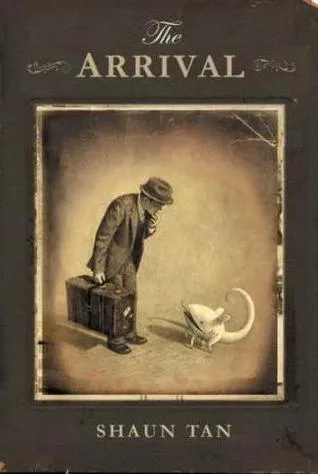
The Arrival
by Shaun Tan
The Arrival is a masterclass in storytelling, made even more impressive by being entirely wordless. It follows a man crossing the ocean to start a new life in a strange land, demonstrating the bravery, loneliness, and alienation of relocation as an immigrant or refugee. Tan combines realism and speculative elements to create a timeless fable that has proven to be a modern classic—it's often taught in schools. If you're the kind of comics reader that reads the words and skims over the artwork, this is a good reminder that words are secondary to the primary language of comics.
- Danika Ellis

The Best We Could Do
by Thi Bui
Graphic memoir has made way for more diverse stories, by which I mean more stories about people navigating an array of real-world problems outside of the spotlight and from diverse backgrounds and cultures. Thi Bui worked in education before she became an award-winning author and illustrator through this personal and profound exploration of her family's escape from South Vietnam in the '70s. Reckoning with how survival and trauma shaped her parents, the decisions and sacrifices they made for their family, Bui beautifully, painstakingly, and unforgettably renders the layered impacts of displacement and life as a refugee.
- S. Zainab Williams

The Diary of a Teenage Girl: An Account in Words and Pictures
by Phoebe Gloeckner
Gloeckner has pushed the boundaries of comics storytelling with The Diary of a Teenage Girl. Her masterwork melded her childhood diaries and illustrations, two very intimate storytelling methods. Fifteen-year-old Minnie Goetz, an avatar for Phoebe, lives in San Francisco with her mother and starts to explore drugs, sex, and art. Gloeckner was trained as a medical illustrator, which lends her artwork an intense, uncomfortable realism, especially in the sex scenes with her inappropriately older lover. Not for the faint of heart, this memoir is equal parts devastating, funny, and insightful.
- Julia Rittenberg
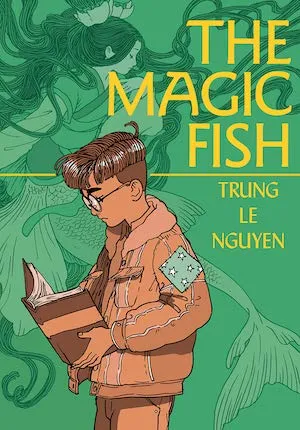
The Magic Fish
by Trung Le Nguyen
In this YA graphic novel, Tien struggles to come out to his mother as gay, made more difficult by the language barrier: how can he finds the words in Vietnamese? They find connection by sharing fairy tales with each other. The embedded fairy tale stories all have their own visual style, including the fashion, that reflects something about the storyteller. I loved that this wasn’t just about Tien trying to come out to his mother, but also about his mother’s experiences as an immigrant from Vietnam. This is such a work of art, and it breaks my heart that it's been targeted for book bans so frequently in recent years.
- Danika Ellis

The Prince and the Dressmaker
by Jen Wang
This Eisner- and Harvey Award-winning YA graphic novel is a charming fairy tale about Prince Sebastian, who secretly moonlights as the fashionista Lady Crystallia, helped by his dressmaker best friend, Frances. It has a timeless, classic fairy tale feel, and the gender-nonconforming main character is what makes it stand out—unfortunately, that means it has also been targeted for book bans. This gentle, comforting story for all ages is a perfect example of the kind of books getting targeted in the current book banning wave, despite their literary quality and age appropriateness.
- Danika Ellis
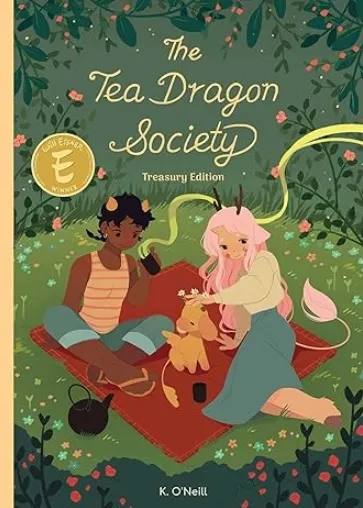
The Tea Dragon Society
by K. O'Neill
This Eisner Award-winning middle grade graphic novel series is unlike anything else I've ever read. It made me fall in love with cozy fantasy before "cozy fantasy" was a term. It's set in a queernorm, inclusive world populated by supportive and caring characters. In this first book, Greta is apprenticing as a blacksmith when she finds a tea dragon—a small dragon that produces magical tea leaves. She learns about how to take care of him from the local tea dragon experts. While there, she befriends their ward, a shy girl with missing memories. Did I mention that I recently got my first tattoo, and it's a tea dragon? That's how much I love this.
- Danika Ellis

The Unbeatable Squirrel Girl
by Ryan North, Steve Ditko, Will Murray, Erica Henderson,
Squirrel Girl is simply the best. But don’t take my word for it. She managed to go from an obscure and weird character to a delightful, clever, and kind superhero with 12 volumes and a podcast. Thanks to writer Ryan North and artist Erica Henderson, Squirrel Girl breaks the mold of what a superhero can be. It's impressive that she often uses non-violent methods to resolve conflicts, especially with some of the most notorious Marvel baddies. Her adventures feel fresh and timely, which include a deadly escape room and an encounter with a suitor who wouldn’t take no for an answer. Plus, there are footnotes, so many glorious footnotes.
- Elisa Shoenberger

The Vision
by Tom King, Gabriel Hernández Walta, Jordie Bellaire
Tom King has managed to give a superhero comic the gravitas of a Shakespearean tragedy. It’s that magical blend of good intentions, dark secrets, and a need to belong that ends in blood and tears. Vision creates a family in his quest to become more human; all he wants is to be ordinary. But his family is not ordinary, and pretending to be normal by imitating everyday human activities is off-putting. The stakes get higher when it’s clear that the people around them won’t accept them and that they are not welcome. This is simply a masterpiece of comic books and storytelling.
- Elisa Shoenberger

The Walking Dead
by Robert Kirkman, Tony Moore
Zombie stories are classic. Comic books began with pulpy stories of monsters, after all. Robert Kirkman's The Walking Dead was something different. It wasn't pulpy. It wasn't like John Carpenter's movies. This story was more about how humans behave when the world around them falls away and turns deadly. Zombies, it winds up, aren't the greatest threat left. It's people. Oh, and this comic launched the wildly successful TV show and Kirkman's prodigious career.
- Chris M. Arnone

This One Summer
by Mariko Tamaki, Jillian Tamaki
The various shades of blue in This One Summer perfectly mirror its beach setting. But the true brilliance is the tone it sets for what this young adult graphic novel explores: summer friendship; the massive difference a year or two in age can make between teenagers; how what parents are privately going through can be missed by their children; and how parents can miss what their children do notice and absorb. I was so moved by this book that I have since read everything the Tamaki cousins have put out, jointly and individually.
- Jamie Canaves
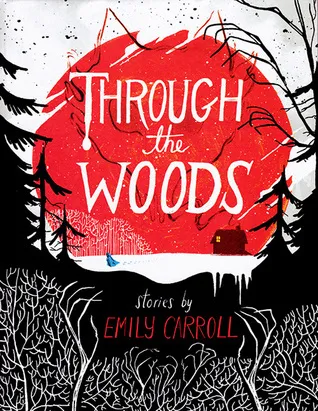
Through the Woods
by E.M. Carroll
E.M. Carroll is one of the best comic artists working today, in my humble opinion, and it was almost impossible to choose just one of their books to highlight. While I love their creepy, atmospheric, queer graphic novels When I Arrived at the Castle and A Guest in the House, this 2014 YA horror comic is what put them on the map. The illustrations perfectly capture the dark fairy tale tone of its stories, and the creative range of page layouts show the possibilities of the medium. I loved using these pages as examples while teaching high school English, because students were immediately drawn by the eye-catching artwork and haunting narrative.
- Danika Ellis

Ultimate Spider-Man
by Brian Michael Bendis, Mark Bagley
Marvel's Ultimate universe was an early-2000s launch of new titles set in a separate universe, intended to tell stories without the baggage of continuity while attracting new fans. The most successful of these was Ultimate Spider-Man. With it, Brian Michael Bendis beat out Stan Lee's record for consecutive issues as a writer on any series. More importantly, this book introduced Miles Morales. Other elements of Ultimate Spider-Man have shown up not only in the Spider-Verse movies, but also in the recent live-action Spider-Man movies.
- Chris M. Arnone

What It Is
by Lynda Barry
You can only hear someone and their work referenced so much by your favorite writers before you seek out their books with star-high hopes. This iconic artist and instructor’s prose and illustrations, indeed, filled me with awe. Published in 2008, the first installment in the author of Cruddy’s “Creativity” series earned a 2009 Eisner Award. I keep Barry’s popular title blending memoir, pearlescent creative wisdom, prompts, and vibrant collage art close. Available in paperback since 2024, each intricately detailed page has a way of stilling my amble. My eyes always fall on something new. What a sweetness, to pause the world with this treasure.
- Connie Pan
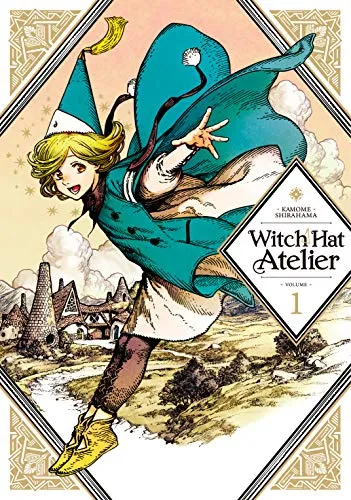
Witch Hat Atelier
by Kamome Shirahama
This Harvey and Eisner Award-winning manga follows a young girl named Coco whose only wish in her mundane life is to be a witch. But she wasn't blessed with the gift, and witches are born, not made... right? A chance meeting with a traveling magician reveals there may indeed be more than one way to witch, and everything Coco has been told about magic is a lie. The series is a fantasy masterpiece with beautiful artistry and complex world-building, one that's sold over 7.5 million copies since its serialization in 2016. In the wide world of witchy fantasy, this one is a must-read.
- Vanessa Diaz
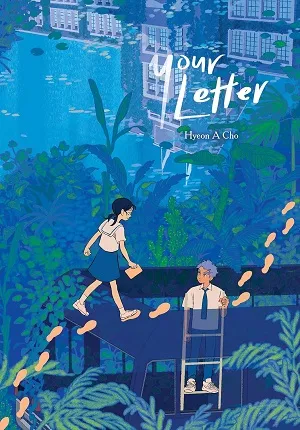
Your Letter
by Hyeon A. Cho
Hyeon A. Cho’s poignant manhwa blends beautiful art with a heartfelt story and relatable characters. This is the kind of book I want to return to whenever I need a pick-me-up. After Sori Lee stands up for her friend getting bullied at their middle school, she becomes the new target and decides to transfer. At her new school, Sori finds a letter taped to her desk that leads her on a scavenger hunt around the school and the surrounding grounds. Through the letters she finds, Sori begins to adjust to her new school and makes touching connections along the way, including with a boy who also searches for the mysterious letter writer. Themes of navigating bullying and moving to a new place, along with finding belonging, are so powerful in this story. It leaves me hopeful after reading.
- Megan Mabee





 English (US) ·