
[00:00:00] KELLY KRAUSE: One that a lot of people have been talking about.
ANNE BOGEL: Ooh, yeah. Okay, I'll tell you. I don't know.
KELLY: Okay.
ANNE: I want you to read like three big wins and then I want to talk to you about it.
KELLY: Okay.
ANNE: But it's not like a heck yes or definitely not. It's like a ooh, like, oh, it's-
KELLY: Maybe.
ANNE: Let's get a little more info first.
Hey readers, I'm Anne Bogel, and this is What Should I Read Next?. Welcome to the show that's dedicated to answering the question that plagues every reader, what should I read next? We don't get bossy on this show. What we will do here is give you the information you need to choose your next read. Every week we'll talk all things books and reading and do a little literary matchmaking with one guest.
[00:00:52] Readers, this year marks a whole bunch of milestones here at What Should I Read Next? HQ. And one of those is our 15th Summer Reading Guide coming your way next month. Creating this guide each year is truly a labor of love. Our Modern Mrs. Darcy book club and What Should I Read Next? Patreon community members are automatically invited. And we'll have a popular a la carte option as well.
To make sure you get the 15th anniversary edition in your inbox and to find out how to join us for our live unboxing event, visit modernmrsdarcy.com/srg, for Summer Reading Guide, to get all the details. That's modernmrsdarcy.com/srg.
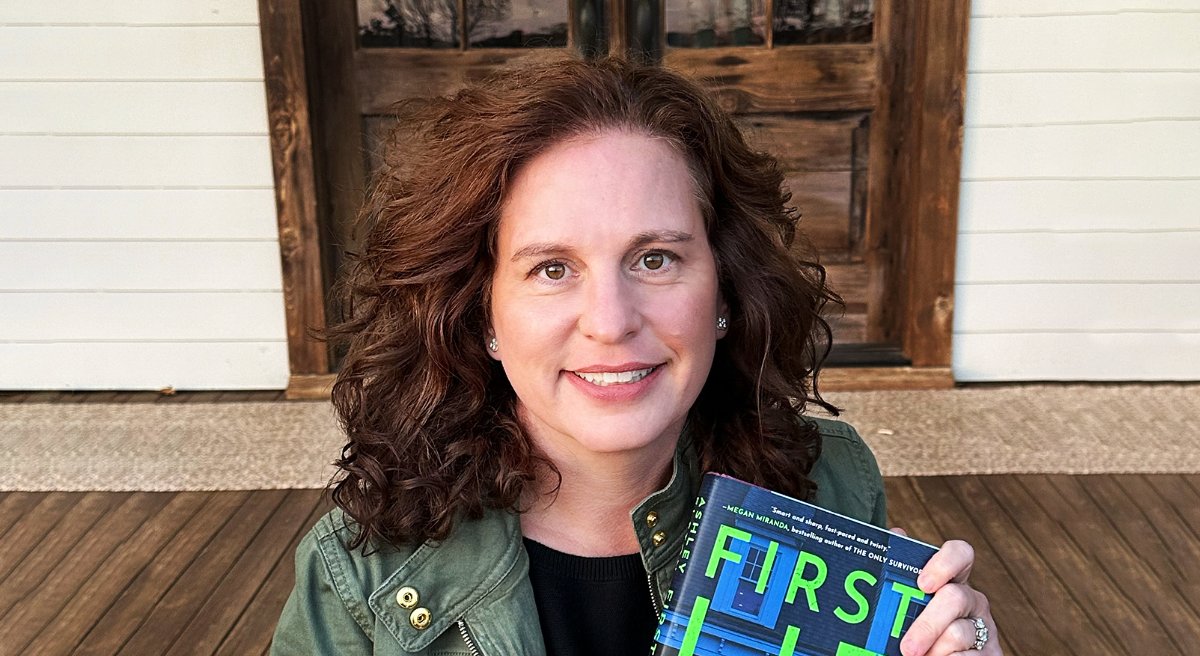
Readers, today's guest would love to add more four and five-star picks to her reading list and she's curious about techniques that might help get her there. Kelly Krause is a first-grade teacher who lives in Northwest Arkansas with her family. In addition to reading with her girls, she loves finding stories that pack a certain kind of emotional punch.
[00:01:51] When Kelly discovers a winning author, it feels like a slam dunk to read the rest of their work. But when it comes to branching out in new directions, Kelly is not as confident. She's wondering whether devoting more time to reflecting on her reads by analyzing what's worked well or practicing the art of writing book reviews will help her pick more winning titles. You know we love to talk about the examined reading life around here, and I can't wait to explore this with Kelly today.
Kelly, welcome to the show.
KELLY: Thank you. I'm so excited to talk to you today about books.
ANNE: Oh, I can't wait to talk books today. Kelly, would you start by giving our readers just a glimpse of who you are? Tell us a little bit about yourself.
KELLY: I am a first-grade teacher, and I would describe myself also as a soccer mom. I'm living in Northwest Arkansas with my husband and our two daughters. Our favorite date night when we're not watching soccer and all the things, when we have a little time, is to go biking on the Razorback Trail here in Northwest Arkansas. We have an amazing trail system. We also like to go hiking as a family and take out... we recently inherited a 1969 teal blue ski boat that we named Martha Jean.
ANNE: Very nice.
KELLY: Yeah, it's fun.
[00:03:05] ANNE: That sounds like a lot of fun. Kelly, tell me a little bit about your reading life.
KELLY: Well, I think I fell in love with reading when I was a little girl. My mom read me stories before bed. And definitely when I had two girls of my own, I've been really trying to be purposeful about reading with them. So we did 1,000 Books Before Kindergarten when they're in preschool. And now it's something that we're reading Harry Potter and The Green Ember and Anne of Green Gables books as a family. And so that's a big part of my reading life. As well as, of course, being a first-grade teacher, I get the privilege of teaching children how to read. And so I'm very intentional about that as well.
For my own reading life, I feel like it has taken a backseat a little bit. I mostly get reading done during breaks, like spring break that's coming up and also the summertime. So I really enjoy it. And I think of it as a big treat.
[00:04:07] ANNE: That sounds lovely. I'm thinking of my friend who's a teacher who says... well, what she would say about you is perhaps "Summer Kelly" lives an entirely different life, especially reading life, than "School Year Kelly."
KELLY: Oh, definitely. I fly through the books in the summertime and on spring break and breaks like that. And during the rest of the year, I just kind of slowly make my way through them.
ANNE: All right. Well, I hope you've been slowly making your way through some good stuff. And I'm excited about making your way through some good stuff at a quicker pace coming very soon.
KELLY: Yes, definitely.
ANNE: Okay. Kelly, I believe you've been listening to the show for a while.
KELLY: Yes, I have. I've been enjoying it for a long time.
ANNE: But something has prompted you to come to What Should I Read Next? right now. And I'm really wondering what that is.
KELLY: Well, I think during winter break, right before the new year started, I was listening to a few of your podcasts, and one of your teammates said that they were attempting to read four and five-star reads.
ANNE: That sounds like Shannan.
[00:05:07] KELLY: Okay. Well, I was just thinking, how would one go about doing that? And so I started making a list of books that I thought might be right for me based off of books that I've read before. But the first few books that I picked up for myself were not quite five-star reads. And so I was feeling a little frustrated that maybe I wasn't quite in touch with the books that I wanted to read or how to go about finding that five star read.
ANNE: Ooh. Okay. We definitely may be digging more into the process you used. But how would you feel today about beginning with talking about the books you really loved and didn't? And maybe along the way, we'll hear some of what your experimentation has felt like.
KELLY: Sure.
ANNE: Also tagging for you and the readers that you mentioned in your submission, that reviewing more books may be an element that helps you in this quest.
[00:06:00] KELLY: Yeah, definitely. I feel like I process by writing things down. I think even if I write for myself or on a platform like Goodreads, then it would help me just kind of figure out what I enjoyed about a book or maybe what I didn't enjoy about a book. But I am cautious about it. I think I never want to hurt anyone's feelings or sound negative about a book. So I think that's kind of given me pause in the past.
ANNE: Okay. I will hold that for our continuing conversation. Kelly, you know how this works. You have come with three books you love, one you don't, and what you've been reading lately. And Kelly, we're going to use that to see if we can identify books that are more likely to be four and five-star reads for you. First, I'd love to hear how did you think about choosing these today?
KELLY: Well, I think I tried to pick books that have stuck with me. These are all books that I've read several years ago, and they're also books that are in different genres. So just to kind of give a range of the different types of books that I've read and enjoyed.
[00:07:05] ANNE: That sounds good. That sounds really helpful for what we want to do here. What's the first book you love?
KELLY: The Book of Hope: A Survival Guide for Trying Times. And that's by Jane Goodall and Douglas Abrams. I chose this book to represent a nonfiction choice for me. I think most people are probably familiar with Dr. Jane Goodall. She recently passed away last year, which was sad. So maybe it's a good time to think about her for me.
But Dr. Jane Goodall was known for studying chimpanzees and their habitat. And I thought it was really interesting just hearing about her story of how she was inspired to be a scientist as a kid. I think she mentioned spending a lot of time in nature and also reading books like Doctor Dolittle as a child. And then I also found it really fascinating just what it would have been like being a woman scientist and going in her 20s to Africa to study chimpanzees and their habitat.
[00:08:03] So I found her career really fascinating and how it evolved to becoming an international spokesperson for wildlife protection. I just found her book both interesting and also inspiring. She really approached big problems with wisdom and hope.
ANNE: Interesting and inspiring.
KELLY: And I listened to this book on audio, which was a really great way for me to read this book. I enjoyed her accent, and I enjoyed the conversational style because Doug Abrams asked her questions. It's more of an interview type or conversational format.
ANNE: Thanks for sharing that. Kelly, what's the second book you love?
KELLY: The second book I love is The Kitchen Front by Jennifer Ryan. I would describe this book as British Bake Off meets World War II Rations. It's set in the British countryside during World War II and it's based, I believe, on an actual BBC radio program during that time. I just really enjoyed the rivalry between the women that were the contestants in this radio program and also their friendship that evolved along the way.
[00:09:14] ANNE: British Bake Off meets World War II Rations. It sounds like a mix, and I've read your submission, of the hard and the cozy. Would you say more about that?
KELLY: I've read a lot of World War II books and I've enjoyed many of them. This one felt just a little cozier, like you said, or just a little bit lighter in the tone, and I appreciated that about this book. It's talking about a hard topic, but in a way that didn't feel so, I guess, in your face about it.
ANNE: Hard topic made bearable?
KELLY: That's a better way to put it, yes.
ANNE: And I'm noticing this is historical fiction.
KELLY: Yes. And historical fiction, I would say, is my go-to genre. So this book probably represents the largest chunk of what I would normally be reading.
ANNE: Okay, that's helpful. Kelly, what did you choose for your third favorite?
[00:10:03] KELLY: My third favorite is The Poet X. I chose this book because I wanted to pick something that was a little outside of my normal reading. The Poet X is a YA novel in verse. This is definitely the first novel that I remember reading that was written in verse. I was really impressed with just how poetry can be put into a narrative.
For people who aren't familiar with the book, it's about a 16-year-old girl named Xiomara Batista. She lives in Harlem and she, like many 16-year-olds, is wanting more freedom and starting to want to date. But her mother is very strict and devout, and so they have a lot of conflicts that gets taken too far. I also think this book ends in a hopeful way. But I just really enjoyed just reading a book that was written in a different style.
ANNE: Than your go-tos?
KELLY: Yeah, I had never read a book that was written in verse before, for example.
[00:11:04] ANNE: Okay, your first one. Did you follow it up with more, or is this still really unique in your reading life?
KELLY: I feel like I've read maybe one or two more, and those were more YA books as well. I am not familiar with books that are in this type of format for, I guess, the adult section of the library. But I would say this book is adult-appropriate for sure. It's not a young child book at all.
ANNE: We read this in Modern Mrs Darcy Book Club years ago, and Elizabeth Acevedo came and talked to us and read to us, which was incredible. But we heard from so many readers: "I may not have picked this up, but I'm so glad I read it."
KELLY: Definitely. And speaking to her sounds like such a great opportunity that I'm kind of jealous that I missed that. But I wish I had also… and I guess I can go back. I read this book in print, but I think this would be a great book on audio.
[00:11:57] ANNE: Yes. I know I've listened to the audio. I'm trying to remember if that was my first exposure. But any novel in verse, or any book that really has a musicality about it like that, can be amazing on audio. For next time.
KELLY: Yes.
ANNE: Kelly, what is a book that did not fit your taste, timing, style? I'd love to hear what you chose and why you chose it.
KELLY: Sure. I chose The Ministry of Time. I know that this book actually has won so many awards, so I'm probably in the minority for not enjoying this book. But I think for me, it was the case of, I thought it was going to be something that it turned out to be less of. And that is that it was described as a spy thriller and a workplace comedy and a time travel romance were some of the key words that I picked out. But for me, it just wasn't that funny or romantic.
[00:12:56] ANNE: I really enjoyed this book, and I am surprised by the phrase "workplace comedy" in this context, both at the same time.
KELLY: Okay. Maybe that was just a review that I read and I had unmet expectations.
ANNE: I will reveal my working theory: the tone, the worldview, the underlying idea the author has about what kind of world we're living in, what we can expect from it, and what it means for us and the story in these pages. I think that may be the heart of your struggle to find these four and five-star reads.
KELLY: Sure. I would love to hear that.
ANNE: Okay. Well, that's all I'm going to say for right now. So that one did not work out for you.
KELLY: At least not at this time.
ANNE: Well, Kelly, I heard you say The Book of Hope was inspiring, The Kitchen Front took a hard topic and made it inviting for you to enter in, and The Poet X was hopeful. I think these adjectives coming out of your mouth one after the other, I don't think that's a coincidence.
[00:14:00] KELLY: You're right. That's probably not a coincidence.
ANNE: And The Ministry of Time is many things, and it has won a ton of awards, and subjective, personal opinion, but also shared by many. It's beautifully crafted. But that is not the same as being inspiring, hopeful or... what's one synonym for The Kitchen Front? I mean, we talked about how… or Bake Off. Can we just use Bake Off as the adjective?
KELLY: Yeah, it feels more fun. I guess there's a little bit of fun or whimsy to that idea of having a British Bake Off-type competition in the midst of a war.
ANNE: I hear that. And there is definitely some droll humor in The Ministry of Time. Like, it's not that it's never funny. But inspiring and hopeful, I don't think, is what Kaliane Bradley was aiming for.
KELLY: Probably not.
ANNE: Okay. We're going to put a pin in that. What have you been reading lately?
[00:14:54] KELLY: Well, I recently finished A Man Called Ove by Fredrik Backman. Fredrik Backman is definitely an author that works well. Every book I've read has been a book that I've enjoyed by him. I was halfway through the book, and I wasn't enjoying it as much as I expected to. But without any spoilers, the end really came through. And so that turned out to be a great read for me.
It's about a lonely widower who is really grouchy and hard to live around, and his neighbors who are meddling into his business quite a lot. And it's just funny and cute, sweet, and hopeful.
ANNE: That sounds lovely. Anything else you've been reading lately?
KELLY: I also just finished The Keeper of Lost Children by Sadeqa Johnson. It recently came out in February. I think I saw it at the airport and picked it up and felt lucky to find it. It's about a woman who is a military wife in the 1950s. She goes over to Germany, and she discovers that there are a lot of biracial children that have been born, out of having African-American men that are in Germany at that time, and just the struggles that the children have been dealing with as far as being accepted by that culture or by our culture.
[00:16:15] And so she feels inspired to take action and have the children adopted by American families. It follows the path of how that turned out for these children. I would also say this story is hopeful and interesting. It was a topic that had not been introduced to before, so I was really excited to learn more about it. I wouldn't say it was a five-star read for me just because I felt like it wasn't a page turner for me. I wasn't as invested in the characters as I would expect to be, I guess, based on the topic.
ANNE: All right. I'm glad to hear about that one. I would like to go back to Fredrik Backman for a moment. Can we do that?
KELLY: Yes, definitely.
ANNE: Okay. You said you've really enjoyed everything you've read by him. What have you read by him? And I'm really wondering if you've read Beartown in the trilogy.
[00:17:09] KELLY: I believe I've read at least two, if not three, from that series. And I really enjoyed it. I feel like his writing in that almost feels poetic in some places. The words are so purposeful, and it kind of moves the story along in a really great way.
ANNE: The reason I was asking is that book is hard.
KELLY: Oh, yeah. It is hard, for sure.
ANNE: And yet, that one worked for you.
KELLY: Yes, I enjoyed that book. I guess I'm not really opposed to reading books that are hard. I have to space them out. But I also appreciate when they don't end in a bleak way.
ANNE: So you have the books that you loved, and you'd like to find more of these four- and five-star reads.
KELLY: Yes.
ANNE: You want to tell me about what you're trying, what you've tried so far?
[00:18:01] KELLY: Well, what I started out with, I made a list for 2026. I came up with 26 books that I thought I might read. And I kind of did that based off of books that I've read in the past. And also, I believe I got this idea off of your podcast as well as creating my own curriculum. So just things I think are interesting.
So the first book I read is Heartwood, which is about a female hiker that gets lost on a trail. The whole story is about trying to find her. Of course, I like hiking, and I'm in that age range, so I thought this book would be really great for me.
And then another book that I read is Station Eleven. And to tell you the truth, I don't remember why I thought I would like Station Eleven. I think I've just heard of that book several times, and I thought that I should read it.
ANNE: And how did those work out for you?
[00:18:54] KELLY: I think Heartwood, it has a beautiful cover, first of all. It is a beautiful book, and there are a lot of great things about this book. But for me, I just felt a little confused in some places. Again, I didn't feel quite as much for the character situation as I felt was appropriate. I lacked a little bit of character development, maybe. I don't know if that's the right way to put it, for me.
ANNE: Okay, I can see that. I'm just guessing that you were drawn to this more on the wilderness vibes and Appalachian Trail concept than the scary guy doing bad things.
KELLY: A hundred percent.
ANNE: In the woods?
KELLY: Yes.
ANNE: What was on your personal curriculum? Did you have a unifying theme or themes? What did you want to explore?
KELLY: Well, first, I have to tell you, I titled this... it's just a list, a bullet point list. And it's just "things I can nerd out about if I want to."
ANNE: Oh, I love that.
[00:19:57] KELLY: That's my personal curriculum. So it's just a bullet point list of things that I find interesting.
ANNE: And can you give us the flavor of some of the things on it?
KELLY: Sure. Art heists throughout history, Anastasia, Cleopatra, city planning, and then also some nature-related themes like sea turtles and forest. It's kind of a wide variety in there, but I think there's history and there's nature, probably are two big themes.
ANNE: Scribbling furiously here. All right, that's really fun. And I love how you gave that great example of a personal curriculum theme that absolutely makes sense for you, unified, cohesive, something you're excited about, but "things I could nerd out about if I wanted to" is just a giant umbrella for all kinds of what you would consider to be good stuff. And actually, probably me too. That sounds like a really fun list, Kelly.
KELLY: I had fun making it.
[00:21:00] ANNE: Okay, but you've identified these books. You're hoping also that they will be four and five stars. Is that correct?
KELLY: Yes.
ANNE: And it's not going the way you want it to?
KELLY: Yes. That's basically when I reached out to you is because I read the first two that I described and they just weren't quite up to the five-star reading that I wanted to. And since I have such little time to read, I'm just trying to be more purposeful this year about it. And so I thought you can maybe help me figure out which direction to go.
ANNE: Okay. You could go lots of directions. You have so many options available to you, but I'm not entirely sure that's going to land on you as a good thing because what are you supposed to do if you could do so much? But looking for that intersection of "belongs on your personal curriculum," "has a touch point in common with what you've enjoyed before." And also, I really think that tone is something I'd like to pay attention to for you as we think about what you may really enjoy.
[00:22:03] And Beartown is throwing me a little bit because that book is not... I mean, it's been 10 years since I've read it, but I wouldn't call it hopeful or inspiring, even though – although maybe now I can equivocate a little bit – there are definitely moments in that book and characters in that book that do call out to the reader, Like, "look at this person. Here is evidence for your not misplaced faith in human nature." But also, how many times have I said there's hard stuff in that book that remains?
KELLY: Yeah. I think that something that we haven't talked about is that when I read hard books, I think that I gain empathy for people in situations that are unlike my own. And so, that also reflects back on Poet X and, I think, Beartown.
ANNE: Kelly, as I'm scouring my mental stores for what you may enjoy reading, do I remember correctly that you're a big library user? Are there lots of new titles you're intrigued in? How should we be thinking about where we're going to go get these books?
[00:23:06] KELLY: I have to put a plug in for the Fayetteville Public Library. We have an amazing –
ANNE: Please do.
KELLY: We have an amazing, beautiful library in Fayetteville, and I would appreciate any excuse to go visit it and walk around the shelves. They have a great section for books that are new called "Lucky Day," so you can just kind of see what they have that is available and new. So, that's intriguing to me. But also, I am open to actually purchasing more books this year. I think that's part of just trying to be more intentional and taking my time and not worrying about a due date.
ANNE: Okay. So, you do read some old, some new?
KELLY: Definitely.
ANNE: Kelly, I'm really interested in hearing what would help you best today. Do you have a list of books you're considering and you're thinking, like, "Ah, I don't know if these really belong on my list or not"? Would you like some fresh titles? Are you curious to hear what I might say that might already be on your list? Like, how can I help you as you move forward?
[00:24:09] KELLY: Yes, definitely. It would be fun to see if any of the books that you recommend for me are on my list to see if I am on the right track. And then, again, any advice that you have about ways to maybe keep track of why and why I didn't like certain books. Kind of what we've said is that some of the books that I said, like Beartown, I did enjoy, and they don't necessarily fit in with the other books on my list. So, just helping me understand that a little bit more.
ANNE: I'm looking back at your submission and just reading how one of your sticking points has been that you haven't been as emotionally invested in the characters in some of the books you've been reading, like Heartwood and Station Eleven. Like, you hoped they'd be four and five-star reads. They really weren't for you and you think that emotionally invested piece is part of it. Am I getting that right?
KELLY: I think so.
[00:25:02] ANNE: I'm wondering if the emotional resonance is important, but I'm also wondering if the idea of, like, what kind of emotions are calling to you. I'm wondering if you're really wanting to be a participant in the emotional universe of the book and not an external observer.
The books you love are often buoyant and, I think, generally open-hearted. And the drumbeat beneath the surface and the fundamental assumptions about life and people, there's a lot in common in the books you love. And I'm wondering if the question that you're hoping your books will answer with a hopeful bent is, like, "this is the way it is, so, like, what now? How are we supposed to live now?" And I wonder if you're hoping to enter into that experience.
KELLY: I think I am. I think that goes kind of to the point of wanting to gain empathy and experience someone's life and their feelings through the book.
[00:26:03] ANNE: So, I wonder if taking that idea, "what am I expecting this book to feel like?" and "does that sync up with how I want to feel right now when I open my books?" I wonder if that could be useful as you're scanning your list of 26 and 26.
KELLY: I think it definitely can be useful because I think I went about it in a different way, and that is what I thought would be interesting, and not what I would feel like.
ANNE: I mean, the interesting is really important, too. But I think neither are the only thing. I wonder if you can feel more comfortable and confident saying, "this is what I expect to enjoy and why." And even if it totally doesn't work out, if afterwards you can see clearly, like, "okay, this is where the gap was. I understand. This makes sense to me." Instead of it being like a big murky puzzle. I wonder if that would be a good place to, like, that you could then branch out from into ones that you're not at all sure about, but you are interested in trying because of the themes and because of how they found their way to the "things I could nerd out about if I wanted to" list.
[00:27:13] KELLY: Yes, definitely. That makes sense to me.
ANNE: Because if you really want to know about sea turtles, then you may be willing to take a chance on any number of books that might not sound like they're in your usual lane. But it might be nice to do that from a place of a little more confidence than you're feeling right now.
KELLY: Yes.
ANNE: Are there any titles on your list you want to spot-check real quick and talk through?
KELLY: Sure. The Wild Dark Shore is one that a lot of people have been talking about.
ANNE: Yeah. Okay. I'll tell you. I don't know.
KELLY: Okay.
ANNE: I want you to read like three big wins, and then I want to talk to you about it.
KELLY: Okay.
ANNE: But it's not like a, heck yes, or definitely not. It's like, a, ooh, like, oh, let's get a little more info first.
KELLY: Okay. Okay.
ANNE: Readers, if you disagree, you can comment on our show notes any time and tell Kelly your take. That's whatshouldireadnextpodcast.com.
KELLY: Yes. I would love to hear everyone's feedback. Another book that is on my list is The Lion Women of Tehran.
[00:28:08] ANNE: Oh, my gosh. That's on my notes for what I thought we might talk about today.
KELLY: Oh, perfect. That's exciting.
ANNE: Because what I was wondering, based on The Kitchen Front and based on—I know you're about to leave for a trip—so based on what I assumed was an interest in travel, was that maybe you'd like to experience another side of the world through the pages of your novels. And Marjan Kamali does... I mean, for me, who grew up in Kentucky and had my schooling in Virginia and Illinois, I didn't learn about the Iranian Revolution she's describing in this book. So yes, absolutely. You want to tell me what you know about it, or do you want me to tell you why I thought you might enjoy it?
KELLY: Well, I don't know much about it, but I do have a connection to Iran, and that is one of my best friends in high school. Her family immigrated from Iran.
ANNE: Well, this is a best friend story.
[00:28:57] KELLY: Okay. So perfect. This will give me an opportunity to reach back out to her. I just want to know more about that culture.
ANNE: Then I think Marjan Kamali is a wonderful author, because she excels at the sensory details and the slice of life, even against the backdrop of these earth-moving political happenings. But her writing is so rich and textured, especially when it comes to things like describing the wardrobes. You feel like you can touch the fabric of the dresses and smell the food and what's cooking as you move through the market, and you can feel the air on your skin.
But this is the story of a decades-long, life-defining friendship between two girls who meet in school and don't seem to have a lot in common. And their families actually aren't keen on the idea of them being friends, but they are inseparable. And it's set between 1953 and 1982, and it is primarily the story of these two women and their friendship.
[00:29:56] But it's also very much about the Iran they're living in and the political upheaval they live through during this time. And it's set against the backdrop of the Iranian Revolution, which means they are experiencing, as young girls and then as women, the just cataclysmic change in both their countries and both because of, and also in addition to, changes happening in their families.
What I was trying to say is some of those changes are politically driven, but some are really not. But the two friends are divided by politics, not because they're not sympathetic to each other's beliefs, but they have very different ideas of what to do, what help looks like, what is needed, how much to involve themselves in action to make those political yearnings a reality. I love this for you. How's all this sounding?
KELLY: All of that sounds perfect.
ANNE: And I feel like you're in good hands knowing what you like with Kamali.
KELLY: Great. Well, I'm so excited to hear that, that at least one of these might be a good fit for me.
[00:30:59] ANNE: At least one. Okay, I think there's more.
KELLY: Yes. I guess related more to my first choice, I also have Born a Crime. Are you familiar with that book?
ANNE: Yeah. I think you could absolutely do this. What were we saying about workplace comedy not feeling right? Now, this is not a workplace comedy. It has been a long time since I picked this up, but he can make you laugh and cry on the same page describing the devastating realities of his life growing up in South Africa. But also, he's so funny at finding the humor in sometimes terrible, horribly embarrassing situations or just heartbreaking ones. And also telling some stories purely for comic relief.
This is wonderful on audio. You mentioned that you really enjoyed the Book of Hope in that format, that the style really helped, you felt like you were listening in on the conversation. This is only Trevor Noah, but I think you'll feel like he is telling these stories to you.
[00:31:58] KELLY: Oh, I'm so glad that you mentioned that. That is really helpful to know.
ANNE: What else you got?
KELLY: Another one on my list is The Correspondent.
ANNE: Oh, yes. You could absolutely do this one. And gosh, isn't it everywhere? As is Wild Dark Shore. But this one feels like a much more confident pick. What calls to you about it?
KELLY: I think it's one that I have seen a lot of people talking about. Is it a book written in letters?
ANNE: It is, yeah. And a few emails.
KELLY: Okay. Well, I have found that other books like that have worked for me in the past. I'm not sure if the plot is one that will be a page-turner. I don't know a lot about it to tell you the truth. I think it's just one that I know that people are talking about, and then it's written in letters.
[00:32:49] ANNE: Okay. This is a book that addresses terribly difficult things, primarily grief over unpreventable losses, but also remorse over a major past decision. And those two threads are big in the book. And yet the reading of it feels and has felt so gentle to so many readers. The protagonist is a 70-something career woman. She was a law clerk to a respected judge in the Baltimore area for a very long time, and she could fairly be described as a curmudgeon. She has strong opinions. She's set in her ways. She's a little bit judgy. But we get to see a real growth journey.
And there are threads that will make you wonder, what is going to happen? Who's sending her these scary anonymous letters and what she's going to do about them? What is going on with this rift with her best friend? What's she going to do about it? Is she going to patch things up with her daughter that we see come unglued at the beginning of the book? What's she going to do about these men? She's figuring out how to deal with suitors in her 70s, and she finds herself very surprised to be in such a... what's she going to decide?
[00:34:08] So just seeing, where is Sybil's life going to take her when she finds herself in this exciting place she did not expect to be in her early 70s. There is narrative drive, and yet, I don't believe it's like a, oh my gosh, race through the pages kind of book.
KELLY: Sure.
ANNE: And that's not a dig in any sense. That's what to expect from it. That's a different kind of emotional experience than what I think you'll find here.
KELLY: Okay. That is very helpful too. Again, I put this one on my list not knowing a lot about it, but having you describe it makes me definitely more interested in it.
ANNE: Inspiring, hopeful, uplifting, interesting. I think those are the words that have come out of your mouth that I think apply to The Correspondent as well.
KELLY: Are there any books based off of the ones that I've had on my list that you feel like I should add to my list?
ANNE: Oh, absolutely. Okay. For historical, have you read anything by Kim Fay?
KELLY: I don't believe so.
[00:35:07] ANNE: Well, let's add one of those to your list. This is not a "should," this is an option. She, I believe, just has two novels out. Her debut was Love and Saffron, which is about two women in California and the Pacific Northwest—I think a small island off Washington State Coast—exchanging letters that began because somebody wrote a food column and the other one wrote a letter to say, "Hey, I enjoyed that." And they strike up a correspondence that becomes a friendship.
But the one I would recommend for you based on what we've talked about today is Kate and Frida that came out more recently. I believe it came out last spring, spring of 2025. And it takes place in the early 90s, but it really feels like historical fiction.
And it begins when Frida, who's a young California-born aspiring war correspondent, she's based in Paris and she writes to the Puget Sound Book Company, which feels very much like Elliott Bay Book Company, if any of you Seattle dwellers know it, to request a book because she couldn't just hop online and order one in the nineties.
[00:36:09] And Frida's letter is chatty and she sounds young. So the shop manager, when she opens it, taps their bookseller in her 20s, Kate, to respond. And Kate does have a tie to Imogen in Love and Saffron for anyone who's read that book and is paying close attention.
Kate writes back, handles a request, but also includes her own personal note and a friendship is born. So these women are exchanging letters slowly. Like this friendship is blossoming at the speed of international airmail. It's slow. But these conversations that begin about their favorite books expand into the realms of, like, making big decisions in your twenties and finding love and friendship and family relations and also career ambitions.
These women are in Seattle and Paris, so we get to see slices of both cities. But Frida does want to be a war correspondent. And the story takes her and the reader to some places that I really did not expect that were dark and difficult and based on things that unfolded in her part of the world in the 90s.
[00:37:17] But Kim Fay is so gentle with the way she holds the reader and accompanies Frida to these dark and unexpected places. I think this will be one of those "hard topics made"... I'm really struggling with what the right word is here, but for now, imperfectly, we're going to go with like a "hard topic made bearable" to the reader.
Also, there's so many fun little notes for readers in here. Like they talk about being card-carrying bookstore addicts and just singing the praises of bookstores and what makes them so amazing. Like, you'll definitely want to go visit one or twelve after you read this. And they're constantly exchanging book recommendations. And those are so fun for a certain kind of reader to look up and consider reading next. How does that sound?
KELLY: Well, I love that. I like the book references that you just mentioned, but also the friendship over time and writing letters back and forth. That sounds like a really great read.
[00:38:12] ANNE: I'm glad to hear it. Also, you said sea turtles. I have only ever read one literary fiction novel that has largely revolved around sea turtles. And it's not my favorite novel by Gail Godwin, but I wonder if it might have special appeal to you. Can I tell you about this?
KELLY: Definitely.
ANNE: Okay. So this is by Gail Godwin. We've talked about her books on the show before, especially Father Melancholy's Daughter, and... oh, her next one in that loosely connected series is called Evensong. She's also written Flora, Queen of the Underworld, Old Lovegood Girls just came out in 2020. She's written some nonfiction as well. I know Ginger has really enjoyed her book called, I think, Heart. And I am so sorry if I'm getting that wrong.
But this book, Grief Cottage, is a novel. It came out about ten years ago. And it's set on the Florida shore. I do not remember the part of the state, but it's about this young... I think he's 11 or 12, but there's this young boy who ends up moving in with this reclusive aunt who's an artist, has always kept to herself, never had children, always seemed a little distant and maybe a little bit scary.
[00:39:27] But this child, Marcus, goes to live with her after his mother dies and he ends up being immersed in her world and discovering things about her and his family he never suspected. But there's also this cottage nearby from which a family disappeared during a hurricane a long time ago. And he's so captured by this story and he's heard there's ghosts there and he's a little bit scared but mostly needs to know the story of what happened to the people who lived in that home.
This feels very Southern, a little Southern Gothic-ish, almost. But throughout this book we know that the sea turtles are nesting and laying eggs and there's this sense of expectation, like, will it go okay? Will anything interfere with them? Will the people leave them alone? Will the weather be hospitable? I wonder if literary fiction, feels a little bit historical, that incorporates sea turtles might be a different kind of also hard-to-find read for you.
[00:40:35] KELLY: Definitely hard to find. I mean, sea turtles, throwing that at you was very random and I appreciate you thinking of something that incorporated that.
ANNE: It's possible what you want is a good, like, I don't know, National Geographic photo book or a nonfiction, like descriptions of how it all happens, but this is a little bit different take that might... I mean, like Google can't really take you to a place like this.
KELLY: No, I think what you're describing is actually right up my alley because it is a dream to go, you know, to a beach when the sea turtles are going through that process of laying their eggs or protecting their eggs. I'm from Arkansas, there's not an ocean here, so it's kind of... It is definitely a travel-related experience that I can imagine being at. And also the story that is going around with it, I think would add to it more than a National Geographic type of book.
ANNE: Well, I'm curious to see what you think.
KELLY: Yes, definitely.
[00:41:36] ANNE: I think there's so many places you could happily go for novels. I'm wondering about the Dear Mrs. Bird series. The author name eludes me right now. I'm wondering about The Gown by Jennifer Robson. I spoke with Nikkya on the podcast just a few weeks ago, a reader recommended Vanessa Miller's The Filling Station, which is about, as a starting point, the Tulsa Race Massacre. Hard topic for sure, but handled so compassionately and, to the extent as possible, gently in those pages. I think that would be a great read for you as well.
I think the more recent works of Patti Henry, Charmaine Wilkerson... there's some nonfiction books that I think would serve you well. Martha Hall Kelly could be a good one, perhaps especially her new one, The Martha's Vineyard Beach and Book Society. It speaks to lesser-told history. Are any of those already on your radar or on your list perhaps?
[00:42:31] KELLY: No, I don't think that they are, Anne. Especially what popped up to me from that was the Martha's Vineyard book. One of my great-aunts lived in that area.
ANNE: Did she?
KELLY: So I've been interested in that area.
ANNE: The Martha's Vineyard Beach and Book Society, which talks about Martha's Vineyard's role in hosting army drills and also she tells this fascinating story in her author's note, Martha Hall Kelly does, about the rumors and whispers about German U-boats in the area when her grandmother was growing up in the World War II era. And that was the inspiration for this story. I think you may enjoy the story and also reading the inspiration.
And I forgot to say, I do think the previous books by Sadeqa Johnson could also be a very good fit for you.
KELLY: Okay, that's good to know.
ANNE: Okay, you want to talk about reviews?
KELLY: Yes, please.
ANNE: Kelly, what would you like to do with your reviews that you feel like you're not getting to now?
[00:43:28] KELLY: I guess having confidence to put together thoughtful reviews that are helpful to me. And I guess if I put them on a public platform like Goodreads, that they would be helpful to other people as well.
ANNE: Okay, I like the way you're thinking. If I remember correctly, writing reviews will help you figure out what you think and also preserve that when you go back and look at it later.
KELLY: Definitely. For a while, I wasn't even giving ratings to my books because I just recorded the books I read and I didn't really even say, you know, if it was a two or three. And so I've just started to do that, and that's been helpful. So I imagine this is the next step that will be even more helpful.
ANNE: Okay, I love that for you. Some of you readers know that we have several classes about how to review books in our Modern Mrs Darcy Book Club archives. So that information is there, but I'm going to give a few quick tips.
[00:44:22] So when we're talking about writing a good book review, we're not just talking about writing a plot summary and we're not talking about just a real quick verdict that "I liked it" or "I didn't so much." What we want to do is weigh the book on its merits, sometimes place it in the literary spectrum, like, say, "what kind of book is this?" A good review also helps the reader vet selections as they're thinking about what they may enjoy reading next.
So what I try to do when I write reviews is thoughtfully engage the work, wrestle with what I found there, note its successes, but also mark its shortcomings. So I like to think about these three questions I'm answering in my reviews. And to be clear, like, I don't write reviews very often, but when I do I like to think about: What is the book about? And I don't mean "it's about a woman who goes on a hike," but like in Heartwood, what are the fundamental questions about what it means to be human? What are the themes that Amity Gaige is addressing in that book? When we talk about what the book's about, that's what I have in mind.
[00:45:29] I also want to know, what does the author think the book is about? Like, what did the author set out to do? And then, what did the author actually do? And are those the same thing? And then, what do I, as the reviewer, think about the result? In other words, what is the author trying to do, did they do it, and what do I think about the result?
And something that trips people up a lot is they judge a book based on what the reader wished it was about or wanted it to be about. And that certainly can belong in a review, but it shouldn't be the rubric. If you wanted a thriller and what you got was a slow-burning mystery, then that's important and good to know and good for you to say for your own information, but should that be a ding against the author? Like, not unless the author told you "this is going to be a scintillating, page-turning, keep-you-up-all-night, race-through-the-pages kind of book."
[00:46:26] Something that I find really helpful also is... you know what, maybe we should have started here, Kelly. You could start with just ratings, and not just like "do you give this book two stars or five stars," but if you can separate those ratings into two categories in your mind, like, how much did you enjoy it, and also a separate rating for craft. Like, was this well done? And then think about the elements you want to consider. Like, it could be characters, plot, setting, prose style, structure, atmosphere. Those things that are important to you, or you could borrow that pretty generic list about elements of a book—how well do you think the author did on those measures?
KELLY: That makes sense. And the teacher in me likes to think about it breaking down into kind of a rubric, but also, I guess, "grading it"—to use teacher terms again—based off of what the intention of the book was rather than just my enjoyment of it, although keeping in mind that, you know, it's important that I enjoy it and that's what I want to be reading.
[00:47:36] ANNE: Yes. So, okay, for the teacher in you, you could really think about evaluating the book on its merits. Like, how well do you think the author developed the characters, laid out the plot? Did the pacing serve the story? How richly was the setting drawn? Was it what it needed to be? What did you think of the atmosphere, the voice, the style, the structure? If it helps you to think through those individual elements, slicing it a little thinner than just "did this book work for you" helps a lot of readers.
You could also ask yourself things like, what did this book remind me of? You know, was it referencing any books that I'm familiar with or have read before? What do I think the author was trying to do, and how well did they do it? And then, on a separate note that maybe isn't a "review" in this sense, but I think could really help you, was, how did this book make me feel? Emotionally, what was the reading experience like? Did I enjoy that? Were there things I wished were different? Were there things I really appreciated? What were the strong points? What was my least favorite part? Were there any places where it sagged?
[00:48:54] I also find "Who would I recommend this book to?" to be a useful question. It gives me a little bit of distance to reflect on what kind of book it is and what kind of reader it might appeal to. And then from that I can kind of look backwards and be like, "Well, am I actually that kind of reader?" Like, maybe I wouldn't have described myself as a reader who likes to take adventures in the great outdoors, but if I find myself recommending Heartwood to people who like to do exactly that, well then maybe I should consider that for myself as I think about my current and future reads. I think you're already there on Heartwood, but just as an example.
KELLY: Yes, definitely. I love all these questions. And I think it kind of goes back to my goal of being more intentional in general about the books and just sitting with them a little bit longer and really dissecting what I like about them. So these questions are very helpful. Thank you.
[00:49:47] ANNE: I'm glad to hear it. We're just going to recap some of the books we talked about. Some I brought to the table first and some you did, but we talked about The Lion Women of Tehran by Marjan Kamali, The Correspondent by Virginia Evans, Kate and Frida by Kim Fay, Grief Cottage by Gail Godwin, and Born a Crime by Trevor Noah. And then we tossed out lots of additional authors including Jennifer Robson, Patti Henry, Vanessa Miller, Charmaine Wilkerson, Martha Hall Kelly. Kelly, of the books we talked about today, what do you think you may enjoy reading next?
KELLY: Well, I think I'll keep the ones that you suggested on my list, but I will definitely add a couple, and especially the Kate and Frida book sounds really right up my alley.
ANNE: I'm excited to hear it. Thank you so much for bringing your personal curriculum to us, and thanks for talking books with me today.
KELLY: Oh, I enjoyed it so much. Thank you for talking to me today.
[00:50:45] ANNE: Hey readers, I hope you enjoyed my conversation with Kelly, and I'd love to hear what you think she should read next. Connect with Kelly at rockymountaintot.com. We'll have that link along with the full list of titles we talked about today at whatshouldireadnextpodcast.com.
Connect with our show on Instagram @whatshouldireadnext. Join our email list at whatshouldireadnextpodcast.com/newsletter, where we send out quick updates with a peek at our newest episode and all the happenings here at What Should I Read Next? and Modern Mrs. Darcy HQ. Please make sure you're following in Apple Podcasts, Spotify, Overcast, Pocket Casts, wherever you'd like to get your podcasts.
Thanks to the people who make this show happen. What Should I Read Next? is created each week by executive producer Will Bogel, Media production specialist Holly Wielkoszewski, social media manager and editor Leigh Kramer, community coordinator Brigid Misselhorn, community manager Shannan Malone, and our whole team at What Should I Read Next? and Modern Mrs. Darcy HQ. Plus the audio whizzes at Studio D Podcast Production.
Readers, that's it for this episode. Thanks so much for listening. And as Rainer Maria Rilke said, "Ah, how good it is to be among people who are reading." Happy reading, everyone.






 English (US) ·