
Advertising and Marketing
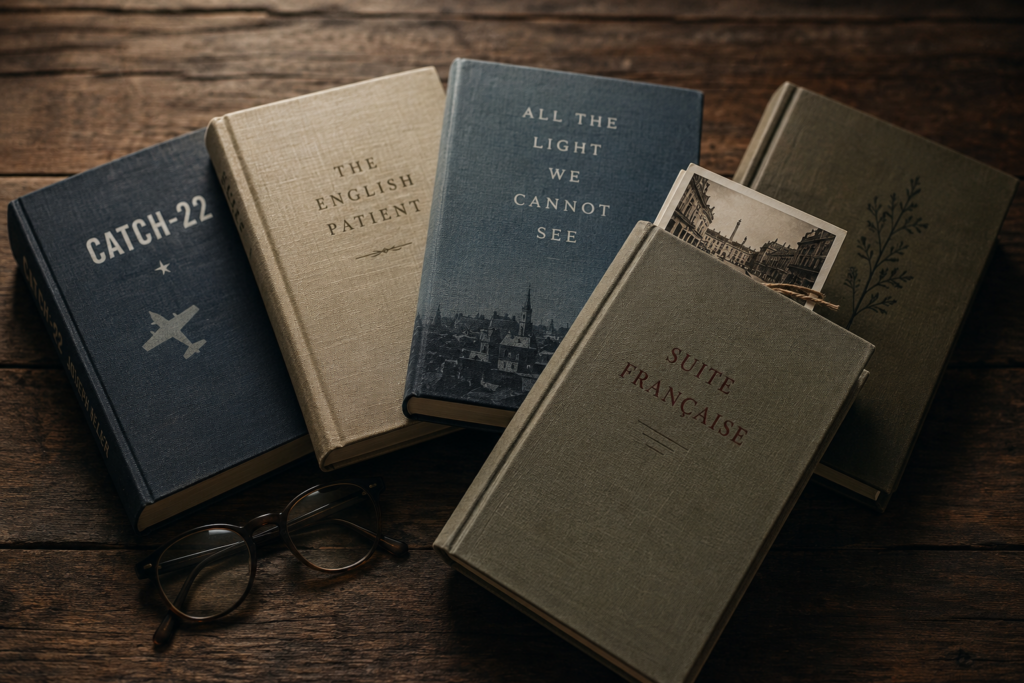
For many self-published authors, publishing a physical copy of their book is little more than an eBook afterthought. But a growing trend among readers who first discover books digitally is beginning to change that. Increasingly, readers are purchasing special edition paperback and hardcover copies of stories that had a meaningful emotional impact on them, not because they need another way to read the book, but because they want to own it. These keepsake editions often end up proudly displayed on bookshelves, serving as trophies that commemorate a memorable reading experience.
This week, Ginger explores this shift in reader purchasing habits and the opportunity it creates for authors willing to think beyond standard print-on-demand options. From understanding the psychology behind collectible books to exploring the design and production choices that can transform a paperback into a premium product, he outlines a variety of ways authors can create physical editions that readers are proud to display, share, and treasure. For authors willing to invest more effort into their print editions, there can be tremendous value in offering something special to the fans who connected most deeply with their story.
You’ve agonized over every sentence. You’ve rewritten the meet-cute four times, fine-tuned the slow burn, and made sure the happily ever after lands with the emotional weight it deserves. For most self-published authors, the book is the words—and understandably so.
The words are everything. Right?
But here’s something worth sitting with. Your book is also an object.
If you offer a physical copy of your book, even if it’s just Amazon’s default CreateSpace option, it can also have weight. Texture. A spine that catches the light and a cover that catches the eye. A book is a thing and for many of us (myself included) you don’t feel like a real author until you hold a physical copy of it in your hands.
And believe it or not, many readers feel the same way. In the romance community especially, the physical book has become something far more significant than just a mere reading format.
It’s become a trophy.
The Reader Who Buys Twice
Romance readers are, as a community, extraordinarily passionate. They talk about their reads obsessively on BookTok, curate their shelves like galleries, and hold up their favourite covers to the camera with the same reverence someone might show a rare vinyl record. And a growing, influential segment of this readership has developed a very specific purchasing habit that could work to your advantage, even if it doesn’t sound like it at first.
They don’t buy physical books first.
Romance readers read digitally. They listen via audiobook on the commute, on the treadmill, on the school run. And only then, when a truly special book absolutely destroys them in the best possible way, do they go back and buy a physical copy.
It sounds counterintuitive, but these readers don’t buy the paperback of the book that just rocked their world to read it again (though sometimes that too), but to own it.
To hold it. To put it on the shelf. For it to sit there like the stuffed head of a lion or tiger on a game hunter’s wall, as a record of the emotional experience it gave them.
Readers like these don’t buy books to read them. They’re building trophy cabinets. Every spine on their shelf is a bookmark in their emotional history as a reader. They’re not buying a product. They’re acquiring a keepsake.
And for self-published authors, this is a profound shift in how we should think about the physical edition of our books. Most of us are leaving an enormous amount of value on the table by not thinking about our books beyond just the mere words printed inside of them.
The Print Edition as an Art Object
Think about it this way:
Imagine if somebody read your book and loved it. I mean, REALLY loved it. It moved them. Resonated with them. It spoke to them as if it was written just for them (and let’s face it, we’ve all found a book that feels like that to us.)
If this reader decides that your book means so much to them that they’re going to buy a physical copy of your book as a collectible, after already having read or listened to it, what are they actually paying for?
They’re not paying for the story. They already have the story. They’re paying for the experience of owning this specific object.
And that means the physical edition of your book needs to deliver on a completely different set of promises than the book you merely wrote. It needs to be beautiful. It needs to feel special in the hand. It needs to look stunning on a shelf. And crucially, it needs to feel worth the premium they’re paying for a physical copy in an age when digital is cheaper and more convenient in almost every other way.
This is where traditional publishing has, for decades, had an enormous advantage. But it’s also where savvy self-published authors are now beginning to close the gap.
Think about the books that generate the most excitement when a special edition is announced. The ones with sprayed edges in gradient colours. The ones with foil-stamped covers that shimmer under a ring light. The ones with interior illustrations, ribbon bookmarks, and debossed titles that you can feel with your fingertip.
These are not accidents of design. They’re deliberate, considered choices made by authors (or teams of marketers) who understand that the physical book is a luxury product deserving luxury treatment.
There is no reason that self-published authors like us can’t make the same choices.
Beyond Print-on-Demand: What’s Actually Possible
Amazon’s Kindle Direct Publishing (KDP) print-on-demand service is a genuine miracle of convenience. It has democratized publishing in ways that would have seemed impossible twenty years ago. But it has real limitations when it comes to the physical details that elevate a book from a printed document to a beautiful object.
KDP offers matte or glossy covers, black-and-white or color interiors, and a limited range of trim sizes. That’s largely where its customization ends. There’s no foil. No embossing. No debossing. No spot UV. No sprayed or painted edges. No ribbon markers. No custom endpapers. No vellum inserts. No die-cut elements. And the paper stock options, while serviceable, are not the kind of thing that makes a reader catch their breath when they open the cover.
If you want to create a truly exceptional physical edition—the kind that gets held up to a camera and shown to eighty thousand followers—you need to look beyond print-on-demand entirely, or use it only as a baseline while offering premium editions through other channels.
Physical Details Worth Considering
When approaching the design of a premium print edition, here are the elements to consider working through with a specialist printer:
- Cover finish and effects: Foil stamping in gold, silver, rose gold, or holographic. Spot UV, which creates a glossy raised effect on selected areas. Soft-touch matte laminate, which gives a velvety feel that readers find irresistible. Embossing or debossing titles and design elements so they have tactile dimension.
- Edge treatments: Sprayed edges in a solid color that matches your cover palette. Gradient or ombre edge effects. Painted scene edges, where a miniature illustration wraps around the three exposed sides of the closed book. That’s a detail that stops people in their tracks.
- Interior paper: Cream or ivory stock rather than bright white, which is far easier on the eye for long reading sessions and looks far more luxurious. Higher GSM (weight) paper that feels substantial in the hand. Colored paper for specific sections or chapter openers.
- Interior design details: Chapter header illustrations. Decorative drop caps. Thematic flourishes at scene breaks. Colored ink for specific design elements (available with full-color interior printing). Map or illustration inserts on different paper stock.
- Binding and structure: Sewn signatures rather than perfect binding, which allows the book to open flat and last decades. Ribbon bookmarks attached to the spine. Colored headbands at the top and bottom of the spine.
- Endpapers: The pages glued to the inside of the front and back covers. Custom illustrated or patterned endpapers transform the moment of opening a book entirely.
- Extras: Printed author’s notes, fold-out playlists, or content pages. Numbered limited editions with a signed bookplate. Exclusive bonus content printed only in the physical edition.
Finding the Right Printer
Several printers specialize in short-to-medium run book production with premium options that KDP simply can’t match. IngramSpark offers more options than KDP and broader distribution reach, making it a strong starting point for authors ready to step up. But for truly bespoke production, companies like BookBaby, Bookmobile, and specialist short-run printers in the UK and US (such as Clays, Pureprint, or Sheridan) offer extensive finishing options and will work with you on custom specifications.
For authors wanting the absolute highest tier—signed, numbered, collector’s editions—working directly with a print broker or a letterpress and specialty bindery opens up possibilities that are genuinely extraordinary.
The unit cost of specialty printing is higher, but so is the price point these editions can command. Readers who buy a trophy book expect to pay for it.
Getting Your Beautiful Books to Readers
Creating a stunning physical edition is only half the challenge. The other half is distribution.
Selling on Amazon via Expanded Distribution: If you print through IngramSpark, your title becomes available for Amazon to order through their standard wholesale relationship, meaning it can still appear on Amazon’s product page alongside your KDP eBook without you managing fulfilment yourself. You won’t have the same profit margins as KDP, but you gain premium print quality.
Fulfilment by Amazon (FBA): For authors printing in bulk, FBA is a powerful option. Yes, there’s the massive initial outlay to buy dozens (hundreds, or even thousands) of copies of your book, but then you ship your inventory to Amazon’s warehouses, and they handle storage, packing, and shipping to customers who order through your Amazon listing. This means Prime eligibility, fast shipping, and Amazon’s trusted checkout, without you touching a single parcel. It works well for steady-selling titles where you can confidently order in volume.
Your own website via Shopify: If you know me, you know I’m all about direct sales, and Shopify is the platform of choice for many author-entrepreneurs, and for good reason. It gives you complete control over branding, pricing, and the customer experience, and you keep a far higher percentage of each sale than you would through any third-party marketplace. Signed editions, personalization options, bundle deals with merchandise, and limited-edition drops all work naturally within Shopify’s framework. You can also integrate a third-party fulfilment service (such as ShipBob or Printful for standard stock, or a dedicated book fulfilment house) so that orders ship automatically without you managing them yourself.
Direct sales at events: Author events, signing tours, and book festivals are natural places for selling premium physical editions. The ability to hold the object, feel the foil, and have it signed in person is an experience no digital format can replicate.
Thinking Like a Publisher (and a Designer)
The self-publishing revolution gave authors their freedom back. The next evolution of that freedom is the realization that you’re not just a writer. You’re a publisher, and publishers make deliberate, strategic decisions about every aspect of the physical object they put into the world.
Your story deserves beautiful words. But it also deserves a beautiful home for those words, something your readers will be proud to display, photograph, and keep for years. When a reader picks up your book from a shelf in ten years’ time, you want them to feel the same thing they felt the first time they read it.
That doesn’t happen by accident. It happens because you decided the bookshelf was worth designing for. If you want to truly feel like a “real” writer, this might be exactly the avenue to explore toward achieving that.
Share this blog
About the Author

Ginger is also known as Roland Hulme - a digital Don Draper with a Hemingway complex. Under a penname, he's sold 65,000+ copies of his romance novels, and reached more than 320,000 readers through Kindle Unlimited - using his background in marketing, advertising, and social media to reach an ever-expanding audience.







 English (US) ·