
Jensen Huang is one of the most remarkable figures in the history of technology. Born in Taiwan and sent to the United States as a child – accidentally enrolled in a school for troubled youth – he went on to co-found NVIDIA in a Denny's restaurant in 1993 and build it into the most valuable company on Earth. His story is one of obsessive focus, calculated bets, and a three-decade refusal to pivot away from a vision that almost everyone else thought was too niche to matter.
The books below cover his life from every angle – the childhood that shaped him, the early GPU wars, the pivot to AI that changed everything, and the leadership philosophy that made NVIDIA what it is today. Whether you want the definitive journalistic account or a sharper introduction to his vision, this list has something for every reader.
What Are The Best Jensen Huang Biographies?

The Thinking Machine: Jensen Huang, Nvidia, and the World's Most Coveted Microchip, by Stephen Witt (2025)
Through unprecedented access to Huang, his early investors, and the engineers who built the company, Stephen Witt reconstructs the full arc of NVIDIA's rise – from a three-person startup betting everything on a graphics chip nobody asked for, to the corporation that became the engine of the AI revolution. The book covers Huang's childhood in Taiwan, the boarding school years in the United States, and the singular focus that has defined every phase of his career.
Winner of the Financial Times and Schroders Business Book of the Year Award and named a Best Book of 2025 by The Economist, this is the definitive account of Jensen Huang and NVIDIA. Witt is a meticulous reporter and a gifted storyteller, and the result is the rare business biography that reads as compellingly as a thriller.

The Nvidia Way: Jensen Huang and the Making of a Tech Giant, by Tae Kim (2024)
Drawing on deep research and more than a hundred interviews, Wall Street journalist Tae Kim traces how Jensen Huang built NVIDIA from a chip startup into a company with a near-monopoly on the hardware powering modern AI. The book examines Huang's unconventional management philosophy – his insistence on radical transparency, his tolerance for discomfort, and the extreme ownership culture he built across the organization.
The Nvidia Way is particularly strong on the strategic decisions that set NVIDIA apart – the early bet on CUDA, the long years of slow adoption before AI made it pay off, and how Huang kept the company focused when rivals were pivoting in every direction. A sharp, well-sourced account that works as both a business history and a leadership primer.

Jensen Huang and the Rise of NVIDIA, by Shing Chou (2024)
Shing Chou's biography traces the full story of Jensen Huang's rise through personal anecdotes, reflections from those who worked alongside him, and a detailed chronicle of NVIDIA's defining milestones. The book captures the human side of the story – the immigrant background, the early struggles, and the personal values that shaped Huang's approach to building and leading a company.
More narrative and accessible than some of the more analytical accounts, this biography works well as an entry point to Huang's story. It pays particular attention to how NVIDIA's culture was built from the ground up and how Huang's leadership style evolved as the stakes grew higher.

Jensen Huang: The Visionary Leader of Nvidia, by Kyrie Petra (2024)
Kyrie Petra's portrait of Jensen Huang doesn't shy away from the harder chapters – the scandals, the near-collapses, and the moments when the company's survival was genuinely in question. The book follows Huang's journey from engineering roots to global tech icon, with particular focus on the decisions and crises that tested his conviction and ultimately defined NVIDIA's identity.
A useful companion to the more celebratory accounts, this biography offers a fuller picture of what it actually took to build the empire. For readers who want to understand not just the success but the pressure and cost behind it, this book fills in important context that others leave out.
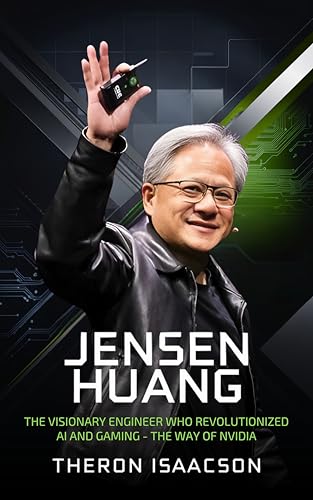
Jensen Huang Biography: The Visionary Engineer Who Revolutionized AI and Gaming, by Theron Isaacson (2025)
Theron Isaacson's biography focuses on Jensen Huang as an engineer turned innovator – the technical instincts that drove NVIDIA's early product decisions, the gaming roots that gave the company its first commercial foothold, and the AI pivot that transformed everything. The book makes a persuasive case that Huang's engineering background, not just his vision, is what made NVIDIA's bets so well-timed.
Subtitled “The Way of Nvidia,” this biography offers a clear-eyed look at how innovation, leadership, and long-term thinking intersect in Huang's career. A good choice for readers who want to understand the technical and strategic logic behind NVIDIA's decisions as much as the personal story.

Jensen Huang Biography: How a Humble Engineer Sparked the AI Revolution, by Gary M. Phelan (2025)
Gary M. Phelan's biography frames Jensen Huang's life around a central question: how did a humble engineer – not a salesman, not a venture capitalist, not a showman by nature – manage to spark one of the most consequential technology revolutions in modern history? The book traces Huang's path from immigrant student to CEO to one of the most influential figures in global tech, with an emphasis on the decisions that set NVIDIA apart from its peers.
Part of the Voices from Business, Sports, and Entertainment series, this is a concise and readable introduction to Huang's story and NVIDIA's global impact. A strong choice for readers new to the subject who want a solid grounding before diving into the longer, more detailed accounts.
Final thoughts on Jensen Huang biographies
Jensen Huang's story is one of the great long-game narratives in business history – three decades of focus on a technology that almost nobody believed in, until the rest of the world caught up. The books on this list approach that story from different angles: the journalist's deep access, the analyst's strategic lens, the researcher's rigor, and the storyteller's eye for the human details behind the headlines. Start with Witt or Kim for the most authoritative view, then use the others to fill in the context that makes the story complete.


My profession is online marketing and development (10+ years experience), check my latest mobile app called Upcoming or my Chrome extensions for ChatGPT. But my real passion is reading books both fiction and non-fiction. I have several favorite authors like James Redfield or Daniel Keyes. If I read a book I always want to find the best part of it, every book has its unique value.
















 English (US) ·