
April 22, 2026, 5:35 AM
AI has made contemporaneous self-reflexivity almost a necessary precondition for anyone who tries to write about it, now that, from behind the blinking cursor marking my every pause and hesitation in writing this sentence, a serpent waits to strike. I would prefer not to write sentences that track their own emergence from thought; I don’t like the kind of faddish writing that does this, this very thing that I am doing; but now that I feel I must actively preserve thinking as the medium in which language is generated, against Google’s satanic offer to “Help Me Write,” I also feel I should think about what it is I’m preserving, and who, exactly, the tempter is, and why they are so eager to “help me” surrender the pleasure of making the next associative or logical leap on my own, from hints and insinuations found inside a brain that can never fully know itself, or—sorry if this seems vain—tire of trying.
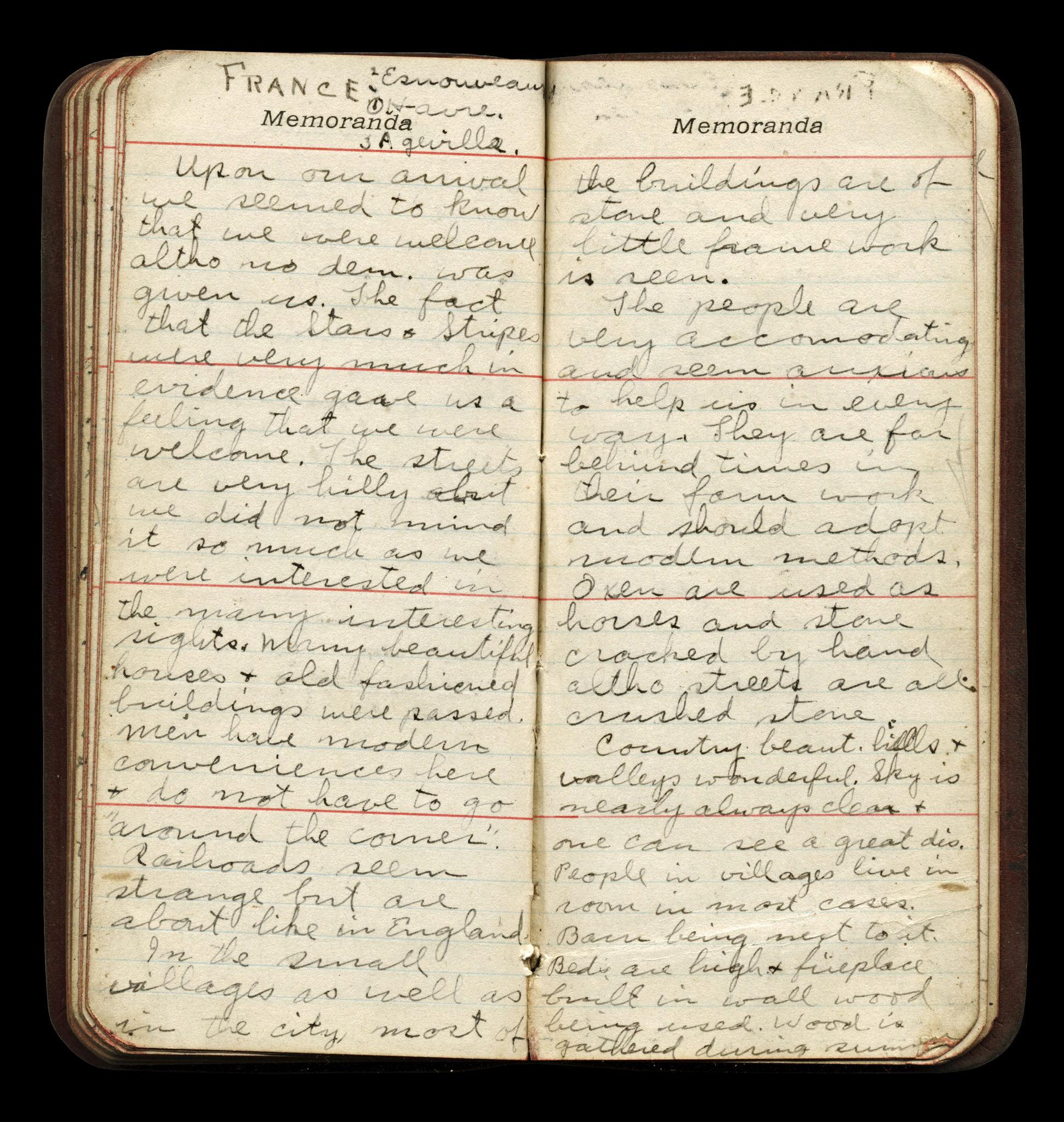
“Heavens—it is an hour later,” Elizabeth Bishop once wrote to Robert Lowell, in a letter: “I was called out to see a calf being born in the pasture beside the house.” It’s an hour or so later for me, too; I finished that first paragraph while lying on my back in bed, around 6:30 AM; walking my dog around the little pond up the hill from our house, I thought about where I wanted this piece of writing to go next. I was also checking in on a patch of wild irises, though they don’t flower until early May in New England, since today is the birthday of my friend, the late Louise Glück, who loved these flowers and wrote a great book called The Wild Iris. I had two ideas for this paragraph: before I decided on Bishop, I considered, instead, describing the little pools of saturated ink in the manuscript poems of Emily Dickinson, where she paused and rested her pen while gathering thought for her next astonishing turn. You can actually see the thinking, in those slightly darker splotches, and even estimate its duration—the darker the splotch, the longer the hesitation.
How is this going? I now ask myself. It’s certainly not what I intended to write, or at least how I intended to start. I actually find what I’m doing here pretty annoying. Was the mention of Louise gratuitous? Are my sentences, I don’t know, too gooey? Among the many humiliations of AI is that it seems to invite us to sentimentalize impulses and values that we would ordinarily interrogate, complicate, half accept on wary, provisional terms. My life is not all irises and calves and ponds; while writing this I also scrolled, googled, posted, and did other attention-attenuating online things that make up something like my new, now not-so-new, process of resisting before succumbing to distraction, a mental tug-of-war I never chose and that I do not find especially fun or good for my moods, and maybe not so good, either, for my writing.
9:00 AM
The temptation to make large claims for this moment that AI has encroached upon, whatever its insignia—the blinking cursor, the blank stare, the walk around the pond—is not new; it has a tradition. I will now stitch together a little homemade commonplace book of a few scattershot examples.
In “East Coker,” T.S. Eliot connected these moments of being on the brink of a breakthrough with larger personal and historical impasses:
So here I am, in the middle way, having had twenty years—
Twenty years largely wasted, the years of l’entre deux guerres—
Trying to use words, and every attempt
Is a wholly new start, and a different kind of failure
Because one has only learnt to get the better of words
For the thing one no longer has to say, or the way in which
One is no longer disposed to say it. And so each venture
Is a new beginning, a raid on the inarticulate,
With shabby equipment always deteriorating
In the general mess of imprecision of feeling,
Undisciplined squads of emotion. And what there is to conquer
By strength and submission, has already been discovered
Once or twice, or several times, by men whom one cannot hope
To emulate—but there is no competition—
There is only the fight to recover what has been lost
And found and lost again and again: and now, under conditions
That seem unpropitious.
These “attempts” are always thrilling, torturous, full of false starts and sudden advances, along with many little cliff-hangers within thought; for Eliot writing “l’entre deux guerres,” their metaphorical expression waited upon the passing of history, in the form of such things as ventures, squads, conquests, and “shabby equipment” that come straight from the battlefield; and it waited, too, for the settling longueurs of “the middle way,” where one’s body and mind and heart find themselves, to quote another genius, Joni Mitchell, “between the forceps and the stone.” But twenty or so years is not too long to wait for the inspiration to write lines like those quoted above.
How long should these impasses between words, ideas, formal breakthroughs last, anyway, in any one spell of writing? Bishop waited decades for small details, phrases, and rhythmic effects to materialize in a poem, “The Moose,” that she had otherwise completed and even talked up to her beloved aunt and the poem’s dedicatee, Grace Bulmer Bowers. Poor Grace Bulmer Bowers was eighty-seven when she finally saw the poem in print. Lowell celebrated his friend’s sublime patience in a sonnet:
Have you seen an inchworm crawl on a leaf,
cling to the very end, revolve in air,
feeling for something to reach to something?
Do
you still hang your words in air, ten years
unfinished, glued to your notice board, with gaps
or empties for the unimaginable phrase—
unerring Muse who makes the casual perfect?
Impasses, “empties,” “gaps”: Lowell might have been thinking of Dickinson’s own exploration of the problem:
To fill a Gap
Insert the Thing that caused it—
Block it up
With Other—and ‘twill yawn the more—
You cannot solder an Abyss
With Air.
Dickinson describes her own process here; no poet ever embodied better than she the ranging, nose-down, dog-onto-a-scent process of trying to “solder an Abyss” with the missing word, phrase, image, or formal turn, her own stumped pauses rendered by her signature dashes.
William James described this sort of moment in Principles of Psychology as an active gap:
Suppose we try to recall a forgotten name. The state of our consciousness is peculiar. There is a gap therein; but no mere gap. It is a gap that is intensely active. A sort of wraith of the name is in it, beckoning us in a given direction, making us at moments tingle with the sense of our closeness, and then letting us sink back without the longed-for term. If wrong names are proposed to us, this singularly definite gap acts immediately so as to negate them. They do not fit into its mould. And the gap of one word does not feel like the gap of another, all empty of content as both might seem necessarily to be when described as gaps.
James, like the other writers I have quoted, imagines that the only pressure to fill the gap is an internal one, generated by a person’s need to supply the right name. There’s no ticking clock or economic imperative; a person feels excruciated, and so seeks release. The process takes up time.
Noon
Much of this section was mentally drafted during an especially strenuous gap, while I was dragging my own body, nearly fifty-five years old and very much “in the middle way,” and my frantic young dog’s body for a long run on trails near our house. This time of year the run becomes more challenging, since Sadie must be kept on a leash, which she despises and fights with all her mettle. There’s no alternative; there are too many tasty cadavers, plus squirrel pelts coughed up by hawks in the trees after they’ve been picked clean of meat and tissue. Sadie gobbles these up and has diarrhea for days; my wife and I take turns staying up all night to take her out every few hours. The exercise itself I must do every single morning, no matter how bleak the day, or she will bother me while I try to get some work done: throw the ball, or get bitten. But the run is good because it tends to generate ideas, and if I like them enough it actually forces me to pick up my pace, lest I forget them before I can write them down. This morning I returned home having memorized the following list of words, some of which I plugged into the earlier parts of this essay, since as I move forward in the argument I also move back to make certain changes:
Insignia
Impasse
Pelts
Detonation
Models of time
The Book of Knowledge
The “argument” I’m trying to make comes to rest on the last three items on my list. We know that human writing happens in time; we know from our own experiences and the testimony of many, many great writers that writing time is variable, plastic, marked by long periods of foundering and sudden adrenalized bursts; it pools and flows; it gets stoppered and unstoppered. AI offers us a way out of these gaps, empties, impasses, “new starts,” and “different kinds of failures.” We’re being optimized entirely for one thing, to become more efficient consumers, by companies and other entities that have monetized our attention and sell it to other companies or entities for a profit.
If we think of all the great works of poetry and prose that dilate a day or an instant into an eon, or compress whole eras into a nutshell, or run time backwards, or find some position where time can be spatialized and we can see, all at once, as Yeats writes, “what is past, or passing, or to come,” we arrive at one of the appropriate emotions for this moment, which is anger. (Another emotion, grief, is waiting close by.) We now have accepted a brutal, capitalist model of time that represents passing moments as close-packed detonations of panic. A person either speeds up to stay ahead of these powerful blasts, or risks losing everything. The reading and writing of literature cannot keep up, so it is jettisoned. As a result, we lose the craving for it, and even the capacity to enjoy it. These losses, for those of us who earn our livings as teachers, are especially evident in the young, and probably irreversible. The institutions entrusted to keep time have themselves sped up.
Intelligence, artificial or otherwise, might no longer be the main point: maybe instead we should think about knowledge. My layman’s sense of AI is that it “thinks” using whatever the Internet “knows”—much of which, of course, is wrong. But even if this knowledge base was perfectable, maybe especially if it was, we’d end up as humans knowing very little. The “knowing” has been outsourced to a machine; we just retrieve the bits we want and leave the rest behind. Whatever that is, it isn’t knowledge, and one of the truly astonishing things about this moment is the fact that so many people are perfectly happy to know so little. Again Bishop comes to mind, from “At the Fishhouses”:
It is like what we imagine knowledge to be:
dark, salt, clear, moving, utterly free,
drawn from the cold hard mouth
of the world, derived from the rocky breasts
forever, flowing and drawn, and since
our knowledge is historical, flowing, and flown.
2:00 PM
I have an edition of a children’s encyclopedia published around the turn of the twentieth century called The Book of Knowledge. I came to buy it after I had the good fortune of getting to know the poet John Ashbery, who had owned this set as a child and credited it in large part for his discovery of poetry. The book is delightful, even awe inspiring, with its full-page illustrations of the pyramids, the human brain, the nervous system, the constellations, historical scenes of Napoleon and Attila the Hun, as well as riddles, games, activities, and, crucially, mixed in with all of these other ways of occupying time, poems. The most important feature of the encyclopedia is that it cannot be effectively searched; it’s not a proto-database like the Encyclopedia Britannica, but an immersive stream, like Bishop’s cataract of knowledge, at once “flowing and drawn.” It is not arranged alphabetically or by theme, and there is no index. It is arranged to permit the child to make discoveries, moving from an entry called “Our Wonderful Glands” to one called “Things to Make from an Elder Branch.” Reading it, we realize that “knowledge” must involve discovery, and it always carries a fringe of activity drawing the attention to some new, beautiful, or strange thing.
The model of time proposed by The Book of Knowledge is something like a typical day out of Ashbery’s old-fashioned childhood: pick some apples, read some poems, laze around, spot a warbler. It is still possible for very young children to discover the pleasures of such an afternoon, but the idea that a college student or grown-up would sit with any book for an afternoon now strikes the culture at large as foolish if not morally condemnable. Even some writers I admire praise the time-saving aspects of AI, which can deliver in an instant what it once might have taken months to ascertain, or eliminate peripheral demands that compete with the hard, time-consuming work of writing lines and sentences, and that fall especially heavily on parents, working people, people with disabilities, and others whose experience of time was never going to look much like little JA’s afternoons in his grandfather’s study.
But individuals are powerless to stop the cultural clock; it took Covid to do that, and for a brief moment it appeared we’d all spend the rest of our lives reading Tolstoy together. In fact, corporate capitalism and big tech were standing at the ready to reclaim their time, and since the lockdowns we’ve seen not a gradual erosion but instead an avalanche of losses, including but not limited to the elimination of the book review section of The Washington Post, the loss of serious coverage of the arts at many major papers, the closing of movie theaters, and, most tragically, the cutting of faculty positions and entire humanities departments by administrators who are “meeting,” rather than shaping, student demand, even as their own salaries have increased.
3:00 PM
If anyone is in a position to slow these losses, I suppose it would be me: I chair the English department at Wellesley College, once a bastion of the humanities, now a STEM-focused institution that functions in many ways as a satellite of MIT. Our humanities departments must contend, often jealously, for the same small corps of students willing to major in English or classics or religion and forgo the certainty of a lucrative first job. Most students are driven by an entirely material logic into fields they loathe, like computer science or economics, where, by all reports, the threat of AI is only more lethal. Such “fields” now end in sheer cliffs. But our price tag of $100,000 or so per year means that all but the very richest families expect their children to graduate with an immediately marketable degree. Even poor students who enjoy a full ride and generous career support pay the cost of sitting out employment for four years while they study for professional careers. For all students, even here, every single moment of every day is pressurized to produce a tangible outcome.
The erosion of human knowledge can’t be stopped even at a liberal arts college, because the conditions within time at a place like Wellesley mirror and actually intensify the conditions outside our campus. All of this means that students use technology to optimize the sliver of time every week they have set aside for reading and writing, and many use AI to complete their written assignments, and even their creative work in poetry and prose. There is no point in pretending otherwise, and in the spirit more of cri de coeur than policy wisdom, a few years ago I drafted the following statement to distribute to my classes:
AI Statement
I forbid students’ use of all forms of Artificial Intelligence, including Large Language Models (LLM), in my courses, unless I announce otherwise.
I believe that writing is the most astonishing of all human technologies. English professors teach the history of human innovations in this infinitely rich and adaptable technology. These innovations bear names like “The Canterbury Tales,” “Hamlet,” “To Autumn,” “Middlemarch,” “Ulysses,” “The Moose,” “Giovanni’s Room,” and “Beloved.” These innovators who have made and remade our language over the centuries are known as “poets,” “playwrights,” “novelists,” “critics,” “translators,” and “essayists.” I try to teach what is of value in their remarkable linguistic inventions, or others of equal value. I also try to teach students to detect in all texts the unique traces of the human mind.
My love for human language leads me to strongly oppose all attempts by machines to impersonate it. Furthermore, I am dismayed that some colleges and institutions have normalized AI use for fields whose reason for being is to explore and promote the value of original human expression.
As a scholar and teacher of English, I believe I am uniquely equipped to detect impersonation of human writing by LLM and other forms of AI. And as a publishing writer, I am also aware that my work is being harvested against my will and repackaged by the major AI companies. I oppose the ways our unique human voices are being exploited for the concentrated profits of a few companies and executives.
I invite you to see a clear moral value in writing done by humans, as I do. I am committed to regular review of student writing to detect the use of AI and I will refer all violations of this policy to the college’s Honor Code Council.
In the English Department, we believe “Writing is for Humans.”
The statement got a lot of fanfare, and even, somewhat ironically, went viral on social media. But it is now outdated. The new version of the statement ends this way:
Even as a scholar and teacher of English, I do not believe that I am uniquely equipped to detect impersonation of human writing by LLM and other forms of AI. As a publishing writer, it seems I am mostly powerless to keep my work from being harvested against my will and repackaged by the major AI companies. I oppose the ways our unique human voices are being exploited for the concentrated profits of a few companies and executives.
I invite you to see a clear moral value in writing done by humans, as I do. If you do share this belief, please join my class and hold yourself to your own high and admirable standard. If you do not, please do not enroll.
In the English Department, we believe “Writing is for Humans.”
The difference between those two statements indicates a radical shift in my thinking in just two years. English departments and other communities of writers and readers must become intentional communities, like communes or religious orders, where a strict code of conduct is expected for inclusion in good standing. Liberal arts colleges should support these little hives of readers and writers and hold them up as models for how to exist as a human in time. Only in such time-taking communities will the blinking cursor again be seen as an invitation to “solder the Abyss” with original and provocative thinking.
3:25 PM
This essay was begun and completed as an experiment in the improvement upon a single day, April 22, 2026, Louise Glück’s birthday. It was written in part as an elegy for her, in part as an embodiment of the old idea that time can be shaped by strenuous action of the imagination within it. It takes as its model for attention The Book of Knowledge, and it hopes to scramble, by its intentionally errant path, the predictive technologies used to generate language by AI.
It ends with a quotation from Glück’s essay “Disruption, Hesitation, Silence,” in which she discusses some works by Hans Holbein:
What these unfinished drawings generated was a vivid sense of Holbein at work, at the sitting; to see them was to have a sense of being back in time, back in the middle of something. Certain works of art become artifacts. By works of art, I mean works in any medium. And certain works of art do not. It seems to me that what is wanted, in art, is to harness the power of the unfinished. All earthly experience is partial. Not simply because it is subjective, but because that which we do not know, of the universe, of mortality, is so much more vast than that which we do know. What is unfinished or has been destroyed participates in these mysteries. The problem is to make a whole that does not forfeit this power.






 English (US) ·