
Every few years, someone asks me: if you could only read a thousand books in your lifetime, which ones would they be? I used to dodge the question. Now I have an answer.
This list spans every genre worth reading
- literary fiction,
- science fiction,
- fantasy,
- romance,
- horror,
- thriller,
- mystery,
- historical fiction,
- biography,
- memoir,
- self-help,
- business,
- sport,
- history,
- science,
- and philosophy.
The only rule: the book had to earn its place, whether through cultural impact, sales, critical acclaim, or the simple fact that it refuses to leave you alone after the last page. For series, I've listed only the first book, because a great first book is a door, and I'll let you decide how far in you walk.
The following list runs in reverse chronological order, from the most recently published to the oldest, because great books keep being written, and the newest ones deserve to be seen first.
Intermezzo, by Sally Rooney (2024)
Two brothers, a chess prodigy and a grieving lawyer, navigate love, loss, and complicated family dynamics in the aftermath of their father's death. Rooney returns with a novel that is both intimate and expansive, capturing the messy interior lives of people trying to connect across difference.
I think this is Rooney's most emotionally mature work yet — less cool and detached than her earlier novels, more willing to sit with pain and tenderness at the same time. A quiet masterpiece that grows on you long after you've finished it.

James, by Percival Everett (2024)
The Pulitzer Prize–winning retelling of Adventures of Huckleberry Finn from the perspective of Jim — the enslaved man who, in Twain's original, was always on the margins. Everett reimagines Jim as James, a man of secret intelligence and deep interiority who observes the white world with devastating clarity.
This is one of the most important American novels in years. It exposes the violence beneath Twain's comedy while paying homage to a classic, and it does so with a prose style that is both playful and pitiless. A must-read.
The Women, by Kristin Hannah (2024)
Frances McGrath follows her brother to Vietnam in 1965 as an Army nurse, and returns home to an America that doesn't want to acknowledge what she sacrificed. Hannah brings her signature emotional power to the story of women veterans who have been all but erased from the official narrative of the war.
This is Hannah at her most ambitious. The research is meticulous, the characters are vivid, and the anger is earned. It will make you cry — but more importantly, it will make you pay attention to stories you might have missed.
All Fours, by Miranda July (2024)
A woman in her mid-forties sets off on a road trip from Los Angeles but only makes it a few miles before checking into a motel, upending the life she thought she wanted. July's novel is about desire, aging, motherhood, and the particular madness of perimenopause — subjects that are rarely treated with this kind of raw honesty and dark comedy.
Divisive, strange, and genuinely unlike anything else published this year, All Fours is the kind of novel you'll either love fiercely or find completely baffling — and either reaction is worth having. I found myself thinking about it for weeks.
The God of the Woods, by Liz Moore (2024)
At a summer camp in the Adirondacks in 1975, a teenage girl from a prominent family goes missing — and the disappearance echoes a similar event from thirteen years earlier. Moore weaves together multiple timelines, perspectives, and secrets in a literary thriller that builds to a genuinely shocking conclusion.
This is the kind of book that makes you stay up past midnight just to find out what happened. Moore handles both the plot mechanics and the emotional depth with equal skill, and the Adirondack setting is rendered so vividly it becomes a character in itself.

Orbital, by Samantha Harvey (2024)
Six astronauts orbit Earth aboard the International Space Station over the course of one day, watching sixteen sunrises, worrying about the planet below, and confronting the solitude of being suspended in space. The 2024 Booker Prize winner is a short, luminous novel that reads like a meditation on what it means to be human when you're as far from humanity as it's possible to go.
Harvey's prose is extraordinary — spare and beautiful and precise in a way that makes the enormity of space feel both terrifying and tender. Don't be put off by the premise: this is not a novel about science. It's a novel about longing.
The Anxious Generation, by Jonathan Haidt (2024)
Haidt argues that the rewiring of childhood through smartphones and social media since around 2012 has caused a global mental health crisis among adolescents — and he backs the argument with a mountain of evidence. This is an urgent, readable, and often alarming book for any parent, teacher, or policymaker trying to understand what is happening to the next generation.
Whether or not you agree with every conclusion, the data Haidt marshals is genuinely disturbing and hard to dismiss. One of the most important non-fiction books of the decade — the kind that actually has the potential to change public policy.
Slow Productivity, by Cal Newport (2024)
Newport challenges the culture of relentless busyness and argues that true productivity looks more like the working lives of Darwin, Newton, or Jane Austen — fewer things done at a deeper level, over longer stretches of time. A manifesto against pseudo-productivity and the tyranny of the inbox.
If you've ever finished a packed day of meetings and emails feeling like you accomplished nothing real, this book will feel like a revelation. Newport writes with clarity and conviction, and his historical examples are both persuasive and genuinely interesting.
Eruption, by Michael Crichton and James Patterson (2024)
Left unfinished at Crichton's death, this thriller set around a catastrophic volcanic eruption in Hawaii was completed by James Patterson. The story follows a military officer racing to prevent a geopolitical disaster while Kilauea threatens to bury everything in its path.
This is exactly what you'd expect from these two authors — fast, gripping, scientifically grounded entertainment that makes you briefly panic about volcanoes. It's not literature, and it doesn't try to be. Sometimes that's exactly what you need.
Here One Moment, by Liane Moriarty (2024)
On a delayed flight from Hobart to Sydney, an elderly woman begins making her way down the aisle, stopping at passengers one by one and quietly informing them of the age and cause of their eventual death. The passengers scattered to their lives after landing — but the woman's predictions keep coming true.
Moriarty is one of the best storytellers working today, and this novel showcases everything she does well: sharp observation, dark comedy, and an emotional gut punch you don't see coming. I couldn't put it down.
Wind and Truth, by Brandon Sanderson (2024)
The fifth and final entry in the Stormlight Archive's first arc brings together years of epic worldbuilding in a book so long it comes with its own glossary, timeline, and reasons to take a week off work. Sanderson delivers on nearly every promise he has made across thousands of pages.
For fans of the series, this is essential. For newcomers, start with The Way of Kings and work your way here — the payoff is worth every page. Sanderson's plotting is meticulous and his magic systems are unlike anything else in fantasy fiction. Note: this is the conclusion of a 5-book arc — add the series opener to your list.
The Familiar, by Leigh Bardugo (2024)
Set in the Spanish Inquisition's shadow, a woman with a dangerous secret survives by making herself invisible — until the queen of Spain notices her, and everything changes. Bardugo writes the kind of historical fantasy that makes you forget you're reading fantasy: the world is so fully realised, the stakes so immediate and human.
A lush, propulsive standalone novel from the author of the Six of Crows series. This is Bardugo operating at full power — intricate plotting, vivid prose, and a heroine you'll root for with everything you have.
Fourth Wing, by Rebecca Yarros (2023)
Violet Sorrengail was supposed to enter the Scribes Quadrant. Instead, her mother forces her into the Riders Quadrant — where students bond with war dragons or die trying. The first book in the Empyrean series is a fantasy romance that became one of the biggest publishing phenomena in years.
Yes, there's a love interest who is infuriating in exactly the right way. Yes, the dragons are magnificent. But what makes the book work is its propulsive plotting — Yarros keeps you turning pages at two in the morning even though you know you'll regret it. Addictive doesn't cover it.
Hello Beautiful, by Ann Napolitano (2023)
A multigenerational saga following a Chicago family across more than a century, from the Great Migration to the present day. The 2023 Pulitzer Prize winner traces the wounds and gifts that pass between parents and children, grandparents and grandchildren, across time and distance.
Napolitano writes about family with a ferocity and tenderness that few novelists can match. This is a big, generous novel — the kind that makes you want to call your mother, or your grandmother, or forgive someone you've been angry at for years.
The Covenant of Water, by Abraham Verghese (2023)
Spanning more than a century and three generations of a South Indian family, this epic novel follows a condition that causes some family members to die near water — and the doctor who eventually uncovers what is happening. Verghese brings the same meticulous, reverent attention to his characters' bodies and souls as a physician does to a patient.
At nearly 800 pages, this is a commitment — and worth every page. The Kerala setting is rendered with extraordinary sensory richness, and the love Verghese has for these characters comes through on every line. One of the most transporting novels I've ever read.

Happy Place, by Emily Henry (2023)
Harriet and Wyn have secretly broken up, but haven't told their friend group — and now they're all headed to the beloved lake house for their annual vacation. The fake-couple trope done with Henry's characteristic wit, emotional intelligence, and deep affection for her characters.
Henry is the best writer working in contemporary romance, and this might be her most emotionally layered novel yet. The friendship dynamics are as compelling as the central romance, and the ending left me genuinely moved. Perfect for a weekend when you want to feel everything.
Yellowface, by R.F. Kuang (2023)
June Hayward watches her more successful author friend Athena Liu die in a freak accident — and steals Athena's unpublished manuscript, passes it off as her own, and watches her career explode. A savage satire of publishing, race, cultural appropriation, and the way the internet can destroy and create careers simultaneously.
Kuang writes with a scalpel. This novel will make you deeply uncomfortable in the best possible way, forcing you to examine your own assumptions about voice, authenticity, and who gets to tell which stories. Unputdownable and morally complex in equal measure.

The Wager, by David Grann (2023)
In 1741, a British warship called the Wager wrecked off the coast of Patagonia, stranding its crew on a desolate island. What followed was a story of survival, mutiny, murder, and the lies people tell when they return from the edge of the world. Grann reconstructs the incident from original documents with the narrative pace of a novel.
Grann is one of the great narrative non-fiction writers working today, and this is his most gripping book since Killers of the Flower Moon. The story is so extraordinary that it feels invented — but it isn't, and that makes every page more terrifying.
The Creative Act: A Way of Being, by Rick Rubin (2023)
The legendary music producer shares his philosophy of creativity in 78 short chapters that read more like meditation prompts than conventional creative advice. Rubin draws on a career spent working with Johnny Cash, Jay-Z, Adele, and many others to offer a view of art-making that is both practical and deeply spiritual.
I think this is the most useful book about creativity published in a decade. It doesn't tell you how to write a hit song or build an app — it tries to help you understand how to be the kind of person who can receive and express ideas fully. Worth reading slowly, a chapter at a time.

Same as Ever, by Morgan Housel (2023)
The author of The Psychology of Money turns his attention to the things in human behavior that never change — how we respond to risk, why we're overconfident, how stories shape our decisions — and uses them to explain almost everything about finance, history, and life. Twenty-three short essays, each one illuminating something you thought you already understood.
Housel has a rare gift: he makes complex ideas feel obvious in hindsight, and then you realize they weren't obvious at all. This is the kind of book you buy for everyone you know and then forget to stop talking about. Genuinely one of the best business/finance books in years.

Outlive: The Science and Art of Longevity, by Peter Attia (2023)
A physician and longevity researcher makes the case that modern medicine is almost entirely focused on treating disease after it develops rather than preventing it — and shows what you can actually do to live not just longer, but better. Dense with research, it covers exercise, sleep, nutrition, and mental health with equal rigor.
This book changed how I think about aging. Whether you're 25 or 65, the argument Attia makes — that the decisions you make now determine your health at 80 — is both motivating and sobering. One of the most practically useful non-fiction books of the decade.
Spare, by Prince Harry, Duke of Sussex (2023)
The Duke of Sussex offers his account of royal life, family ruptures, military service in Afghanistan, and the decision to step back from the institution of the monarchy. Whatever you think of Harry, this is a first-hand account of one of the most scrutinised family dramas of modern times — and it is far more candid than any previous royal memoir.
The parts about his mother's death and his own mental health struggles are genuinely affecting. The palace intrigue is compulsive reading. You may roll your eyes at certain passages, but you won't be able to stop reading — and that's the point of memoir, isn't it?
Holly, by Stephen King (2023)
Private investigator Holly Gibney returns to investigate the disappearance of a young woman — and discovers that a couple of distinguished retired professors are hiding a monstrous secret. King delivers one of his most precisely plotted and genuinely disturbing novels in years.
Holly has been one of King's most beloved supporting characters since Mr. Mercedes, and she more than carries a novel on her own. This is King in full command of his gifts — terrifying, funny, and morally serious all at once. A great entry point if you haven't met Holly before.
Starter Villain, by John Scalzi (2023)
Charlie Fitzer is a down-on-his-luck substitute teacher who inherits his uncle's secret supervillain empire — complete with a volcano lair, a crew of talking dolphins with strong union opinions, and enemies who want him dead. Scalzi has never been funnier or more inventive.
This is the kind of book you read in one sitting with a huge grin on your face. It's smart, it's fast, and it makes surprisingly good points about capitalism and labour rights while also featuring cats who are intelligence assets. Absolutely delightful.

Tomorrow, and Tomorrow, and Tomorrow, by Gabrielle Zevin (2022)
Sam and Sadie meet as children in a hospital and bond over video games. Their friendship, creative partnership, and complicated love for each other spans thirty years and the entire arc of the video game industry from the early 1990s to the 2020s. This is a novel about art, collaboration, ambition, and the things we create to survive.
Zevin writes about making things — games, relationships, versions of yourself — with a depth of feeling that is rare in contemporary fiction. I think this is one of the best novels published in the past decade. It is a love story in every sense of the word, and it will break your heart more than once.

Lessons in Chemistry, by Bonnie Garmus (2022)
Elizabeth Zott is a brilliant chemist in early 1960s California who, through a series of improbable events, ends up hosting a cooking show — which she treats as a chemistry lesson and her audience treats as a revelation. A novel about a woman refusing to be smaller than she is, in a time that demanded exactly that.
This book is funny, furious, and deeply satisfying. Garmus clearly had a wonderful time writing it, and that joy is infectious. Zott is one of the great feminist heroines of recent fiction — not because she gives speeches about equality, but because she simply refuses to pretend she isn't the smartest person in the room.
Demon Copperhead, by Barbara Kingsolver (2022)
A retelling of David Copperfield set in the Appalachian opioid crisis, following a red-haired boy born to a teenage mother in a trailer in southwest Virginia. The 2023 Pulitzer Prize winner is a devastating, compassionate portrait of poverty, addiction, and the systems that grind people down.
Kingsolver writes with enormous moral seriousness and enormous tenderness. The Dickens parallels are ingenious — the novel works perfectly even if you've never read Copperfield — and the anger at pharmaceutical companies and government negligence is entirely earned. A masterpiece.
Trust, by Hernan Diaz (2022)
Four manuscripts, each offering a different account of a powerful New York financier and his mysterious wife in the early twentieth century. Each version of the story contradicts the last, and by the time you finish, you are not sure what is true — only who has the power to decide. The 2023 Pulitzer Prize winner for fiction.
This is formal brilliance in service of deep ideas about wealth, narrative, and who gets to write history. Diaz makes you work, but the reward is a novel that changes how you think about every story you've ever been told. I've recommended this to a dozen people and every one of them has been transfixed.

Babel, by R.F. Kuang (2022)
In an alternate 1830s Oxford, the Royal Institute of Translation uses silver bars engraved with words to power the British Empire's dominance — and a young Chinese scholar brought to England as a child must decide whether to serve the empire or betray everything he has been taught to value. A dark academia fantasy about colonialism, language, and complicity.
Kuang is one of the most ambitious young writers in speculative fiction. Babel is fiercely political and deeply emotional, and it uses fantasy as a lens to examine real history with devastating clarity. The footnotes alone are worth reading — they are an education in themselves.
Sea of Tranquility, by Emily St. John Mandel (2022)
Across several centuries — from British Columbia in 1912 to a moon colony in 2401 — different characters encounter the same inexplicable anomaly: a moment of forest darkness accompanied by violin music and the smell of wood smoke. Mandel weaves together time travel, pandemic, and art in a novel of dizzying elegance.
If Station Eleven felt prescient about pandemic, Sea of Tranquility feels prescient about everything else. It is short, almost perfectly constructed, and does more in 260 pages than most novels do in 600. The ending will stay with you.

Book Lovers, by Emily Henry (2022)
Nora Stephens is a ruthlessly efficient literary agent who keeps running into the same brooding editor in the small North Carolina town where she's spending the summer with her sister. A romance that lovingly deconstructs romance-novel tropes while being genuinely romantic at the same time.
Henry writes characters who read books and talk about books and think about books, which is catnip if you're the kind of person reading this list. Smart, funny, warm, and perfectly plotted — one of her best.
The Atlas Six, by Olivie Blake (2022)
Six magicians are recruited by a secret society that has preserved the world's most dangerous knowledge for thousands of years — but only five of them will be admitted. Over the course of a year, they study together, fall apart together, and try to eliminate each other without getting caught. Dark academia with fangs.
Blake originally self-published this, and the internet-fuelled word of mouth that got it a traditional publishing deal is entirely deserved. The characters are vivid, morally ambiguous, and compulsively readable. A brilliant premise executed with real style.
The Maid, by Nita Prose (2022)
Molly Gray is a hotel maid who experiences the world differently from most people — she understands a perfectly made bed better than she understands social cues. When she discovers a dead guest in a suite, she becomes the prime suspect and must navigate a mystery that is far bigger than one hotel room.
This is one of the most charming and quietly subversive mysteries in recent years. Prose handles Molly's neurodivergence with dignity and care, and the mystery itself is cleverly constructed. A comforting read with real emotional depth underneath.

The Light We Carry, by Michelle Obama (2022)
The former First Lady offers a collection of personal reflections on navigating uncertainty, building meaningful relationships, and finding stability when the world feels chaotic. Drawing on her own experiences — as a mother, a wife, a Black woman in predominantly white spaces — she provides tools for handling life's inevitable challenges.
Obama writes with warmth and directness that feels genuinely personal rather than polished-for-public-consumption. This is a book about how to hold yourself together when things are hard — practical, honest, and inspiring without being saccharine.
The Inheritance Games, by Jennifer Lynn Barnes (2022)
Avery Grambs, a teenager with no connection to the Hawthorne family, is inexplicably left the majority of a billionaire's estate — and moves into Hawthorne House to find out why. The four Hawthorne brothers are equally determined to solve the mystery, in this addictive YA puzzle-box thriller.
Barnes has constructed a truly ingenious mystery with layered clues and a genuinely surprising payoff. The romantic tension is expertly managed and the puzzle elements are satisfying without being show-offy. The kind of YA thriller that adults read and pretend is for their kids.
Project Hail Mary, by Andy Weir (2021)
Ryland Grace wakes up alone on a spacecraft with no memory of who he is or why he's there. He slowly pieces together the truth: he is the sole conscious crew member on a desperate last-chance mission to save the Earth from extinction. What he discovers when he gets where he's going is something he never could have prepared for.
I think this is the best science fiction novel of the decade, and I don't say that lightly. The friendship at the heart of the book is one of the most moving relationships in recent fiction — and I won't say more than that because discovering it for yourself is part of the joy. Don't read reviews. Just read the book.
The Four Winds, by Kristin Hannah (2021)
Texas, 1934. Elsa Martinelli, a woman who has spent her life being told she is not enough, must choose between the land she loves and the future her children deserve during the dust bowl and the Great Depression. A sweeping, heartbreaking historical novel about resilience and sacrifice.
Hannah researched the Dust Bowl migration exhaustively, and the historical authenticity shows. This is a big, unsparing novel — it will hurt you the way great historical fiction always does, by making you feel the weight of a past that is too easily forgotten.
Malibu Rising, by Taylor Jenkins Reid (2021)
Four famous siblings — children of a legendary 1960s pop star — host their annual end-of-summer party in Malibu in 1983. Over the course of one night, their family's past and present collide, and everything burns. Literally. Reid operates across multiple timelines with characteristic confidence.
Reid is one of the most purely readable novelists writing today. She makes enormous ambition look effortless, and her eye for the mythology of fame and family is razor-sharp. Perfect for a long afternoon when you want a story that moves like a summer wave.
People We Meet on Vacation, by Emily Henry (2021)
Alex and Poppy have been best friends for years, taking one trip together each summer despite being total opposites — until two years ago, when something happened that ended everything. Told in alternating timelines, this is a slow-burn romance about the people who know us best and the risks of wanting more.
This is the Emily Henry novel that started the Emily Henry phenomenon, and it deserves every reader it found. The friendship-to-romance arc is beautifully constructed, and the locations — all those different summers, all those different places — make the book feel like a love letter to travel itself.
The Last Thing He Told Me, by Laura Dave (2021)
Before her husband Owen disappears, he leaves Hannah one note: “Protect her.” Her stepdaughter Bailey is the last person Hannah thought she'd be running with — but together they must unravel the truth about who Owen really was before whoever is chasing him catches up with them.
This is a thriller that works on every level — the mystery is genuinely surprising, the family dynamics are emotionally real, and Dave keeps the pace mercilessly tight. Julia Roberts bought the rights for good reason. One of the most gripping thrillers in recent memory.

Beautiful World, Where Are You, by Sally Rooney (2021)
Two writers and their respective love interests navigate desire, friendship, political anxiety, and the strange alienation of success in contemporary Ireland. Rooney's third novel is the most essayistic of her books — long emails between friends serve as a vehicle for her to think aloud about meaning and purpose in a broken world.
Some readers found this less compelling than Normal People — I found it more interesting. The intellectual restlessness of the characters feels true to a certain kind of millennial anxiety, and the love story is moving in ways that sneak up on you quietly. Rooney is one of the defining voices of her generation.

The Love Hypothesis, by Ali Hazelwood (2021)
A third-year PhD student in biology fake-dates a notoriously difficult professor to convince her best friend that she's moved on — and what starts as a calculated arrangement starts to feel extremely real. STEM academia, slow burn, and a heroine who is both brilliant and endearingly anxious.
Hazelwood writes romances that feel genuinely smart about science and academia, and the chemistry (chemical and romantic) between her leads is off the charts. This was a self-published internet sensation before its traditional release, and the readership it built proves that readers know quality when they find it.
Cloud Cuckoo Land, by Anthony Doerr (2021)
Five characters across three timelines — Constantinople in 1453, an Idaho library in the present day, and a generation ship in the distant future — are all connected by an ancient Greek manuscript that changes each of their lives. A love letter to books and the act of reading, from the author of All the Light We Cannot See.
Doerr writes sentences that make you stop and read them again. The structural ambition here is extraordinary — weaving together so many timelines without losing the reader — and the emotional payoff, when the connections finally click into place, is genuinely beautiful. A magnificent novel.
Harlem Shuffle, by Colson Whitehead (2021)
Ray Carney runs a respectable furniture store in Harlem in the 1960s, trying to keep one foot on each side of the law. When his cousin pulls him into a heist at the Hotel Theresa, Carney discovers that respectability is harder to maintain than he thought. A novel of style, crime, and the complicated geography of Black America.
Whitehead has won two Pulitzers and earned every one of them — but this lighter, more playful novel shows a different range. It reads like a jazz record: cool, rhythmic, and dangerous underneath the surface. A great entry point to his work if you haven't read him before.

The Midnight Library, by Matt Haig (2020)
Nora Seed finds herself in a library between life and death, where every book represents a different version of the life she could have lived if she'd made different choices. She can step into any of them — but which life is worth living? A novel about regret, possibility, and the radical act of deciding you want to exist.
This book has found its way to millions of people at exactly the moment they needed it, and that is not an accident. Haig writes about depression and suicidal ideation with both honesty and hope, and the philosophical conceit — infinite alternate lives — is handled with genuine elegance. One of the most life-affirming novels of recent years.
The Invisible Life of Addie LaRue, by V.E. Schwab (2020)
In 1714, a young French woman makes a desperate bargain with a dark god and is granted immortality — but cursed to be forgotten by everyone she meets. She lives for 300 years, invisible to history, until she meets a man in a bookshop who remembers her. A sweeping fantasy about art, memory, and what it means to leave a mark on the world.
Schwab writes this with a romanticism that sweeps you along without ever tipping into sentimentality. The concept is brilliant, the execution is even better, and the ending is exactly right. I've pressed this into more people's hands than any other book from the last five years.

Anxious People, by Fredrik Backman (2020)
A failed bank robber accidentally ends up holding a group of strangers hostage during an open house for an apartment neither of them could afford anyway. The ensuing police investigation, told through interviews and flashbacks, gradually reveals the hidden connections between the hostages and their own private disasters. Backman at his most tragicomic.
This novel is simultaneously very funny and very moving, which is the hardest trick in fiction and the one Backman performs better than almost anyone. By the last fifty pages, you will care about every single person in that apartment — which is exactly what Backman intends you to feel.
The Vanishing Half, by Brit Bennett (2020)
Twin sisters Desiree and Stella Vignes grow up in a small, light-skinned Black community in Louisiana and run away together at sixteen — only to separate and live entirely different lives, one passing as white. The novel follows both sisters and their daughters across decades, asking what we owe each other when we choose who we will be.
Bennett writes with a cool, surgical precision that somehow produces enormous emotional warmth. This is a novel about race and identity and the lies families tell themselves, but it is first of all a story about sisters — and that relationship is rendered with devastating accuracy. One of the best novels of the past decade.
Mexican Gothic, by Silvia Moreno-Garcia (2020)
Noemí Taboada, a glamorous Mexico City socialite, travels to a decaying mansion in the Mexican countryside to rescue her cousin from a dangerous marriage — and finds something far more terrifying than a bad husband lurking in the walls. A gothic horror novel soaked in 1950s atmosphere and colonial dread.
Moreno-Garcia is a master of genre, and this is her most perfectly realised book. The horror elements are genuinely unnerving, the setting is extraordinary, and the examination of colonialism and eugenics gives the story a weight that elevates it beyond pure entertainment. Creepy, smart, and hard to put down.

Beach Read, by Emily Henry (2020)
January Andrews is a romance writer who can't write romance anymore. Augustus Everett is a literary fiction writer who doesn't believe in happy endings. They're neighbours for the summer, and they make a bet: each will try to write the other's genre. An extremely funny enemies-to-lovers novel about genre, grief, and what we choose to believe in.
Henry's debut novel set the template for everything that followed — smart, emotionally honest romance with real literary bones underneath. The conversation about what romance novels mean, and who dismisses them and why, is one of the best things in the book. A genre-defining debut.

Piranesi, by Susanna Clarke (2020)
The narrator lives in a House with infinite halls, flooded lower levels, and statues that may or may not be alive. He records everything meticulously in numbered journals. Slowly, he begins to wonder who he is and how he came to be there. Clarke's follow-up to Jonathan Strange & Mr Norrell is a mystery that defies easy description.
This is one of the strangest and most beautiful novels I have ever read. The House is unlike any setting in fiction, and the narrator's gradual awakening to his own history is handled with such delicacy that it feels like watching someone slowly remember a dream. Luminous and impossible and completely unlike anything else.

Shuggie Bain, by Douglas Stuart (2020)
Set in the housing schemes of 1980s Glasgow, this debut novel follows Shuggie Bain, the youngest child of Agnes, a charismatic and fiercely loving alcoholic mother he cannot save. The 2020 Booker Prize winner is one of the most devastating and beautiful novels about addiction and unconditional love in modern literature.
Stuart wrote this novel over a decade, drawing on his own childhood, and the intimacy of that experience is present on every page. This is not an easy read — but it is an essential one. Agnes Bain is one of the great tragic characters in contemporary fiction, and Shuggie's love for her will break your heart open.
Daisy Jones and the Six, by Taylor Jenkins Reid (2019)
Presented as an oral history of a legendary 1970s rock band, this novel captures the making and spectacular unmaking of Daisy Jones & The Six through the voices of everyone who was there. The fictional band feels so real that readers have searched for their music online — which is the highest compliment you can pay a music novel.
Reid's decision to write the entire novel in interview format is audacious and completely successful. Each voice is distinct, each perspective partial, and the truth of what really happened between Daisy and Billy emerges slowly from the white space between their accounts. A dazzling reading experience.
The Testaments, by Margaret Atwood (2019)
Set fifteen years after The Handmaid's Tale, this sequel is told through three perspectives: Aunt Lydia herself, a young woman raised in Gilead, and a teenager in Canada who was smuggled out as a baby. Together they tell the story of how Gilead began to rot from within. Winner of the Booker Prize.
Atwood returns to Gilead with a novelist's control and a political philosopher's fury. The revelation of Aunt Lydia's history is the novel's greatest achievement — a villain made comprehensible without being made sympathetic. Essential reading for anyone who has lived with The Handmaid's Tale.
Normal People, by Sally Rooney (2019)
Connell and Marianne grow up in the same small town in Ireland, move through Trinity College Dublin together, and conduct a relationship that is never quite what either of them wants or can admit to wanting. A novel about class, desire, power, and the specific cruelty that the people we love most can inflict on us.
Rooney's prose is clinical and precise in a way that somehow produces a reading experience that is intensely emotional. This is a novel that understands how young people actually talk to each other and about each other — obliquely, inadequately, and at enormous cost. The TV adaptation is excellent, but the book is better.

The Nickel Boys, by Colson Whitehead (2019)
Based on the real Dozier School for Boys in Florida, this novel follows Elwood Curtis, a brilliant, principled young Black man who is wrongly sent to a reform school where the boys are routinely beaten, exploited, and sometimes killed. A shattering account of institutional racism and the people who survive it.
Whitehead won his second Pulitzer for this novel, and it deserved every word of that recognition. Short, controlled, and absolutely devastating — the structural choice he makes in the final pages is a masterstroke that reframes everything you've read. One of the most important American novels of this century.
A Good Girl's Guide to Murder, by Holly Jackson (2019)
Five years ago, a teenage girl in a small English town was murdered by her boyfriend, who then killed himself. The case was closed. Pippa Fitz-Amobi, doing a senior project on the case, is convinced they got it wrong — and what she uncovers turns the whole town upside down. A YA mystery with the structure and tension of an adult thriller.
Jackson knows how to plot — the red herrings are fair, the twists are earned, and Pippa is one of the great YA detectives. The format (mixing narrative with Pippa's research notes and documents) makes it feel genuinely investigative. I think adults enjoy this as much as the teenagers who first found it.
Educated, by Tara Westover (2018)
Tara Westover grew up in rural Idaho with survivalist parents who didn't believe in hospitals, schools, or the government. She had never been to school when she taught herself enough to get into Brigham Young University, then Cambridge, then Harvard. This memoir is the story of education as liberation — and the cost of that liberation.
This is one of the most extraordinary memoirs of the past twenty years. The tension between what Westover knows happened to her and her family's insistence that it didn't is wrenching and intellectually honest. She doesn't resolve the contradiction — she lives with it. That courage makes the book unforgettable.
The Life Impossible, by Matt Haig (2024)
A recently widowed retired maths teacher inherits a house in Ibiza from a friend she'd lost touch with decades ago. What she discovers on the island defies everything she thought she knew about reality, loss, and what comes after. A novel about grief, wonder, and second chances — with a supernatural edge.
Haig writes about depression and the will to live with more compassion than almost anyone working today, and this novel is no exception. Warm and strange and deeply hopeful, it's the kind of book that makes you want to call someone you've been meaning to call for years.
The Institute, by Stephen King (2019)
Children with telekinetic and telepathic abilities are being abducted from their homes and brought to a facility in Maine called the Institute, where they are subjected to tests that slowly destroy them. Luke Ellis, a twelve-year-old genius, is determined to escape and expose what is happening. Classic King, at the top of his form.
King is at his best when he's writing about children in danger, and this novel recaptures the energy of his early work — the claustrophobic dread, the righteous anger at adult cruelty, the satisfaction of children fighting back. If you loved It and Firestarter, this is essential.
Recursion, by Blake Crouch (2019)
A neuroscientist develops a machine that allows people to relive their memories — a technology that is intended to treat Alzheimer's but ends up fracturing reality itself. Detective Barry Sutton races against collapsing timelines to prevent the technology from destroying the world. A thriller that earns its philosophical ambitions.
Crouch takes quantum mechanics and neuroscience seriously enough to make the science feel plausible, then uses it to ask questions about memory, identity, and whether you can truly undo the worst things that have happened to you. Fast, smart, and emotionally devastating in equal measure.
The Starless Sea, by Erin Morgenstern (2019)
A graduate student named Zachary Ezra Rawlins finds a mysterious book in his university library that contains a story about his own childhood. Following the clues, he discovers an underground world of stories, stories within stories, and a war between those who want to preserve narrative and those who want to burn it all down.
This is a novel for people who love books so much they want to live inside them. It's self-referential and dreamlike and sometimes deliberately confusing — but Morgenstern creates an atmosphere of enchantment that is unlike anything else. A fever dream of a love letter to reading.
The Dutch House, by Ann Patchett (2019)
Danny and Maeve Conroy grow up in an extraordinary house in suburban Philadelphia, are exiled from it as children when their father remarries, and spend the rest of their lives circling back to it, talking about it, being defined by it. Patchett uses the house as a lens through which to examine privilege, family mythology, and the stories we tell ourselves about our childhoods.
Patchett writes with a clarity and ease that makes you forget you're reading, until a line stops you cold because it is so perfectly, devastatingly right. This is one of her very best — a meditation on sibling love and the places that form us and the difficulty of being free.
Where the Crawdads Sing, by Delia Owens (2018)
Kya Clark grows up alone in the North Carolina marshlands, abandoned by her family one by one, learning to read from the boy who delivers her groceries, and becoming an expert naturalist. When a local man is found dead, she becomes the prime suspect. A coming-of-age novel wrapped inside a murder mystery wrapped inside a nature poem.
This became one of the best-selling novels of all time for a reason: the marshlands are drawn with extraordinary love and precision, Kya is a heroine worth following anywhere, and the mystery is expertly handled. The twist — when it comes — earns every reader it has surprised.
Becoming, by Michelle Obama (2018)
The memoir of the 44th First Lady of the United States traces her journey from a working-class family on Chicago's South Side to Princeton and Harvard Law School to the White House, and through the eight years that changed the world. Honest, warm, politically engaged, and beautifully written.
This is the rare political memoir that reads like a novel — because Obama is a gifted storyteller with a genuine desire to be understood rather than celebrated. The sections about raising daughters in the White House are particularly moving. The best-selling memoir in history for good reason.

Circe, by Madeline Miller (2018)
The witch of Aeaea — dismissed as a minor character in the Odyssey — tells her own story: daughter of the sun god Helios, discoverer of her own power, lover of Odysseus, enemy of Athena, and eventually one of the most formidable figures in Greek mythology. A feminist epic that transforms a footnote into a legend.
Miller writes mythological prose with a richness that never tips into purple, and her Circe is one of the great modern heroines — defined by her relationship with power rather than by her relationships with men. Deeply satisfying for classical scholars and total newcomers alike. One of the finest mythological retellings ever written.
Atomic Habits, by James Clear (2018)
A framework for building good habits and breaking bad ones, built on the insight that tiny changes — improvements of just one percent — compound into remarkable results over time. Clear synthesises research from psychology, neuroscience, and behavioural economics into a practical system that anyone can use.
This is the best book on habits ever written — and I say that as someone who has read most of the competition. Clear's four laws of behaviour change are simple, memorable, and actually work in practice. The most-recommended self-help book of the last decade, and it earns that status on every page.
Bad Blood, by John Carreyrou (2018)
The Wall Street Journal reporter who broke the Theranos story tells the full account of how Elizabeth Holmes built a $9 billion fraud on the claim that her technology could run hundreds of medical tests from a single drop of blood — and how she kept it going for over a decade by intimidating, lying to, and manipulating almost everyone around her.
This reads like a thriller, but every word is documented. Carreyrou's reporting is meticulous and his narrative instincts are superb — the book is structured so that the sense of dread builds perfectly across 300 pages. Essential reading for anyone interested in Silicon Valley, healthcare, or the psychology of con artists.
The Great Alone, by Kristin Hannah (2018)
In 1974, a Vietnam vet moves his family to remote Alaska, chasing a dream of self-sufficiency and escape. But the darkness of the Alaskan winter triggers something in him, and his daughter Leni must find a way to survive not just the wilderness but the man she loves most. A brutal, beautiful novel about survival and the particular horror of domestic violence.
Hannah is unflinching here in a way that makes some of her other books look gentle by comparison. The Alaska setting is rendered with awe-inspiring detail, and the love story between Leni and Matthew is one of the most heartbreaking in recent fiction. A novel that stays with you for years.
An American Marriage, by Tayari Jones (2018)
Roy and Celestial are newlyweds when Roy is wrongly convicted of a crime and sentenced to twelve years in a Louisiana prison. The marriage begins to strain under the weight of injustice, distance, and diverging lives. Told in letters and alternating perspectives, a novel about love and the American criminal justice system.
Jones writes about a complicated marriage with zero sentimentality and enormous compassion for all parties — including Roy, who is not easy to love, and Celestial, who is not easy to judge. The racial politics are woven in rather than bolted on, which makes the novel's arguments all the more powerful. Oprah's Book Club, and worth every word of the praise it received.

The Seven Husbands of Evelyn Hugo, by Taylor Jenkins Reid (2017)
Ageing Hollywood legend Evelyn Hugo grants an exclusive interview to a young, unknown journalist — and proceeds to tell the full story of her life, her seven marriages, and the great love that she kept hidden for decades. A lush, golden-age-Hollywood novel about ambition, identity, and the price of keeping secrets.
Reid's novel has become a genuine cultural phenomenon, and I think it deserves every reader it has found. Evelyn is one of the most compelling characters in contemporary fiction — a woman who used every tool available to her in a world that gave women almost none. The central love story is devastating and perfect.
Killers of the Flower Moon, by David Grann (2017)
In the 1920s, members of the Osage Nation — who had become the wealthiest people per capita in the world after oil was discovered on their land — began dying under suspicious circumstances. The systematic murder of the Osage people and the FBI investigation that followed is one of the most disturbing stories in American history.
Grann's reconstruction of these events is both a masterpiece of research and a genuine page-turner. The final section, where Grann himself becomes part of the story, is one of the most powerful moments in American non-fiction. The Scorsese film is excellent; the book is better.
A Gentleman in Moscow, by Amor Towles (2017)
Count Alexander Rostov is sentenced to house arrest in the Metropol Hotel in Moscow in 1922 by a Bolshevik tribunal — and the novel follows him across three decades as Russia convulses around him and the world inside the hotel becomes his entire universe. A novel about grace, friendship, and civilised life under pressure.
This is one of the most purely pleasurable reading experiences I can recommend. Towles writes with wit and warmth, and the hotel becomes a microcosm of everything the Count — and the reader — loves. A deeply humane novel that reminds you why reading is worth defending.
Lincoln in the Bardo, by George Saunders (2017)
On the night of February 24, 1862, Abraham Lincoln visits the crypt where his recently-deceased young son Willie lies — and in the surrounding graveyard, the ghosts of the dead, stuck between death and what comes next, watch the president grieve. A formally extraordinary novel constructed from historical sources and supernatural invention. Winner of the Booker Prize.
Saunders — known as a short story master — writes a novel that only he could have written. The grief at the centre of the book is absolutely real and absolutely earned, and the chorus of ghostly voices is both funny and heartbreaking. One of the most original novels of the decade.
The Power, by Naomi Alderman (2017)
Women develop the ability to electrocute people through their fingertips — and within a decade, the global power structure is inverted. A speculative novel that uses gender reversal to examine how power corrupts, how violence organises society, and how quickly the oppressed become the oppressors. Winner of the Baileys Women's Prize for Fiction.
Alderman wrote this with Margaret Atwood as her mentor, and the intellectual ambition shows. The novel is not simply a revenge fantasy — it is a careful, disturbing argument about the relationship between physical power and social organisation. Uncomfortable and essential reading.

Little Fires Everywhere, by Celeste Ng (2017)
The ordered life of the Richardson family in a planned community in Shaker Heights, Ohio, is upended by the arrival of a nomadic artist and her daughter — and by a custody battle that divides the town along lines of race, class, and what it means to be a good mother. A novel about the impossibility of controlling everything and everyone.
Ng writes about suburban life with the precision of someone who has studied it very carefully from the inside. The moral questions the novel raises have no easy answers, and she doesn't pretend they do. The Reese Witherspoon TV adaptation is excellent, but as always, the book comes first.
The Underground Railroad, by Colson Whitehead (2016)
Cora is an enslaved woman on a Georgia cotton plantation who escapes on a literal underground railroad — not the historical network of safe houses but an actual railway, running underground between the states. Each state she passes through offers a different vision of America's relationship with race, freedom, and progress. Winner of the Pulitzer Prize and National Book Award.
Whitehead's decision to make the Underground Railroad literal is not a gimmick but a profound artistic choice — it allows him to explore different historical and hypothetical Americas with the freedom of allegory while keeping the horror of slavery completely real. A modern classic.

The Subtle Art of Not Giving a F*ck, by Mark Manson (2016)
A counterintuitive approach to living a good life, arguing that the key to wellbeing is not positive thinking but learning to choose what to care about — and to stop caring about everything else. Manson writes with an irreverence that cuts through the usual self-help platitudes to make a genuinely useful argument.
I think this is one of the few self-help books that actually says something true. The argument — that we have a limited number of f*cks to give and should spend them wisely — sounds simple and is, in practice, genuinely difficult and genuinely liberating. The profanity is not gratuitous; it's part of the point.

It Ends with Us, by Colleen Hoover (2016)
Lily Bloom moves to Boston and falls for a neurosurgeon named Ryle Kincaid — charming, intense, and seemingly perfect — while also reconnecting via journal with her memories of a first love named Atlas. A romance novel about domestic violence that treats its subject with more honesty and complexity than almost anything in the genre.
Hoover's most important novel divided readers when it was written and continues to divide them — but its willingness to look directly at abuse within love, rather than safely around it, is exactly why it matters. It became a phenomenon for a reason. Read it, and then tell someone about it.
Dark Matter, by Blake Crouch (2016)
Jason Dessen, a physics professor, is kidnapped, drugged, and wakes up in a life that is not his — a life where he made different choices, achieved different things, and is surrounded by people who know him as someone he doesn't recognise. A quantum mechanics thriller that is as emotionally driven as it is conceptually audacious.
Crouch writes page-turners that respect your intelligence, and this is his best. The concept of the multiverse is used not as a physics thought experiment but as a meditation on regret, identity, and whether the life you have is the life you would have chosen. Compulsive and genuinely moving.
A Court of Thorns and Roses, by Sarah J. Maas (2015)
Feyre Archeron, a mortal huntress who kills a wolf in the woods, is taken to a magical land by a terrifying Fae lord as punishment — and discovers that the world beyond the wall is nothing like the stories she was told. A Beauty-and-the-Beast-inspired fantasy romance that launched one of the most successful series in the genre's history.
Maas builds worlds with staggering confidence and writes romantic tension with an intensity that makes readers forget to breathe. This is the book that started a cultural phenomenon, and the series only improves as it goes. A gateway drug to adult fantasy romance for an entire generation of readers.
A Little Life, by Hanya Yanagihara (2015)
Four friends — Willem, JB, Malcolm, and Jude — navigate their lives from their twenties into middle age in New York City. At the novel's centre is Jude St. Francis, a brilliant lawyer whose childhood and adolescence were marked by a degree of violence and abuse that the novel depicts with unsparing honesty. A nearly 1,000-page novel about suffering, friendship, and the limits of love.
No book on this list has divided readers more fiercely, and I think that means it is doing its job. A Little Life is painful in ways that are almost physically unbearable — but the friendship it depicts is one of the most beautiful in modern fiction. Read it knowing what you're getting into.
The Sympathizer, by Viet Thanh Nguyen (2015)
A communist spy embedded within the South Vietnamese army escapes to America after the fall of Saigon and writes his confession from a re-education camp. A darkly comic, fiercely intelligent novel that sees the Vietnam War — and America — from the perspective of the other side. Winner of the Pulitzer Prize for Fiction.
Nguyen writes with a ferocity and irony that is unlike anything else in American literature. The narrator is complicit in terrible things and is fully aware of it, which gives the novel a moral complexity most war fiction avoids. Brilliant, disturbing, and entirely necessary.
Uprooted, by Naomi Novik (2015)
Every ten years, a powerful wizard known as the Dragon takes a girl from the valley to serve him for a decade. This year, he chooses Agnieszka — the least likely girl imaginable. A fairy-tale fantasy rooted in Eastern European folklore, with magic, a corrupted forest, and a slow-burn romance that has inspired devoted readers for a decade.
Novik draws on Polish folklore to create something genuinely fresh in the fantasy genre, and the magic system — intuitive, organic, emotional — is one of the best I've encountered. The friendship between the two women at the novel's centre is as important as the romance. A perfect novel.
The Martian, by Andy Weir (2014)
Astronaut Mark Watney is accidentally left behind on Mars when his crew evacuates during a storm. With limited supplies and no way to contact Earth, he must figure out how to survive long enough to be rescued — using nothing but botany, engineering, and an extremely dry sense of humor. A novel that makes you feel like anything is solvable if you just stay calm and think.
Weir did the maths. Every problem Watney solves actually works, which is part of why this is so satisfying — the ingenuity is real ingenuity. But what makes the book unforgettable is Watney's voice: funny, relentless, and deeply human even alone on a dead planet. One of the great survival stories.
All the Light We Cannot See, by Anthony Doerr (2014)
A blind French girl and a German boy with a talent for radio engineering move through World War II on a collision course that takes years to play out. Told in short, precisely crafted chapters, Doerr reconstructs the war through two innocent lives caught in its machinery. Winner of the Pulitzer Prize.
Doerr's prose is luminous — there is no other word for it. Every chapter is a small, perfect thing, and the novel as a whole is one of the most moving books about the second world war ever written. The radio that connects Marie-Laure and Werner across the chaos of war is one of the most beautiful symbols in recent fiction.

Station Eleven, by Emily St. John Mandel (2014)
A flu pandemic kills most of humanity. Twenty years later, a travelling symphony and theatre troupe performs Shakespeare for the scattered settlements that remain. Moving backwards and forwards in time through the lives of several characters connected to a famous actor who dies the night the pandemic begins, this is a post-apocalyptic novel unlike any other.
Mandel's decision to focus not on survival but on what survives — art, memory, love, human connection — gives the novel a hope that most post-apocalyptic fiction lacks. The famous line from the book, “survival is insufficient,” is one of the most profound things a novel has said about what civilisation is for.

Big Little Lies, by Liane Moriarty (2014)
Three women — Madeline, Celeste, and Jane — meet at kindergarten orientation and form an unlikely friendship. Their lives are more complicated than they appear, and the novel builds toward a school trivia night that ends in someone's death. A darkly funny thriller about the lies we tell to keep our lives looking perfect.
Moriarty is one of the great underrated novelists of her generation — consistently brilliant, consistently underestimated. Big Little Lies is funny and sad and completely gripping, and its treatment of domestic violence is one of the most honest in popular fiction. The HBO adaptation did it justice, but the book is sharper.
The Goldfinch, by Donna Tartt (2013)
Theo Decker survives a terrorist bombing at a museum that kills his mother — and leaves clutching a tiny, exquisite painting of a goldfinch that he never quite manages to return. The novel follows him from orphaned childhood in New York to teenage years in Las Vegas to adult disaster, with the painting always at the centre. Winner of the Pulitzer Prize.
Tartt writes the kind of big, dense, nineteenth-century novels that hardly anyone attempts anymore, and she does it brilliantly. The central theme — whether beauty can justify everything, whether art is a reason for living — is explored with a depth and sincerity that rewards the thousand-page investment. One of the great American novels.
Me Before You, by Jojo Moyes (2012)
Louisa Clark, a small-town girl with no particular ambitions, takes a job caring for Will Traynor, a quadriplegic former City boy who is determined not to live. Their relationship changes both of them — but not in the way a conventional love story would require. A romance that refuses the easy resolution and is better for it.
Moyes writes this with tremendous emotional intelligence, refusing to sentimentalise Will's situation or turn it into a vehicle for Louisa's growth alone. The ending is devastating and correct. This is one of the best examples of commercial fiction that earns its tears honestly — every single one of them.
Crazy Rich Asians, by Kevin Kwan (2013)
New York economics professor Rachel Chu accompanies her boyfriend Nick Young to Singapore for a wedding — and discovers that Nick is from one of the wealthiest families in Asia. A delicious, propulsive novel about old money, family loyalty, and the particular cruelties of elite social hierarchies.
This is satire dressed up as glamour, and Kwan makes both work simultaneously. The world he creates is genuinely extravagant in the most pleasurable way, but underneath the gold and diamonds there is a very astute examination of class, identity, and what families do to outsiders they consider threats. Irresistible.

Gone Girl, by Gillian Flynn (2012)
On their fifth wedding anniversary, Amy Dunne goes missing. The suspicion falls immediately on her husband Nick, who is hiding something — though perhaps not what everyone thinks. Told in alternating perspectives, with Amy's diary entries and Nick's present-day account slowly revealing that neither version of events can be trusted.
Flynn invented a genre with this book. The unreliable narrator was not new, but the way she constructed two equally unreliable narrators who are also both withholding and revealing at the same time was genuinely revolutionary. The plot twist is one of the most discussed in recent fiction, and it fully deserves the notoriety.

The Fault in Our Stars, by John Green (2012)
Hazel Grace Lancaster, sixteen and terminally ill, meets Augustus Waters at a cancer support group — a boy with a mechanical leg, a great smile, and a tendency to make grand romantic gestures. Together they travel to Amsterdam to meet the reclusive author of Hazel's favourite novel. A young adult love story about mortality that earns every tear it produces.
Green writes about death with a refusal to look away and a refusal to despair that is genuinely rare. The novel is funny and sad and intellectually alive, and the characters argue about books and meaning with a passion that feels real. One of the most important YA novels of its generation.
The Name of the Wind, by Patrick Rothfuss (2007)
Kvothe — legend, hero, myth — sits down in a country inn and begins to tell his story to a Chronicler. His account of his own life: an orphaned trouper's boy, child prodigy at a university of magic, street child, student of alchemy and sympathy. The first volume of the Kingkiller Chronicle is one of the finest fantasy debuts ever written.
Rothfuss writes with a literary confidence that is rare in genre fiction — every sentence earns its place. The frame narrative (the legend telling his own story) adds a melancholy and complexity that elevates this far above standard epic fantasy. The wait for the third book is agonising; the first book is worth it regardless.
The Giver, by Lois Lowry (1993)
Jonas lives in a seemingly perfect community — no pain, no conflict, no real choices. When he is assigned the role of Receiver of Memory and begins to inherit the true history of the world, he faces an impossible decision. One of the most important YA dystopian novels ever written, still taught in schools for very good reason.
Lowry writes with extraordinary economy — this is a short book that carries enormous weight. The concept of a society that has traded everything difficult for safety is as resonant now as it was in 1993, perhaps more so. The ending remains one of the most discussed and debated in children's literature.

The Hunger Games, by Suzanne Collins (2008)
In the dystopian nation of Panem, twelve districts send two young tributes each year to fight to the death in the Hunger Games — a spectacle broadcast live for the entertainment of the Capitol. When sixteen-year-old Katniss Everdeen volunteers to save her sister, she becomes the spark of something far larger than herself.
Collins constructed one of the most perfectly paced action narratives in YA history. The political allegory — media, surveillance, spectacle, the brutality of power — is handled with intelligence, and Katniss is a genuinely great heroine. One of the defining novels of the early twenty-first century, for any age.

Divergent, by Veronica Roth (2011)
In a future Chicago divided into five factions based on human virtues, sixteen-year-old Tris Prior discovers she is Divergent and joins Dauntless while uncovering a conspiracy that threatens everyone she loves. Roth wrote this in college, and the raw energy shows on every page.
The faction system is brilliant world-building, and Tris earns every victory the hard way. One of the most propulsive YA debut novels of its decade.

Where'd You Go, Bernadette, by Maria Semple (2012)
Bernadette Fox, a reclusive and spectacularly difficult former architect, disappears before a family trip to Antarctica. Her daughter Bee pieces together what happened from emails, police reports, and neighbourhood gossip. A very funny novel about genius, dysfunction, and the terror of being truly seen.
Semple is one of the funniest novelists working in America. Bernadette is an infuriating and magnificent character, and the epistolary structure is both hilarious and perfectly constructed.
The Maze Runner, by James Dashner (2009)
Thomas wakes up in a lift with no memory and finds himself in the Glade, a community of boys surrounded by an ever-shifting maze full of mechanical monsters. A fast, inventive YA dystopian thriller built around a mystery that keeps you turning pages.
Dashner creates one of the most compelling puzzle-box premises in YA science fiction. The Glade is fully realised, the camaraderie genuine, and the central mystery is satisfying in ways the sequels never quite match.
The Girl with the Dragon Tattoo, by Stieg Larsson (2005)
Disgraced journalist Mikael Blomkvist is hired to investigate the decades-old disappearance of a wealthy family member and teams up with Lisbeth Salander, a brilliant and damaged hacker, to uncover something far darker than a missing-person case.
Lisbeth Salander is one of the great characters in twenty-first century crime fiction, ferociously competent and impossible to categorise. Larsson died before seeing the trilogy become a global phenomenon, which makes the books feel more urgent somehow.

The Road, by Cormac McCarthy (2006)
A father and his young son walk through a post-apocalyptic America carrying the last fire in a world reduced to ash. One of the bleakest and most beautiful novels ever written, a meditation on love, survival, and what it means to protect someone when there is nothing left to protect them with. Winner of the Pulitzer Prize.
McCarthy strips his prose to the bone and the result is devastating. The relationship between the man and the boy is one of the great portraits of parental love in literature, made more intense by the knowledge that everything is ending. Not for readers who need comfort, but essential for those who can bear it.
No Country for Old Men, by Cormac McCarthy (2005)
A Vietnam veteran finds money at a drug deal gone wrong in the Texas desert and sets off a pursuit involving Anton Chigurh, one of the most terrifying antagonists in American fiction, and an ageing sheriff who can no longer understand the world he has been asked to police.
McCarthy uses the thriller form to make a philosophical argument about fate, free will, and the nature of evil. The Coen Brothers adaptation is a masterpiece; the novel goes further into darkness and ambiguity. Not comfort reading, but genuinely profound.

Freakonomics, by Steven D. Levitt and Stephen J. Dubner (2005)
An economist and a journalist examine the hidden side of everything: why drug dealers live with their mothers, what sumo wrestlers and teachers have in common, and how the legalisation of abortion may have caused the 1990s crime drop. A book that weaponises economic thinking against conventional wisdom.
Levitt and Dubner changed how millions of people think about incentives and causation. Some conclusions have been challenged; the methodology has been enormously influential. Essential reading for anyone who wants to think more clearly about how the world actually works.

The Kite Runner, by Khaled Hosseini (2003)
Amir, the privileged son of a Kabul merchant, and Hassan, the son of his father's servant, are inseparable friends until Amir fails to protect Hassan at a crucial moment. The guilt shapes the rest of his life and leads him back to Taliban-controlled Afghanistan decades later to attempt atonement.
Hosseini gives Western readers a deeply human view of Afghanistan before the Taliban that was largely absent from Anglophone fiction. The central act of moral failure and what it costs over a lifetime is one of the most effective ethical engines in contemporary storytelling.
A Thousand Splendid Suns, by Khaled Hosseini (2007)
Two Afghan women, Mariam and Laila, born a generation apart, end up sharing a home and a husband in Taliban-controlled Kabul, and form a bond that becomes the central act of resistance in both their lives. A novel about female friendship and survival under oppression.
I think this is Hosseini's masterpiece. The friendship between Mariam and Laila is one of the most deeply rendered in contemporary fiction, and the novel's account of daily life under the Taliban serves as both story and historical document. Heartbreaking and essential.

The Help, by Kathryn Stockett (2009)
In 1960s Jackson, Mississippi, a young white woman begins secretly interviewing the Black domestic workers who raised the town's white families, collecting their stories for a book that could endanger the women she is writing about.
Whatever the debate about who has the right to tell which stories, the novel is genuinely gripping. Aibileen and Minny are among the most vivid characters in contemporary American fiction, and the friendship between women across racial lines feels hard-won and true.
Twilight, by Stephenie Meyer (2005)
Bella Swan moves to the small rainy town of Forks, Washington, and falls in love with Edward Cullen, who is not entirely human. The first novel in the Twilight saga introduced a generation of readers to vampire romance and sold more than 100 million copies worldwide.
Whatever critics said about the prose, Meyer created something that resonated on a primal level. The longing at the heart of the book, to be seen completely and loved despite your ordinariness, is a genuine and powerful emotion delivered straight. A cultural phenomenon worth understanding on its own terms.
The Time Traveler's Wife, by Audrey Niffenegger (2003)
Henry DeTamble has a genetic disorder that causes him to involuntarily time-travel. His wife Clare has known him since childhood, though in his own timeline they did not meet until she was twenty. A love story told out of sequence, with extraordinary emotional precision.
Niffenegger uses time travel not as science fiction but as a metaphor for the impossibility of being fully present with someone you love. The structural complexity is handled with grace, and the emotional punch at the end is one of the finest in popular fiction. I have recommended this to everyone I know.
The Lovely Bones, by Alice Sebold (2002)
Susie Salmon, fourteen, narrates her own story from heaven after being raped and murdered by her neighbour, watching from above as her family tries to grieve and her killer nearly escapes justice. A novel about violence, grief, and the strange persistence of love beyond death.
Sebold tells you who did it on the first page and spends the rest exploring what happens next, to the killer and the grieving family alike. The result is a meditation on loss stranger and more moving than any conventional thriller could be.

The Da Vinci Code, by Dan Brown (2003)
Harvard symbologist Robert Langdon is called to the Louvre where a murdered curator has left behind an elaborate set of clues pointing toward the greatest secret in Western Christianity. A thriller that became one of the best-selling novels in history by making readers feel like detectives in the world's great museums.
Brown is not a literary stylist, and the novel has been mocked accordingly, but the puzzle-box plotting is genuinely compulsive. Sometimes a book earns its readers not by being beautifully written but by being exactly the ride people needed at that moment in their lives.
The Curious Incident of the Dog in the Night-Time, by Mark Haddon (2003)
Christopher John Francis Boone, fifteen years old and deeply logical, investigates the murder of his neighbour's dog and is led far further from home than he expected, uncovering truths about his own family he was not prepared for.
Haddon creates one of the most distinctive narrative voices in contemporary fiction. Christopher's literal-minded perspective makes the reader see the world freshly, and the emotional revelations hit harder precisely because he processes them differently from us.
Life of Pi, by Yann Martel (2001)
Pi Patel survives a shipwreck and finds himself adrift on a lifeboat with a Bengal tiger named Richard Parker. The two share the boat for 227 days. A novel about survival, storytelling, and whether a beautiful story is preferable to an ugly truth. Winner of the Man Booker Prize.
Martel makes both versions of Pi's story equally believable, then asks which one you choose to believe, and why. It is a novel about faith and narrative disguised as survival adventure. The opening section alone is one of the finest in contemporary fiction.
A Game of Thrones, by George R.R. Martin (1996)
Seven noble families fight for control of the Iron Throne in a world where summers last for years and something ancient stirs beyond the northern wall. Martin redefined what was possible in epic fantasy: politically complex, morally ambiguous, and willing to kill any character.
Martin writes fantasy like a medieval historian with a novelist's soul. The geopolitics are as intricate as the magic, and the characters are too human to be safely heroic. The series remains unfinished, but the first book is a complete and magnificent reading experience.

The Lord of the Rings: The Fellowship of the Ring, by J.R.R. Tolkien (1954)
Frodo Baggins inherits a Ring of Power and sets out with a fellowship of companions to destroy it in the fires of Mount Doom, while the dark lord Sauron bends his entire will toward recovering it. The novel that invented modern fantasy and built an entire mythology from scratch.
Tolkien created a world complete with languages, histories, and geographies that feels more real than many places that actually exist. The Fellowship is the most perfect of the three volumes. The foundation of everything that followed in the genre.
The Hobbit, by J.R.R. Tolkien (1937)
Bilbo Baggins, a perfectly respectable hobbit with no interest in adventures, is recruited by a wizard and thirteen dwarves for a quest to reclaim their mountain home from a dragon. Lighter than The Lord of the Rings but equally mythological in its bones.
Tolkien wrote this for his children, and the warmth reflects that. The riddle game in the dark between Bilbo and Gollum is one of the most extraordinary scenes in all of children's literature. The best entry point to Middle-earth for any age.
Sophie's World, by Jostein Gaarder (1991)
A fourteen-year-old Norwegian girl begins receiving mysterious letters from a stranger teaching her the entire history of Western philosophy, from Socrates to Sartre. A novel that smuggles a complete philosophical education into a page-turning mystery, translated into more than fifty languages.
This is the book that introduced millions of teenagers to philosophy without their realising it. The meta-fictional twist, when Sophie begins to question the nature of her own reality, is one of the most daring things ever attempted in a novel aimed at young people. Genuinely essential.
The Name of the Rose, by Umberto Eco (1980)
A Franciscan friar and his young novice investigate a series of mysterious deaths in a medieval Italian abbey, where the library holds a book so dangerous that people are being murdered to conceal it. A historical mystery that is simultaneously a philosophical novel and a meditation on knowledge and power.
Eco produced one of the most intellectually stimulating books of the twentieth century. The first fifty pages, heavy with medieval theology, are demanding, but push through them and you will find one of the great mysteries in all of literature waiting on the other side.
Catch-22, by Joseph Heller (1961)
Captain Yossarian, a WWII bombardier, wants to be grounded because he fears the enemy is trying to kill him. The military will ground him if he is crazy, but asking to be grounded proves he is sane. Hence Catch-22. A dark comedy about war, bureaucracy, and the insanity of institutions.
Heller is as formally radical as he is funny, and the horror underneath the comedy is genuine horror. The characters, Major Major Major Major and Milo Minderbinder among them, are comic creations of the highest order. One of the most important American novels of the twentieth century.
Slaughterhouse-Five, by Kurt Vonnegut (1969)
Billy Pilgrim, a WWII soldier who survives the firebombing of Dresden, has become unstuck in time, randomly living moments of his life out of sequence. Vonnegut's antiwar masterpiece wraps genuine horror inside science fiction and black comedy until the horror is more horrifying, not less.
So it goes, the refrain after each death, is one of the most devastating phrases in American literature. Vonnegut was writing about trauma before we had the word, and the fractured non-linear form of the novel is the form trauma takes in memory. A masterpiece.

Ender's Game, by Orson Scott Card (1985)
Andrew Ender Wiggin, a brilliant six-year-old, is recruited to a space military academy where gifted children are trained to fight an alien enemy. What Ender must become in order to save humanity is answered with enormous moral complexity. One of the most influential science fiction novels of the twentieth century.
The insight that the military makes children into weapons remains as sharp today as it was in 1985. The game within games structure is brilliant, and the revelation at the end reframes everything that preceded it perfectly. Controversial author, undeniable novel.
The Hitchhiker's Guide to the Galaxy, by Douglas Adams (1979)
Moments before the Earth is demolished to make way for a hyperspace bypass, Arthur Dent is rescued by his friend Ford Prefect, who turns out to be a researcher for the eponymous guide. A comedic space odyssey that begins with the answer to life, the universe, and everything being 42.
Adams was one of the funniest writers of the twentieth century, and this is his best joke sustained over four novels. The comedy is profound in the way that only genuinely silly things can be. I believe everyone should read this book. It will make you feel better about almost everything.

Dune, by Frank Herbert (1965)
On the desert planet Arrakis, the only source of the spice that makes interstellar travel possible, young Paul Atreides survives the political assassination of his family and emerges as a messianic leader among the Fremen. A science fiction epic of politics, ecology, religion, and power without equal in the genre.
Herbert wrote a novel so dense with ideas that readers have spent fifty years unpacking it: about ecological catastrophe, the dangers of hero worship, and the corruption of power. The 2021 film captured its scale. Only the novel captures its philosophy. The greatest science fiction novel ever written.
Harry Potter and the Sorcerer's Stone, by J.K. Rowling (1997)
Harry Potter, an orphan raised in misery by his aunt and uncle, discovers on his eleventh birthday that he is a wizard. The first book of the defining fantasy series of a generation introduces Hogwarts, Hermione, Ron, and Voldemort with a confidence and wit that makes the world feel immediately real.
Whatever one thinks of Rowling today, the achievement of the series is undeniable: these books created readers. Children who had never finished a book read this one and emerged as lifelong readers. The world she built is one of the most fully imagined in popular fiction. Start here.

One Hundred Years of Solitude, by Gabriel Garcia Marquez (1967)
The Buendia family founds the town of Macondo in the Colombian jungle and watches it flourish, decline, and disappear across a hundred years and seven generations. The masterpiece of magical realism blends the extraordinary and the mundane with such ease that the reader stops noticing the border between them.
This is one of the greatest novels ever written, not because critics say so but because it does things with language and reality that no other novel has managed to replicate. The opening sentence is the best first sentence in the history of prose fiction. Read it.
In Search of Lost Time: Swann's Way, by Marcel Proust (1913)
The unnamed narrator tastes a madeleine dipped in tea and is flooded with involuntary memories of his childhood in Combray. The first volume of Proust's seven-part masterwork follows his early years with a microscopic attention to the movement of thought and feeling that has never been equalled.
Proust is the Everest of literature, formidable and worth every step. If you read only this first volume you will still have read one of the greatest achievements in the history of the novel. The madeleine scene alone has changed how we understand the relationship between memory, sensation, and the self.

Don Quixote, by Miguel de Cervantes (1605)
An ageing Spanish gentleman, driven mad by too many chivalric romances, appoints himself a knight errant and rides into the world to perform heroic deeds. Often called the first modern novel, and one of the funniest books ever written.
Every subsequent novel is in some way a response to Don Quixote: the gap between idealism and reality, between the stories we tell about ourselves and the truth. Cervantes wrote it in prison, and the joy that comes off every page is all the more extraordinary for that. Read the Grossman translation.
The Odyssey, by Homer (approx. 8th century BC)
Odysseus has been trying to get home from the Trojan War for ten years. He encounters cyclopes, sirens, the witch Circe, and the land of the dead, while at home his wife Penelope holds off suitors and his son searches for news of his father. The original adventure story.
The Emily Wilson translation is recommended for contemporary readers, the first English translation by a woman, restoring the poem's speed and humanity. This is not a museum piece but a living story about homecoming, resilience, and the cost of being gone too long. Nearly three thousand years old and never dated.

The Psychology of Money, by Morgan Housel (2020)
Nineteen short stories examining the strange ways people think about money: why intelligent people do financially foolish things, why luck and risk matter more than talent in most financial outcomes, and why the goal of financial planning is not to maximise returns but to sleep at night.
Housel writes with a rare combination of genuine insight and accessible prose. The argument that your relationship with money is fundamentally a question of behaviour rather than intelligence is both democratising and genuinely useful. Essential reading for anyone who earns money.
The Hard Thing About Hard Things, by Ben Horowitz (2014)
The co-founder of Andreessen Horowitz writes honestly about what it is actually like to run a startup in crisis: layoffs, failed products, near-bankruptcy, and the solitude of being the person responsible when everything is going wrong. The most useful and honest startup book ever written.
What distinguishes this from most business books is the willingness to dwell in difficulty rather than rush to the lesson. Horowitz does not pretend there are easy answers. Required reading for anyone building a company, or thinking seriously about it.
Greenlights, by Matthew McConaughey (2020)
The actor's memoir-philosophy, told through journal entries, life lessons, and stories from a career stranger and richer than most. Part self-help, part Hollywood memoir, part philosophical manifesto, entirely unconventional in the way its author is unconventional.
I was not expecting to like this as much as I did. McConaughey has a genuinely distinctive philosophy, and he articulates it with warmth and specificity that feels earned rather than packaged. Surprisingly good.
Can't Hurt Me, by David Goggins (2018)
Goggins grew up in an abusive home, became morbidly obese, then became a Navy SEAL, an Army Ranger, and one of the world's greatest endurance athletes through sheer, sustained refusal to be limited by anything. Part memoir, part extreme motivation manual.
This is not a comfortable book. Goggins is not trying to make you feel good about yourself. He is trying to make you uncomfortable in a productive direction. The core argument, that most people operate at forty percent of their true capacity, is hard to dismiss once you have seen what he has done with his life.
Think and Grow Rich, by Napoleon Hill (1937)
Hill distils principles from twenty years studying the habits of the wealthiest Americans, including Carnegie, Ford, and Edison, into a thirteen-step philosophy of desire, faith, persistence, and what he calls the mastermind principle. A foundational text of the self-help genre.
One of the best-selling self-help books in history. The core argument, that success begins with a specific, burning desire and a definite plan, is more valuable than the book's age might suggest. Read critically, but read it.
How to Win Friends and Influence People, by Dale Carnegie (1936)
Carnegie's manual for human relations argues that the single most important principle in dealing with people is making them feel important and understood. Practical, specific, and far less manipulative than its title implies, this remains the best-selling self-help book of the twentieth century.
Carnegie is teaching empathy and active listening long before either term was common. The examples are dated in their particulars but not in their underlying principles: people want to feel heard, valued, and respected. Every page is a reminder of how rarely we actually provide those things.
Man's Search for Meaning, by Viktor Frankl (1946)
A psychiatrist and Holocaust survivor describes life in Auschwitz and draws from that experience a theory of human psychology: the primary human drive is not pleasure or power but the search for meaning, and meaning can be found even in suffering.
This is one of the most important books ever written, and one of the shortest. Frankl writes without self-pity or melodrama about experiences that would justify both, and the psychological framework he derives feels both rigorous and deeply human. Read it, and then read it again.

The 7 Habits of Highly Effective People, by Stephen R. Covey (1989)
Covey argues that sustainable effectiveness requires an inside-out approach: changing personal paradigms and character before attempting to change external behaviour. The seven habits move from private victory to public victory to continuous renewal.
This book has been in continuous print for over thirty years. The distinction between circle of influence and circle of concern alone is worth the price. Not all self-help ages well; this one does, because it is about character rather than tactics.
Good to Great, by Jim Collins (2001)
Collins and his research team examined eleven companies that made the leap from good to great sustained performance and identified the distinguishing factors: Level 5 leadership, the Hedgehog Concept, the Flywheel effect, and a culture of discipline.
Collins is rigorous in a way that most business writers are not, basing conclusions on data across fifteen years of company performance rather than on anecdote. Some of the great companies he identified have since declined, which has prompted useful debates about how enduring the principles actually are.
The 48 Laws of Power, by Robert Greene (1998)
Drawing on the lives of historical figures from Machiavelli to Louis XIV to P.T. Barnum, Greene distils the mechanisms of power into 48 laws, illustrated with historical examples and counter-examples. A ruthless, amoral, and genuinely illuminating manual of human ambition.
Greene is not offering a moral framework but an empirical one: this is how power actually operates, whether or not you approve. Some readers use it as a guide; others read it as a warning. Either way, understanding its arguments makes you more aware of the power dynamics happening around you.
Zero to One, by Peter Thiel (2014)
Thiel argues that truly innovative companies do not compete in existing markets but create new ones. A short, provocative book about entrepreneurship, monopoly, and the future of technology written from Stanford lecture notes.
I think this is the most intellectually stimulating entrepreneurship book written in the last twenty years. Thiel asks questions that most business books avoid: what do you believe that almost no one else agrees with? What valuable company has not yet been built? The contrarianism is not a pose but a genuine epistemology.
Thinking, Fast and Slow, by Daniel Kahneman (2011)
The Nobel Prize-winning psychologist summarises a lifetime of research into human judgment and decision-making, describing the two systems of thought that govern our behaviour: System 1, fast and intuitive, and System 2, slow and rational. A masterwork of popular social science.
Kahneman is the most important social scientist of the last half century, and this book makes his life's work accessible without dumbing it down. Every chapter contains something that changes how you understand your own mind. Required reading for anyone who makes decisions, which is everyone.
Sapiens: A Brief History of Humankind, by Yuval Noah Harari (2011)
Harari traces the history of the human species from the first Homo sapiens through the agricultural, scientific, and industrial revolutions, arguing that what makes humans uniquely powerful is our ability to believe in shared fictions: money, nations, corporations, human rights, and gods.
The most widely read work of narrative history of its generation, and it deserves its readership. Harari synthesises archaeology, biology, economics, and philosophy with a confidence and pace that is exhilarating. Not all historians agree with his conclusions; all of them have had to respond to them.
Homo Deus: A Brief History of Tomorrow, by Yuval Noah Harari (2015)
The follow-up to Sapiens asks what humans will pursue once famine, plague, and war have been conquered. Harari argues we will direct energy toward the old dreams of immortality, bliss, and divinity, and examines what twenty-first century technologies may make possible.
More speculative than Sapiens but equally stimulating. The questions Harari asks about artificial intelligence and biogenetic enhancement are more important than his necessarily tentative answers. A book for anyone who wants to think seriously about where humanity is headed.
Born to Run, by Christopher McDougall (2009)
McDougall travels to Mexico to find the Tarahumara, an indigenous people who run hundreds of miles through the Copper Canyons without injury, uncovering a counter-argument to everything the running shoe industry has taught us about human locomotion.
Part adventure journalism, part biomechanical investigation, part love letter to the act of running, this book started a global movement toward barefoot running. Even if you never run a step, this is a fascinating story about human potential and endurance.
Open, by Andre Agassi (2009)
The tennis legend writes with extraordinary candour about hating the sport that made him famous, his secret drug use during his career, his rise and fall and rise again, and what it means to have your identity defined before you are old enough to choose it.
Written with J.R. Moehringer, this is the most honest and literate sports memoir ever written. Agassi does not protect himself or his image, and the result is one of the great love stories in all of sports writing. Genuinely essential, even for people who care nothing about tennis.
Shoe Dog, by Phil Knight (2016)
The founder of Nike writes about the company's founding years: the trips to Japan that started everything, the near-bankruptcy crises that nearly ended it, and the obsessive people who built the brand before it was a brand. Honest, funny, and more exciting than most thrillers.
Knight writes with a self-awareness about his own flaws that is rare in founder memoirs. The portrait of his early business partners is one of the most affectionate in business literature. One of the great entrepreneurship memoirs ever written.
The Boys in the Boat, by Daniel James Brown (2013)
The story of the nine working-class young men from the University of Washington who beat Hitler's crew at the 1936 Berlin Olympics in one of the most dramatic races in the history of the sport. A narrative of teamwork, Depression-era poverty, and the beauty of athletic coordination at its peak.
Brown has written one of the great sports books of the last twenty years: meticulously researched, beautifully paced, and emotionally satisfying. The historical context of the 1936 Olympics makes every race more charged. The film is lovely; the book is better by a significant margin.
I Am Malala, by Malala Yousafzai (2013)
The Pakistani schoolgirl who survived being shot in the head by the Taliban for her advocacy of girls' education tells her own story: growing up in the Swat Valley, her public campaigning, and the attack that made her the youngest Nobel Peace Prize laureate in history.
This is not just a memoir of survival but an argument for what education means: the development of a mind that cannot be controlled. Yousafzai writes with a clarity and moral force far beyond her years. One of the most important personal accounts of the twenty-first century.
Unbroken, by Laura Hillenbrand (2010)
Louis Zamperini, an Olympic runner who became a WWII bombardier, survived a plane crash, 47 days adrift on a raft in shark-infested waters, and then years as a Japanese prisoner of war, enduring torture that would have broken almost any other human being.
Hillenbrand writes narrative non-fiction with the pacing of a thriller and the emotional depth of a literary novel. The account of Zamperini's survival is almost beyond belief, and the story of his eventual forgiveness of his captors is one of the most moving in the WWII genre. Essential reading.
The Body Keeps the Score, by Bessel van der Kolk (2014)
A psychiatrist who has spent decades treating trauma survivors explains how traumatic experiences are stored in the body, not just the mind, and examines which treatments have proved most effective. A groundbreaking and accessible account of trauma science.
This book has changed how clinicians, teachers, and ordinary people understand trauma, and its influence on therapeutic practice has been enormous. Essential reading for anyone working with vulnerable people, or who has lived through difficult experiences themselves.
The Warmth of Other Suns, by Isabel Wilkerson (2010)
Wilkerson tells the story of the Great Migration, the movement of six million Black Americans from the South to the North and West between 1915 and 1970, through the intimate biographies of three individuals who made the journey at different times. A masterpiece of narrative non-fiction.
Wilkerson spent fifteen years on this book, interviewing more than 1,200 people. The result is one of the great works of American historical journalism, personal and political and heartbreaking and indispensable. Won the National Book Critics Circle Award.
Caste: The Origins of Our Discontents, by Isabel Wilkerson (2020)
Drawing on comparisons between the American racial hierarchy, the caste system of India, and Nazi Germany, Wilkerson argues that America is not simply a country with a racism problem but a caste society, and that understanding it as such changes what solutions are possible.
Wilkerson is one of the most important non-fiction writers working today, and this book is her most ambitious. The structural argument is provocative and rigorously supported, and the personal anecdotes ground abstract theory in lived experience. A book that changes your vocabulary for what you are seeing.

A Brief History of Time, by Stephen Hawking (1988)
Hawking attempts to explain cosmology, the big bang, black holes, the nature of time, and the quest for a unified theory of physics to a general audience without mathematical training. It remained on the Sunday Times bestseller list for 237 weeks.
This is the book that proved popular science could be a genuinely literary endeavour. Hawking writes about the most difficult concepts in physics with a clarity and wit that makes the reader feel they are understanding something profound. Essential for anyone curious about the universe.

The Selfish Gene, by Richard Dawkins (1976)
Dawkins reframes evolutionary theory from the perspective of the gene rather than the organism: natural selection operates not on individuals but on genes themselves, which use bodies as temporary vehicles for replication. He also coins the word meme in this book.
Whether or not you agree with Dawkins on other matters, this book is a masterwork of scientific explanation. The gene's eye view of evolution is genuinely illuminating, and the writing is so clear that complex ideas feel almost obvious once explained. One of the most important popular science books of the twentieth century.
The Emperor of All Maladies, by Siddhartha Mukherjee (2010)
A biography of cancer, tracing its history from ancient Egyptian records to modern targeted therapies, through the development of chemotherapy, radiation, surgery, and the basic science that made precision medicine possible. Winner of the Pulitzer Prize.
Mukherjee writes about cancer with the intimacy of a physician and the scope of a historian. This is one of the greatest popular science books ever written, as literary as it is informative. Essential reading for anyone touched by this disease, which is everyone.

The Immortal Life of Henrietta Lacks, by Rebecca Skloot (2010)
Henrietta Lacks died of cervical cancer in 1951. Without her knowledge, doctors took her cancer cells, which turned out to be immortal in culture, and the HeLa cell line has since contributed to virtually every area of medical research. Skloot tells both the scientific and the family's story.
Skloot spent a decade on this book. This is a story about medical ethics, race, class, and the ownership of the body disguised as a science story. Essential reading for anyone who has ever benefited from modern medicine, which is everyone.
The Sixth Extinction, by Elizabeth Kolbert (2014)
Kolbert examines the current mass extinction event, the sixth in Earth's history, arguing that it is being caused by human activity. Travelling to research sites around the world, she profiles individual species and ecosystems facing elimination. Winner of the Pulitzer Prize.
Kolbert does not lecture or moralise; she simply shows what is happening, species by species, habitat by habitat, with the precision of a journalist and the gravity of a witness. Deeply unsettling and deeply necessary.
Guns, Germs, and Steel, by Jared Diamond (1997)
Diamond asks why European civilisations came to dominate much of the world, and answers not with theories of racial superiority but with geography, agriculture, and the accidents of which animals could be domesticated and which diseases could spread. Winner of the Pulitzer Prize.
The argument has been contested by historians who feel it underestimates agency and politics, but the challenge it poses to racial determinism is genuinely important. The kind of book that makes you see the shape of history differently after reading it.
The Diary of a Young Girl, by Anne Frank (1947)
The diary kept by Anne Frank from 1942 to 1944, during the two years she and her family hid from Nazi Germany in a concealed Amsterdam apartment. One of the most widely read non-fiction books in history, and the most intimate document we have of the Holocaust's human cost.
Anne Frank was thirteen when she started writing. The intelligence, humour, and emotional acuity of her observations are astonishing, and the fact that she was murdered in Bergen-Belsen at fifteen makes every page unbearable with the knowledge of what is coming. No book has done more to put a human face on a historical catastrophe.
The Autobiography of Malcolm X, by Malcolm X and Alex Haley (1965)
Malcolm Little's journey from a broken childhood through street crime, prison, conversion to Islam, rise in the Nation of Islam, break with Elijah Muhammad, and final evolution toward a broader humanism, completed just weeks before his assassination.
This is one of the essential American autobiographies, a document of radical personal and political transformation that is also an indictment of the American racial system. Alex Haley's collaboration gave the oral history its literary form. Essential reading for anyone who wants to understand twentieth-century America.
The Power Broker, by Robert A. Caro (1974)
The biography of Robert Moses, the unelected New York power broker who shaped the physical landscape of New York City and State for more than forty years, destroying neighbourhoods and building the expressways, parks, bridges, and beaches that still define the region.
At 1,300 pages, this is the greatest American biography and possibly the greatest non-fiction book of the twentieth century. It won the Pulitzer Prize. Moses is one of the most important people in American history whom most people have never heard of, and Caro makes the story of his power as gripping as any thriller.
Born a Crime, by Trevor Noah (2016)
The Daily Show host grew up in apartheid-era South Africa as the mixed-race child of a white Swiss father and a Black Xhosa mother, whose very existence was a criminal act under apartheid law. A memoir about race, identity, language, and an extraordinary mother.
Noah uses comedy as both a survival mechanism and an analytical tool. The portraits of his mother Patricia are among the finest in recent non-fiction: a woman of iron will, deep faith, and absolute refusal to be limited by the world she was born into. Essential reading.
When Breath Becomes Air, by Paul Kalanithi (2016)
A neurosurgeon diagnosed with terminal lung cancer in his mid-thirties writes about confronting mortality from both sides of the medical relationship, asking what makes life meaningful when it cannot be long. Written in his final months and completed posthumously.
This is one of the most beautiful and most heartbreaking books I have ever read. Kalanithi writes about dying with the same precision he brought to surgery, and the prose is so good that it makes the loss of its author feel genuinely catastrophic to literature as well as to medicine. Read it slowly.
Quiet, by Susan Cain (2012)
Cain argues that the modern world is built for extroverts and has systematically undervalued the strengths that introverts bring: deep focus, careful preparation, and independent thought. A passionate, well-researched manifesto for rethinking how we structure schools, offices, and social life.
As an introvert, I found this book not just validating but illuminating: it named things about my experience that I had felt but could not articulate. As a piece of social science writing it is also excellent. One of the most important popular psychology books of the past two decades.
The Pillars of the Earth, by Ken Follett (1989)
The building of a cathedral in 12th-century England becomes the spine for an epic novel of ambition, faith, violence, and love spanning decades. Tom Builder, the prior Philip, and the noblewoman Ellen are at the centre of a story that moves with extraordinary pace across medieval history.
Follett spent years researching medieval architecture and it shows: the cathedral itself is as vivid and important as any human character. The gold standard of popular historical fiction: meticulous, passionate, unputdownable, and genuinely illuminating about a world most readers know nothing about.

The Power of the Dog, by Don Winslow (2005)
DEA agent Art Keller wages a thirty-year war against the Barrera family, the most powerful drug lords in Mexico. Beginning in the 1970s and tracking the rise of the Sinaloa cartel with meticulous historical accuracy, this is the great American novel about the War on Drugs.
Winslow spent years researching the Mexican drug trade, and the depth of that research gives the novel an authenticity that elevates it far above genre. The moral cost is shown from all sides. Nobody comes out clean. The first book of a trilogy that only gets better.
Lonesome Dove, by Larry McMurtry (1985)
Two retired Texas Rangers take a cattle herd from the Rio Grande to Montana in the 1870s, in an epic that is simultaneously a celebration and an elegy for the American West. Winner of the Pulitzer Prize, and widely considered the greatest Western novel ever written.
McMurtry created a world so fully realised that readers have never been able to fully leave it. Augustus McCrae is one of the great characters in American fiction, funny, wise, tragic, and completely real. The final pages are among the most quietly devastating in any genre.

The Count of Monte Cristo, by Alexandre Dumas (1844)
Edmond Dantes, unjustly imprisoned in the Chateau d'If, escapes after fourteen years, finds a vast treasure, and methodically reinvents himself as the mysterious Count of Monte Cristo to exact revenge on every man who betrayed him. The greatest revenge novel ever written.
At 1,200 pages this is a commitment, but the rewards are extraordinary. Dumas is a pure storyteller: every chapter has a hook, every character is vivid, and the revenge is dispensed with such artistry that the reader feels both satisfied and slightly guilty about it. Read the unabridged version.
War and Peace, by Leo Tolstoy (1869)
Tolstoy follows five aristocratic Russian families through the Napoleonic Wars of 1805 to 1815, centering on the idealistic Pierre Bezukhov, the passionate Natasha Rostova, and the principled Prince Andrei Bolkonsky. At more than 1,200 pages, it contains everything life contains.
The first 200 pages feel like entering a dense, confusing world. By page 400, you never want to leave. Tolstoy's battles are the most realistic in literature. His characters are the most fully realised. The philosophical epilogue, widely considered skippable, is actually the most interesting thing he ever wrote.

The Brothers Karamazov, by Fyodor Dostoevsky (1880)
Three brothers, the passionate Dmitri, the intellectual Ivan, and the saintly Alyosha, are implicated in the murder of their corrupt father. The greatest philosophical novel ever written is also a gripping murder mystery and a panoramic portrait of Russian society.
Dostoevsky died shortly after finishing this, writing with the urgency of a man running out of time. The chapter known as The Grand Inquisitor is arguably the most important fifteen pages in the history of world literature. The question it asks, why does God permit the suffering of children, has no comfortable answer.
Crime and Punishment, by Fyodor Dostoevsky (1866)
Raskolnikov, an impoverished student in St. Petersburg, murders a pawnbroker and her sister and spends the rest of the novel in psychological agony, haunted by guilt and the question of whether extraordinary people are above ordinary moral law. A detective novel in reverse.
Dostoevsky invented psychological realism with this book, the novel as the inside of a consciousness. The interrogation scenes between Raskolnikov and the detective Porfiry are among the most tense and intellectually alive in all of literature. Far more readable than its reputation suggests.
Anna Karenina, by Leo Tolstoy (1878)
Anna Karenina, a beautiful married aristocrat, falls into a passion for Count Vronsky that destroys her place in Russian society. Simultaneously, the landowner Levin struggles to find meaning in work, love, and faith. Tolstoy considered this his first real novel, and he may have been right.
All happy families are alike; each unhappy family is unhappy in its own way. The most famous opening in the history of prose fiction, and one that most perfectly delivers on its promise. Tolstoy's empathy is so total that you simultaneously understand and grieve every character, including those you despise.
Middlemarch, by George Eliot (1871)
The interwoven lives of several characters in the fictional English town of Middlemarch in the 1830s: Dorothea Brooke, who marries the wrong man; the idealist doctor Lydgate, who marries unwisely; and the quietly corrupt Bulstrode, who hides a guilty past. Many critics call this the greatest novel in the English language.
Virginia Woolf called it one of the few English novels written for grown-up people, and she was right. Eliot understands her characters' follies without judging them, and the final pages, on the unhistoric acts of ordinary people making the world slightly better, are among the most quietly radical things in all of literature.
Great Expectations, by Charles Dickens (1861)
Pip, an orphan in the Kent marshes, is mysteriously given the means to become a gentleman and goes to London, where he falls in love with the cold Estella, loses touch with those who loved him, and slowly comes to understand what wealth and class actually are.
This is the Dickens novel to recommend to people who think Dickens is too long or too sentimental. Pip is not heroic, he is self-deceiving and snobbish and wrong, and his reckoning with who he really is produces one of the most satisfying character arcs in literature.

Pride and Prejudice, by Jane Austen (1813)
Elizabeth Bennet meets the proud and wealthy Mr. Darcy and dislikes him immediately. The battle of wit and misunderstanding and pride that follows is one of the most pleasurable love stories ever written, wrapped inside a sharp satire of the English gentry.
Austen invented a kind of novel, intimate and ironic and fundamentally about the interior life of women, that subsequent writers have been trying to write for two hundred years. Elizabeth Bennet is the most charismatic heroine in literary fiction. The romantic arc is perfect. The comedy is better.
Jane Eyre, by Charlotte Bronte (1847)
Jane Eyre, orphaned, plain, and poor, becomes a governess at Thornfield Hall, falls in love with the brooding Mr. Rochester, and discovers that Thornfield holds a dangerous secret. A love story, Gothic thriller, and proto-feminist manifesto all at once.
Reader, I married him: the most triumphant sentence in Victorian fiction, earned because Jane refused to compromise her integrity, demanded to be valued, and walked away when love required her to diminish herself. Jane Eyre invented a template for fictional heroines that we are still using.
Wuthering Heights, by Emily Bronte (1847)
The foundling Heathcliff and Catherine Earnshaw grow up together on the Yorkshire moors with a connection so intense it borders on the supernatural, and the consequences of their love destroy two households across two generations. Gothic, wild, and completely unlike anything else in Victorian literature.
People who expect a conventional love story are surprised by how dark and violent this novel is. Heathcliff is not a romantic hero but a force of destructive vengeance. Emily Bronte wrote one novel, and it was unlike anything before or since. Read it on a cold night with the windows open.

Madame Bovary, by Gustave Flaubert (1857)
Emma Bovary, a doctor's wife in provincial Normandy, is suffocated by the gap between the romantic life she read about in novels and the dull reality of her marriage, and pursues affairs, debt, and ultimately self-destruction. The novel that invented literary realism.
Flaubert is the first novelist who makes you feel the true texture of lived experience. Emma is simultaneously contemptible and completely sympathetic, and the narration's irony never tips into cruelty. The most technically perfect novel in the history of the form.
Moby-Dick, by Herman Melville (1851)
Ishmael signs up on a whaling ship captained by the monomaniacal Ahab, who is pursuing the white whale that took his leg. Part adventure story, part whale encyclopaedia, part metaphysical meditation on obsession and fate. The Great American Novel, if there is such a thing.
Melville's book was a commercial failure in his lifetime and is now one of the supreme achievements in world literature. The chapters on whaling feel slow until you realise they are a meditation on how we classify the universe. Read it for Ahab, stay for the philosophy, love Ishmael for having survived.
Sense and Sensibility, by Jane Austen (1811)
Elinor and Marianne Dashwood, one rational and one passionate, navigate a world that offers women no security except marriage. Both fall for men who cannot commit, and must find their way through disappointment, propriety, and genuine heartbreak.
Austen's first published novel is funnier and more subversive than its reputation suggests. The real subject is not whom to marry, but what it costs women to live in a world that reduces them to their marriageability. More radical than it appears.
North and South, by Elizabeth Gaskell (1855)
Margaret Hale moves from the genteel south of England to the industrial north, where she encounters the factory owner Mr. Thornton and the radical social conflicts of the industrial revolution. A love story built on genuine intellectual and moral disagreement.
Gaskell writes about the conflict between workers and factory owners with a fairness remarkable for 1855. The romance is absolutely first-rate, the slow burn between Margaret and Thornton one of the greatest in Victorian fiction. Criminally overlooked outside period drama circles.
David Copperfield, by Charles Dickens (1850)
The most autobiographical of Dickens's novels, following David from miserable childhood through school, work, love affairs, and eventual success as a novelist. One of the richest novels in English, containing some of the funniest and most heartbreaking scenes Dickens ever wrote.
Dickens called this his favourite child, and the affection shows on every page. He had an unlimited appetite for human variety, and David encounters dozens of fully realised characters across 900 pages. If you have avoided Dickens, start here.

Adventures of Huckleberry Finn, by Mark Twain (1884)
Huck Finn escapes his abusive father by faking his own death and travels down the Mississippi River on a raft with Jim, an escaped slave. The novel that Hemingway said all American literature descends from.
Twain wrote about race with a complexity and honesty rare in any era. Huck's growing understanding of Jim's humanity, achieved against every cultural instruction he has received, is one of the great moral arcs in literature. The novel has been challenged and banned; it has also been one of the most powerful arguments against racism ever written in fiction.
The Great Gatsby, by F. Scott Fitzgerald (1925)
Nick Carraway narrates the story of his neighbour Jay Gatsby, a mysterious millionaire who throws legendary parties to win back the woman he lost five years earlier. Set in the gilded world of Long Island in the 1920s, a meditation on the American Dream and its inevitable corruption.
Fitzgerald wrote the most beautiful prose in American fiction, sentences that gleam and hurt simultaneously. The green light at the end of Daisy's dock is one of the most enduring symbols in literature. The argument that the past cannot be recaptured, and that the dream always destroys the dreamer, has never stopped being true.
To Kill a Mockingbird, by Harper Lee (1960)
Scout Finch, six years old, narrates the story of her father Atticus, a lawyer who defends a Black man wrongly accused of rape in Depression-era Alabama. One of the most beloved American novels ever written, about moral courage, racial injustice, and the loss of childhood innocence. Winner of the Pulitzer Prize.
Lee managed something almost impossible: a novel about race and justice in the American South accessible to children and devastating for adults. Atticus Finch is the most idealised portrait of legal integrity in fiction, and while later scholarship complicated that portrait, the emotional power of the novel remains entirely intact.

1984, by George Orwell (1949)
Winston Smith works for the Ministry of Truth in the totalitarian state of Oceania, rewriting historical records to match the Party's ever-changing version of events. The defining dystopian novel of the twentieth century.
Orwell gave us a language for surveillance, totalitarianism, and the manipulation of truth that we are still using today. Big Brother, doublethink, the memory hole, Room 101: these have passed into common usage because the concepts they name are universal and enduring. Essential reading in any era.
Brave New World, by Aldous Huxley (1932)
In a future world state, human beings are manufactured, conditioned for their social role, and kept docile by a pleasure drug called soma. A dystopia that mirrors Orwell's but argues control comes not from fear but from pleasure and distraction.
I think Huxley's vision has aged even better than Orwell's. The idea that people can be controlled by distraction, entertainment, and the easy satisfaction of desire feels more prescient with every year. The world of soma and feelies is not a warning from the past. It is a description of the present.
Fahrenheit 451, by Ray Bradbury (1953)
In a future America where firemen burn books rather than put out fires, Guy Montag begins to question the society he serves. A short, incandescent novel about censorship, conformity, and the essential nature of literature, written in nine days in a UCLA library.
Bradbury described tendencies already present in 1953 that are even more acute now. Every page feels newly urgent in an age of algorithmic distraction and shrinking attention spans. The novel is not about a distant dystopia but about something already underway.
The Catcher in the Rye, by J.D. Salinger (1951)
Holden Caulfield, recently expelled from his fourth school, wanders New York City for three days, narrating his contempt for phoniness, his grief over his dead brother, and his desperate wish to protect children from the corruption of the adult world. The defining novel of adolescent alienation.
Some find Holden insufferable; others find him the truest portrait of teenage consciousness ever written. I think both reactions are correct, and the tension between them is exactly what Salinger intended. A book that holds up differently every time you read it, at every age.
Flowers for Algernon, by Daniel Keyes (1966)
Charlie Gordon, an intellectually disabled adult, undergoes an experimental procedure that triples his IQ. Told through progress reports, the novel charts his transformation from innocence to genius to the horrifying recognition that the change may be temporary.
Keyes does something extraordinary: you fall in love with Charlie three separate times, and each time it breaks your heart differently. The writing, deliberately simple at first and declining again at the end, is one of the finest formal achievements in American fiction. Unforgettable.
The Stranger, by Albert Camus (1942)
Meursault, an emotionally detached French Algerian, kills an Arab man on a beach and is subsequently tried not so much for the killing as for his failure to perform expected grief at his mother's funeral the previous week. A defining work of existentialism and absurdism.
Camus wrote this at 27, and the philosophical clarity is remarkable. The argument that the universe is indifferent, that social ritual is performance, and that authentic existence is simultaneously liberating and dangerous has lost none of its force. The ending remains one of the most startling moments in literary fiction.
Outliers, by Malcolm Gladwell (2008)
Why do some people succeed far beyond the norm? Gladwell examines the hidden factors behind extraordinary achievement: the 10,000-hour rule, the role of birth date in hockey, the cultural legacies that shape pilots and lawyers. His answer challenges the myth of the self-made success.
Gladwell changed how millions of people think about talent and opportunity. Some conclusions have been challenged; the central argument, that success is more contextual than we admit, remains valuable and genuinely important.
The Tipping Point, by Malcolm Gladwell (2000)
How do ideas, products, and behaviours spread? Gladwell argues that epidemics tip when three types of people, connectors, mavens, and salesmen, spread them through the right context. A book that changed the vocabulary of marketing and social change.
The Tipping Point is the book that made Gladwell famous, and it deserved to. The case studies are irresistible, the central idea is genuinely original, and the writing is so readable you forget you are learning things. Still widely used in public health, marketing, and education.
Predictably Irrational, by Dan Ariely (2008)
A behavioural economist examines the hidden forces that shape our decisions, demonstrating that human irrationality is not random but systematic and predictable. From the effect of free offers to the psychology of ownership, Ariely illuminates why we routinely act against our own best interests.
Ariely writes with wit and rigour, and his experiments are often so simple and so surprising that they feel like magic tricks. More fun to read than most economics books, and more useful than most self-help books. One of the defining popular science books of its decade.
The Power of Habit, by Charles Duhigg (2012)
Duhigg explains the neurological loop underlying all habits: cue, routine, reward, and shows how understanding this loop allows individuals and organisations to change the habits limiting them. A highly readable exploration of how automatic behaviours shape everything we do.
The framework here is simpler and more actionable than in most books about habit, and the case studies, from Olympic swimmers to Alcoa's transformation to the civil rights movement, are chosen to show the full scope of what habit change can accomplish. Practical and fascinating in equal measure.
Deep Work, by Cal Newport (2016)
Newport argues that the ability to focus without distraction on cognitively demanding tasks is increasingly rare and increasingly valuable, and provides a philosophy and set of practices for cultivating it in a world of constant connectivity and open-plan offices.
This book has changed how I work more than any other. Newport is not anti-technology but pro-intentionality, arguing that the people who will thrive in the knowledge economy are those who can concentrate deeply on the things that matter. The argument is well supported and the practical advice is excellent.
Grit, by Angela Duckworth (2016)
A psychologist argues that the most reliable predictor of success is not talent but grit: the combination of passion and perseverance for long-term goals. Drawing on research with West Point cadets, National Spelling Bee finalists, and salespeople, she builds a compelling case for effort over ability.
Duckworth writes with the clarity of a great scientist and the accessibility of a great teacher. The grit scale in the book is useful for self-assessment, and the parenting and education implications of her research are thought-provoking. A book that genuinely changes how you see effort.
Mindset, by Carol S. Dweck (2006)
Stanford psychologist Dweck identifies two fundamental mindsets: fixed, which sees talent as innate and unchangeable, and growth, which sees it as developable through dedication. The research behind these two orientations has transformed education and management.
The mindset framework is one of the most practically useful ideas in modern psychology. Dweck explains it with enough nuance that it does not collapse into self-help platitude. The sections on parenting and teaching are particularly valuable. A book that genuinely changes how you see effort.
Start with Why, by Simon Sinek (2009)
Sinek argues that the most inspiring leaders and organisations communicate from the inside out: they start with why they do what they do rather than what they do or how they do it. The Golden Circle is his framework for understanding charismatic leadership and loyal customers.
The TED talk that inspired this book is one of the most-watched in history, and the book delivers on its promise. The core idea, that people do not buy what you do but why you do it, has proved genuinely useful in a wide range of contexts from business to personal identity.
The Lean Startup, by Eric Ries (2011)
Ries argues that startups should treat their business as a series of experiments: build a minimum viable product, measure what actually happens, and learn quickly enough to adjust before running out of money. A methodology that has changed how Silicon Valley builds products.
The Lean Startup is one of those rare business books whose ideas have genuinely become standard practice. Build-measure-learn is now so deeply embedded in startup culture that many founders follow the methodology without knowing its name. Read the source.
The 4-Hour Workweek, by Timothy Ferriss (2007)
Ferriss proposes a radical redesign of the standard working life: outsource tasks, automate income, eliminate the unnecessary, and use the resulting freedom to create a series of mini-retirements rather than deferring life until the conventional retirement age.
Not everything in this book is realistic for everyone, but the core challenge it poses, why are you doing what you are doing, and what would you do differently, is genuinely valuable. Ferriss writes with the conviction of someone who has actually lived the philosophy rather than theorised it.
Bossypants, by Tina Fey (2011)
The creator of 30 Rock and SNL head writer offers a memoir of her career in comedy, her experiences as one of the few women in writers rooms that were nearly entirely male, and her thoughts on ambition, parenthood, and beauty standards. One of the funniest memoirs ever written.
Fey is brilliant at the comedy of specificity, the precise detail that makes a story universal. This is a book about how funny women survive in spaces not designed for them, and it is so entertaining that you almost miss how serious the underlying argument is. One of the great comic memoirs.
The Checklist Manifesto, by Atul Gawande (2009)
A surgeon examines how checklists, the same simple tool used by pilots and engineers, can dramatically reduce errors in complex, high-stakes environments like hospitals. A book that is both a fascinating case study in human fallibility and a genuinely practical argument for a counter-intuitive solution.
Gawande is one of the best writers in medicine, and his ability to make the implications of hospital data feel urgent and human is extraordinary. The story of how a WHO surgical checklist reduced mortality is almost too good to be true, which makes it more important that it is true.
Everything Is F*cked: A Book About Hope, by Mark Manson (2019)
The follow-up to The Subtle Art examines hope itself: why we need it, how it has been exploited by political and religious movements, and why genuine hope requires confronting uncomfortable truths rather than retreating into comfortable narratives. Darker and more philosophical than its predecessor.
Manson is at his most ambitious here, engaging seriously with Kant, Nietzsche, and the psychology of trauma. Not all of it lands, but the core argument, that hope without honesty is a form of cowardice, is genuinely challenging and important in the current cultural moment.
The Millionaire Next Door, by Thomas J. Stanley (1996)
Based on research into the actual spending habits of wealthy Americans, Stanley reveals that most millionaires live well below their means, drive used cars, and accumulated wealth through frugality and discipline rather than high incomes. The book that exploded the mythology of conspicuous wealth.
The data here is genuinely surprising and genuinely useful. The portrait of the prodigious accumulator of wealth versus the under-accumulator remains one of the most practically useful frameworks in personal finance. Essential reading for anyone who confuses wealth with the appearance of wealth.

The Last Lecture, by Randy Pausch (2008)
Carnegie Mellon professor Randy Pausch, diagnosed with terminal cancer, delivered a lecture titled Really Achieving Your Childhood Dreams to a packed auditorium. This book expands that lecture, a meditation on childhood dreams, parenting, and what you would say if you knew you were running out of time.
Pausch speaks with the directness and warmth of someone who has shed everything unimportant. The book is not about dying but about living, and the specificity of his advice gives it a weight that outlasts the sentimentality some readers detect. A genuine gift to anyone who reads it.

The Way of Kings, by Brandon Sanderson (2010)
The first book of the Stormlight Archive epic fantasy series follows Kaladin, a soldier-turned-slave with an extraordinary gift; Shallan, a scholar's apprentice with a dangerous secret; and Dalinar, a highprince haunted by visions of a lost world. Set on a planet ravaged by magical storms.
Sanderson is the most productive and arguably the most inventive fantasy writer of his generation, and The Way of Kings is his masterpiece opening. At over 1,000 pages it is a commitment, but the world it introduces is so fully realised and the characters so compelling that the investment pays off magnificently.
A Fire Upon the Deep, by Vernor Vinge (1992)
In a universe where the laws of physics change depending on how far you are from the galactic core, a family is stranded on a medieval world populated by pack-mind aliens while a malevolent super-intelligence pursues them. One of the most imaginative hard science fiction novels ever written.
Vinge won the Hugo Award for this novel, and it deserves every accolade. The Tines, alien creatures whose individual intelligence depends on the size of their pack, are one of the most original alien inventions in all of science fiction. Demands and rewards total engagement.

Stranger in a Strange Land, by Robert A. Heinlein (1961)
Valentine Michael Smith, a human raised by Martians, arrives on Earth with no understanding of human social norms and gradually develops a philosophical and spiritual movement that overturns human society. Heinlein's countercultural masterpiece introduced the word grok to the language.
This is a deeply strange book that reflects the specific madness of the early 1960s, and it has aged in complicated ways. But the central argument, that human beings create unnecessary suffering through shame, possessiveness, and the refusal to share, remains provocative and worth engaging with seriously.
The Moon is a Harsh Mistress, by Robert A. Heinlein (1966)
The Moon's prison colony revolts against the Earth's Authority, organised by a revolutionary computer named Mike, a one-armed computer technician, and a charismatic professor. Heinlein's most accessible political novel, and a foundational text of libertarian science fiction.
TANSTAAFL, there ain't no such thing as a free lunch, entered the English language via this novel. The political philosophy embedded in the colony's revolution has been enormously influential on libertarian and anarcho-capitalist thought, for better or worse. Compulsive and genuinely thought-provoking.
I, Robot, by Isaac Asimov (1950)
Nine interconnected stories exploring the logical and ethical consequences of Asimov's Three Laws of Robotics, through the accounts of robopsychologist Susan Calvin. The foundation of robot fiction and one of the most influential works in the history of artificial intelligence.
Asimov's genius was to realise that the interesting questions about robots were not about machines going berserk but about what happens when machines try to follow rules too perfectly. Every story in this collection is a logical puzzle, and every solution reveals something unexpected about the nature of intelligence and ethics.
The Caves of Steel, by Isaac Asimov (1954)
New York City detective Elijah Baley is partnered with a Spacer robot named R. Daneel Olivaw to solve a murder in a future Earth where humans have become agoraphobic cave-dwellers, and robot-hating Earth humans confront an alien culture that depends on robots. The first of Asimov's Robot detective novels.
Asimov combined detective fiction with science fiction with extraordinary success, and Lije and Daneel are one of the great crime-solving partnerships in fiction. The sociological imagination here, the underground cities, the food factories, the deep human fear of open spaces, is as vivid now as it was in 1954.
Foundation, by Isaac Asimov (1951)
Mathematician Hari Seldon uses the science of psychohistory to predict the fall of the Galactic Empire and establishes the Foundation on the edge of the galaxy to preserve knowledge through the coming dark ages. The most ambitious project in science fiction: a story spanning thousands of years of galactic history.
Asimov's scope here is staggering. The idea that mathematics might be able to predict the broad strokes of social history is both scientifically absurd and narratively irresistible, and the novel explores its implications with enormous intelligence. The Foundation Trilogy won a Hugo Award for Best All-Time Series. Essential.
Rendezvous with Rama, by Arthur C. Clarke (1973)
A vast cylindrical alien vessel, 50 kilometres long, enters the solar system and a team of astronauts enters to explore it before it leaves. Clarke's landmark hard science fiction novel is about the experience of encountering something so alien that human categories of understanding simply do not apply.
Clarke writes with the lucid calm of a man who genuinely believes in the vast indifference of the universe, and Rama is his finest image of it. The sense of scale, of mystery, and of the alien's complete indifference to human beings is one of the most powerful effects in science fiction literature.
2001: A Space Odyssey, by Arthur C. Clarke (1968)
A mysterious black monolith influences human evolution at the dawn of history, and then again when astronauts discover one on the Moon. The mission to Jupiter that follows, overseen by the computer HAL 9000, ends in an encounter beyond human comprehension. Developed simultaneously with Kubrick's film.
The novel and the film are complementary works, each illuminating what the other cannot. Clarke explains what is happening in the film's enigmatic final sequence, and the scientific and philosophical ideas are fleshed out with a rigour the film's visuals could not provide. Essential companion to Kubrick's masterpiece.
The Dispossessed, by Ursula K. Le Guin (1974)
A physicist from a anarchist moon colony travels to the capitalist home planet, experiencing the contrast between two radically different societies. Le Guin's Nebula and Hugo Award-winning novel is the finest utopian and dystopian novel ever written, because it refuses to make either society wholly good or bad.
Le Guin is one of the great political thinkers in science fiction, and this is her masterpiece. The double narrative structure, alternating between Shevek's present and his past, is handled with extraordinary skill, and the argument the novel makes about freedom, property, and the good society is one of the most serious in literature.
The Left Hand of Darkness, by Ursula K. Le Guin (1969)
An envoy from the galactic confederation arrives on a planet whose humanoid inhabitants have no fixed gender, shifting between male and female depending on the season. A profound, beautiful novel about the role gender plays in shaping society, politics, and personal identity. Winner of Hugo and Nebula Awards.
Le Guin wrote this thought experiment before second-wave feminism had fully developed its vocabulary, and it anticipates almost every major gender theory debate of the following fifty years. The friendship between Genly Ai and Estraven is one of the most moving in science fiction. A genuine masterpiece.
A Prayer for Owen Meany, by John Irving (1989)
John Wheelwright narrates his life-long friendship with the strange and unforgettable Owen Meany, a small boy with an enormous voice who believes himself to be an instrument of God. Irving weaves together New England childhood, Vietnam, faith, and fate in one of the most compelling novels of its era.
Irving is one of the great plotters, and the structural mechanics of this novel, the way Owen's every childhood statement turns out to be prophetic, is masterfully handled. The novel is funny and heartbreaking and makes a serious argument about faith and American foreign policy that never feels like a lecture.
The World According to Garp, by John Irving (1978)
T.S. Garp is the illegitimate son of a feminist hero, and his life is a series of extraordinary events: a prodigiously talented writer, a faithful husband undone by impulse, a father undone by tragedy. One of the most generously imagined novels in American literature.
Irving writes with a Dickensian appetite for human variety and a Dickensian confidence that a novel can contain anything. The novel's engagement with feminism is both sincere and complicated, and the dark comedy of Garp's world is unlike anything else in American fiction. A book that stays with you for decades.
Angela's Ashes, by Frank McCourt (1996)
Frank McCourt's memoir of his childhood in the slums of Limerick, Ireland, in the 1930s and 40s: grinding poverty, alcoholic father, dead siblings, and the particular oppression of the Catholic Church over Irish working-class life. Winner of the Pulitzer Prize.
McCourt somehow makes a childhood of extraordinary misery funny, not in a way that diminishes the suffering but in a way that reveals the human capacity to endure it with wit and grace. The prose style, unpunctuated, running on, is the prose style of oral memory. One of the great memoirs of the twentieth century.
Love Story, by Erich Segal (1970)
Oliver Barrett IV, a Harvard hockey player from an old New England family, falls in love with Jennifer Cavalleri, a working-class scholarship student from Radcliffe. Their love story is told in prose of almost shocking simplicity and directness. Love means never having to say you are sorry.
Segal's novel has been laughed at by critics and loved by tens of millions of readers, and I think the readers are right. The simplicity is intentional and appropriate for a story about absolute devotion and absolute loss. What it does not have in literary ambition it makes up in genuine emotional honesty.
The Corrections, by Jonathan Franzen (2001)
An ageing midwestern patriarch with Parkinson's disease and his wife attempt one last Christmas gathering of their three adult children, each of whom is dealing with a separate private disaster. A sprawling, brilliant, contentious novel about family, American capitalism, and the failure of the Great Plains dream.
Franzen writes about family with a ferocity that some readers find alienating and others find liberating. The novel is at its best in the chapters set in the Midwest, where the landscape of the parents' life is rendered with extraordinary specificity and sadness. Won the National Book Award.
The Andromeda Strain, by Michael Crichton (1969)
A satellite returns from space and crashes near a small Arizona town, killing almost all the inhabitants. A team of scientists races to identify and contain the alien microorganism before it spreads. Crichton's breakthrough novel, presented as a classified government document, created the techno-thriller genre.
Crichton wrote this while still a medical student, and the scientific detail is authentic and painstaking. The procedural format, presented as a factual account with appendices and diagrams, was revolutionary and has been widely imitated. The terror of an invisible, unknowable threat has rarely been more effectively conveyed.
Roots, by Alex Haley (1976)
Haley traces his family history from the capture of his ancestor Kunta Kinte in The Gambia in 1767, through slavery in America, the Civil War, Reconstruction, and eventually to the present day. A landmark work of African American history that became a cultural phenomenon via the 1977 television adaptation.
Whether Roots is history, memoir, or historical fiction remains contested. What is not contested is its cultural impact: it introduced millions of Americans to the specific human experience of slavery and its aftermath in a way that no previous book had managed. Essential reading for understanding American history.

The Stone Diaries, by Carol Shields (1993)
The fictional autobiography of Daisy Goodwill Flett, from her birth in 1905 to her death in the 1990s, told in a variety of forms: narratives, letters, photographs, lists, recipes. A Pulitzer Prize-winning novel about an ordinary woman's life and the gap between how we see ourselves and how we are seen.
Shields is one of the great underappreciated novelists of the twentieth century, and this is her masterpiece. The formal innovation, the way she makes Daisy's own autobiography unreliable, is handled with such subtlety that it takes a while to notice how radical the book actually is. Quietly extraordinary.

Beloved, by Toni Morrison (1987)
Sethe, a former slave living in Cincinnati after the Civil War, is haunted by the ghost of the infant daughter she killed rather than allow to be returned to slavery. Morrison's Pulitzer Prize-winning masterpiece confronts the trauma of slavery with an intensity and formal brilliance that no other novel has matched.
Morrison is the greatest American novelist of the twentieth century, and Beloved is her greatest novel. The prose is incantatory, the structure is fractured in the way trauma is fractured, and the ethical question at the novel's centre, what would you do to save your child from slavery, has no easy answer. Essential reading.

Song of Solomon, by Toni Morrison (1977)
Milkman Dead grows up in a prosperous Black family in Michigan in the 1930s and 40s and sets out, initially for selfish reasons, on a quest for family gold that becomes a quest for his own identity and family history. Morrison's National Book Award-winning novel is a myth, a jazz composition, and a family saga all at once.
Morrison brings to this novel the full range of her gifts: the incantatory prose, the mythological imagination, the deep knowledge of Black American history. The quest structure gives the novel a momentum that her other books sometimes lack. Start here if you are new to Morrison.
Sula, by Toni Morrison (1973)
The friendship between Nel Wright and Sula Peace, two Black women in a small Ohio town, from childhood through old age. Morrison explores what women owe each other, what friendship costs, and what happens when one woman refuses to be defined by anyone else's expectations.
Short, dense, and ferociously intelligent, Sula is Morrison's most formally perfect novel. The relationship between Nel and Sula is one of the most complex female friendships in literature, and Morrison's refusal to judge Sula, or to make her sympathetic in conventional ways, is exactly the right artistic choice.

Housekeeping, by Marilynne Robinson (1980)
Two orphaned sisters, Ruth and Lucille, grow up in a small town in Idaho, passing through the care of various relatives until their eccentric aunt Sylvie arrives. Robinson's first novel is a meditation on transience, loss, and the life lived permanently on the edge of things.
Robinson writes prose of extraordinary beauty, sentences that feel like they were shaped by geological pressure over centuries. This is a quiet, short, devastating novel about what it means to choose the world of the living over the world of the dead. One of the finest American novels of the twentieth century.
Gilead, by Marilynne Robinson (2004)
An ageing Congregationalist minister in a small Iowa town writes a long letter to his young son, knowing he will not live to see the boy grow up. A meditation on mortality, faith, memory, and the quiet dignity of an ordinary life. Winner of the Pulitzer Prize.
Robinson writes about faith in a way that is neither evangelical nor dismissive, which is almost unprecedented in contemporary American fiction. The prose is incandescent and the voice of John Ames is one of the most fully realised in all of American literature. A book to return to throughout your life.
Jazz, by Toni Morrison (1992)
Harlem, 1926. A middle-aged man shoots his young lover and his wife tries to disfigure the corpse at the funeral. Morrison's novel unravels the passions behind this act with a narrative structure that mimics the improvisational structure of jazz itself.
Morrison uses an unreliable, omniscient narrator who keeps revising their own account as the novel proceeds. The formal boldness mirrors the themes, desire, improvisation, the impossibility of controlling what you feel. One of her most experimental and most rewarding novels.
Never Let Me Go, by Kazuo Ishiguro (2005)
Kathy, Tommy, and Ruth grow up together at a boarding school called Hailsham, which seems idyllic until its hidden purpose becomes clear. A science fiction novel about love, memory, and mortality told with Ishiguro's characteristic obliqueness and restraint.
Ishiguro tells you almost nothing directly: the horror of what the children are is revealed slowly, through implication, and the result is one of the most devastating science fiction novels ever written. The restraint is the point: Kathy's acceptance of her fate says something profound about human self-deception and the difficulty of rebellion.

The Remains of the Day, by Kazuo Ishiguro (1989)
Stevens, an English butler of impeccable dignity, drives through the English countryside in 1956 recalling his decades of service and examining the choices he made: to defer his own feelings, to serve a master whose politics were wrong, to confuse professional excellence with moral good. Winner of the Booker Prize.
The entire novel is an exercise in repression, in the gap between what Stevens says and what he means, between what he remembers and what he refuses to remember. It is simultaneously one of the funniest and most heartbreaking books in English. The final paragraph is one of the most quietly devastating in literary fiction.
Love in the Time of Cholera, by Gabriel Garcia Marquez (1985)
Florentino Ariza waits fifty-one years, nine months, and four days for Fermina Daza, who married someone else. When her husband dies, Florentino arrives to declare his love. A novel about romantic obsession, age, and the strange forms love can take across a lifetime. Garcia Marquez's most accessible masterpiece.
This is the novel Garcia Marquez wrote after One Hundred Years of Solitude proved he could do the impossible, and he chose to do the next most difficult thing: write a tender, funny, sad novel about old people in love. The ending, floating on the river under a flag of cholera, is one of the most beautiful in literature.
The Shadow of the Wind, by Carlos Ruiz Zafon (2001)
A young boy in post-war Barcelona discovers a mysterious novel by an author named Julian Carax, whose other books have been systematically destroyed by a figure who calls himself Lain Coubert. A Gothic mystery wrapped in a love story wrapped in a meditation on books and their power to preserve the past.
This is one of the most purely pleasurable reading experiences in contemporary fiction: atmospheric, beautifully plotted, and written with a love for the city of Barcelona that makes it feel like a character in its own right. The novel's argument that books save lives is made not as metaphor but as literal fact.
White Teeth, by Zadie Smith (2000)
The intertwined stories of two World War II veterans in London: Samad Iqbal, a Bangladeshi immigrant, and Archie Jones, a white Englishman, and their families across three generations. Smith's debut novel is a sprawling, comic, brilliant portrait of multicultural London.
Smith wrote this at twenty-three and it is a phenomenon: maximalist, funny, overflowing with ideas, and characterised by an exuberance that makes even its flaws feel like choices. The best debut novel of the decade, and one of the best portraits of contemporary Britain ever written.
The Hours, by Michael Cunningham (1998)
Three women, Virginia Woolf in 1923 Richmond, Laura Brown in 1950 Los Angeles, and Clarissa Vaughan in 1990s New York, are each in their own way reading or living through Mrs Dalloway. Winner of the Pulitzer Prize, a profound meditation on literature, time, and the ordinary heroism of continuing to live.
Cunningham brings the structural elegance of Woolf's own fiction to a novel about Woolf. The three narratives mirror and illuminate each other with extraordinary delicacy, and the ending, where all three timelines finally touch, is one of the most affecting moments in contemporary literary fiction.
Gone Girl, by Gillian Flynn (2012)
On their fifth wedding anniversary, Amy Dunne goes missing and suspicion falls on her husband Nick. Told in alternating perspectives, with Amy's diary and Nick's present-day account slowly revealing that neither version of events can be trusted. Flynn invented a genre with this novel.
The unreliable narrator was not new, but the way Flynn constructed two equally unreliable narrators who are also both withholding and revealing at the same time was genuinely revolutionary. The plot twist is one of the most discussed in recent fiction, and it fully deserves the notoriety.
The Girl on the Train, by Paula Hawkins (2015)
Rachel takes the same commuter train every morning, watching the lives of a couple she has named Jason and Jess. When Jess goes missing and Rachel realises she saw something the morning of her disappearance, she inserts herself into the investigation. An unreliable narrator thriller that became a global phenomenon.
Hawkins's first novel benefits from Gone Girl paving the way, but stands on its own merits: the three-narrator structure is handled with skill, Rachel's alcoholism is drawn with nuance, and the central mystery is genuinely surprising. One of the defining thrillers of the decade.
In the Woods, by Tana French (2007)
Dublin detective Rob Ryan and his partner Cassie Maddox investigate the murder of a twelve-year-old girl on an archaeological site that may be linked to a twenty-year-old case involving the mysterious disappearance of three children, one of whom was Rob. The first book in the Dublin Murder Squad series.
French is the finest crime writer working today, a novelist who writes literary fiction in the form of detective novels. Rob Ryan is one of the most unreliable, complicated, and compelling narrators in crime fiction, and the ending of this novel is more disturbing for breaking the genre's expectations rather than fulfilling them.

Atonement, by Ian McEwan (2001)
Thirteen-year-old Briony Tallis witnesses an incident in the garden of her country house and misidentifies what she saw, with consequences that destroy her sister's life. The novel follows the consequences across decades, from 1935 England to the Dunkirk evacuation to the 1999 present.
McEwan is writing about the ethics and dangers of fiction itself: about the power of narrative to construct reality and the moral responsibility of those who construct it. The final section is one of the most formally daring and emotionally devastating in contemporary British fiction. One of the great novels of the early twenty-first century.
The English Patient, by Michael Ondaatje (1992)
In an Italian villa at the end of World War II, four people of different nationalities come together: a badly burned English patient who may not be English, his Canadian nurse, a Sikh sapper, and a thief. Winner of the Booker Prize and the Booker of Bookers.
Ondaatje writes prose that is closer to poetry than any other novelist's, and the novel's fragmented, non-linear structure is the formal equivalent of its themes: memory, identity, the destruction of the world. Ralph Fiennes in the film is extraordinary; the novel is more so.
The Amazing Adventures of Kavalier and Clay, by Michael Chabon (2000)
Josef Kavalier, a Czech Jewish refugee, and his Brooklyn cousin Sammy Clay create a comic book superhero called The Escapist in 1930s New York, while the real-world horrors of fascism and the impossibility of truly escaping anything press in on them. Winner of the Pulitzer Prize.
Chabon writes with an exuberant energy that matches his subject, and the comic book world of the late 1930s is rendered with extraordinary love and historical precision. The novel's argument about art as escape and escape as both gift and limitation is one of the most moving in recent American fiction.
The Luminaries, by Eleanor Catton (2013)
Walter Moody arrives in a New Zealand gold rush town in 1866 and stumbles into a meeting of twelve men who are all concealing secrets relating to a missing fortune, a dead hermit, and a young woman found unconscious in the road. The 2013 Booker Prize winner is structured according to an astrological schema.
Catton was twenty-eight when she published this 832-page novel, which is itself a kind of astonishment. The structural conceit is managed with extraordinary control, and the pleasure of the novel is partly the pleasure of a brilliantly constructed mechanism slowly revealing itself. Remarkable.
All the Bright Places, by Jennifer Niven (2015)
Theodore Finch is fascinated by death; Violet Markey lives for the future. When they meet on the ledge of their school's bell tower, they become improbably connected, embarking on a quest to find the extraordinary things in Indiana while both battle their private darkness. A YA novel about mental illness and grief.
Niven writes about depression and suicide with honesty and care, drawing on her own family experience. This is not a romance that accidentally touches on mental health but a story about mental illness that also contains a love story. One of the most important YA novels of the decade.
The Hate U Give, by Angie Thomas (2017)
Sixteen-year-old Starr Carter witnesses her childhood friend Khalil shot and killed by a police officer. Afterwards, Starr must navigate two worlds: the poor Black neighbourhood where she lives, and the prep school she attends. A YA novel about police violence, activism, and finding your voice.
Thomas wrote this novel in the immediate aftermath of Trayvon Martin's death, and the urgency is present on every page. This is one of the most important YA novels published in the twenty-first century, not because it preaches but because it trusts young readers to sit with complexity and moral ambiguity.
Pachinko, by Min Jin Lee (2017)
Four generations of a Korean family, beginning with a teenage girl who becomes pregnant in 1910s Korea under Japanese occupation, navigating identity, discrimination, and survival across a century and several continents. A sweeping historical novel about what is passed down and what can never be escaped.
Lee spent thirty years on this novel, and the depth of the research and emotional investment shows. The multigenerational structure allows her to examine how history shapes individual lives in ways that make the abstractions of historiography entirely concrete. One of the great family sagas of the twenty-first century.
The Overstory, by Richard Powers (2018)
Nine Americans, whose stories begin centuries apart, are linked by their relationships with trees, and their lives converge in a struggle to save the last virgin forests. Winner of the Pulitzer Prize, a novel that argues for trees as active agents in the world and humans as their temporary stewards.
Powers wrote this novel after he moved to the Smoky Mountains and began to pay attention to what was around him. The result is one of the most radical and most affecting American novels of its time: radical in its insistence that the non-human world has its own claim on our attention, affecting in the human stories it tells.
Between the World and Me, by Ta-Nehisi Coates (2015)
Coates addresses his teenage son in a long letter about the history of race in America and what it means to inhabit a Black body in a country that has historically treated Black bodies as property. Winner of the National Book Award, written in response to the deaths of Trayvon Martin, Michael Brown, and others.
This is one of the essential American political texts of the twenty-first century. Coates writes with a ferocity and precision that recalls James Baldwin, whom he invokes explicitly, and the letter form gives the book an intimacy and urgency that a conventional essay could not achieve. Essential reading.
Their Eyes Were Watching God, by Zora Neale Hurston (1937)
Janie Crawford, a Black woman in the rural South, tells the story of her life and her three marriages to her friend Pheoby. Hurston wrote this in seven weeks while on a Guggenheim fellowship, and it is one of the greatest American novels, a love story, a linguistic achievement, and a declaration of female selfhood.
Hurston's use of Southern Black vernacular is not an affectation but the text's entire expressive medium. The novel was neglected for decades after publication and was largely rediscovered through Alice Walker's advocacy in the 1970s. It deserves to be read by everyone. Nothing else in American literature sounds like it.
Invisible Man, by Ralph Ellison (1952)
The unnamed narrator, a Black man in America, moves through a series of environments, from a Southern Black college to New York to the Communist Party to Harlem, each of which requires him to be invisible in a different way. Winner of the National Book Award, and one of the defining works of American literature.
Ellison spent eight years on this novel and produced a masterpiece of American modernism. The prologue and epilogue, in which the narrator addresses the reader from his underground room lined with light bulbs, are among the most extraordinary passages in American fiction. The picaresque middle sections are funny, harrowing, and politically exact.
A Confederacy of Dunces, by John Kennedy Toole (1980)
Ignatius J. Reilly, a fat, flatulent, medievalist, and incompetent idler, lurches through New Orleans causing chaos in a series of disastrous jobs. Published posthumously after Toole's suicide, won the Pulitzer Prize. The funniest American novel ever written.
The character of Ignatius is one of the great comic creations in all of literature: simultaneously monstrous, pathetic, and right about more things than he deserves to be. New Orleans is rendered with extraordinary affection and specificity. The novel is about what happens when someone refuses to engage with modernity, and the results are both absurd and strangely moving.
Lolita, by Vladimir Nabokov (1955)
Humbert Humbert, a European intellectual with a devastating secret, writes his memoir from prison, recounting his obsession with twelve-year-old Dolores Haze, whom he calls Lolita. One of the most controversial and most formally brilliant novels in the twentieth century.
Nabokov's achievement is to write a paedophile's self-justifying confession so seductively that readers must actively resist being won over by it. The prose is among the most beautiful in English fiction, which is entirely the point: the beauty is the danger, the seduction of style over truth. Essential reading for anyone interested in how narrative perspective shapes moral judgment.
Pale Fire, by Vladimir Nabokov (1962)
A 999-line poem by John Shade, followed by an extraordinary commentary by his editor Charles Kinbote, who appears to be using the poem to tell an entirely different and increasingly delusional story. One of the most formally innovative novels ever written and one of the funniest.
Nabokov is playing a game with the reader that requires complete attention and rewards it with extraordinary pleasure. Whether Kinbote is a king in exile, a delusional professor, or something else entirely is deliberately unresolvable. A puzzle box of a novel that offers new surprises on every rereading.
Herzog, by Saul Bellow (1964)
Moses Herzog, a middle-aged professor whose second marriage has just collapsed, spends the summer writing letters he never sends, to the living and the dead, to presidents and philosophers, working through his failure, his culture, and his desperate need to understand what has happened to him.
Bellow won the Nobel Prize partly on the strength of this novel. Herzog is infuriating and sympathetic in equal measure, brilliantly intelligent and spectacularly unwise, and his letters to the dead, to the living, to God, are among the funniest and most intellectually alive passages in American fiction. Essential.
Humboldt's Gift, by Saul Bellow (1975)
Charlie Citrine, a successful Chicago writer, is haunted by the memory and legacy of Von Humboldt Fleisher, a brilliant poet whose talent was consumed by paranoia, alcohol, and the American marketplace. Bellow's National Book Award-winning examination of the relationship between art and commerce in America.
Bellow is examining what happens to genius in America, and the answer, that the culture consumes and destroys it, is both a critique and a lament. The portrait of Humboldt, based partly on Delmore Schwartz, is one of the great portraits of the doomed American artist in fiction.
The Women's Room, by Marilyn French (1977)
Mira Vale, a suburban housewife, leaves her marriage and goes to Harvard, where she encounters a generation of women re-examining everything they were told about their lives. One of the most influential feminist novels ever written, defined a generation's experience of second-wave feminism.
French's novel may be the most directly influential feminist novel of the twentieth century in terms of its social impact. It was not the most subtle, but it did not need to be: it gave millions of women a language for what had been happening to them and permission to want something different.
American Gods, by Neil Gaiman (2001)
Shadow Moon, released from prison, discovers that his wife has died in an accident and is recruited by a mysterious man called Mr. Wednesday, who is preparing for a war between the old gods brought to America by immigrants and the new gods of technology and media.
Gaiman is the most gifted mythographer of his generation, and this is his most ambitious work. The portrait of America as a country haunted by every deity ever believed in by its immigrants is one of the most original conceptions in modern fantasy, and the road-trip structure lets Gaiman explore an extraordinary range of American landscapes and mythologies.

The Sandman, Vol. 1: Preludes and Nocturnes, by Neil Gaiman (1988)
Morpheus, the King of Dreams, is accidentally imprisoned by an occultist in 1916 and escapes in 1988 to reclaim his realm. The first volume of Gaiman's landmark graphic novel series is also a complete story in itself: a tour of the DC Universe that transforms everything it touches.
The Sandman changed what comics could do. Gaiman brought the full range of literary reference, myth, and emotional complexity to the form and demonstrated that sequential art could do things no other medium could. The series as a whole is one of the great works of the twentieth century in any medium. Start here.
Ready Player One, by Ernest Cline (2011)
In 2044, most of humanity lives in a virtual reality world called the OASIS. When its creator dies and hides an enormous fortune inside the simulation as an Easter egg, teenager Wade Watts joins the hunt. An exuberant love letter to 1980s pop culture and video game history.
Cline writes with a geek's unfiltered enthusiasm, and the novel's central pleasure is simply the joy of recognition, the cascade of references to films, games, and songs that defined a generation's childhood. The plot mechanics are serviceable but the atmosphere is irresistible for anyone who grew up in the 1980s.
Cryptonomicon, by Neal Stephenson (1999)
Two narrative strands, WWII codebreakers working with Alan Turing and modern-day tech entrepreneurs trying to create a data haven, are woven together into a novel about cryptography, information theory, and the relationship between secrecy and freedom. Neal Stephenson at his most entertaining and most informative.
Stephenson writes with a programmer's love of procedural detail and a novelist's gift for character, and the combination produces something unique: a genuinely funny, genuinely thrilling, genuinely educational novel about mathematics and cryptography. The longest and best airport novel ever written.
Snow Crash, by Neal Stephenson (1992)
Hiro Protagonist delivers pizza for the Mafia in a near-future Los Angeles and moonlights as a warrior in the Metaverse, the virtual reality precursor to the internet. When a new drug threatens to crash both the virtual and physical worlds, Hiro must stop it. Stephenson coined the word metaverse in this novel.
Snow Crash is not just prophetic about technology; it is one of the funniest novels in science fiction, combining cyberpunk action with genuine linguistic and anthropological scholarship. The worldbuilding is so vivid that everything Stephenson invented, including the Metaverse itself, has been treated as a design document by Silicon Valley.
A Wrinkle in Time, by Madeleine L'Engle (1962)
Meg Murry, her brother Charles Wallace, and her friend Calvin O'Keefe travel through time and space to rescue Meg's father from the evil IT, a disembodied brain that has enslaved an entire planet. A science fantasy novel for children that takes physics, theodicy, and the nature of evil completely seriously.
L'Engle's novel was rejected by twenty-six publishers before finding a home, and it has since sold over twenty million copies. The idea that the universe is essentially good and that love is a force strong enough to combat pure evil is not naive in this novel but earned through genuine darkness. One of the great children's novels.

The Golden Compass, by Philip Pullman (1995)
Lyra Belacqua lives in an Oxford that runs on dust and daemon-companions, animal spirits that are the external manifestation of each person's soul. Her quest to rescue kidnapped children leads her to the far north and a discovery that threatens every world. The first book of His Dark Materials.
Pullman wrote a fantasy for children that is simultaneously a critique of institutional religion, a meditation on the nature of consciousness, and an adventure story of the highest order. The daemon concept is one of the finest inventions in children's literature, and Lyra is a heroine of extraordinary courage and moral complexity.

Anne of Green Gables, by L.M. Montgomery (1908)
Anne Shirley, a red-haired, freckled orphan with an extraordinary imagination and a tendency toward accidents, is mistakenly sent to the Cuthbert farm on Prince Edward Island, where she proceeds to transform everything around her. One of the most beloved children's novels in the English language.
Montgomery created a heroine who is eccentric, dramatic, intellectually ambitious, and fiercely proud of herself in ways that were not expected of girls in 1908 and have not entirely ceased to be surprising. Anne's friendship with Diana, her rivalry with Gilbert, and her relationship with Marilla are among the most enduring in children's literature.

Charlotte's Web, by E.B. White (1952)
Wilbur the pig befriends Charlotte the spider, who saves his life by spinning words into her web: SOME PIG, TERRIFIC, RADIANT, HUMBLE. A children's novel about friendship, mortality, and the power of words, that has been read by children and wept over by adults for more than seventy years.
White wrote this, he said, out of grief for a spider in his barn, and the emotion is present on every page. The death of Charlotte is one of the most delicately handled deaths in literature: White does not flinch from it, but he does not dramatise it either. He simply states it. And it is devastating.
A Separate Peace, by John Knowles (1959)
Gene Forrester, a student at a New England boarding school during World War II, recounts the summer he spent with his brilliant, athletic best friend Phineas, and the terrible accident that ruined everything. A novel about envy, friendship, and the war within ourselves that precedes all other wars.
Knowles wrote this as a short story that he expanded to a novel, and the compression shows: every image means something, every conversation carries subterranean weight. The central act of violence is ambiguous in a way that keeps readers debating it for decades. One of the finest American coming-of-age novels.
The Outsiders, by S.E. Hinton (1967)
Ponyboy Curtis, a greaser on the wrong side of town, navigates gang warfare, class conflict, and personal tragedy in 1960s Tulsa. Hinton wrote this when she was sixteen years old, and it reads with the raw urgency of someone who desperately needed to tell this story.
The Outsiders created the YA genre by demonstrating that teenage readers wanted honest stories about difficult experiences, not sanitised fantasies. The friendship between Ponyboy and Johnny is rendered with a tenderness and specificity that makes the ending unbearable. Stay gold.
The House on Mango Street, by Sandra Cisneros (1984)
Esperanza Cordero grows up in a Chicago Latino neighbourhood and narrates her coming-of-age in a series of interconnected vignettes, each one a prose poem about her street, her neighbours, her body, her dreams, and her determination to leave and return on her own terms.
Cisneros writes in a form that is neither story collection nor novel but something new: a mosaic of moments that accumulates into a portrait of a young woman and a community. The prose is spare and musical, and the book's feminist politics are embedded in the form itself. One of the foundational texts of Chicana literature.
The Brief Wondrous Life of Oscar Wao, by Junot Diaz (2007)
Oscar, a fat, nerdy Dominican-American kid in New Jersey who loves science fiction and fantasy, is haunted by what seems to be a family curse. Diaz tells his story and the story of his family in the Dominican Republic under Trujillo, mixing English, Spanish, and footnotes in a novel that won the Pulitzer Prize.
Diaz's voice is unlike anything else in American fiction: the combination of geeky cultural reference, Dominican slang, English profanity, and genuine historical scholarship is chaotic and irresistible. The novel argues that the curse of the DR, the fukus, is nothing more or less than colonial history. Brilliant, funny, devastating.
The Virgin Suicides, by Jeffrey Eugenides (1993)
In the 1970s, five suburban sisters all commit suicide within a year. A group of neighbourhood boys, now grown men, try to piece together why, using the objects and memories they've collected over decades. Eugenides's debut novel is both a mystery and a meditation on the way men project their fantasies onto women.
The collective narrator, the neighbourhood boys speaking as we, is one of the most original narrative conceits in American fiction. The sisters remain mysterious throughout, which is entirely the point: the novel is about the impossibility of truly knowing another person, particularly across gender. Haunting and formally perfect.
Middlesex, by Jeffrey Eugenides (2002)
Cal Stephanides, born intersex but raised as a girl, traces his family history from a small Greek village to the Detroit riots to the 1970s, to understand the genetic legacy that shaped him. Winner of the Pulitzer Prize, a novel of enormous scope and intimacy.
Eugenides gives Cal one of the most engaging narrative voices in contemporary fiction, and the multigenerational saga he tells is both a family novel and a novel about identity, about the gap between how we are perceived and what we actually are. The Detroit sections are among the finest things in American fiction.
Mr. Mercedes, by Stephen King (2014)
Bill Hodges, a recently retired detective, receives a taunting letter from a killer who drove a stolen Mercedes into a crowd. King's first detective novel follows Hodges as he tries to catch a damaged young man before he strikes again. The first book in the Bill Hodges trilogy.
King proves here that his gifts extend to the detective novel: the plot mechanics are as well-engineered as anything in the genre, and Brady Hartsfield is one of his most carefully drawn and disturbing villains. Holly Gibney makes her first appearance in this novel, and the character is worth the entire trilogy.
Doctor Sleep, by Stephen King (2013)
Danny Torrance from The Shining is now middle-aged, struggling with alcoholism, and working in a hospice where his abilities allow him to ease the dying into death. When a group of psychic vampires called the True Knot threaten a girl named Abra Stone, Danny must confront his past.
King returns to one of his most beloved characters and does him justice. The novel engages seriously with addiction and recovery in a way that the horror elements never overshadow, and the relationship between Danny and Abra is one of the most warmly drawn in his recent work. A worthy successor to The Shining.
It, by Stephen King (1986)
In the town of Derry, Maine, a group of misfit children calling themselves the Losers Club encounter a shapeshifting entity that most often appears as a clown named Pennywise, who has been preying on children for centuries. King's epic horror novel is simultaneously a coming-of-age story about loss and friendship.
At 1,138 pages, It is King's most ambitious novel, and his most successful. The parallel narrative structures, children in 1958 and adults in 1985, are handled with remarkable skill, and the friendship among the Losers is one of the most fully realised in his work. Pennywise is the most frightening figure in his entire canon. A masterpiece of the horror genre.
The Shining, by Stephen King (1977)
Jack Torrance, a recovering alcoholic and failed writer, takes a job as winter caretaker of the Overlook Hotel in Colorado, bringing his wife and psychic son Danny. The hotel has an evil history, and the isolation amplifies Jack's darkest impulses. King's breakthrough novel and still his most frightening.
King has said that Jack Torrance is partly himself: an alcoholic father taking out his self-loathing on his family, with supernatural assistance. That autobiographical investment gives the novel a psychological horror beneath the ghosts and hedge animals that is more disturbing than any monster could be. Essential horror fiction.
Carrie, by Stephen King (1974)
Carrie White, a bullied, religiously oppressed teenager, discovers she has telekinetic powers. When a cruel prank at the prom pushes her over the edge, the results are catastrophic. King's debut novel, written in the wastepaper basket and rescued by his wife Tabitha.
King told this story from an unusual angle: as much from the perspective of the town that produced Carrie as from Carrie herself, using mock newspaper reports and book excerpts. The result is more sociologically interesting than a straightforward horror novel would be. The prom scene remains one of the great set pieces in horror fiction.

Pet Sematary, by Stephen King (1983)
The Creed family moves to rural Maine and discovers a burial ground behind the pet cemetery where dead animals come back, changed. What happens when Louis Creed uses it after a family tragedy is the subject of what King has called his most frightening book.
King reportedly put this manuscript in a drawer, afraid to publish it. He is right that it is his darkest work: the horror here is not about monsters but about grief and the refusal to accept death, and the consequences are more psychologically awful than physically terrifying. The ending is one of the most disturbing in American popular fiction.
The Silence of the Lambs, by Thomas Harris (1988)
FBI trainee Clarice Starling is sent to interview imprisoned cannibal Dr. Hannibal Lecter for insights into a serial killer case. Their strange, charged relationship becomes one of the most celebrated in crime fiction. Winner of multiple awards; the film adaptation won five Academy Awards.
Harris created two of the most iconic characters in crime fiction and gave them to each other: Clarice's intelligence and courage, Lecter's brilliance and monstrousness, make every scene between them electric. The novel is simultaneously a thriller, a meditation on female competence in a male institution, and a horror novel. Perfect.
The Woman in the Window, by A.J. Finn (2018)
Anna Fox, an agoraphobic child psychologist, watches her neighbours from her New York City apartment and witnesses something she was not meant to see. A psychological thriller that pays explicit homage to Rear Window and The Girl on the Train.
Finn is a skilled plotter who gives the sub-genre one of its most reliable pleasures: the unreliable narrator whose unreliability is both genuinely surprising and, in retrospect, completely fair. The resolution of Anna's agoraphobia is handled with more care than the genre usually allows.
Eleanor & Park, by Rainbow Rowell (2013)
Two misfits find each other on the school bus in 1986 Omaha: Eleanor, the new girl with the wild red hair and thrift-shop clothes, and Park, the half-Korean boy who has carefully constructed an armour of comic books and mixtapes. Over one school year, they fall in love in the quietest, most devastating way.
Rowell writes teenage love with an accuracy that feels almost dangerous. The relationship between Eleanor and Park develops through shared comics and headphone-splitting — acts of intimacy that feel exactly right for two people who are afraid to touch each other. One of the most honest YA love stories ever written.
The Night Circus, by Erin Morgenstern (2011)
A mysterious black-and-white circus appears without warning and only operates at night. Behind its enchantments is a fierce competition between two young magicians, Celia and Marco, trained since childhood to face each other — except they have fallen in love. The venue for their contest is the circus itself.
The Night Circus is a novel that succeeds entirely on atmosphere and sensation. Morgenstern builds her world with a jeweler's patience, and the cumulative effect is intoxicating. I think readers either fall completely under its spell or find the thin plot a disappointment — I fell under the spell.
A Man Called Ove, by Fredrik Backman (2012)
Ove is the most curmudgeonly man in Sweden: a fifty-nine-year-old widower with strict principles, a rigid daily routine, and a short fuse for anyone who parks incorrectly. When a boisterous young family moves in next door, his solitary existence is upended in ways he never expected.
Backman has written a novel that is essentially a very long argument that grumpy people are just people who love too much and are afraid to show it. It is an argument that works completely. By the end, Ove is one of the most fully realised and beloved characters in contemporary popular fiction.
The Book Thief, by Markus Zusak (2005)
Death narrates the story of Liesel Meminger, a young girl living with a foster family in Nazi Germany who steals books and shares them with her neighbors during the bombing raids. It is a story about the power of words in a time when words are used to justify monstrous things.
I think this is one of the most inventive narrative conceits of the past two decades. Having Death as narrator gives the novel a melancholy calm that is heartbreaking. Zusak writes with a poet's precision, and the result is a book that is both about World War II and transcends its historical setting entirely.

Outlander, by Diana Gabaldon (1991)
In 1945, Claire Randall, a former British combat nurse, is inexplicably transported back in time to 1743 Scotland. Torn between two worlds and two men — her twentieth-century husband Frank and the rugged eighteenth-century warrior Jamie Fraser — she must survive in a land she barely understands.
Gabaldon invented her own genre with this first book: part historical fiction, part time travel romance, part adventure novel. It is a remarkable achievement of world-building and character. The relationship between Claire and Jamie is one of the great love stories in popular fiction, and the series built on this foundation spans eight enormous volumes.
The Alchemist, by Paulo Coelho (1988)
Santiago, an Andalusian shepherd boy, dreams of travelling the world in search of treasure. His quest takes him from Spain to Morocco to the Egyptian desert, where he encounters wise men, a crystal merchant, an Englishman, and an alchemist — each of whom teaches him something about the Soul of the World and his Personal Legend.
The Alchemist is one of the best-selling books in history for a reason: Coelho distills the oldest story in the world — the hero's journey — into a slim, luminous parable that reads in an afternoon but lingers for years. It is unabashedly mystical and optimistic, and entirely sincere in its conviction that the universe conspires to help those who pursue their dreams.

And Then There Were None, by Agatha Christie (1939)
Ten strangers are lured to a lonely island mansion off the Devon coast and one by one they are murdered, each death mirroring a verse from the rhyme ‘Ten Little Soldiers.' With no way off the island and no suspects beyond themselves, the survivors must work out who among them is the killer.
This is the best-selling mystery novel of all time, and it deserves every copy sold. Christie constructed an almost mathematically perfect puzzle: the killer must be one of the ten characters, and Christie eliminates each alibi with surgical precision. The solution is both completely fair and genuinely surprising.
Murder on the Orient Express, by Agatha Christie (1934)
Hercule Poirot boards the Orient Express in Syria and is woken in the night by a commotion. By morning, the American businessman Samuel Ratchett has been stabbed twelve times in his compartment, and the train is snowbound in Yugoslavia. All thirteen other passengers had means, motive, and opportunity.
Christie breaks every rule of detective fiction with this one — and gets away with it entirely because she has the audacity to commit to her premise completely. The solution is outrageous in the best possible way. I think the ending is the cleverest single moment in crime fiction.
The Murder of Roger Ackroyd, by Agatha Christie (1926)
The wealthy Roger Ackroyd is found stabbed in his study in the quiet village of King's Abbot. Retired Belgian detective Hercule Poirot, living quietly nearby, is persuaded to investigate. The narrator is Dr. Sheppard, Roger's friend and the village doctor.
When this was published, Christie was accused of cheating. She was not. Every clue is present, every statement technically true. The solution is one of the most controversial in detective fiction precisely because it forces readers to reconsider everything they thought they knew about the rules of the genre. A landmark novel.
Moneyball: The Art of Winning an Unfair Game, by Michael Lewis (2003)
The Oakland Athletics, working with one of the smallest budgets in baseball, consistently competed with teams spending three times as much money. General manager Billy Beane and his team of analytical outsiders used statistics that the traditional baseball establishment scorned to find undervalued players and exploit market inefficiencies.
Lewis is the finest nonfiction storyteller working today, and this is his most influential book. It changed how baseball operates, and then changed how every other sport and business thinks about data and talent evaluation. It is also simply a great story about people who trusted their own analysis when everyone else told them they were wrong.
The Big Short: Inside the Doomsday Machine, by Michael Lewis (2010)
A handful of eccentric outsiders saw the 2008 financial crisis coming and bet against the U.S. housing market. Lewis follows four groups of investors — including the odd, one-eyed hedge fund manager Michael Burry — who recognized that the subprime mortgage industry was built on fraud and made fortunes when it collapsed.
Lewis makes complex financial instruments comprehensible and the human stories behind them devastating. The Big Short is furious and funny in equal measure: furious because the people who caused the crisis were rewarded and the people who predicted it were mocked, and funny because the truth of Wall Street is often so absurd it can only be laughed at.

Into the Wild, by Jon Krakauer (1996)
In April 1992, a young man named Christopher McCandless walked alone into the Alaskan wilderness with little food and equipment. He had given away his savings, burned his cash, and abandoned his car. Four months later, his decomposed body was found by moose hunters. Krakauer investigates who he was and why he went.
McCandless is a divisive figure — reckless idealist to some, inspiring romantic to others. Krakauer himself is upfront about identifying with McCandless, which gives this book a confessional urgency most narrative journalism lacks. It is a book about the call of the wild, the death wish embedded in that call, and what we mean when we say we want to be free.
Into Thin Air: A Personal Account of the Mt. Everest Disaster, by Jon Krakauer (1997)
In May 1996, an unprecedented number of climbers attempted Everest's summit. A fierce storm struck in the afternoon, and when it cleared, eight people were dead. Krakauer, who was on the mountain as a journalist, was among the survivors. This is his account of what happened and why.
Krakauer writes with the guilt of a survivor — he wonders whether his oxygen use compromised his judgment and whether he contributed, however unknowingly, to what happened. That moral weight makes this more than a disaster narrative. It is a meditation on ambition, risk, and the human compulsion to stand in extreme places.
The Devil in the White City, by Erik Larson (2003)
Two men, each bent on building something magnificent. Daniel Burnham is the architect behind the 1893 Chicago World's Fair, the event that defined American urban ambition. H.H. Holmes is a charming doctor who built a hotel near the fairgrounds — a hotel with secret rooms, a gas chamber, and a crematorium.
Larson braids these two stories together so skillfully that both feel like fiction even though every detail is documented. The contrast between Burnham's creative heroism and Holmes's calculated evil gives the book its moral architecture. I find the Burnham sections as compelling as the Holmes sections, which is saying something.
Wild: From Lost to Found on the Pacific Crest Trail, by Cheryl Strayed (2012)
At twenty-two, Cheryl Strayed lost her mother to cancer. In the years that followed, she destroyed her marriage and nearly destroyed herself. At twenty-six, with no hiking experience, she decided to walk alone from the Mojave Desert to Washington State — 1,100 miles on the Pacific Crest Trail.
Strayed is fearlessly honest about her failures — the heroin use, the infidelities, the impulsive decisions — in a way that makes her eventual healing feel earned rather than miraculous. The trail functions as a narrative engine and a metaphor simultaneously. This is one of the finest American memoirs of the past twenty years.
The Glass Castle: A Memoir, by Jeannette Walls (2005)
Jeannette Walls grew up with parents whose charisma and genius were exceeded only by their dysfunction. Her father, Rex, was a self-taught intellectual and alcoholic dreamer who moved the family constantly, always promising to build his children a house made of glass. Her mother was an artist who refused to put their needs before her own.
Walls writes about her parents with a complexity that is morally demanding of the reader — she neither condemns nor excuses them. The Glass Castle is remarkable for its lack of bitterness, which makes it more powerful than a straightforward indictment would be. It is a book about the specific kind of love that survives terrible parenting.
Eat, Pray, Love: One Woman's Search for Everything, by Elizabeth Gilbert (2006)
After a devastating divorce, Elizabeth Gilbert spent a year travelling alone: four months in Italy eating and recovering her pleasure in life, three months in India pursuing spiritual discipline in an ashram, and three months in Bali seeking balance. This memoir chronicles that year of deliberate transformation.
I think Eat, Pray, Love is better than its cultural reputation suggests. Gilbert is funny, self-aware, and genuinely curious, and her descriptions of each destination are vivid and specific. It is a book about the courage required to decide you deserve happiness and to pursue it deliberately, which is harder than it sounds.
Steve Jobs, by Walter Isaacson (2011)
The authorized biography of Apple co-founder Steve Jobs, based on more than forty interviews conducted over two years, as well as interviews with more than a hundred family members, friends, colleagues, and competitors. It is a portrait of one of the most influential figures in the history of technology.
Jobs was a difficult subject — brilliant, cruel, inspirational, petty, visionary, and myopic in equal measure — and Isaacson does not flinch from any of it. What emerges is a portrait of someone whose creative drive and interpersonal failures were inseparable. The book raises uncomfortable questions about whether the products justify the person.
Einstein: His Life and Universe, by Walter Isaacson (2007)
The first biography of Albert Einstein to make full use of the Einstein archives, this account traces his remarkable life from his childhood in Germany through his miracle year of 1905, his general theory of relativity, and his later years in Princeton, where he sought without success a unified field theory.
Einstein's life is inseparable from his ideas, and Isaacson is skilled at making the physics accessible without falsifying it. What surprised me in this biography is how much Einstein's imagination — his ability to visualise thought experiments — drove his discoveries, and how his personal nonconformity expressed itself in his science as well as his life.

Long Walk to Freedom, by Nelson Mandela (1994)
Nelson Mandela's autobiography, written largely in secret during his twenty-seven years of imprisonment and completed after his release. It traces his journey from his rural Transkei childhood through his years of activism with the African National Congress, his imprisonment on Robben Island, and his emergence as South Africa's first democratically elected president.
Mandela writes with a dignity that is itself a political statement. The account of the Robben Island years is remarkable for its lack of bitterness and its insistence on seeing his captors as human. Long Walk to Freedom is one of the great political biographies of the twentieth century and a document of what the human spirit can endure.
Jonathan Strange & Mr Norrell, by Susanna Clarke (2004)
In an alternate England where magic was once practiced widely but has fallen into disuse, Mr Norrell becomes the country's first practical magician in three centuries and helps defeat Napoleon's fleet. His proud, secretive nature leads him to take on a pupil, Jonathan Strange, whose talent quickly surpasses his own.
Clarke wrote this enormous, footnoted novel over ten years, and it shows: the world is complete, the alternative history is meticulous, and the magic system has the internal logic of a legal code. It reads like a Victorian novel that genuinely contains magic, which is a description that makes it sound dull and is actually the highest praise I can offer.
The Blind Assassin, by Margaret Atwood (2000)
Told through newspaper clippings, memoirs, and a pulp science fiction story embedded within the narrative, The Blind Assassin traces two sisters in 1930s Toronto. The elder, Iris, marries a wealthy industrialist. The younger, Laura, dies in a car crash days after World War II ends. What Laura's death concealed is the novel's subject.
Atwood's narrative architecture here is spectacular — she builds the mystery not through conventional withholding but through the slow accumulation of fragments that reveal what Iris has not been saying. The embedded science fiction story is itself a perfectly crafted novella. It won the Booker Prize and deserved it.
Alias Grace, by Margaret Atwood (1996)
Based on a true story: in 1843, sixteen-year-old Grace Marks was convicted of murdering her employer and his housekeeper in Upper Canada and sentenced to life in prison. A young doctor attempts to determine whether she was truly guilty, truly mad, or truly manipulative — and finds himself unable to decide.
Atwood uses the historical record as a skeleton and builds around it a novel about the ways women's stories are told by others, about memory and its unreliability, and about the violence that lives beneath the surface of respectable Victorian life. Grace is one of Atwood's most elusive and brilliant creations.

Kindred, by Octavia Butler (1979)
Dana, a Black woman living in 1970s California, is repeatedly and involuntarily transported back in time to antebellum Maryland, where she must ensure that her white ancestor Rufus — a slaveholder — survives long enough to father the child who will be Dana's own ancestor. She must keep him alive and navigate the horrors of slavery to survive herself.
Butler invented a new way to write about slavery: not as historical backdrop but as lived present. By giving her protagonist a modern sensibility and forcing her to inhabit an enslaved person's position, Butler makes the psychological and physical reality of the institution unavoidable. Kindred is one of the most important American novels of the twentieth century.
Parable of the Sower, by Octavia Butler (1993)
In a near-future California where climate change and economic collapse have turned civilization into a patchwork of walled neighborhoods and violent wastelands, fifteen-year-old Lauren Olamina has hyperempathy — she feels what she observes others feeling. When her community is destroyed, she leads a group of survivors north and writes a new religion as she goes.
Butler wrote this in 1993 and her vision of social collapse — private water, corporate debt slavery, climate refugees — reads as prophecy in the twenty-first century. Lauren is one of the great protagonists in speculative fiction: practical, visionary, and painfully vulnerable. Parable of the Sower is a novel about founding something in the ruins.

Oryx and Crake, by Margaret Atwood (2003)
Snowman believes he is the last human being on earth. Crake, his brilliant and quietly terrifying friend, engineered a plague that eliminated humanity and replaced it with a genetically modified, peaceful, vegetarian near-human species. Snowman watches over them and remembers how the world ended.
Atwood has always denied writing science fiction, but this is science fiction in the truest sense: extrapolation of present tendencies to their logical and terrifying conclusion. The genetic engineering, the corporate compound cities, the online dark markets — all feel uncomfortably plausible. Crake is one of the great fictional monsters, all the more frightening for being entirely rational.

The Unbearable Lightness of Being, by Milan Kundera (1984)
In Prague in 1968, a surgeon named Tomas conducts an affair with a young woman named Tereza while maintaining his philosophical conviction that lightness — uncommitted freedom — is superior to the weight of love and responsibility. When the Soviet tanks arrive, his philosophy is tested in ways he did not anticipate.
Kundera is as much essayist as novelist, and the digressions into philosophy, history, and the nature of kitsch are as essential as the story. The novel asks whether it is better to live lightly or heavily, and then arranges its characters so that both options are genuinely tragic. Few novels make the political so personal and the personal so philosophical.

The Trial, by Franz Kafka (1925)
Josef K., a senior bank official, is arrested one morning by two warders for a crime that is never specified. He spends the rest of the novel trying to understand the charges against him, navigate a labyrinthine legal system that is entirely inaccessible, and find someone who can help him. No one can.
Kafka died before he could finish this novel, and the publisher Max Brod assembled the chapters as he could. The incompleteness suits the material: a story about bureaucratic futility should perhaps have no resolution. Kafkaesque has entered the language as an adjective, and reading The Trial shows why — it captures something true about institutional power and individual helplessness.

The Metamorphosis, by Franz Kafka (1915)
Gregor Samsa wakes one morning to find himself transformed into a monstrous insect. His family's immediate concern is not his transformation but the loss of his income. The novella follows the Samsa family's attempts to manage Gregor's presence, his sister's devoted care and growing resentment, and Gregor's own shrinking sense of self.
The Metamorphosis is Kafka's most perfectly calibrated work: short enough to be read in a sitting, dense enough to support a century of interpretation. It can be read as a story about depression, about the dehumanisation of labour, about family dynamics, or about the alienation of the self from society. All readings are simultaneously correct.
Les Misérables, by Victor Hugo (1862)
Jean Valjean, released after nineteen years in prison for stealing bread, is relentlessly pursued by the inspector Javert. Against the backdrop of post-Napoleonic France and the 1832 Paris uprising, Valjean attempts to become an honest man, adopts the orphan Cosette, and struggles to escape his past while doing good.
Hugo's novel is one of the most ambitious in the French tradition — part crime novel, part romance, part political treatise, part social history. Its digressions on the Battle of Waterloo and the Paris sewers can be tested by the most patient readers, but the core story has the driving moral urgency of a great thriller. Valjean and Javert are archetypes that have not aged.
A Tale of Two Cities, by Charles Dickens (1859)
Set during the French Revolution, the novel follows Charles Darnay, a French aristocrat who has renounced his title, and Sydney Carton, a dissolute English barrister who bears an uncanny resemblance to him. Both men love Lucie Manette, whose father was imprisoned in the Bastille for eighteen years.
Dickens' most tightly plotted novel sacrifices some of the comic extravagance of his greater works for melodramatic propulsion, and the trade is worth it. The final chapters are among the most moving in Victorian fiction. It opens with the most famous pair of sentences in English literature and earns them.
Oliver Twist, by Charles Dickens (1837)
Oliver Twist, a workhouse orphan, escapes a life of misery only to fall in with Fagin's gang of pickpockets in the London underworld. The novel follows his journey through the criminal world of Victorian London, his search for his identity, and the characters — Fagin, the Artful Dodger, Bill Sikes, Nancy — who define his world.
Oliver himself is arguably Dickens' least interesting protagonist, but the supporting cast is among the richest in English fiction. Fagin, Bill Sikes, and Nancy are all fully human figures whose humanity makes them more frightening and more sympathetic than simple villains. The novel's anger at the Poor Law system is undimmed by time.
Bleak House, by Charles Dickens (1853)
The interminable legal case of Jarndyce and Jarndyce, which has dragged through the courts for generations, casts a long shadow over the lives of those who stand to benefit from its resolution — while the legal system devours them. Two narratives alternate: an omniscient third-person account of London society and a first-person memoir by Esther Summerson.
Bleak House may be Dickens at his best: the satire of the legal system is savage, the detection plot is genuinely complex, and Esther is one of his most interesting protagonists — presented as saintly but written with more ambiguity than Dickens usually allowed his heroines. Inspector Bucket is the first detective in English fiction.
The Picture of Dorian Gray, by Oscar Wilde (1890)
Dorian Gray, a beautiful young man in Victorian London, sits for a portrait. Influenced by the witty, amoral Lord Henry Wotton, Dorian wishes that the portrait would age in his place. It does. He remains forever young while the painting records every sin and corruption, locked in an attic while Dorian pursues pleasure without consequence.
Wilde embeds his best aphorisms in Lord Henry's dialogue and then demolishes them with the narrative. The novel is a morality tale that is also a critique of morality tales, and a defence of hedonism that demonstrates its costs. It is the only novel Wilde published, and it is sufficient to secure his place in the first rank of English fiction.
Dracula, by Bram Stoker (1897)
Told through diary entries, letters, and newspaper clippings, Stoker's novel follows Jonathan Harker, a young solicitor who travels to Transylvania and discovers that his client, Count Dracula, is a vampire. When Dracula moves to England and begins preying on Harker's fiancée Mina, a small group of men and women must track and destroy him.
Stoker's vampire is far more frightening than his descendants: Dracula is ancient, powerful, patient, and utterly alien. The epistolary form gives the novel a documentary immediacy, and the team of vampire hunters feel genuinely heroic because they are genuinely afraid. All subsequent vampire literature exists in this novel's shadow.
Frankenstein, by Mary Shelley (1818)
Victor Frankenstein, obsessed with the secret of life, creates a conscious being from dead tissue and immediately abandons it in horror at what he has made. The creature, rejected and alone, seeks connection and is refused everywhere. It vows revenge. Victor pursues the creature across Europe to the Arctic. The novel asks who the real monster is.
Shelley was eighteen when she conceived this novel on a rainy summer at Lake Geneva. It invented science fiction, launched the modern horror genre, and raised moral questions about creation and responsibility that are more urgent now than ever. The creature's speeches in the novel's middle section are its finest achievement — a being of genuine intelligence and anguish.

Strange Case of Dr Jekyll and Mr Hyde, by Robert Louis Stevenson (1886)
Dr. Henry Jekyll, a respected London physician, discovers a drug that splits his personality into two separate identities: the respectable Jekyll and the murderous, sensation-seeking Edward Hyde. As Hyde's crimes escalate, Jekyll loses the ability to control the transformations and faces a choice between surrender and death.
Stevenson conceived the core image in a dream and wrote the first draft in six days. What he produced is a novella that works as a thriller, a horror story, and a parable about the Victorian double life simultaneously. Hyde is one of the most enduring monsters in literature — not supernatural but human, which is the point.
Treasure Island, by Robert Louis Stevenson (1883)
Young Jim Hawkins discovers a map to buried pirate treasure in a dead sailor's sea chest. He joins an expedition to find it, but the hired hands — including the charismatic, one-legged cook Long John Silver — turn out to be the pirates who once served under the map's original owner, Captain Flint.
Stevenson invented the modern adventure novel and most of its conventions — the treasure map, the desert island, the duplicitous charmer — in this single book. Long John Silver is one of the great literary ambiguities: pirate and surrogate father, traitor and protector. The novel is as fresh and propulsive as the day it was written.

The Call of the Wild, by Jack London (1903)
Buck, a large domesticated dog living in California, is stolen and sold into service as a sled dog during the Klondike Gold Rush. The novel follows his brutal education in the harsh realities of the Yukon, his growing bond with a kind master named John Thornton, and his ultimate response to the call of the wilderness.
London writes about survival with a moral seriousness that elevates this beyond adventure. Buck's transformation is both physically credible and psychologically profound: London is genuinely interested in what consciousness is like for a non-human animal, and his answer is one of the finest pieces of animal psychology in fiction.

The War of the Worlds, by H.G. Wells (1898)
Martians land in the English countryside in enormous cylinders and emerge as incomprehensible tentacled creatures inside fighting machines of terrible destructive power. They devastate the British Army and advance on London, and the narrator witnesses the collapse of the most powerful civilisation on Earth in a matter of days.
Wells wrote this partly as a corrective to British imperial complacency — the Martians treat Englishmen exactly as Englishmen had treated colonised peoples. The novel is also the template for every alien invasion story that followed, and its central reversal — the most powerful force on earth defeated by the most primitive — has never been improved upon.

The Time Machine, by H.G. Wells (1895)
A Victorian scientist known only as the Time Traveller builds a machine that allows him to travel through time. He arrives in the year 802,701 to find humanity divided into two species: the beautiful, passive Eloi, who live above ground, and the brutal Morlocks, who live underground and tend the machinery that keeps the Eloi fed and clothed.
Wells was twenty-nine when he wrote this, and the vision of class conflict extrapolated to its biological extreme remains one of the most penetrating in science fiction. The Traveller's horror at what humanity has become is as affecting as the image itself is ingenious. This slim novel essentially invented the time travel genre.
Around the World in Eighty Days, by Jules Verne (1872)
Phileas Fogg, an imperturbable English gentleman, bets his fellow members of the Reform Club that he can circumnavigate the globe in eighty days. With his new French manservant Passepartout, he immediately departs, travelling by steamer, train, elephant, and sledge while pursued by a detective who believes him a bank robber.
Verne wrote this as a serialised newspaper story and the pace reflects it: the novel never stops moving. Fogg is one of fiction's great comic creations — a man of such rigid rationality that he makes the most extraordinary journey in history seem like a matter of logistics. The ending is the best kind of surprise.
Twenty Thousand Leagues Under the Sea, by Jules Verne (1870)
Professor Aronnax, captured by the mysterious Captain Nemo, becomes a guest aboard the Nautilus — a submarine of extraordinary capability. He voyages across the world's oceans, witnessing their wonders and horrors, while trying to understand who Nemo is and why he has chosen to exile himself beneath the sea.
Nemo is one of literature's great romantic figures — brilliant, implacable, both more and less human than the people around him. Verne's descriptions of the deep sea were written decades before it could be seen, and his imagination is so powerful that it is surprising to remember how much of it he invented from nothing.
Journey to the Center of the Earth, by Jules Verne (1864)
Professor Lidenbrock discovers a coded message revealing a passage to the center of the earth beneath an Icelandic volcano. He descends with his nephew Axel and their guide Hans, discovering underground seas, prehistoric creatures, and geological wonders on a journey that defies everything science thought it knew about the earth's interior.
Verne's greatest gift was making the impossible feel plausible through the accumulation of scientific detail. Journey to the Center of the Earth prefigures the spirit of the space age: the desire to go somewhere no human has been because it is there, and because the knowledge gained is worth the risk.
The Old Man and the Sea, by Ernest Hemingway (1952)
An old Cuban fisherman, Santiago, has gone eighty-four days without catching a fish. Alone, far out in the Gulf Stream, he hooks a massive marlin and spends three days struggling to land it, sustaining himself with thoughts of DiMaggio and the lions he once dreamed of in Africa. He wins and loses simultaneously.
Hemingway's last great novel is also his most distilled. Every sentence is essential and none is wasted. Santiago is the purest expression of the Hemingway code: courage is not the absence of pain or failure, it is grace under the pressure of both. The novel won Hemingway the Nobel Prize and justified it.

A Farewell to Arms, by Ernest Hemingway (1929)
Lieutenant Frederic Henry, an American serving with the Italian Army in World War I, falls in love with Catherine Barkley, a British nurse. Their romance deepens against the backdrop of the disastrous Italian retreat from Caporetto, through the mountains, and ultimately to Switzerland, where they attempt to escape the war entirely.
The retreat sequence — the Caporetto chapters — is among the greatest extended passages in American fiction. Hemingway wrote about love and war together because they are inseparable: the tender intimacy of the couple's scenes is only possible because it exists against the background of mass death.
For Whom the Bell Tolls, by Ernest Hemingway (1940)
Robert Jordan, an American fighting with the Republican guerrillas in the Spanish Civil War, is assigned to blow up a bridge behind Nationalist lines. He has three days and must coordinate with a band of guerrilla fighters led by the volatile Pablo. During those three days he falls in love with Maria.
Hemingway said this was his best book, and there is a case for it. The compression of four days into an epic feels like the best use of the restricted time frame in fiction. The Spanish Civil War — the last war where one could still feel moral clarity about which side was right — gives the novel a righteousness that is absent from his other war fiction.
The Sun Also Rises, by Ernest Hemingway (1926)
Jake Barnes, an American expatriate in Paris with a war wound that makes sex impossible, loves Brett Ashley, who is incapable of being faithful to anyone. Their circle of post-war expatriates drink their way through Paris and travel to Pamplona for the bullfighting festival, where their relationships are tested by alcohol, jealousy, and desire.
This is the defining novel of the Lost Generation — the young people permanently damaged by World War I who found themselves unable to live in the world that followed. Hemingway's style was born here: declarative sentences, simple words, and an enormous amount of meaning living in the white space between them.
East of Eden, by John Steinbeck (1952)
A vast California saga spanning three generations of two families — the Trasks and the Hamiltons — East of Eden re-imagines the story of Cain and Abel in the Salinas Valley. At its center is Cathy Ames, one of the most purely evil characters in American fiction, and the question of whether people are truly free to choose good.
Steinbeck considered this his masterpiece, and I agree. The Hamiltons, based on his own family, give the novel its warmth; the Trasks give it its moral grandeur. The Chinese servant Lee's analysis of the Hebrew word ‘timshel' — ‘thou mayest' — is one of the finest moments of close reading in American fiction.
The Grapes of Wrath, by John Steinbeck (1939)
The Joad family, driven from their Oklahoma farm during the Dust Bowl, joins thousands of other migrants on Route 66 toward California, where the promise of agricultural work proves to be exploitation and near-starvation. Tom Joad's journey from ex-convict to activist is the novel's moral core.
Steinbeck was furiously angry when he wrote this, and the anger sustains the novel's nine-hundred-page span. The intercalary chapters — panning back from the Joads to describe the migration as a whole — give the individual story its epic scale. The final scene is among the most debated and most powerful in American literature.

Of Mice and Men, by John Steinbeck (1937)
George Milton and Lennie Small, itinerant farm workers during the Great Depression, dream of owning their own ranch. George is small and quick; Lennie is physically enormous, gentle in spirit, and intellectually disabled. When Lennie accidentally kills the wife of their employer's son, George faces an impossible choice.
Steinbeck wrote this in a single month, and the compression gives it the taut inevitability of tragedy. The friendship between George and Lennie is one of literature's great relationships: George's protection of Lennie is both genuinely selfless and contains within it the seeds of the novel's ending. It is a story about the American Dream and its necessary cruelty.
Gone with the Wind, by Margaret Mitchell (1936)
Scarlett O'Hara, the willful daughter of a Georgia plantation owner, survives the Civil War, the burning of Atlanta, and Reconstruction through sheer determination, multiple marriages, and an obsessive love for the feckless Ashley Wilkes — while ignoring the attentions of the only man who might be her equal, Rhett Butler.
Gone with the Wind is one of the most commercially successful novels ever published, and it is also a deeply troubling one — its romanticisation of the antebellum South and the Lost Cause mythology requires critical engagement. As a story of survival and self-creation, however, Scarlett O'Hara is one of the great characters in American popular fiction.
Rebecca, by Daphne du Maurier (1938)
A young woman of no means marries the wealthy widower Maxim de Winter and goes to live at his vast Cornish estate, Manderley. The memory of his first wife, Rebecca — beautiful, accomplished, beloved — pervades the house in the form of the sinister housekeeper Mrs Danvers, who cannot accept a replacement for the dead mistress.
The narrator of Rebecca has no name, which is itself a statement about her lack of identity in relation to the woman she has replaced. Du Maurier writes gothic suspense with supreme control: every chapter intensifies the reader's unease, and the revelation about Rebecca's true character is genuinely shocking. It is one of the finest English novels of the twentieth century.
The Woman in White, by Wilkie Collins (1859)
Walter Hartright, a drawing master, encounters a mysterious woman dressed in white on a moonlit road — a woman recently escaped from an asylum. He falls in love with his pupil Laura Fairlie, who bears a startling resemblance to the woman in white. When Laura marries the sinister Sir Percival Glyde, the mystery deepens.
Collins invented the sensation novel and with it many of the conventions of the modern thriller. Count Fosco, the villain, is one of the great characters in Victorian fiction — charming, ruthlessly intelligent, and genuinely menacing. The Woman in White established the template for the mysteries that followed.
The Red and the Black, by Stendhal (1830)
Julien Sorel, a carpenter's son of exceptional intelligence and ambition, attempts to rise through French society in the years after Napoleon's fall. He becomes the tutor in a wealthy household, conducts an affair with the mistress, then rises higher still — until his ambition and his passions combine to destroy everything he has built.
Stendhal wrote the first great psychological novel in the French tradition. Julien is a fascinating creation: simultaneously sympathetic and morally reprehensible, his failures of judgment are always rooted in feelings he has tried to suppress. The Red and the Black is as modern as any novel written in the twentieth century.
Germinal, by Émile Zola (1885)
Étienne Lantier, unemployed and desperate, takes work in a coal mine in northern France and discovers a community of workers ground down by poverty, starvation wages, and the indifference of the mining company. He organises a strike that becomes a catastrophe for everyone involved — workers, owners, and himself.
Zola spent months in the mines of northern France before writing this novel, and the physical reality is overwhelming. Germinal is the greatest novel about industrial labour ever written, and its vision of class conflict is neither sentimental about the workers nor simply condemning of the owners. Everyone is trapped by the system.
Cannery Row, by John Steinbeck (1945)
A portrait of the inhabitants of Cannery Row in Monterey, California — a street lined with sardine canneries, bums, prostitutes, and marine biologists. The central figure is Doc, based on Steinbeck's friend Ed Ricketts, a marine biologist of serene wisdom. The book's plot, such as it is, concerns a party the inhabitants want to throw for Doc.
Steinbeck wrote this as what he called ‘a love song' to Monterey and to his dead friend. It is his most relaxed and most gentle novel — a celebration of people who live outside the system of ambition and productivity by choice or by circumstance, and a meditation on what it means to live well.
The Moonstone, by Wilkie Collins (1868)
A fabulous Indian diamond, stolen from a Hindu idol, is given to Rachel Verinder on her eighteenth birthday and disappears that night. The investigation, told through multiple narrators each with limited knowledge, eventually reveals a truth that is simultaneously unexpected and inevitable.
Collins published The Moonstone in 1868 and T.S. Eliot called it ‘the first, the longest, and the best of modern English detective novels.' The multiple narrator structure anticipates twentieth-century psychological fiction, and the solution to the crime is genuinely inventive. Every detective novel written since stands on this foundation.
The Three Musketeers, by Alexandre Dumas (1844)
D'Artagnan, a young Gascon, travels to Paris to join the Musketeers of the Guard and falls in with three of the most celebrated: Athos, Porthos, and Aramis. Together, they oppose the machinations of Cardinal Richelieu and his spy, the mysterious Milady de Winter, in defense of Queen Anne's honour.
Dumas wrote at the speed of a serial novelist — which he was — and every page has the energy of something that must keep you reading. The friendship of the four musketeers remains the template for every male ensemble in popular fiction. Milady de Winter is one of the greatest villains in literature.

All Quiet on the Western Front, by Erich Maria Remarque (1929)
Paul Baumer and his classmates, urged by their schoolmaster, enlist in the German Army in World War I. The novel follows Paul through the trenches, the mud, the gas attacks, and the leaves home to a civilian world that no longer makes sense, until there are no more classmates left and then there is nothing.
Remarque wrote this in six weeks from memory of his own experience, and the directness is devastating. There is no heroism and no sentimentality — only the daily reality of surviving, the moments of dark humor that make survival possible, and the growing understanding that the men who sent them to war are untouched by it.
Les Liaisons Dangereuses, by Pierre Choderlos de Laclos (1782)
Two aristocratic libertines — the Marquise de Merteuil and the Vicomte de Valmont — conduct a game of seduction and manipulation through letters, using innocent victims to settle their own grievances and to prove their respective superiority. Their game escalates until it destroys everyone it touches, including themselves.
Laclos published this in 1782 and it was immediately recognised as dangerous because it is so knowingly accurate about how power and desire corrupt each other. The novel works as both a morality tale and as an anatomy of manipulation. Merteuil is one of the first feminist protagonists in Western literature, even as she is also its villain.
Old Man's War, by John Scalzi (2005)
John Perry enlists in the Colonial Defense Forces on his seventy-fifth birthday — the age at which Earth allows its citizens to fight among the stars. He is given a young, genetically enhanced body and discovers that humanity is locked in a bloody contest with dozens of alien species for habitable planets.
Scalzi wears his Heinlein influence openly and is not diminished by the comparison. Old Man's War is a novel that takes pleasure in its genre's conventions while using the premise of elderly recruits to think seriously about mortality, identity, and what we owe to the species. It is smart, fast, and funny in the way the best science fiction is funny.

The Long Way to a Small, Angry Planet, by Becky Chambers (2014)
The crew of the Wayfarer, a tunneling ship that creates wormholes through space, accept a job that will take them on a year-long journey to a distant, volatile planet. The novel follows their months together in close quarters, building community across species and cultures.
Chambers wrote this as a self-published novel, and it shows — not as a criticism but as a description of a book unconstrained by market expectations. It is a novel about chosen family and coexistence, and the aliens are genuinely alien without being hostile. I think it invented a new subgenre: hopepunk.

A Memory Called Empire, by Arkady Martine (2019)
Mahit Dzmare, ambassador from a small mining station, arrives at the heart of a vast galactic empire and discovers that her predecessor has been murdered. She must navigate imperial politics, the empire's seductive cultural hegemony, and an implanted memory of her predecessor that speaks to her — while trying to ensure her people's survival.
Martine writes about empire from the perspective of the colonised with a nuance that is rare in science fiction. The world-building is exceptional, and the political intrigue is as good as any thriller. A Memory Called Empire won the Hugo Award and launched Martine as one of science fiction's most important new voices.
Stories of Your Life and Others, by Ted Chiang (2002)
A collection of eight stories by one of science fiction's most precise and humane minds. The title story — which became the film Arrival — follows a linguist who learns an alien language that restructures her perception of time. Other stories explore the theological implications of skyscrapers built to reach heaven and the mathematics of beauty.
Chiang publishes rarely and slowly, and every story is the result of years of thought. His science is always genuine — he does real intellectual work before imagining where it leads — and the human consequences he extracts from his premises are always surprising and true. He is the finest living writer of the short story form in science fiction.
Exhalation: Stories, by Ted Chiang (2019)
Nine stories including ‘Exhalation,' in which a mechanical being discovers that all life in his universe is powered by compressed air and the universe is slowly running down; ‘The Lifecycle of Software Objects,' a novella about the bond between humans and digital creatures; and ‘Anxiety Is the Dizziness of Freedom,' about the ethics of parallel universes.
Chiang's second collection is, if possible, more accomplished than his first. Each story begins with a genuine idea and pursues it to its human and philosophical implications with complete integrity. ‘Exhalation' is the finest short story written in this century.
The Color Purple, by Alice Walker (1982)
Celie is a poor, uneducated African American girl growing up in the rural South in the early twentieth century. Through letters to God and to her sister Nettie, she survives abuse, loses her children, and eventually finds love and self-worth through her relationships with the blues singer Shug Avery and her friend Sofia.
Walker's novel is one of the great epistolary novels in American fiction. Celie's voice — rendered in African American Vernacular English — evolves over the course of the novel as she evolves: from a woman who can barely articulate her own suffering to someone who speaks her joy with authority. It won the Pulitzer Prize and the National Book Award.
Love Story, by Erich Segal (1970)
Harvard senior Oliver Barrett IV, from a wealthy Boston family, falls in love with Jennifer Cavalleri, a scholarship student from a poor Italian family. They marry against his father's wishes, he is cut off financially, and they build a life together on nothing — until Jennifer is diagnosed with a fatal illness.
Erich Segal wrote this as a screenplay first, and the economy of the prose reflects it. Love Story sold twelve million copies in its first year and the line ‘Love means never having to say you're sorry' entered popular culture permanently. It is unabashedly sentimental and makes no apology for it.
A Visit from the Goon Squad, by Jennifer Egan (2010)
A collection of linked stories following music industry executive Bennie Salazar and his assistant Sasha across decades, from the San Francisco punk scene of the 1970s to a near-future New York. Each chapter is narrated by a different character, and one chapter is told entirely through a PowerPoint presentation.
Egan is technically brilliant — the PowerPoint chapter is genuinely moving — and structurally ambitious in a way that popular fiction rarely is. The novel's central subject is time and how it takes things from you, and the fragmented structure enacts what it describes. It won the Pulitzer Prize and deserved it.
The No. 1 Ladies' Detective Agency, by Alexander McCall Smith (1998)
Precious Ramotswe establishes the first female detective agency in Botswana, working from a small office in Gaborone with a typewriter and a gift for observation and common sense. Her cases — a missing boy, a fake doctor, a question of inheritance — are gentle by crime fiction standards, but the book's subject is Botswana itself.
McCall Smith has written one of the most quietly radical books in crime fiction: a mystery that cares more about people than about violence, that celebrates Africa and African wisdom on Africa's own terms, and that features a protagonist who is fat, middle-aged, and entirely confident in her own worth. It launched one of the most beloved series in contemporary fiction.
Wide Sargasso Sea, by Jean Rhys (1966)
Jean Rhys wrote this novel as a prequel to Jane Eyre, giving voice to Bertha Mason — Rochester's first wife, whom Brontë's novel locks in an attic as the ‘madwoman.' Rhys reimagines her as a Creole woman from Jamaica named Antoinette, following her childhood in post-slavery Jamaica and her destructive marriage to an Englishman who renames her and unmakes her.
This is one of the finest acts of literary reclamation in the twentieth century. Rhys writes the Caribbean and colonial England with equal accuracy and makes the reader simultaneously understand what Brontë saw and what she deliberately or unconsciously suppressed. Wide Sargasso Sea is not a supplement to Jane Eyre — it is its indispensable correction.
A Raisin in the Sun, by Lorraine Hansberry (1959)
The Younger family, three generations living in a cramped Chicago apartment, receives a ten-thousand-dollar life insurance check and must decide how to use it. Each member has a different dream: the son Walter wants to invest in a liquor store, his sister Beneatha wants to become a doctor, and their mother wants to buy a house in a white neighbourhood.
Hansberry was twenty-nine when this became the first play by a Black woman produced on Broadway. It remains one of the defining works of American dramatic literature — not because it is dated but because it is not. The conversation about what Black Americans owe each other and what America owes them has lost none of its urgency.
Herzog, by Saul Bellow (1964)
Moses Herzog, a twice-divorced intellectual, is in the middle of a breakdown. He writes endless letters — to the living and the dead, to philosophers and politicians, to his ex-wife and her lover — which he never sends. He is examining his own life and the ideas he has held and the ways they have failed him.
Bellow wrote about the over-educated, under-equipped urban intellectual with both affection and severity. Herzog is his finest such figure: a man of genuine intelligence whose intelligence is insufficient to manage his own life. The letters are a brilliant formal conceit, and the novel's ending — Herzog finding momentary peace in the countryside — is among the most quietly earned in American literature.

Drive: The Surprising Truth About What Motivates Us, by Daniel Pink (2009)
Drawing on decades of scientific research on human motivation, Pink argues that the carrot-and-stick approach to motivation — reward and punishment — is fundamentally misaligned with how people actually work. Autonomy, mastery, and purpose are the three elements of genuine motivation.
Pink synthesises a huge body of research into a single compelling argument and illustrates it with memorable examples. Drive changed how many organisations think about management, and its core insight — that people are not lab rats and that intrinsic motivation is more powerful than extrinsic reward — is supported by decades of experimental evidence.

Roots: The Saga of an American Family, by Alex Haley (1976)
Alex Haley traces his ancestry back seven generations to an African named Kunta Kinte, born in 1750 in the Gambia, who was captured by slave traders and brought to America. The novel follows Kunta and his descendants through slavery, the Civil War, Reconstruction, and into the twentieth century.
Haley spent twelve years researching this book, and the scale of the undertaking — personal, historical, and moral — is visible on every page. Roots changed the way Americans thought about slavery by giving it a specific, continuous human face across generations. The television adaptation was watched by over 130 million Americans.
The Celestine Prophecy, by James Redfield (1993)
An American man travels to Peru following an ancient manuscript that describes nine spiritual insights humanity is beginning to comprehend. The story is a parable in the form of a thriller, combining adventure with spiritual philosophy about coincidence, energy, and human evolution.
The Celestine Prophecy sold twenty million copies without any mainstream marketing, passed from reader to reader as something more than a novel — a spiritual guide in fiction's clothing. As a novel it is thin, but as a cultural document of the 1990s new age movement, it is essential reading.
Tuesdays with Morrie, by Mitch Albom (1997)
Every Tuesday for fourteen weeks, sportswriter Mitch Albom visits his dying former professor, Morrie Schwartz, who has ALS. Their conversations about life, death, love, and meaning are gathered into this memoir-as-philosophy, one of the best-selling books of the past thirty years.
Albom did not try to write a literary masterpiece, and readers sensed his sincerity. Tuesdays with Morrie works because Morrie himself is so fully realised: a man using his own death as a final teaching. The simplicity of the lessons — about giving, about forgiveness, about what matters — is the point, not a deficiency.
The Five People You Meet in Heaven, by Mitch Albom (2003)
Eddie, a maintenance man at a seaside amusement park, dies trying to save a little girl. In heaven, he encounters five people from his life — some he knew, some he never met — each of whom explains how their lives were connected to his and what that means.
Albom has written a theological fable that happens to be extremely readable. The five meetings function as a way of arguing that every life matters and every life touches others in ways we cannot know. It is a book that asks for emotional surrender and most of its millions of readers have been willing to provide it.
The Bonfire of the Vanities, by Tom Wolfe (1987)
Sherman McCoy, a master of the universe bond trader in 1980s New York, takes a wrong turn in the Bronx and becomes entangled in an accident that kills a young Black man. His subsequent destruction by the legal system, media, and political opportunists is Wolfe's dissection of American class, race, and ambition.
Wolfe set out to write a social novel in the tradition of Thackeray and Balzac, and largely succeeded. The Bonfire of the Vanities is one of the best portraits of 1980s New York ever written — its greed, its racial anxiety, its tribal wars over money and status. Sherman McCoy's decline is both a comic masterpiece and a serious moral argument.

Infinite Jest, by David Foster Wallace (1996)
Set in a near-future North America, the novel follows students at an elite tennis academy, the residents of a halfway house across the street, and the shadowy political forces pursuing a film so entertaining it incapacitates everyone who watches it. It is one of the most formally demanding novels in American literature.
Wallace wrote this as an attempt to cure loneliness by making the reader feel completely understood. Whether it succeeds is the central critical debate about the novel. I think it is a work of staggering ambition and genuine achievement — a novel that takes entertainment addiction, depression, and the failure of irony as its subjects and enacts all three in its form.

The Idiot, by Fyodor Dostoevsky (1869)
Prince Myshkin, a genuinely good man who suffers from epilepsy, returns to Russia after years in a Swiss sanatorium and enters St. Petersburg society, where his guileless honesty and compassion make him simultaneously beloved and ridiculous. His love for Nastasya Filippovna, a beautiful and damaged woman, ends in tragedy.
Dostoevsky's attempt to portray ‘a positively good person' is one of the most ambitious projects in fiction. Myshkin is both too good for the world and not good enough to save it. The novel asks whether goodness is compatible with survival in a society built on self-interest, and the answer is quietly devastating.
Demons (The Possessed), by Fyodor Dostoevsky (1872)
A small Russian provincial town is disrupted by the arrival of Pyotr Verkhovensky, a radical revolutionary organiser, who manipulates a group of young nihilists into political violence, culminating in murder. Based partly on the real 1869 murder committed by the revolutionary Sergei Nechaev.
Dostoevsky wrote this as a polemic against the Russian revolutionary movement, but he was too great a novelist to write propaganda. The radicals are neither caricatures nor heroes — they are damaged people who have substituted ideology for meaning. The novel predicted the terrorism of the twentieth century with unnerving accuracy.
Doctor Zhivago, by Boris Pasternak (1957)
Yuri Zhivago, a Russian physician and poet, lives through the 1905 revolution, World War I, and the Russian Revolution and Civil War. His love affair with Lara unfolds against the backdrop of historical catastrophe. Pasternak wrote the novel in secret; it was published abroad and won him the Nobel Prize he was forced to decline.
Doctor Zhivago is the great Russian novel of the Soviet period precisely because it insists on the value of the individual life at a moment when ideology demanded its submission. The winter landscapes of the Urals, the chaos of the Revolution, and the quiet tenderness of Yuri and Lara's love exist in a balance that is one of fiction's greatest achievements.
One Day in the Life of Ivan Denisovich, by Aleksandr Solzhenitsyn (1962)
Ivan Denisovich Shukhov, an ordinary Russian soldier wrongly convicted of treason, spends one day in a Soviet labor camp — from reveille to lights out. The novel records every detail of survival: the smuggled piece of bread, the stolen moments of warmth, the calculus of who to trust.
Khrushchev allowed this to be published as part of his de-Stalinisation programme, and it was a shock to Soviet society. Solzhenitsyn made the Gulag visible by making it specific and human: Shukhov's ingenuity, his small victories, his dignity in conditions designed to destroy it. The day that appears ordinary is in fact a window onto systematic evil.
Fear and Loathing in Las Vegas, by Hunter S. Thompson (1971)
Raoul Duke and his attorney Dr. Gonzo travel to Las Vegas for a motorcycle race and a district attorneys' conference on narcotics. The trip, fueled by a briefcase full of drugs, becomes a meditation on the death of the American Dream and the failure of the 1960s counterculture.
Thompson invented gonzo journalism as a way of getting at truths that conventional reporting cannot reach: by making the reporter's subjective experience the subject, he captures the spirit of an era better than any objective account could. Fear and Loathing is simultaneously hilarious and despairing, and its ending — ‘Never turn your back on fear; it should always be in front of you, like a thing that might have to be killed' — is one of the great last lines.
One Flew Over the Cuckoo's Nest, by Ken Kesey (1962)
Randle Patrick McMurphy, a convict who has faked insanity to avoid prison labour, is transferred to a mental hospital in Oregon. His energetic, anarchic personality immediately clashes with Nurse Ratched, whose tyranny operates through humiliation and procedural control. The novel is narrated by Chief Bromden, a Native American patient who has been pretending to be mute.
Kesey worked in a psychiatric ward while writing this, and the institution is rendered with documentary precision. McMurphy vs. Nurse Ratched is one of literature's great confrontations — individual freedom vs. institutional order — and Kesey is fair enough to understand that the institution wins most of the time.
The Bell Jar, by Sylvia Plath (1963)
Esther Greenwood, a brilliant young woman who has won a summer editorial job at a New York fashion magazine, finds herself unable to write, unable to sleep, and unable to see the point of any of the futures available to her. After a suicide attempt, she is committed to a psychiatric hospital.
Plath published this novel under a pseudonym, afraid of the reactions from family and friends, and it is easy to understand why: the specificity is too precise to be entirely fictional. The Bell Jar is both a clinical portrait of severe depression and one of the sharpest social critiques of what the 1950s expected from intelligent women.
Invisible Man, by Ralph Ellison (1952)
An unnamed African American narrator moves from a small Southern town to Harlem, then through a series of institutions — a Black college, a paint factory, the Brotherhood, a political organisation — each of which defines him on its own terms. The novel is a metaphysical exploration of what it means to be seen as representing a category rather than a person.
Ellison spent seven years writing this, and the ambition of the result is astonishing. The prose moves from naturalism to surrealism to social satire within single chapters. Invisible Man is a portrait of American racism, but it is also a philosophical investigation of identity that is universal in its implications.
Main Street, by Sinclair Lewis (1920)
Carol Milford, an educated idealist, marries a doctor in the small Minnesota town of Gopher Prairie and spends the next decade trying to bring culture and excitement to a community that neither wants nor understands what she is offering. The conflict between Carol's aspirations and the town's complacency is the novel's engine.
Lewis's savage portrait of small-town American provincialism made him famous and earned him the Nobel Prize ten years later. Main Street was one of the first major attacks on the myth of small-town virtue, arguing that cultural conformity, anti-intellectualism, and social conservatism were as tyrannical as any authoritarian regime.
An American Tragedy, by Theodore Dreiser (1925)
Clyde Griffiths, a poor young man from a religious family, works his way up to a position in his uncle's factory and falls in love with the wealthy Sondra Finchley. When his working-class girlfriend Roberta becomes pregnant, Clyde plans to murder her — then hesitates at the crucial moment, with consequences that will destroy them both.
Dreiser based this on a real murder case and turned it into an examination of the American Dream and the violence embedded in the desire to transcend one's origins. Clyde is one of literature's great morally ambiguous protagonists: too weak to be either truly good or truly evil, and too specifically American for the tragedy to be accidental.
The Ambassadors, by Henry James (1903)
Lewis Strether, a middle-aged American sent to Paris to retrieve his patron's son Chad from what she assumes is a corrupting entanglement, discovers that Paris has transformed Chad into someone more cultured and more alive. Strether begins to question the values that sent him and to mourn the unlived life behind him.
James considered this his best novel, and his late style — the famous long sentences, the registration of the finest shadings of consciousness — is at its most refined here. The famous speech Strether gives in the garden — ‘Live all you can; it's a mistake not to' — is one of the great passages in American literature, and the novel builds to it for four hundred pages.
Women in Love, by D.H. Lawrence (1920)
The continuation of The Rainbow follows two sisters, Ursula and Gudrun Brangwen, through their love affairs with Rupert Birkin and Gerald Crich. Set against the backdrop of industrial England and the shadow of World War I, the novel is a sustained meditation on love, desire, power, and the possibility of genuine connection.
Lawrence was interested in the life of the body in a way no previous English novelist had been, and Women in Love is his most sustained investigation of how power and desire intersect in intimate relationships. The famous chapter ‘Gladiatorial,' in which Birkin and Gerald wrestle naked, is one of the most discussed scenes in twentieth-century fiction.
The Rainbow, by D.H. Lawrence (1915)
Three generations of the Brangwen family in the English Midlands — farmers rooted in the pre-industrial landscape — are followed through the industrialisation of England and its effects on their inner lives, their relationships, and their search for a fuller existence beyond the social and economic constraints of their time.
Lawrence was one of the first English novelists to write seriously about working-class inner life, and The Rainbow is his most sustained attempt. The final image of the rainbow arching over a landscape of industrial miners' houses — promise visible above degradation — is one of the most famous endings in English fiction.
As I Lay Dying, by William Faulkner (1930)
Addie Bundren has died, and her family — husband Anse, sons Cash, Darl, Jewel, Vardaman, and daughter Dewey Dell — undertakes an arduous journey across Mississippi to bury her in Jefferson as she requested. The journey becomes a nine-day ordeal of flood, fire, and physical collapse, narrated by fifteen different voices.
Faulkner wrote this in six weeks while working at a power plant at night. The formal innovation — fifteen narrators with radically different levels of coherence — serves the novel's deepest subject: the impossibility of knowing what another person's experience truly is. Vardaman's section, in which his grief for his mother takes the form of ‘My mother is a fish,' is one of the most brilliant pieces of compressed psychology in American literature.
Absalom, Absalom!, by William Faulkner (1936)
Thomas Sutpen arrives in Mississippi in 1833 with a ‘grand design' — to build a plantation dynasty. The story of his failure, told decades later by multiple narrators who can only speculate about what really happened, involves race, ambition, the Civil War, and the sins that shape generations.
This is widely considered Faulkner's masterpiece, and its formal complexity — narrators who contradict each other, timelines that spiral rather than progress — is not decoration but argument: the past is not over, it is not even past, and we can never fully know it. The novel is Faulkner's most sustained meditation on the Southern myth and its consequences.
The Sound and the Fury, by William Faulkner (1929)
The decline of the Compson family, an aristocratic Southern family in Jefferson, Mississippi, told through four different narrators over three days in 1928 and one day in 1910. The first narrator, Benjy, is intellectually disabled; the second, Quentin, is suicidal; the third, Jason, is bitter and venal; the fourth is told in the third person.
Faulkner said he began with the image of a little girl with muddy underwear in a tree, looking through a window at her grandmother's funeral — and built outward from there. The novel's formal difficulty is inseparable from its subject: the irretrievable past, the damaged perspective through which we observe it, the silence at the centre of grief.
The Secret Garden, by Frances Hodgson Burnett (1911)
Mary Lennox, a disagreeable and neglected orphan, is sent from India to live at Misselthwaite Manor in Yorkshire with her reclusive uncle Archibald Craven. She discovers a locked, overgrown garden hidden behind a wall, and in restoring it to life she restores herself — and her sickly cousin Colin.
Burnett's novel has been beloved for over a century because it takes the inner life of a difficult child completely seriously and allows her to change through effort and connection rather than through instruction. The garden as metaphor for the self is handled with a lightness that makes it feel earned rather than schematic.
My Name Is Red, by Orhan Pamuk (1998)
In sixteenth-century Istanbul, a master illuminator is murdered and his body thrown down a well. His killer is one of the miniaturists working on a secret book commissioned by the Sultan — a book that blends Eastern and Western artistic traditions in a way that threatens to shatter the entire Ottoman world of art.
Pamuk wrote this as a meditation on the conflict between Eastern and Western aesthetics, and the murder mystery is really a vehicle for a sustained, gorgeous argument about representation, identity, and the meaning of style. The multiple narrators — including a corpse, a gold coin, and the colour red itself — give the novel a formal brilliance that matches its intellectual ambition.
The House of the Spirits, by Isabel Allende (1982)
Three generations of the Trueba family in an unnamed Latin American country, from the early twentieth century through a brutal military coup. The story moves from the magical realist world of Clara, who predicts the future and levitates tables, through the violence of political upheaval that claims her granddaughter Blanca's daughter Alba.
Allende wrote this as a letter to her dying grandfather, and the intimate urgency drives the epic scope. The House of the Spirits is the finest South American novel written by a woman — it takes the magical realism of García Márquez and inflects it with a specifically female experience of time, love, and political terror.

Things Fall Apart, by Chinua Achebe (1958)
Okonkwo, a proud and successful wrestler and farmer in an Igbo community in late nineteenth-century Nigeria, struggles against his own fear of weakness and his father's legacy of failure. When Christian missionaries arrive, the social fabric of his community begins to unravel in ways that destroy everything he has built.
Achebe wrote this as a corrective to the colonial African novel — Conrad's Heart of Darkness, Cary's Mister Johnson — that depicted Africa as a backdrop rather than a subject. Things Fall Apart is a genuine tragedy in the classical sense: its hero has genuine virtues, and those virtues are also his destruction. It is the most widely read African novel ever published.

Norwegian Wood, by Haruki Murakami (1987)
Toru Watanabe, a student in late 1960s Tokyo, is caught between two women: Naoko, the fragile, emotionally damaged girlfriend of his dead best friend, and Midori, vivid and direct in a way that Naoko cannot be. The novel follows Toru's attempt to be present for both of them as one slips away.
Norwegian Wood was Murakami's first realist novel, abandoning the surrealism of his early work to write about grief, sex, and the ordinary misery of young adulthood with devastating accuracy. It sold millions of copies in Japan and made Murakami a superstar. I think it is his best novel — more controlled and more moving than his more celebrated work.
The Wind-Up Bird Chronicle, by Haruki Murakami (1994)
Toru Okada, an unemployed Tokyo man, loses his cat and then his wife, and descends into a labyrinth of strangeness: an alley called Cats' Killing, a dry well, a hotel called the Dolphin Hotel, and a vast conspiracy connecting his wife's disappearance to atrocities committed by the Japanese army in Manchuria.
Murakami's most ambitious novel blends domestic realism, Kafkaesque surrealism, and historical horror into something genuinely unique. The well sequences — Toru sitting alone in darkness, waiting for something he cannot name — are the novel's spiritual core. It is a book about what we refuse to look at in ourselves and in history.
Kafka on the Shore, by Haruki Murakami (2002)
Two parallel narratives: Kafka Tamura, a teenage boy who runs away from home and hides in a private library in Takamatsu, and Nakata, an elderly man who lost his memories in a wartime incident and can talk to cats. Their stories spiral toward each other in ways neither can understand.
Murakami mixes Oedipus, Kafka, and Japanese mythology in a novel that insists on the reality of the dream world and the dreamlike quality of reality. The talking cats are not a whimsical detail but an argument about consciousness and communication. Like all of Murakami's best work, it is fully felt before it is fully understood.

The God of Small Things, by Arundhati Roy (1997)
In Kerala, India, in 1969, a small act of love between a widowed woman and an Untouchable man has consequences that echo across decades. The novel is told through the memories of the twins Rahel and Estha, who return to the town of Ayemenem as adults and try to piece together what happened.
Roy's prose is unlike anything else in English fiction — dense with puns, wordplay, and inventive compression. She won the Booker Prize with her first novel and has not published a second one, which is either an act of supreme artistic integrity or the saddest loss in contemporary literature. The God of Small Things is one of the finest novels in English.
The Joy Luck Club, by Amy Tan (1989)
Four Chinese immigrant women and their American-born daughters navigate the tensions between the worlds their mothers survived and the world their daughters inhabit. The novel is structured as a series of linked stories, each revealing how much the mothers and daughters have failed to tell each other and what happens when they finally do.
Tan writes about intergenerational silence and the cost of survival with a combination of tenderness and fury that is rare. The mothers' stories — of a first marriage, of selling babies to survive wartime famine, of a husband's concubine — are devastating, and the daughters' inability to understand them is one of the truest things in American fiction.
Interpreter of Maladies, by Jhumpa Lahiri (1999)
Nine stories about Indian and Indian-American characters navigating displacement, marriage, infidelity, and the gap between the country of their birth and the country of their lives. The title story follows a tour guide who falls briefly in love with an Indian-American woman who confesses a secret to him.
Lahiri's first book won the Pulitzer Prize for fiction, and the stories justify the recognition. She writes about the loneliness of immigrants and second-generation Americans with a precision that is both specific to the Indian experience and completely universal. Her sentences have the kind of clarity that looks effortless and takes years to achieve.

The Namesake, by Jhumpa Lahiri (2003)
Ashoke and Ashima Ganguli emigrate from Calcutta to Cambridge, Massachusetts, and name their son Gogol — after the Russian writer who saved Ashoke's life. The novel follows Gogol's struggle with his name, his parents, his identity, and the gap between his American life and the Indian world his parents carry everywhere.
Lahiri uses the strangeness of Gogol's name — a burden he resents and then mourns losing — to explore the weight of inheritance and the cost of assimilation. This is one of the finest American immigrant novels, and the ending, in which Gogol finally reads the Gogol book his father gave him years before, is quietly perfect.
Midnight's Children, by Salman Rushdie (1981)
Saleem Sinai is born at the precise moment of India's independence, midnight on August 15, 1947, and discovers he has a supernatural power: telepathic connection with the one thousand other children born in the same hour. The novel traces India's first three decades through Saleem's extravagant, unreliable memory.
Rushdie invented a new way to write about history: as myth, as memory, as gossip, as the stories a nation tells itself about its birth. The novel is one of the most formally inventive in the English language — sprawling, self-contradictory, exuberant, and finally devastating. It won the Booker Prize and the Booker of Bookers.
Ficciones, by Jorge Luis Borges (1944)
Seventeen short stories that are less stories than thought experiments in narrative form: a library that contains every possible book; a man who rewrites Don Quixote word for word and produces a different book; a map that is the same scale as the territory it depicts. Each story is a philosophical argument dressed as fiction.
Borges invented postmodern fiction in these stories. He did not influence subsequent literature — he created the conditions within which subsequent literature was possible. Every metafictional novel, every story that plays with narrative ontology, every piece of fiction that thinks seriously about what fiction is, descends from these pages.
Chronicle of a Death Foretold, by Gabriel Garcia Marquez (1981)
On the morning that Santiago Nasar is murdered by the Vicario twins, almost everyone in the village knows it is going to happen. Twenty-seven years later, a journalist returns to reconstruct why no one stopped it. The entire novel is the investigation of a known outcome, and the mystery is not whodunit but why the inevitable was not prevented.
García Márquez uses the detective novel form to explore collective guilt and the social codes that make violence inevitable. The novella is a formal masterpiece — everything is known from the first page and the tension is nevertheless unbearable. It is also his most direct examination of machismo and the honour culture that shapes his Caribbean world.
The Autumn of the Patriarch, by Gabriel Garcia Marquez (1975)
A Caribbean dictator, somewhere between 107 and 232 years old, has ruled his country for so long that no one can remember anything else. The novel is structured as a series of rumours and recollections, each correcting or contradicting the last, about a man whose absolute power has made him absolutely alone.
García Márquez wrote this as a meditation on power and solitude, and the prose — long, spiralling sentences that go on for pages — enacts the labyrinth of the dictator's mind. It is a harder book than One Hundred Years of Solitude, and in some ways a more ambitious one.

A Wizard of Earthsea, by Ursula K. Le Guin (1968)
Ged, a young boy with unusual magical talent on the island of Gont, is sent to the great school of wizardry on Roke. Pride leads him to attempt a forbidden spell, and he tears open the boundary between the living world and the dead, releasing a shadow creature that pursues him across the archipelago.
Le Guin wrote this for children and produced one of the masterworks of fantasy. The shadow Ged pursues is himself — the parts of the self we refuse to acknowledge — and the resolution is one of the most profound in the genre. The world of Earthsea, built on the primacy of names and the magic of true speech, is one of the finest secondary worlds ever created.
The Silmarillion, by J.R.R. Tolkien (1977)
The mythological history of Tolkien's invented world, from the creation of the universe through the First Age, when Elves fought the first Dark Lord Morgoth for the jewels called the Silmarils. It is the foundation beneath The Lord of the Rings, the background that explains why the world is as it is.
Tolkien spent most of his life working on this, and it was published posthumously by his son Christopher. It reads less like a novel than like a translation from ancient texts — which was Tolkien's intention. It is demanding but essential for anyone who wants to understand how thoroughly Tolkien built his world.
The Lion, the Witch and the Wardrobe, by C.S. Lewis (1950)
Four English children, evacuated to the country during World War II, discover that a wardrobe in a professor's house is a portal to Narnia — a land held in eternal winter by the White Witch. With the return of Aslan the lion, spring begins, and the children must fight to free Narnia.
Lewis wrote this as a Christian allegory and then constructed one of the most beloved fantasy worlds in children's literature around it. The allegory is transparent enough that it works as theology and invisible enough that it works as story. Generations of children have entered Narnia through the wardrobe without any knowledge of what it means.
The Screwtape Letters, by C.S. Lewis (1942)
A series of letters from the senior demon Screwtape to his nephew Wormwood, a junior tempter, giving advice on how to corrupt his assigned human patient. The letters address every aspect of the patient's spiritual life — his prayer habits, his friendships, his wartime anxieties — from the perspective of the enemy.
Lewis inverted the sermon form to produce one of the most effective Christian apologetics of the twentieth century. By having evil articulate what goodness is not, he makes goodness more visible. The Screwtape Letters is funny, precise, and unsettling in the way that good satire always is.

Charlie and the Chocolate Factory, by Roald Dahl (1964)
Charlie Bucket, the poorest child in a town of very poor children, wins one of five golden tickets hidden in chocolate bars that grant entry to the mysterious factory of the reclusive chocolatier Willy Wonka. The other four ticket-winners are horrible children who receive exactly the fates they deserve.
Dahl wrote this with a gleeful cruelty that distinguishes it from most children's literature. The fates of Augustus, Violet, Veruca, and Mike are comic nightmares, and the pleasure of the book is partly the pleasure of watching unpleasant children punished inventively. Charlie's sweetness is real, not saccharine, because Dahl earns it against such vivid contrasts.
Matilda, by Roald Dahl (1988)
Matilda Wormwood is a brilliant child born into a family of philistines who regard her love of books as a nuisance. She discovers she has telekinetic powers and uses them first for small revenges on her ghastly father, then against the monstrous headmistress Miss Trunchbull, in defence of her beloved teacher Miss Honey.
Matilda is Dahl's most generous creation — a child who loves books and is loved by a book in return. The fantasy elements serve a very direct purpose: they give Matilda the power that intelligence alone cannot provide in a world controlled by adults who resent her. It is one of the greatest celebrations of reading and intelligence in children's literature.
Alice's Adventures in Wonderland, by Lewis Carroll (1865)
Alice falls down a rabbit hole into a world where logic is reversed and transformation is constant. She encounters the White Rabbit, the Cheshire Cat, the Mad Hatter, and the Queen of Hearts, none of whom behave according to any rules Alice understands, and navigates a world that operates on dream logic.
Carroll wrote this for a real child, Alice Liddell, and the immediacy shows. The book works on children as pure adventure and on adults as a philosophical comedy about the arbitrariness of social conventions, the absurdity of authority, and the instability of identity. It has generated more scholarly commentary than almost any other children's book.
The Wonderful Wizard of Oz, by L. Frank Baum (1900)
Dorothy Gale, a farm girl from Kansas, is carried by a cyclone to the land of Oz and told she must visit the Wizard in the Emerald City if she wants to go home. Along the yellow brick road she acquires three companions — the Scarecrow, the Tin Man, and the Cowardly Lion — each seeking what he already possesses.
Baum wrote the first great American fairy tale, entirely free from the European darkness of Grimm and Andersen. The companions' journeys are about recognising what you already have, which is a more sophisticated message than it first appears. The American setting — the flat Kansas grey against Oz's technicolour — gave the mythology its peculiar resonance.
Robinson Crusoe, by Daniel Defoe (1719)
A young Englishman, against his parents' wishes, goes to sea, is shipwrecked off the coast of South America, and spends twenty-eight years alone on a tropical island. He builds a shelter, cultivates food, domesticates animals, and eventually discovers that the island is visited by cannibals — and rescues one of their intended victims.
Defoe essentially invented the novel as a literary form with this book, and with it invented the self-sufficient man — the individual against nature, relying on reason and practicality — who remains one of capitalism's foundational myths. Robinson Crusoe has been read as adventure, as religious allegory, as colonial fantasy, and as the foundation of the British bourgeois imagination.
Gulliver's Travels, by Jonathan Swift (1726)
Lemuel Gulliver, a ship's surgeon, voyages to four lands: Lilliput, where the inhabitants are six inches tall; Brobdingnag, where they are giants; Laputa, a flying island of absurd intellectuals; and the land of the Houyhnhnms, rational horses who keep the brutish, human-like Yahoos as animals.
Swift wrote this as a savage political satire of his age, but the savagery has not dated because human vanity and political folly have not changed. The Yahoos — who are us — are one of the darkest images in Western literature. Gulliver's Travels is simultaneously a children's adventure and one of the bleakest documents of despair in the English language.
The Divine Comedy: Inferno, by Dante Alighieri (1320)
Dante, guided by the Roman poet Virgil, descends through the nine circles of Hell, encountering the damned arranged according to the severity of their sins: the lustful blown on eternal winds, the wrathful fighting in a river of blood, the treacherous frozen in ice at the bottom of creation. The journey is both literal and an allegory of the soul's search for God.
The Inferno is the most vivid vision of evil in Western literature, and Dante's arrangement of the damned according to their sins is still recognisable as moral philosophy. The most unforgettable cantos — Paolo and Francesca, Ugolino eating his children, Ulysses describing his last voyage — have a visceral power that five hundred years of translation has not diminished.
The Iliad, by Homer (approx. 8th century BC)
The story of the last weeks of the Trojan War, focusing on the wrath of Achilles — the greatest Greek warrior — against Agamemnon, his commander. Achilles withdraws from battle, and the Greeks suffer without him; when his companion Patroclus is killed by the Trojan hero Hector, Achilles returns to seek revenge.
The Iliad is one of the foundational texts of Western civilization, and its central subject — the cost of pride, the grief of war, the humanity of the enemy — is as urgent now as it was in the eighth century BC. The scene where Priam, Hector's father, comes to beg Achilles for his son's body is one of the most moving passages in all literature.
The Aeneid, by Virgil (19 BC)
Aeneas, a Trojan warrior and son of the goddess Venus, is divinely appointed to found what will become Rome. Fleeing Troy after its fall, he wanders the Mediterranean, suffers a love affair with the Carthaginian queen Dido that he abandons for duty, descends to the underworld, and finally reaches Italy to fight for the land of his destiny.
Virgil wrote this as a founding myth for the Roman Empire, but he was too great a poet to produce simple propaganda. The ghost of Dido turning away from Aeneas in the underworld without speaking a word is one of the most devastating moments in ancient literature. The Aeneid is a poem about the cost of greatness.
Night, by Elie Wiesel (1960)
Fifteen-year-old Eliezer is deported with his family from Sighetu Marmației to Auschwitz and Buchenwald. The memoir records what he witnessed: the death marches, the selections, the death of his father, the systematic destruction of human dignity, and his own transformation from a deeply religious boy into a survivor who cannot recognize himself.
Night is one hundred and twenty pages long and contains everything that needs to be said about the Holocaust. Wiesel strips his prose to its bones — every sentence carries the weight of what has been refused ornamentation. He spent ten years unable to write this and another eight unable to publish it. The world is fortunate he finally did.
The Things They Carried, by Tim O'Brien (1990)
A linked collection of stories about a platoon of American soldiers in Vietnam, beginning with the literal and figurative weights they carry. O'Brien blurs the line between fiction and memoir to explore how war stories work — how they are told, retold, altered, and what makes them true even when they are invented.
O'Brien is the finest writer about the Vietnam War in American literature. The book's central argument — that a true war story cannot be believed and an unbelievable one may be true — is not a trick but a moral stance. The Things They Carried is a book about what it means to say ‘this happened' when the normal rules of experience no longer apply.
I Know Why the Caged Bird Sings, by Maya Angelou (1969)
Maya Angelou's account of her childhood in Stamps, Arkansas, raised by her grandmother in the segregated South. She writes about racism, sexual abuse, silence, and the slow discovery of her own voice through literature and the unconditional love of her brother Bailey.
Angelou's autobiography is one of the great American coming-of-age narratives. Her account of finding the ability to speak again after years of selective mutism through the intervention of a teacher named Mrs. Bertha Flowers — by reading aloud to her — is one of the most beautiful arguments for literature's power ever written.
What I Talk About When I Talk About Running, by Haruki Murakami (2007)
Murakami, who took up marathon running in his thirties and has run more than twenty marathons since, reflects on what long-distance running has taught him about writing, aging, pain, and persistence. The book moves between his daily training log and his memories of the novels he was writing at the time.
Murakami's memoir on running is also his most direct statement of his artistic philosophy: persistence over talent, long days of solitary work, the willingness to endure discomfort in pursuit of something you cannot quite explain. I think it is the best book about the relationship between physical discipline and creative work ever written.
Just Kids, by Patti Smith (2010)
Patti Smith's memoir of her friendship and love affair with the photographer Robert Mapplethorpe in New York from 1967 to the late 1970s: their early years of poverty in the Chelsea Hotel, their mutual ambitions, and the way their careers diverged as Mapplethorpe entered the gay world and became famous and Smith became a rock poet.
Smith wrote this to fulfil a promise she made to Mapplethorpe as he was dying of AIDS. The result is one of the most beautiful memoirs of artist life ever published — not because the period was glamorous, though it was, but because Smith writes about the seriousness of artistic ambition among young people who had nothing except that ambition.
Kitchen Confidential: Adventures in the Culinary Underbelly, by Anthony Bourdain (2000)
Bourdain describes his twenty-five years working in New York restaurant kitchens — the drugs, the violence, the hierarchy, the camaraderie, the technical skills, and the particular worldview of people who choose to work in conditions that would be considered intolerable in any other industry.
Bourdain wrote this as a journalist's exposé and it reads with the speed of a thriller. Kitchen Confidential launched his television career and changed how food culture is discussed in America. The portraits of his mentors and colleagues are among the best character sketches in memoir, and his love for the craft of cooking is visible on every page.

A Short History of Nearly Everything, by Bill Bryson (2003)
Bryson set out to understand how we know what we know about the universe, the earth, and life — from the Big Bang to the emergence of Homo sapiens. He interviews scientists, reads scientific history, and explains everything from quantum mechanics to plate tectonics with the curiosity and wit of a brilliant autodidact.
Bryson made the history of science as readable as a thriller. His gift is finding the human stories inside scientific discovery — the wrong turns, the feuds, the lucky accidents — and using them to make the discoveries themselves comprehensible and thrilling. This is the book that makes science accessible without condescending.
Notes from a Small Island, by Bill Bryson (1995)
Before leaving England after twenty years as an American living in Britain, Bryson makes a farewell tour of the country by bus and on foot. He visits places famous and obscure, commenting on the peculiarities of the English character, the beauty of the landscape, and the ways Britain is inexplicably and infuriatingly unique.
Bryson's love for England is the kind that can only come from an outsider who chose to stay. Notes from a Small Island is one of the great comic travel books — funny about England's eccentricities in a way that the English find accurate and foreign readers find explanatory. It sold over a million copies in Britain alone.
A Walk in the Woods: Rediscovering America on the Appalachian Trail, by Bill Bryson (1998)
Middle-aged and out of shape after years abroad, Bryson attempts to hike the 2,100-mile Appalachian Trail with his old friend Stephen Katz, who is also middle-aged, out of shape, and much less enthusiastic. What follows is part adventure narrative, part natural history of the eastern United States, and part comedy.
Bryson uses the trail as a frame for everything he finds interesting about American wilderness and American character. A Walk in the Woods is laugh-out-loud funny and unexpectedly moving, and it sent a generation of readers to the Appalachian Trail. The friendship between Bryson and Katz — genuine and exasperating — carries the narrative.
Attachments, by Rainbow Rowell (2011)
In 1999, Lincoln O'Neill is hired to monitor company email for inappropriate content. He reads the correspondence between two employees, Beth and Jennifer, and falls in love with Beth through her messages. He knows he should report them, but instead he reads every word and becomes part of a life he cannot enter.
Rowell's first novel is a romantic comedy about surveillance that somehow makes you root for the stalker, because Lincoln is so transparently decent and his loneliness so recognisable. The emails between Beth and Jennifer are the best part — funny, honest, and more real than most literary dialogue.
Fangirl, by Rainbow Rowell (2013)
Cath Avery, a devoted writer of fan fiction about a Harry Potter-esque wizard named Simon Snow, arrives at college and discovers that her twin sister has no intention of being her roommate. Alone in a way she has never been, she must decide whether to step into the real world or retreat into the stories she tells.
Rowell writes about the specific loneliness of the reader — of the person for whom fictional worlds are more real and more comfortable than the actual one — with complete accuracy and without condescension. Fangirl is a novel about finding out who you are when the person you've always been beside decides to become someone else.
A Walk to Remember, by Nicholas Sparks (1999)
Landon Carter, the most popular boy in his small North Carolina town, is forced by circumstances to partner with the minister's daughter, Jamie Sullivan, for a school play. Slowly and against his own expectations, he falls in love with her — as she is dying of leukemia.
Sparks writes tragedy with a directness that makes no apology for the genre's conventions. A Walk to Remember works because Jamie Sullivan is a character of genuine moral clarity and genuine warmth, and because the ending does not flinch. It is a book about what it feels like to love someone you know you will lose.
A Time to Kill, by John Grisham (1989)
In Clanton, Mississippi, ten-year-old Tonya Hailey is brutally attacked by two white men. Her father, Carl Lee, takes justice into his own hands and kills them in the courthouse. His defense attorney, Jake Brigance, must navigate a case that inflames racial tensions throughout the county as the Klan mobilises.
Grisham's first novel — written before he became a phenomenon — is his most ambitious. A Time to Kill is not a legal thriller in the way his later books are; it is a moral argument about justice, race, and whether the law and justice are the same thing. The closing argument is one of the finest pieces of courtroom rhetoric in fiction.
The Firm, by John Grisham (1991)
Mitch McDeere, a Harvard Law graduate recruited by a Memphis law firm with extraordinary benefits, discovers that the firm launders money for the Mob and that associates who try to leave are murdered. Mitch must find a way out that satisfies both the FBI and the Mob without getting himself or his wife killed.
Grisham's first bestseller established the legal thriller as a distinct genre. The Firm works because the trap is real: Mitch has accepted everything the firm offered and the only way out is through a situation with no good options. The pleasure is watching someone smart work out how to solve an apparently insoluble problem.
The Pelican Brief, by John Grisham (1992)
Law student Darby Shaw writes a theory, as a class exercise, for why two Supreme Court Justices have been murdered. When she shares it, people start dying around her. She and a journalist become the only ones standing between the truth and the people trying to suppress it — including the President of the United States.
Grisham accelerated his storytelling even further with this second novel. The Pelican Brief is a classic conspiracy thriller — the individual against the system — with a plot that keeps the reader a half-step behind the characters. Darby Shaw is one of the strongest female protagonists in the genre.
Killing Floor, by Lee Child (1997)
Jack Reacher, a former military policeman with no fixed address, gets off a bus in Margrave, Georgia on a whim and is immediately arrested for murder. He didn't do it, but the murder is connected to something far larger — a counterfeiting operation that has already killed his brother.
Child invented one of the most successful series heroes in crime fiction: a man who needs nothing, owns nothing, and is capable of extraordinary violence in the service of justice. Killing Floor is the template for all the Reacher novels that follow — clear, fast, and entirely satisfying in the way that only books that know exactly what they are can be.
Snow, by Orhan Pamuk (2002)
Ka, a Turkish poet in exile in Germany, returns to the remote border city of Kars in the middle of a snowstorm to investigate a series of suicides among young women who have been banned from wearing headscarves in state schools. The snowstorm traps him in the city as a coup, a political murder, and a love affair unfold.
Pamuk's novel about the conflict between Western secularism and Islamic tradition in Turkey is one of the most important political novels of the twenty-first century. The snow that isolates Kars functions as a metaphor for the way ideology cuts people off from each other and from the world outside their certainties.
The Kingdom of This World, by Alejo Carpentier (1949)
The Haitian Revolution of the late eighteenth century, seen through the eyes of Ti Noël, a slave. The novel follows him from the plantation of his youth through the extraordinary violence of the revolution — including the reign of Henri Christophe, a former slave who became a king more tyrannical than the French — to old age.
Carpentier invented the term ‘lo real maravilloso' — the marvellous real — to describe the way the supernatural and the historical coexist in Caribbean experience. The Kingdom of This World is the founding text of Latin American magical realism, fifty pages shorter than García Márquez's novel and fifty years earlier.
Like Water for Chocolate, by Laura Esquivel (1989)
Tita, the youngest of three daughters, is forbidden by tradition from marrying because she must care for her mother. Her love for Pedro is thwarted when he marries her older sister instead. Tita expresses what she cannot say through her cooking, and her emotions — her longing, her grief, her rage — literally enter the food she prepares.
Esquivel wrote a feminist novel in the form of a recipe book, and the formal conceit is perfectly matched to the content. Food as the medium of repressed emotion is both a realistic element of Mexican domestic culture and a sustained metaphor for the cost of the silencing of women. Like Water for Chocolate sold six million copies in Spanish before it was translated.
Palace Walk, by Naguib Mahfouz (1956)
The first volume of the Cairo Trilogy follows the al-Jawad family in Cairo during World War I. Al-Sayyid Ahmad Abd al-Jawad is a tyrannical patriarch who demands complete submission from his wife and children at home while living a life of pleasure and freedom outside it. The novel follows his son Fahmy's involvement in the nationalist movement against the British.
Mahfouz won the Nobel Prize in 1988, and the Cairo Trilogy is his masterwork. Palace Walk is one of the great family novels of the twentieth century — its portrait of patriarchal authority and its costs on the women and children who live under it is rendered with both sympathy and judgement. Mahfouz made the Arabic novel visible to the world.

A Grain of Wheat, by Ngũgĩ wa Thiong'o (1967)
In the days before Kenya's independence, four villagers from Thabai look back on the ten years of the Mau Mau uprising. Each carries a secret about a day of violence, and the approaching independence celebration forces them to confront what they did and what was done to them.
Ngũgĩ's novel about the Mau Mau resistance uses the techniques of European modernism — multiple perspectives, non-linear time — in the service of an African story about colonialism, betrayal, and the ambiguity of heroism. It is one of the finest political novels ever written about the end of an empire.
The Last Kingdom, by Bernard Cornwell (2004)
Uhtred of Bebbanburg is a Saxon boy captured and raised by Danes in ninth-century England. When Alfred of Wessex — the future Alfred the Great — is the only English king left fighting the Viking invaders, Uhtred must choose between the Danish culture that raised him and the Saxon world that gave him birth.
Cornwell writes historical fiction with a journalist's regard for the physical reality of the past: the cold, the mud, the fear, and the violence are all exactly right. The Last Kingdom is the beginning of one of the finest series in historical fiction — a saga about the making of England told by a man who is not sure he is English.
Master and Commander, by Patrick O'Brian (1969)
Captain Jack Aubrey, a bluff and brilliant English naval officer, and Stephen Maturin, an Irish-Catalan physician and intelligence agent, begin a friendship and a series of voyages during the Napoleonic Wars. The novel is simultaneously a meticulously accurate account of naval warfare in the age of sail and a profound exploration of friendship.
O'Brian wrote twenty Aubrey-Maturin novels, and together they constitute one of the greatest achievements in English historical fiction. Master and Commander is the beginning: the establishment of two characters who are each other's necessary complement — Aubrey's physical courage and social simplicity, Maturin's intellectual complexity and dangerous knowledge.
Winnie-the-Pooh, by A.A. Milne (1926)
Christopher Robin's toys — a stuffed bear named Winnie-the-Pooh, a pessimistic donkey named Eeyore, a bouncy tiger, a nervous piglet, and others — have adventures in the Hundred Acre Wood: tracking a Woozle, mounting an expotition to the North Pole, building a house for Owl.
Milne created the most beloved cast of characters in children's literature in a set of stories he wrote for his son. Each animal represents a different human temperament rendered as pure comedy, and Pooh's cheerful stupidity is one of literature's great comic performances. The Hundred Acre Wood is one of the places English-speaking childhood goes.
The Spy Who Came in from the Cold, by John le Carré (1963)
British agent Alec Leamas is sent on what appears to be a standard double-cross operation against East German intelligence. But as the operation unfolds, Leamas begins to understand that nothing is as it seems — and that the moral claims of his side are not as clear as he was told.
Le Carré invented the modern spy novel with this book — not the glamorous adventure of James Bond but the morally compromised world of real intelligence work, where the West's methods are indistinguishable from the East's. The Spy Who Came in from the Cold is one of the few perfect novels in the genre.
Tinker, Tailor, Soldier, Spy, by John le Carré (1974)
George Smiley, recently retired from British intelligence, is brought back to identify a Soviet mole at the very top of the service — one of a small circle of men who could be either a patriot or a traitor. The investigation requires Smiley to revisit his own past, his marriage, and the betrayals that have defined his career.
Le Carré's masterpiece is a novel about loyalty and betrayal that uses the spy genre to examine the psychology of the idealist turned traitor. Smiley — cold, precise, capable of genuine compassion — is one of the great characters in English fiction. The mole's identity is both a surprise and, in retrospect, completely inevitable.
Interview with the Vampire, by Anne Rice (1976)
Louis, a Louisiana plantation owner who became a vampire in 1791, tells his story to a young interviewer: his transformation by the vampire Lestat, their creation of the child vampire Claudia, their journey to Europe, and the centuries of guilt and longing that followed.
Rice reinvented the vampire myth by giving it consciousness and guilt — her vampires are Romantic heroes cursed with immortality and the inability to forget. Interview with the Vampire launched the modern literary vampire and changed the genre permanently. It is also a meditation on loss: of humanity, of the child self, of the possibility of change.
The Princess Bride, by William Goldman (1973)
Goldman presents this as his abridged version of a Florinese classic — a story of Westley, a farm boy, and Buttercup, a princess, separated by pirates, a prince, and a hundred miles of deadly obstacles, including the Fire Swamp, the Pit of Despair, and the Dread Pirate Roberts.
Goldman's framing device — the fictional abridgement with his commentary — is itself a meditation on storytelling, on what we keep and what we cut and why. The Princess Bride is a deeply self-aware fairy tale that manages to be both the thing it parodies and the real thing simultaneously. It is funnier than almost any novel published in the twentieth century.
Executive Suite (The Thornbirds), by Colleen McCullough (1977)
Set on the vast Drogheda sheep station in the Australian outback, The Thornbirds follows the Cleary family across three generations, dominated by the passionate, forbidden love between Meggie Cleary and the ambitious priest Ralph de Bricassart. Their love endures through decades of separation, war, and religious conflict.
McCullough wrote one of the great romantic epics of the twentieth century. The central relationship — Meggie and Ralph, each loving the other while pursuing a competing love — gives the novel its emotional architecture. The Australian setting, rendered with geographical precision and lyrical power, is as much a character as any person.
Angels and Demons, by Dan Brown (2000)
Robert Langdon, Harvard professor of religious symbology, is called to CERN after a scientist is murdered and antimatter is stolen. The trail leads him to the Vatican, where four cardinals have been kidnapped by the Illuminati and the antimatter — capable of destroying the city — has been hidden somewhere in Rome.
Brown's first Langdon novel is also his best plotted: the twenty-four-hour countdown structure gives it an urgency that keeps the pages turning without pause. Angels and Demons is not great literature, but it is great entertainment, and the distinction matters less when the pleasure of reading is so immediate.

Blood Meridian, or the Evening Redness in the West, by Cormac McCarthy (1985)
A teenage runaway known only as the kid joins the Glanton gang, a historical band of scalp hunters operating along the Texas-Mexico border in the late 1840s. The judge, a hairless, enormously knowledgeable, seemingly supernatural figure of pure violence, presides over their increasingly brutal campaign.
McCarthy called this his masterpiece, and the case is strong. Blood Meridian is the most uncompromising examination of human violence in American literature — not glorifying it, not moralising about it, simply presenting it with the indifference of history. The judge, who dances and plays the fiddle and murders children, is one of the great monsters of world literature.
All the Pretty Horses, by Cormac McCarthy (1992)
In 1949, sixteen-year-old John Grady Cole, the last of a Texas ranching family whose land is being sold, rides south into Mexico with his friend Rawlins. He finds work on a great hacienda, falls in love with the owner's daughter, and discovers that Mexico's beauty and Mexico's violence are the same thing.
All the Pretty Horses won the National Book Award and brought McCarthy to mainstream attention. It is his most romantic novel — love between a boy and a girl, love between men and horses — and the romance gives the violence that follows its full weight. The Spanish dialogue, untranslated throughout, is itself an argument about language and belonging.
The Master and Margarita, by Mikhail Bulgakov (1966)
The Devil, accompanied by a giant talking cat named Behemoth, a witch, and a silent assassin, visits Moscow in the 1930s and causes chaos among the Soviet literary establishment. In alternating chapters, Pontius Pilate interrogates a philosopher named Yeshua in ancient Jerusalem.
Bulgakov wrote this knowing it could never be published in Stalin's Russia, and the freedom of that knowledge is in every page. The Master and Margarita is the greatest Soviet novel — a satire of Stalinist culture that is also a meditation on courage, art, and the meaning of suffering. Its Pilate chapters are among the finest in Russian literature.
The Godfather, by Mario Puzo (1969)
Vito Corleone, the aging patriarch of one of New York's five Mafia families, is shot when he refuses to back a rival family's narcotics operation. His youngest son Michael, a World War II hero with no intention of joining the family business, is drawn step by step into a world of violence and power he was born to inherit.
Puzo wrote this as a commercial novel and produced one of the defining portraits of American power. The Corleones are simultaneously a critique of the American Dream — achieved through violence and passed down through loyalty — and an embodiment of it. The Godfather is a book about what families do to their members in the name of love.
Heart of Darkness, by Joseph Conrad (1902)
Marlow, a sailor, travels up the Congo River to find Kurtz, a European ivory trader of legendary efficiency and ambition who has gone mad in the jungle and become a god to the indigenous people around his station. The journey is simultaneously a physical voyage and a descent into the nature of European colonialism.
Conrad's novella is one of the most debated texts in English literature — both for the power of its vision and for its treatment of African people as background rather than subjects. Chinua Achebe called it racist; others call it the first great critique of colonialism in English. It is both things simultaneously, which is part of its inexhaustibility.
The Handmaid's Tale, by Margaret Atwood (1985)
In the Republic of Gilead, a totalitarian theocracy that has replaced the United States, fertile women called Handmaids are assigned to powerful commanders and required to bear their children. Offred, a Handmaid, navigates this world of surveillance and ritual while holding onto fragments of her previous life and looking for a way out.
Atwood drew every element of this from historical precedent — nothing in the novel is invented, everything has happened somewhere — and that grounding makes it more frightening than pure invention could. The Handmaid's Tale is a warning about how quickly the framework of freedom can be dismantled when the ideological will exists to dismantle it.
Do Androids Dream of Electric Sheep?, by Philip K. Dick (1968)
Rick Deckard is a bounty hunter in post-nuclear San Francisco whose job is to ‘retire' escaped androids that are indistinguishable from humans. To do his job, he uses an empathy test that measures emotional responses — but as the novel progresses, he begins to wonder whether the test works, and whether he would pass it.
Dick's novel is the source of Blade Runner, but it is richer than any film adaptation could be. The central question — what distinguishes genuine consciousness from simulated consciousness — has become more urgent as technology has advanced, not less. Dick was the philosopher of artificial minds, and this is his most sustained meditation on the question.
The Man in the High Castle, by Philip K. Dick (1962)
An alternate history in which Germany and Japan won World War II and divided the United States between them. In this world, a novel circulates illegally that imagines the Allies won the war — which raises the question of which reality is real. Dick uses the I Ching to structure the narrative, as his characters use it to make decisions.
Dick won the Hugo Award for this, his most formally complex novel. The nested fictions — the characters' alternate history, Dick's alternate history of the characters, and our own history — create a vertiginous meditation on what is real and what is a story we tell to comfort ourselves. It prefigured postmodern fiction by two decades.
Ubik, by Philip K. Dick (1969)
Joe Chip works for a company that employs psychic talents. When the company's founder is killed in an explosion on the moon, Chip and his colleagues find themselves in a reality that seems to be running backward — entropy accelerating, objects decaying to earlier states, and a voice from a spray can offering salvation.
Dick was the first writer to take seriously the idea that reality itself might be a construct, and Ubik is his most vertiginous execution of that idea. The novel's logic is internally consistent in the way that dreams are internally consistent — everything follows from the premise, and the premise is that premises cannot be trusted.
The Three-Body Problem, by Liu Cixin (2008)
During China's Cultural Revolution, a young woman named Ye Wenjie witnesses her father beaten to death by Red Guards and sends a signal into space that makes first contact possible. Decades later, a physicist named Wang Miao is drawn into a secret society investigating a video game called Three Body — and the invasion it predicts.
Liu Cixin wrote the first Chinese science fiction novel to win a Hugo Award, and the scale of imagination is extraordinary. The Three-Body Problem moves from the Cultural Revolution to particle physics to the dark forest theory of the cosmos — why the universe is silent — with the confidence of a writer who has thought everything through.
Hyperion, by Dan Simmons (1989)
Seven pilgrims travel to the planet Hyperion, each carrying a secret reason for the journey, knowing they will face the Time Tombs and the Shrike — a creature of blades that exists across time. On the way, each tells their story: a priest, a soldier, a poet, a scholar, a detective, a diplomat, and a child.
Simmons structured this as a Canterbury Tales for the far future, and each tale is a different genre: horror, military science fiction, cyberpunk, romance. The ambition is enormous and the execution is worthy of it. Hyperion is the first book of a quartet, but it stands alone as a meditation on time, suffering, and the cost of what we create.
The Forever War, by Joe Haldeman (1974)
William Mandella is drafted into Earth's war against the alien Taurans. Because of relativistic time dilation, each combat tour takes years off a soldier's life while decades pass on Earth. Mandella returns from each deployment to find a world that has changed beyond recognition, unable to relate to civilians who have not experienced the war.
Haldeman wrote this from his own Vietnam experience — the alienation is the point, not the science fiction. The Forever War is the finest anti-war novel in the genre: the enemy is barely characterised because the enemy is not the problem. The problem is the war itself, and the way it makes veterans strangers in their own time.
Childhood's End, by Arthur C. Clarke (1953)
Enormous alien spacecraft appear above every major city on Earth and their presence effectively ends war and poverty. The aliens — who call themselves the Overlords — oversee humanity's golden age from above, never showing themselves. When they finally appear, their form explains why they have stayed hidden.
Clarke built a science fiction masterwork around a single idea withheld until the middle of the book, and the revelation is still one of the most audacious moments in the genre. Childhood's End is simultaneously optimistic — it imagines the end of human conflict — and devastating — it asks what humanity is worth without the freedom to fail.
The Eye of the World, by Robert Jordan (1990)
In a fantasy world where the Dark One is breaking free from his prison, a village wisdom senses that three young men — Rand, Mat, and Perrin — are being hunted by the Dark One's servants. She takes them away from their village and toward Tar Valon, the city of the Aes Sedai. One of them may be the Dragon Reborn, prophesied to both save and break the world.
Jordan began one of the most ambitious series in fantasy — fourteen novels, completed by Brandon Sanderson after Jordan's death — with this expansive first volume. The Eye of the World creates a world of such density and consistency that immersing in it feels less like reading a novel than entering a history.
Magician, by Raymond E. Feist (1982)
Pug, a kitchen boy in the castle of Crydee, discovers he has the ability to learn magic but cannot be taught by the conventional methods of his world. When a rift opens between Midkemia and the world of the Tsurani — a rigidly hierarchical warrior civilization — Pug is swept up in a war that will reshape both worlds.
Feist wrote this as his college thesis and launched one of the longest-running series in fantasy. Magician has the quality of a novel written by someone who genuinely did not know what was going to happen next — the plot surprises the reader because it surprised the author. The two worlds and the contrast between them give the novel its moral complexity.
Good Omens, by Terry Pratchett and Neil Gaiman (1990)
An angel named Aziraphale and a demon named Crowley, who have been on Earth since the Garden of Eden and have grown rather fond of the place, work together to prevent the Apocalypse. The Antichrist has been misplaced, the Four Horsemen are on their way, and Agnes Nutter's prophecies are proving surprisingly accurate.
Pratchett and Gaiman share the same gift for affectionate mockery of the institutions they love, and their collaboration produced a novel that is both a perfect comedy and a genuine argument about the nature of good and evil. The central conceit — that an angel and a demon have gone native — is treated with complete seriousness and complete hilarity simultaneously.
The Color of Magic, by Terry Pratchett (1983)
Rincewind, a failed wizard, is assigned to guide Twoflower, the Discworld's first tourist, around Ankh-Morpork. Twoflower is cheerful, naïve, and completely unaware of how dangerous everything is. His luggage — a chest on hundreds of little legs that is fiercely loyal to him — follows them everywhere.
Pratchett began the Discworld series as a parody of fantasy conventions and ended it, forty-one novels later, as one of the great humanists in English literature. The first novel is lighter than his mature work — the satire is of books rather than institutions — but Rincewind and the Discworld's flat cosmology are already perfectly formed.
The Poisonwood Bible, by Barbara Kingsolver (1998)
Nathan Price, a Baptist minister, moves his wife and four daughters to the Belgian Congo in 1959, determined to convert the villagers. His rigid certainties are systematically destroyed by Africa. Told through the voices of his wife and four daughters, the novel follows the family across four decades as each woman defines herself in relation to, and against, what her father did.
Kingsolver spent eight years writing this, and it shows — the texture of the Congo village, the different voices of the five narrators, and the long arc of the consequences are all meticulously worked. The Poisonwood Bible is one of the finest critiques of the American missionary mentality ever written, and it is also a remarkable portrait of how daughters inherit and escape their fathers.
Blink: The Power of Thinking Without Thinking, by Malcolm Gladwell (2005)
Gladwell explores the phenomenon of ‘thin-slicing' — the ability to make accurate judgments from very thin slices of experience. From the Getty Museum's art experts who knew a statue was fake before they could say why, to firefighters who sensed a floor was about to collapse, he argues that rapid cognition is a distinct form of intelligence.
Gladwell's second book is slightly narrower than his first but no less entertaining. The examples are perfectly chosen to illustrate a genuinely counterintuitive argument: that conscious deliberation can interfere with accurate judgment, and that the instincts we dismiss as irrational are often the most reliable tools we have.
The Omnivore's Dilemma: A Natural History of Four Meals, by Michael Pollan (2006)
Pollan traces four meals back to their sources: an industrial meal from McDonald's, an organic meal from Whole Foods, a meal from a sustainably farmed farm, and a meal he hunted and gathered himself. Each chapter is an investigation of the food system that produced it and the values embedded in that system.
Pollan changed how many Americans think about food with this book. The argument is not simply that industrial food is bad but that the way we produce and consume food reflects our values and our disconnection from the natural world. The Polyface Farm chapter — a portrait of a farmer named Joel Salatin — is one of the finest pieces of American reportage of the past twenty years.
The Hot Zone, by Richard Preston (1994)
In 1989, a strain of the Ebola virus appeared in a laboratory in Reston, Virginia — ten miles from Washington, D.C. Preston reconstructs the outbreak, the deaths it caused in Africa, and the emergency response by the U.S. Army that prevented a catastrophe on American soil.
Preston wrote narrative nonfiction with the tension of a thriller, and the material required no amplification — Ebola is genuinely terrifying and the near-miss in Reston is genuinely frightening. The Hot Zone changed how millions of readers thought about emerging viruses and created the genre of the biological thriller.
The Perfect Storm, by Sebastian Junger (1997)
In October 1991, the Andrea Gail, a commercial swordfish boat out of Gloucester, Massachusetts, was lost at sea with all six crew members during a storm of unprecedented violence — the convergence of three weather systems that produced the worst storm on the North Atlantic in recorded history.
Junger reconstructed what happened through interviews, weather records, and oceanographic data, then wove it into a narrative that is both a portrait of the fishing community and a meditation on what it means to die in conditions no one could survive. The Perfect Storm is one of the finest works of narrative nonfiction in American literature.
Endurance: Shackleton's Incredible Voyage, by Alfred Lansing (1959)
In 1914, Ernest Shackleton led twenty-eight men toward Antarctica. His ship Endurance was trapped in pack ice and eventually crushed, stranding the entire crew on the ice. What followed — more than a year on the ice, an open boat journey of eight hundred miles to South Georgia Island, and a winter mountain crossing — is the greatest survival story ever told.
Lansing interviewed most of the survivors and used their diaries to recreate the experience in extraordinary detail. The story works because Shackleton was a leader of genius — he kept all twenty-eight men alive through two years of conditions designed to kill them — and because the obstacles were so formidable that survival itself is a form of heroism.

The Right Stuff, by Tom Wolfe (1979)
Wolfe investigates what qualities made the first American astronauts — what combination of skill, courage, competitiveness, and studied coolness under pressure defined the test pilot culture that produced them. He follows the Mercury Seven astronauts and the forgotten Chuck Yeager, who broke the sound barrier and was never quite celebrated properly.
Wolfe's ‘new journalism' is at its most controlled here — the prose enacts what it describes, switching perspectives with cinematic speed, capturing the macho culture of test pilots with affectionate mockery. The Right Stuff is a book about a specifically American myth of the frontier and its translation into the space age.
Seabiscuit: An American Legend, by Laura Hillenbrand (2001)
In the late 1930s, a small, knobby-kneed racehorse named Seabiscuit became a symbol of American resilience during the Depression. Hillenbrand follows the horse's owner, trainer, and jockey — three damaged men who found each other through the horse — and the races, culminating in the 1938 showdown with the favourite War Admiral.
Hillenbrand writes about sport as a vehicle for examining what Americans needed to believe about themselves during the Depression. The chapters about Red Pollard, the jockey who rode Seabiscuit, are heartbreaking in a way that pure sports writing rarely is. Seabiscuit earned a Pulitzer Prize nomination and deserved it.
In Cold Blood, by Truman Capote (1966)
On November 15, 1959, a prosperous farming family in Holcomb, Kansas, was murdered. Perry Smith and Dick Hickock, who did it, are as central to this book as the Clutters who died. Capote spent six years researching every aspect of the crime, the investigation, and the trial, inventing the ‘nonfiction novel' in the process.
Capote was the first to argue that a work of reported nonfiction could have the formal integrity of a novel, and In Cold Blood is still the finest example of the genre he created. His portrait of Perry Smith — the sensitivity, the damaged childhood, the capacity for both tenderness and violence — is a masterwork of ambivalent characterisation.
Midnight in the Garden of Good and Evil, by John Berendt (1994)
Savannah, Georgia, in the early 1980s: a world of eccentric aristocrats, drag queens, voodoo practitioners, and ancient families. In 1981, the charming antiques dealer Jim Williams shoots his young male companion. The four murder trials that follow expose the contradictions of a city that is simultaneously beautiful and corrupt.
Berendt spent several years in Savannah and wrote a book that is simultaneously a murder mystery, a portrait of a city, and a meditation on the American South's relationship to its own history. The supporting characters — Lady Chablis, Joe Odom, Minerva the voodoo priest — are drawn from life and are more vivid than most invented characters.
The Big Sleep, by Raymond Chandler (1939)
Private detective Philip Marlowe is hired by the aging General Sternwood to handle a blackmail case involving one of his daughters. By the time Marlowe is done, there have been multiple murders and the plot has twisted so many times that even Chandler lost track of who killed the chauffeur.
The plot famously doesn't fully cohere, but the plot is not the point. Marlowe — honest, cynical, genuinely chivalric — invented the template for the private detective in fiction and film. Chandler's prose, which finds poetry in the specifics of Los Angeles's geography and corruption, is the finest writing the crime genre has produced.
The Maltese Falcon, by Dashiell Hammett (1930)
Sam Spade is hired to find a man and ends up in the middle of a hunt for a statuette of a black bird — supposedly solid gold and encrusted with jewels beneath its enamel — that everyone wants badly enough to kill for. The client is lying, the police are hostile, and everyone has a competing claim to the falcon.
Hammett invented the hard-boiled detective with Sam Spade, and The Maltese Falcon established the template for the genre: the detective as the only honest man in a dishonest world, working from instinct and observation in a city defined by its corruption. The scene where Spade decides what to do about Brigid O'Shaughnessy is one of the moral pivots of the genre.
The Hound of the Baskervilles, by Arthur Conan Doyle (1902)
A spectral hound has haunted the Baskerville family for generations, and when Sir Charles Baskerville is found dead near the moor, Holmes and Watson travel to Devon to protect his heir. The moor is genuinely frightening, the mystery is genuinely mysterious, and the revelation — which is prosaic rather than supernatural — is perfectly satisfying.
Conan Doyle wrote four Holmes novels and fifty-six short stories, and this is the best of the novels. The Gothic atmosphere, the physical setting of Dartmoor, and the gradual revelation of what is actually happening give it a sustained suspense that the shorter stories cannot achieve.
The Daughter of Time, by Josephine Tey (1951)
Inspector Alan Grant, confined to a hospital bed with a broken leg, becomes obsessed with the portrait of Richard III and decides to investigate whether the historical king actually murdered his nephews, the Princes in the Tower. Working from his bed through books and a researcher, Grant applies police methods to a five-hundred-year-old mystery.
Tey's novel is one of the most formally inventive in crime fiction — a detective story in which the crime happened in 1483 and the detective never leaves his bed. Her conclusion — that Richard III was framed by Tudor propaganda — is as much historical argument as detective fiction. The novel gave new life to the question and Richard III's rehabilitation.
The Alienist, by Caleb Carr (1994)
In 1896 New York, a series of murders of boy prostitutes are investigated by an unlikely team: a police commissioner named Theodore Roosevelt, a criminal psychologist named Laszlo Kreizler — an alienist, in the period terminology — and a journalist named John Schuyler Moore. Kreizler's methods anticipate criminal profiling by sixty years.
Carr recreates 1890s New York with extraordinary specificity — the smells, the hierarchies, the physical layout of the tenements — and uses the investigation to examine how the period's understanding of psychology, poverty, and sexuality was shaped by the same class interests that created the crimes. The Alienist is one of the finest historical thrillers ever written.
Just Mercy: A Story of Justice and Redemption, by Bryan Stevenson (2014)
Bryan Stevenson, a young lawyer who founded the Equal Justice Initiative, represents condemned prisoners in Alabama — including Walter McMillian, a Black man sentenced to death for a murder he clearly did not commit. The book traces the fight to exonerate McMillian alongside Stevenson's broader argument about the American criminal justice system.
Stevenson writes with the moral clarity of someone who has spent thirty years watching the law systematically fail the people it should protect. Just Mercy is one of the most important American books of the past decade — an argument about race, poverty, and the death penalty grounded in specific, devastating stories.
The New Jim Crow: Mass Incarceration in the Age of Colorblindness, by Michelle Alexander (2010)
Alexander argues that the mass incarceration of Black men in the United States since the 1970s war on drugs has created a new system of racial caste — as comprehensive and deliberate as the old Jim Crow laws, but operating through the apparently neutral machinery of criminal law.
Alexander's argument was controversial when published and has since become the framework through which most serious discussion of American criminal justice proceeds. The New Jim Crow is not just academic argument — it is one of the most important contributions to the understanding of American race and power published in the twenty-first century.
Team of Rivals: The Political Genius of Abraham Lincoln, by Doris Kearns Goodwin (2005)
Lincoln appointed to his cabinet the three men who had competed with him for the Republican presidential nomination — men who thought themselves more qualified than he was. Goodwin follows Lincoln and his rivals through the Civil War, showing how Lincoln transformed his enemies into collaborators through patience, generosity, and supreme political skill.
Goodwin's biography is a study in leadership that uses Lincoln's method as its subject. The portrait of Lincoln that emerges — genuinely humble, strategically brilliant, willing to be misunderstood in the service of the long game — is one of the finest biographical achievements in American history writing.
The Guns of August, by Barbara Tuchman (1962)
The first thirty days of World War I, from the assassinations in Sarajevo through the Battle of the Marne. Tuchman follows the political decisions, military plans, and catastrophic miscalculations that locked Europe into four years of trench warfare — all of it avoidable, none of it avoided.
Tuchman won the Pulitzer Prize for this and created a new standard for popular history. The Guns of August is a tragedy in the classical sense: everyone involved made choices that were rational given their assumptions, and the assumptions were all wrong. Kennedy read it during the Cuban Missile Crisis as a warning about how wars start.
The Making of the Atomic Bomb, by Richard Rhodes (1986)
The complete story of the Manhattan Project: the physics that made it possible, the scientists who emigrated from Europe, the engineering challenges of building a weapon of unprecedented power, and the decision to use it. Rhodes spent seven years on the research and produced what many consider the definitive history of the nuclear age.
Rhodes won the Pulitzer Prize, the National Book Award, and the National Book Critics Circle Award for this — the first book to win all three. He writes with a narrative drive that makes physics accessible and a moral seriousness that never allows the reader to forget what the physics was for.
The Day of the Jackal, by Frederick Forsyth (1971)
An unnamed professional assassin, called the Jackal, is hired by the OAS to kill Charles de Gaulle. The novel alternates between the Jackal's meticulous preparation — creating false identities, acquiring a custom rifle — and the French police detective racing to identify and stop him, knowing only that an assassin exists.
Forsyth created the modern procedural thriller with this novel. The Jackal's preparation is described in such exhaustive detail that the reader almost wants him to succeed. The tension is genuine even though the outcome is historically determined — de Gaulle lived — because Forsyth makes you believe the assassination could have worked.
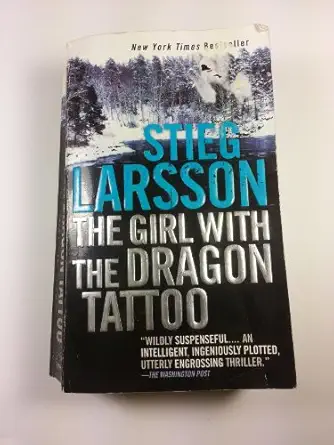
Under the Dome, by Stephen King (2009)
One morning, an invisible, impenetrable dome seals off the small town of Chester's Mill, Maine, from the rest of the world. As resources dwindle and the town's political structure is taken over by a small-town demagogue, the question becomes not just how the dome was made but what it reveals about human nature under pressure.
King at his most politically engaged: Under the Dome is a parable about democracy, fascism, and the kind of fear that makes populations surrender to authoritarian leaders. The dome is a pressure cooker that accelerates processes already present in the town. At over a thousand pages it is one of his most ambitious works.
Desperation, by Stephen King (1996)
Travellers on a Nevada highway are arrested by a psychotic cop and taken to the abandoned mining town of Desperation. They discover that the cop is possessed by an ancient entity that emerged from an old mine — and that God may be asking something of them in return for salvation.
King at his most explicitly theological: Desperation is a horror novel that takes spiritual faith seriously as a response to evil. The characters' relationship with God — tested, doubted, and ultimately affirmed — gives the book a depth that most horror fiction lacks.

Freedom, by Jonathan Franzen (2010)
The Berglunds — Walter, Patty, and their son Joey — seem like the perfect liberal family in a St. Paul suburb. The novel traces the collapse of their relationships over three decades: Walter's environmental obsession, Patty's affair with Walter's best friend, and Joey's drift toward conservatism and a war contractor's daughter.
Franzen's most socially engaged novel maps the contradictions of the liberal professional class — their stated values, their actual desires, and the gap between them — with uncomfortable precision. Freedom is a big American novel in the tradition of Franzen's announced influences, and it mostly succeeds on those terms.
White Noise, by Don DeLillo (1985)
Jack Gladney, professor of Hitler Studies at a Midwestern college, lives with his wife Babette and their children from various marriages. When a chemical spill forces the evacuation of their town, Gladney confronts the terror of death that haunts his life and his marriage in ways he has been unable to acknowledge.
DeLillo wrote the novel of American consumer culture with this book. The ‘white noise' of television, supermarkets, and brand names fills the space that death would otherwise occupy, and the novel's argument is that consumer culture exists to prevent people from thinking about mortality. It won the National Book Award and launched DeLillo's canonical status.
The Bluest Eye, by Toni Morrison (1970)
Pecola Breedlove, a Black girl growing up in Lorain, Ohio, during the 1940s, prays for blue eyes — believing that if she were beautiful in the white American sense, she would be loved. The novel explores the racism that has taught her self-hatred and the community that failed to protect her.
Morrison's first novel was the most technically assured debut in American fiction since Faulkner. She uses multiple narrators and a non-linear structure to show how Pecola's fate was not inevitable but produced — by racism, by poverty, and by a community's own internalized self-contempt. The prose is already distinctly Morrison: dense, musical, and morally demanding.
Native Son, by Richard Wright (1940)
Bigger Thomas, a twenty-year-old Black man in 1930s Chicago, takes a job as a chauffeur for a wealthy white family. When he accidentally kills their daughter, he flees, kills his girlfriend to prevent her from revealing what he has done, and is eventually captured and tried in a case that becomes a referendum on race in America.
Wright's novel was the first to confront directly and without apology the rage embedded in Black American experience — Bigger is not a sympathetic victim but an angry young man whose violence is the product of the system that produced him. Native Son changed American literature by refusing the kind of pathos the white readership expected.
Black Boy, by Richard Wright (1945)
Wright's autobiography, tracing his childhood and adolescence in Mississippi and Memphis, his flight from the South to Chicago, and his years in the Communist Party. It is an account of a Black boy's determination to become a writer in a society designed to prevent him from reading, let alone creating.
Black Boy is one of the most important American autobiographies and one of the most affecting. Wright's descriptions of the daily violence and humiliation of Jim Crow Mississippi — rendered with a novelist's precision and a survivor's fury — are as vivid and as necessary as anything written about the experience.
The Good Earth, by Pearl S. Buck (1931)
Wang Lung, a Chinese peasant farmer, builds himself up from poverty to prosperity through his land, his wife O-Lan, and his obsession with owning more earth. The novel follows his family through three generations: his rise, his wealth, and the inevitable dissolution of the values that made him.
Buck won the Nobel Prize partly for this novel, which she wrote from her experience of growing up in China. The Good Earth has been criticised for its Western perspective, but the portrait of peasant Chinese life — the floods, the droughts, the intimate relationship with the soil — is rendered with a specificity that commands respect. It was the best-selling American novel of 1931 and 1932.
The Fountainhead, by Ayn Rand (1943)
Howard Roark, an architect of uncompromising integrity, refuses to modify his designs to suit the tastes of clients, employers, or the public. His struggle against the mediocrity of the establishment and the parasitism of his enemies is Rand's extended argument for the philosophy she called Objectivism.
Rand's novel is one of the most influential and most divisive in American popular culture. The Fountainhead is a genuinely gripping thriller that is also a philosophical argument — that the individual creative mind is the source of all value and that accommodation is a form of death. Whether or not one agrees, the argument is made with complete conviction.
Atlas Shrugged, by Ayn Rand (1957)
In a near-future America where the government increasingly controls industry, the most productive people begin to disappear. Dagny Taggart, a railroad executive, and Henry Rearden, a steel magnate, struggle to keep their industries functioning while seeking the identity of the man who is pulling the engine of the world.
At over a thousand pages, Atlas Shrugged is the most exhaustive expression of Rand's philosophy of rational self-interest. It is simultaneously a page-turning thriller and a philosophical treatise, and millions of readers have found it life-changing. Its vision of capitalism as the highest human value remains the most influential argument for libertarian economics in popular culture.
Breakfast at Tiffany's, by Truman Capote (1958)
Holly Golightly, a young woman from rural Texas who has remade herself as a sophisticated New York socialite, befriends her upstairs neighbor — a writer who becomes fascinated by her. Holly is working her way toward a wealthy Brazilian husband while living in a world of cigarette holders and powder rooms and barely controlled anxiety.
Capote wrote the finest portrait of a certain kind of American woman — charming, evasive, entirely without an inner life she is willing to share — in this slim novella. Holly Golightly has become one of the enduring figures of American popular culture, and the Audrey Hepburn film, beautiful as it is, simplified her considerably.
Harry Potter and the Chamber of Secrets, by J.K. Rowling (1998)
Harry returns to Hogwarts for his second year to find that someone — or something — is attacking students and leaving ominous messages on the walls. The Chamber of Secrets has been opened, and the heir of Slytherin is abroad in the school. Harry must find and confront them before another student is killed.
Rowling deepens the mythology of Hogwarts in the second volume, introducing the history of the founders and the concept of pure-blood prejudice that will drive the series to its conclusion. The Chamber of Secrets is darker than its predecessor and more explicit about what Voldemort represents.
Harry Potter and the Prisoner of Azkaban, by J.K. Rowling (1999)
Harry's third year brings the escaped prisoner Sirius Black, who everyone believes is a servant of Voldemort, a new Defense Against the Dark Arts teacher named Lupin, the dementors who guard the school, and the first use of time travel in the series. The mystery of Sirius Black's guilt or innocence drives one of the series' finest plots.
The Prisoner of Azkaban is widely considered the best novel in the series: it has the tightest plot, the most carefully constructed mystery, and Lupin — the best Defense Against the Dark Arts teacher Harry will ever have — as its emotional centre. The time travel sequence in the final chapters is one of the finest executed in popular fiction.
The Client, by John Grisham (1993)
Eleven-year-old Mark Sway witnesses a lawyer's suicide and learns where the body of a murdered senator is buried. The Mob wants him silent, a grandstanding federal prosecutor wants him to testify, and the only person on his side is a Memphis attorney named Reggie Love who takes his case for a dollar.
Grisham's finest novel is the one with an eleven-year-old as its protagonist, which forced him to find a different kind of tension than his usual thrillers. Mark Sway is a brilliantly realised child — smart enough to understand his danger, young enough to be genuinely afraid — and his relationship with Reggie Love is one of Grisham's best human relationships.
The Stand, by Stephen King (1978)
A weaponised flu virus escapes a government facility and kills ninety-nine percent of humanity. The survivors — drawn in dreams to either a 108-year-old woman named Mother Abagail in Nebraska or a dark man called Randall Flagg in Las Vegas — gather for a final confrontation between good and evil.
King's most ambitious novel is also his most biblical: The Stand is a retelling of Revelation set in a post-apocalyptic America. At its best — the early chapters describing the collapse of civilization, the long walk toward the confrontation — it is as powerful as anything he has written. At its worst, it is overlong. The best parts are worth the overlong ones.

The Adventures of Tom Sawyer, by Mark Twain (1876)
Tom Sawyer, a mischievous boy in the Mississippi River town of St. Petersburg, Missouri, whitewashes a fence, falls in love with Becky Thatcher, witnesses a murder in the graveyard, and gets lost in a cave with Becky while the murderer Injun Joe is hiding inside it.
Twain wrote the first great portrait of American boyhood — the freedom, the cruelty, the code of honour, the terror, and the boredom of it — in this novel. Tom Sawyer is a less morally complex book than Huckleberry Finn, but it is funnier and the cave sequence is one of the most genuinely frightening things Twain ever wrote.
A Connecticut Yankee in King Arthur's Court, by Mark Twain (1889)
Hank Morgan, a nineteenth-century American factory foreman, is knocked unconscious and wakes up in sixth-century Arthurian England. Using his knowledge of technology and a convenient eclipse, he becomes the ‘Boss' of the realm and attempts to modernise it along American industrial lines.
Twain wrote this as a satire of both romanticism about the Middle Ages and American triumphalism about progress. The ending — catastrophic, deeply un-funny, unexpected in a novel that is mostly comic — is one of the darkest in American fiction and suggests that industrial civilisation, not medieval barbarism, is the real catastrophe.
Ragtime, by E.L. Doctorow (1975)
Three families — a wealthy white family from New Rochelle, a Black jazz musician named Coalhouse Walker Jr., and a Jewish immigrant named Tateh — move through a gorgeously rendered American landscape of the early twentieth century, intersecting with real historical figures including Houdini, J.P. Morgan, and Emma Goldman.
Doctorow invented a form of historical fiction that blurs seamlessly between the real and the invented, and Ragtime is its finest achievement. The Coalhouse Walker storyline — a Black man's systematic legal attempt to have his desecrated car repaired, which escalates into terrorism — is simultaneously a farce and a tragedy, and one of the finest explorations of race in American fiction.
American Pastoral, by Philip Roth (1997)
Seymour Levov, known as the Swede — a golden boy of Jewish Newark, a football star, a successful businessman — marries a beauty queen and builds the American Dream in the New Jersey countryside. Then his daughter Merry plants a bomb to protest the Vietnam War and kills a man, and the pastoral life comes apart.
Roth's Pulitzer Prize winner is his most ambitious examination of what the American Dream does to those who believe in it. The Swede is entirely innocent and entirely destroyed, and the rage behind the novel — against the forces that unmade a good man's life — is Roth at his most morally furious.
Portnoy's Complaint, by Philip Roth (1969)
Alexander Portnoy, a young Jewish man in therapy, delivers a long, hilarious, furious monologue about his mother, his guilt, his desire, and the impossible contradictions of being Jewish and American and sexual all at once. The confession covers his childhood in Newark, his fantasies, his relationships, and his inability to stop complaining.
Roth published this and was immediately both famous and denounced. Portnoy's Complaint is one of the funniest and most scandalous American novels — it says things about Jewish-American guilt and sexuality that had never been said in public — and one of the most formally accomplished: the voice never stops, never contradicts itself, and never runs out of material.
The Plot Against America, by Philip Roth (2004)
Philip Roth imagines an alternate 1940s in which Charles Lindbergh, the aviator and Nazi sympathiser, defeats Franklin Roosevelt for the presidency and signs a non-aggression pact with Hitler. The novel follows the Roth family in Newark — a working-class Jewish family terrified by the country's new direction.
Roth wrote this as a warning — the foreword insists it is not allegory — about how democracy can fail from within. The combination of the family-level drama and the historical nightmare gives it an intimacy that pure political fiction rarely achieves. Published in 2004, it has become more relevant with each election cycle.

Siddhartha, by Hermann Hesse (1922)
Siddhartha, a young Brahmin in ancient India, leaves his comfortable life to seek enlightenment. He tries the path of the ascetics, then the path of the merchant and the courtesan, and finally, as an old ferryman beside a river, discovers what the river has to teach about unity and the eternal nature of time.
Hesse wrote this during a period of spiritual crisis, and the search it describes is genuinely felt. Siddhartha is one of the most widely read novels about spiritual seeking in the Western world — not because it offers answers but because it takes the search with complete seriousness. The river passage near the end is one of the most beautiful in German literature.
Steppenwolf, by Hermann Hesse (1927)
Harry Haller, a middle-aged intellectual, believes himself to be half-man, half-wolf — part civilised, part savage — and is contemplating suicide when he meets Hermine and is drawn into the jazz age nightlife of the Weimar Republic. The novel culminates in the Magic Theatre, a hallucinatory experience that shatters his identity.
Hesse wrote this at fifty and it is the most extreme of his novels — a full assault on the bourgeois values his earlier work had merely questioned. The Magic Theatre sequence is one of the most inventive narrative passages in German modernism. Steppenwolf became the counter-cultural text of the 1960s, which is not quite what Hesse intended.
Nausea, by Jean-Paul Sartre (1938)
Antoine Roquentin, a historian living alone in a provincial French town, begins to experience ‘nausea' — an overwhelming sense of the gratuitous, brute existence of things. A chestnut root, a doorknob, his own hand — all suddenly seem to exist without reason, terrifyingly real and utterly without meaning.
Sartre's first novel is the founding text of literary existentialism. The nausea Roquentin experiences is the recognition that existence precedes essence — that things simply are, without reason or purpose, and that consciousness of this is both liberating and paralyzing. As a philosophical novel, it is more successful than most because the ideas are felt in the body, not just argued in the mind.

The Plague, by Albert Camus (1947)
Plague arrives in the Algerian town of Oran and seals it from the outside world. Dr. Rieux, the chronicler, watches as the townspeople respond in different ways: with denial, with self-interest, with solidarity, with faith, and with the simple daily discipline of doing what needs to be done even when there is no hope of success.
Camus wrote this as an allegory of the French Resistance — the plague is the Nazi occupation — but he made it so specifically realised as a plague narrative that it has served as a guide to every epidemic since. The Plague is a philosophical novel about absurdity and solidarity: the universe offers no consolation, but we can still choose how to face it together.
The Tin Drum, by Günter Grass (1959)
Oskar Matzerath, born in Danzig in 1924, decides at age three to stop growing and to beat his tin drum. He narrates his life — through the rise of Nazism, the war, the fall of Danzig — from an insane asylum where he now lives. His drum can summon the past, and his scream can shatter glass.
Grass won the Nobel Prize largely on the strength of this novel. The Tin Drum is the greatest German novel about the Nazi period — not because it confronts it directly but because Oskar's arrested development is the arrested moral development of Germany itself, his refusal to grow up a metaphor for the refusal to take responsibility.
The Reader, by Bernhard Schlink (1995)
Fifteen-year-old Michael Berg has an affair with Hanna, a woman twice his age. Years later, he sees her again — as a defendant in a war crimes trial, charged with sending Jewish women to their deaths in the Holocaust. He discovers that she is illiterate, that she hid her shame at any cost, and that he is complicit in her guilt.
Schlink's novella poses one of the most uncomfortable questions in post-war German literature: what do we owe to people who did terrible things for understandable, even sympathetic, reasons? The Reader refuses to resolve the tension between understanding and judgment, which is why it is more honest — and more troubling — than most Holocaust fiction.

Buddenbrooks: The Decline of a Family, by Thomas Mann (1901)
Four generations of a wealthy merchant family in Lübeck, Germany, followed from their peak of prosperity in 1835 to their extinction at the end of the nineteenth century. As the family's commercial instincts erode and artistic sensibility increases, their capacity for business diminishes and their sensitivity to suffering grows.
Mann published this at twenty-six and never surpassed it for readability. Buddenbrooks is one of the great family sagas — the inexorable decline structured so that each generation inherits its predecessor's weaknesses along with their qualities. The novel's central argument — that bourgeois vitality and artistic sensitivity are incompatible — haunted Mann for his entire career.
The Magic Mountain, by Thomas Mann (1924)
Hans Castorp, a young Hamburg engineer, visits his cousin in a Swiss tuberculosis sanatorium for three weeks and stays for seven years. The sanatorium is a microcosm of pre-World War I Europe; the doctors, patients, and intellectuals who inhabit it debate the great ideas of the age while the world below them slides toward catastrophe.
Mann wrote the most ambitious novel of ideas in German literature. The debate between Settembrini, the liberal rationalist, and Naphta, the reactionary mystic, is the finest sustained argument in European fiction. The Magic Mountain is a difficult and rewarding book — its difficulty is part of its argument about the value of patient attention.

The Power of Now: A Guide to Spiritual Enlightenment, by Eckhart Tolle (1999)
Tolle argues that human suffering is caused almost entirely by identification with the thinking mind — particularly with thoughts about the past and anxiety about the future. The ‘Now,' the present moment of direct experience, is the only place where peace exists, and the book is a guide to accessing it.
Tolle's book has sold millions of copies, and the reason is simple: the core insight — that most of our suffering is mental and self-created — is both ancient (it is the foundation of Buddhist meditation practice) and urgently useful. The Power of Now is not literature, but it is a genuine guide to a way of being that most people find they need.
Zen and the Art of Motorcycle Maintenance, by Robert Pirsig (1974)
A man and his son ride a motorcycle across the United States. The journey is the frame for a philosophical inquiry — the narrator's own, conducted in ‘Chautauquas' addressed to the reader — into the nature of Quality: what it is, how we recognize it, why it matters, and how Western thought lost its way by separating the rational from the intuitive.
Pirsig submitted this novel to one hundred and twenty-one publishers before it was accepted. It sold over five million copies and introduced a generation to the idea that philosophy could be lived rather than just studied. The relationship between the narrator and his son, and the ghost of his former self who pursued these questions to madness, gives the abstract argument its emotional weight.
The Road Less Traveled: A New Psychology of Love, Traditional Values and Spiritual Growth, by M. Scott Peck (1978)
Peck, a psychiatrist, opens with the sentence ‘Life is difficult' and builds from there: the discipline required to face life's problems, the nature of love as an act of will rather than feeling, the complex relationship between mental health and spiritual growth, and the role of grace in human development.
Peck spent thirteen years trying to publish this book and then watched it sell ten million copies. The Road Less Traveled occupies the intersection of psychology, philosophy, and religion in a way that addressed something millions of readers had not found addressed elsewhere — the connection between the practical difficulties of life and the deepest questions of meaning.
The Prophet, by Kahlil Gibran (1923)
Almustafa, the chosen and beloved prophet, is about to sail home after twelve years in the city of Orphalese when the people ask him to speak of love, marriage, children, work, joy, sorrow, beauty, time, friendship, and death. Each of his answers is a prose poem of extraordinary compression.
Gibran wrote this in Arabic and English and it has been translated into over forty languages. The Prophet is one of the best-selling books in history — not because it is sentimental, though it can seem so, but because Gibran had the gift of saying true things with complete simplicity. The section on children — ‘Your children are not your children' — has been read at more ceremonies than almost any other text.
The Power of Myth, by Joseph Campbell and Bill Moyers (1988)
The transcript of a series of conversations between the mythologist Joseph Campbell and journalist Bill Moyers, recorded at George Lucas's Skywalker Ranch. Campbell discusses the universal themes of world mythology — the hero's journey, the goddess, sacrifice, rebirth — and their relevance to modern life.
Campbell's ideas changed how Lucas thought about Star Wars, and through the film they changed popular culture. The Power of Myth made Campbell famous in his last year of life and brought the concept of the hero's journey to a general audience. It is the most accessible entry point to one of the twentieth century's most influential bodies of thought.
The Hero with a Thousand Faces, by Joseph Campbell (1949)
Campbell identifies the monomyth — a single underlying pattern that he calls the hero's journey — in the mythologies of cultures worldwide: departure, initiation, return. The hero answers the call to adventure, descends into the underworld of transformation, and returns with a boon for the community.
Campbell's synthesis is one of the most influential works of the twentieth century, having shaped everything from Star Wars to contemporary self-help. Critics have questioned whether the universality he claims is real or imposed, but the book's value lies in its demonstration that the same narrative patterns reappear across cultures because they address the same universal needs.

On Writing: A Memoir of the Craft, by Stephen King (2000)
Half memoir — King's account of his childhood, his early career, his alcoholism, and the accident that nearly killed him — and half a practical guide to the craft of writing. The guide covers vocabulary, grammar, the importance of reading widely, how to find ideas, and how to revise.
King's book on writing is the best in the genre, which is remarkable given how many writing books exist. The memoir half earns the advice half — by the time King tells you to write every day, you know what that discipline cost him. The section on adverbs alone is worth the price of admission.
Bird by Bird: Some Instructions on Writing and Life, by Anne Lamott (1994)
Lamott teaches fiction writing and this is her instruction manual — covering how to start, how to get unstuck, how to handle the first terrible draft, the jealousy of other writers' success, the relationship between writing and truth, and why it matters. The title comes from her brother's overwhelmed approach to a school report on birds.
Lamott writes about writing with the same honesty she brings to her memoirs about alcoholism and motherhood. Bird by Bird is beloved because it treats the difficulties of writing — the self-doubt, the comparison, the fear of failure — as real problems rather than weaknesses, and offers genuine, practical wisdom for addressing them.
The Artist's Way: A Spiritual Path to Higher Creativity, by Julia Cameron (1992)
A twelve-week course in recovering and discovering your creative self, structured around two core practices: the Morning Pages — three pages of longhand writing every morning, without censorship — and the Artist's Date — a weekly solo adventure to nourish your creativity. Each week addresses a different block to creative expression.
Cameron's book has helped millions of people begin or continue creative lives by treating creativity not as a talent some have and others lack but as a spiritual practice available to everyone. The Morning Pages are one of the most effective tools for silencing the internal critic ever devised, and the framework of the twelve-week course gives the practice structure.

The War of Art: Break Through the Blocks and Win Your Inner Creative Battles, by Steven Pressfield (2002)
Pressfield identifies Resistance — the internal force that prevents creative people from doing their work — and offers a guide to defeating it. Part one names and describes Resistance; part two describes the professional's approach to work; part three addresses the higher calling of the creative life.
Pressfield wrote screenplays for decades before finding his voice as a novelist, and every line of this book comes from experience. The War of Art is short enough to read in an afternoon and dense enough to revisit for years. The concept of Resistance has become the common language of creative practitioners of every kind.
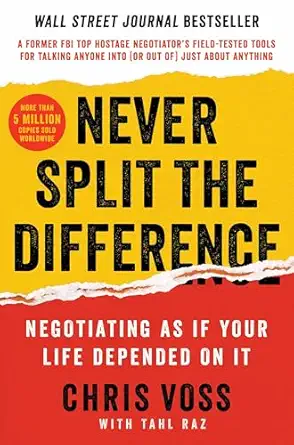
Never Split the Difference: Negotiating As If Your Life Depended On It, by Chris Voss (2016)
Former FBI hostage negotiator Chris Voss argues that the rationalist models of negotiation are wrong: people do not negotiate from logic but from emotion, and the skills that work in a hostage situation — tactical empathy, mirroring, the ‘late night FM DJ voice' — work in every negotiation.
Voss demolishes the consensus model of negotiation and replaces it with a set of techniques grounded in neuroscience and tested in genuinely life-or-death situations. Never Split the Difference is both entertaining — the hostage situations are gripping — and immediately applicable. It changed how many professionals in every field approach difficult conversations.
Influence: The Psychology of Persuasion, by Robert Cialdini (1984)
Cialdini identifies six universal principles by which people are influenced: reciprocity, commitment and consistency, social proof, authority, liking, and scarcity. Each is illustrated with experiments and real-world examples that show how they are used by compliance professionals — salespeople, fundraisers, advertisers — to obtain yes.
Cialdini spent years working undercover in sales, advertising, and fundraising organisations to observe these principles in action. Influence is one of the most-cited books in social psychology and one of the most practically useful business books ever written. Understanding these principles is the first step to both using them honestly and defending against their misuse.
Emotional Intelligence: Why It Can Matter More Than IQ, by Daniel Goleman (1995)
Goleman argues that the standard measure of intelligence — IQ — misses the capacities that most determine success and happiness in life: self-awareness, self-regulation, motivation, empathy, and social skills. These emotional capacities, he argues, are learnable, and they matter more than raw intellectual power in almost every domain.
Goleman synthesised neuroscience, psychology, and sociology into a concept that transformed how organisations think about talent and development. The concept of EQ has become so widely accepted that it is easy to forget how radical it was in 1995 to argue that emotional skills were as important — or more important — than cognitive ones.
Rich Dad Poor Dad: What the Rich Teach Their Kids About Money That the Poor and Middle Class Do Not!, by Robert Kiyosaki (1997)
Kiyosaki contrasts the financial philosophies of his two ‘fathers' — his biological father, a highly educated government employee who died broke, and his best friend's father, a high-school dropout who became one of Hawaii's richest men. The rich teach their children to have assets work for them; the poor and middle class work for their money.
Rich Dad Poor Dad is the best-selling personal finance book in history, and its central idea — that assets, not income, are the path to wealth — is genuinely valuable. The specific advice Kiyosaki gives has been widely criticised as oversimplified, but the fundamental shift in thinking about money that the book advocates has changed many lives.
The Total Money Makeover: A Proven Plan for Financial Fitness, by Dave Ramsey (2003)
Ramsey's step-by-step plan for getting out of debt and building wealth, structured as a series of Baby Steps: save a starter emergency fund, pay off all debt using the debt snowball, build a full emergency fund, invest for retirement, college fund, pay off the house, and build wealth and give generously.
Ramsey's plan is aggressive about debt elimination in a way that most financial advisors are not, and the thousands of people who have completed his programme find that the psychological momentum of the debt snowball — paying off smallest debts first — makes it more effective than optimal strategies. The Total Money Makeover is the most practical debt elimination guide in print.
The Gift of Fear: Survival Signals That Protect Us from Violence, by Gavin de Becker (1997)
Security expert Gavin de Becker argues that human beings have a powerful intuitive system for detecting danger that modern culture trains us to ignore — particularly training women to override their fear of men. The gift of fear is the ability to respond to genuine threat signals before they become violence.
De Becker's book changed how millions of people think about personal safety. His central argument — that fear is a gift, not a weakness, and that the inability to say no to a stranger is a survival-threatening social conditioned reflex — is both obvious in retrospect and genuinely liberating. The chapter on stalking is essential reading.

Why We Sleep: Unlocking the Power of Sleep and Dreams, by Matthew Walker (2017)
Neuroscientist Walker surveys the science of sleep: what happens in the brain during sleep, what happens when we don't get enough, the role of dreams, the effects of caffeine and alcohol, and the catastrophic consequences of the sleep deprivation that modern society normalises.
Walker's book made many people fundamentally reconsider how they treat sleep. The evidence he presents for sleep's role in memory consolidation, emotional regulation, immune function, and cancer prevention is compelling and alarming in equal measure. Some of his specific claims have been challenged, but the overall argument — that sleep is non-negotiable — is well-supported.
Lifespan: Why We Age — and Why We Don't Have To, by David Sinclair (2019)
Harvard geneticist David Sinclair presents his information theory of aging — the idea that aging is caused by the loss of epigenetic information that tells cells what to be — and the lifestyle changes, supplements, and emerging therapies that might slow or reverse the process.
Sinclair is one of the most credentialled researchers in aging science, and his book is both a summary of the current state of longevity research and a personal manifesto. Lifespan will be controversial in twenty years if his predictions prove wrong — and extraordinarily prescient if they prove right. Either way, it is the most optimistic serious book about human aging ever written.
Love, Medicine and Miracles, by Bernie Siegel (1986)
Siegel, a surgeon at Yale, describes his work with exceptional cancer patients — people who defied medical prognosis — and argues that the mind plays a crucial role in healing. Love, connection, and the will to live are not sentimental luxuries but medical factors that affect survival.
Siegel's book was controversial among physicians and enormously influential among patients. Whatever the scientific validity of his specific claims, the book's contribution — demanding that medicine treat the whole person rather than the disease — helped shift the conversation about holistic health that continues today.
John Adams, by David McCullough (2001)
The biography of the second president of the United States — founder, diplomat, the man who argued hardest for independence in 1776 and lost the presidency to his own vice president. McCullough drew on the extraordinary correspondence between Adams and his wife Abigail to produce one of the most intimate presidential biographies.
McCullough is the finest popular historian in America, and John Adams is his most personal subject. The Adams marriage — intellectual equals, separated for years, sustaining each other by letter — is one of the great love stories in American history. The biography rehabilitated Adams from the historical neglect that followed his loss to Jefferson.

1776, by David McCullough (2005)
The year 1776 from the military perspective: George Washington's near-disastrous retreat across New York and New Jersey, the crossing of the Delaware on Christmas night, the battles of Trenton and Princeton. McCullough focuses entirely on what it felt like to be in the Continental Army in the worst year of the Revolution.
McCullough narrows his lens for this book, and the focus makes it his most readable work. The portrait of Washington — exhausted, uncertain, inspired by desperation — is one of the most human in presidential biography. 1776 reads with the urgency of a thriller because the outcome was genuinely uncertain.
The Rise of Theodore Roosevelt, by Edmund Morris (1979)
The first volume of Morris's biography of Theodore Roosevelt traces his extraordinary life from his sickly childhood in New York through his ranching years in the Badlands, his service in the Spanish-American War, and his accidental presidency following McKinley's assassination — all before the age of forty-three.
Morris won the Pulitzer Prize for this, and the scale of Roosevelt's life justifies the scale of the biography. By forty-two, Roosevelt had been a naturalist, legislator, rancher, police commissioner, war hero, assistant secretary of the navy, and governor of New York. Morris renders this panorama without losing the through-line of Roosevelt's extraordinary personality.

Alexander Hamilton, by Ron Chernow (2004)
The biography of the Founding Father who never became president: Hamilton's impoverished West Indies origins, his rise to Washington's side during the Revolution, his creation of the American financial system, his political battles with Jefferson and Madison, and his fatal duel with Aaron Burr.
Chernow wrote the definitive Hamilton and inspired Lin-Manuel Miranda to write the musical that made Hamilton famous to a new generation. The biography's great achievement is making economic and constitutional arguments as dramatic as battlefield narrative. Hamilton emerges as the most modern of the Founders — and the most tragic.
The Lost City of Z: A Tale of Deadly Obsession in the Amazon, by David Grann (2009)
British explorer Percy Fawcett disappeared into the Amazon in 1925, searching for the remains of a great civilization he called Z. Grann follows Fawcett's life and disappearance and then makes his own journey into the Amazon to discover what happened — and what Fawcett was actually looking for.
Grann is the finest writer at The New Yorker, and The Lost City of Z has his characteristic structure: the reported story and the personal quest interwoven so that the correspondent's experience illuminates and complicates what he is reporting. The final revelation — that Fawcett may have been right about Z — is one of the most satisfying in popular history.

The Comfort Crisis: Embrace Discomfort To Reclaim Your Wild, Happy, Healthy Self, by Michael Easter (2021)
Easter spent time in the Alaskan wilderness on a month-long hunting expedition and wove his experience together with research into why modern comfortable life is making us mentally and physically ill, and how deliberate discomfort — cold, hunger, effort, boredom — can restore health and meaning.
Easter brings together the evidence for what many people intuit: that a life optimised for comfort is not a good life, and that the physical and mental challenges that our ancestors faced involuntarily must now be sought deliberately. The Comfort Crisis is the most compelling argument for voluntary hardship written in the past decade.
Say Nothing: A True Story of Murder and Memory in Northern Ireland, by Patrick Radden Keefe (2018)
The murder of Jean McConville, a widowed mother of ten taken from her home by the IRA in 1972, is the entry point for a comprehensive history of the Troubles — focused on Dolours Price, a committed IRA operative who helped carry out the murder and later talked about it as part of an oral history project.
Keefe writes about political violence with a combination of moral seriousness and narrative skill that is rare in nonfiction. Say Nothing is simultaneously a specific story about specific people and a meditation on what political commitment costs and what it produces. It is the most important book about the Troubles published in a generation.
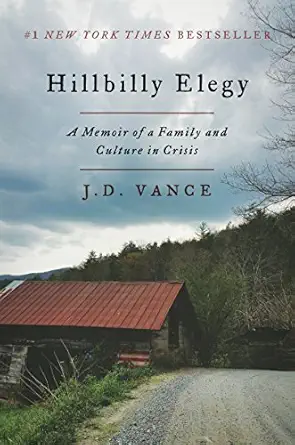
Hillbilly Elegy: A Memoir of a Family and Culture in Crisis, by J.D. Vance (2016)
Vance grew up in the Scots-Irish working-class culture of Appalachia — in a family defined by addiction, violence, and instability — and somehow made it to Yale Law School. This memoir is an attempt to explain his culture to itself and to outsiders, and to understand how so many people he grew up with could not make the same journey.
Hillbilly Elegy became one of the most discussed American books of its decade — used by people across the political spectrum to explain the 2016 election and its aftermath. Whether or not one agrees with Vance's analysis, the memoir itself — the portrait of his grandmother, his escape, and his ambivalence about what he escaped — is vivid and honest.
Untamed, by Glennon Doyle (2020)
Doyle's memoir about leaving a marriage, falling in love with soccer player Abby Wambach, and the broader process of becoming who she was rather than who she was supposed to be. The title comes from her recognition that she, like many women, had been tamed into a life that looked right from outside.
Doyle writes with evangelical intensity about the process of self-liberation, and millions of women have found her account of it transformative. Untamed is a secular sermon about authenticity, and the authenticity of its own confession — including its honesty about the costs of the transformation — is what makes it more than self-help.
The Final Empire (Mistborn), by Brandon Sanderson (2006)
In a world where ash falls from the sky and mists blanket the night, a small crew of thieves plans the most audacious heist in history: steal the Lord Ruler's treasury and end a thousand years of oppression. Vin, a young street thief with an unusual ability to burn metals and gain magical powers, is their most dangerous recruit.
Sanderson built a magic system of extraordinary precision and ingenuity — every power has a cost, every ability has a corresponding weakness — and wrapped it in a heist plot of irresistible momentum. Mistborn: The Final Empire is one of the finest debuts in fantasy and launched Sanderson as the most dependable worldbuilder in the genre.
The Magicians, by Lev Grossman (2009)
Quentin Coldwater, a brilliant and chronically dissatisfied teenager, is admitted to Brakebills, a secret college of magic in upstate New York. He masters the craft and then discovers that the fantasy world of his childhood books — the Narnia-like Fillory — is real, and that real magic does not produce the happiness he expected.
Grossman wrote this as a deliberate response to Harry Potter and Narnia — what happens when you give a depressed adult the magical education he craved and it doesn't fix him. The Magicians is darker and funnier and more honest about the relationship between fantasy and escapism than any fantasy novel that preceded it.
The Lies of Locke Lamora, by Scott Lynch (2006)
Locke Lamora is the leader of the Gentleman Bastards, a gang of exceptionally skilled thieves operating in a fantasy city modelled on Renaissance Venice. Their scheme to defraud the city's nobility is interrupted by the arrival of the Grey King, a figure of brutal mystery who is killing the city's mob bosses and threatening everyone Locke cares about.
Lynch writes dialogue like a screenwriter and plots like a thriller writer, and the combination is irresistible. The Lies of Locke Lamora is the finest debut in fantasy in a generation — a heist novel, a revenge story, and a meditation on what loyalty means in a world where everyone lies.

Assassin's Apprentice, by Robin Hobb (1995)
FitzChivalry Farseer, the illegitimate son of a prince, grows up in the stables of the royal household and is secretly trained as an assassin for the king. He can use a magic called the Skill to enter and influence minds, but the Wit — his ability to bond with animals — is considered base and shameful.
Hobb writes character more deeply than almost anyone in fantasy. Fitz's relationship with the king's jester Fool, his bond with animals, and the psychological cost of the assassin's life are all rendered with a psychological precision that places her work in a different register from most epic fantasy. The Farseer Trilogy is one of the finest in the genre.

The Neverending Story, by Michael Ende (1979)
Ten-year-old Bastian Balthazar Bux is bullied and lonely. He steals a book called The Neverending Story and reads it in the school attic, discovering that the land of Fantasia is dying and that its Empress is being destroyed by the Nothing — a spreading emptiness — and that only a human child's wish can save her.
Ende wrote this as a novel about the relationship between reading and reality, and the metafictional structure — Bastian reading a book that gradually incorporates him — is perfectly matched to the theme. The Neverending Story is a love letter to the imagination and an argument that stories are not an escape from reality but the foundation of it.
The Phantom Tollbooth, by Norton Juster (1961)
Milo, a bored boy who finds no interest in anything, drives his small toy car through a mysterious tollbooth and enters the Lands Beyond, where words and numbers are at war and Rhyme and Reason have been exiled. With Tock the Watchdog and the Humbug as companions, he must rescue the Princesses of Sweet Rhyme and Pure Reason.
Juster wrote this for his own amusement, and the pleasure he took in language is present on every page. The Phantom Tollbooth is a book about curiosity — Milo's transformation from a boy bored by everything to a boy who cannot see enough of the world — and one of the finest arguments for the value of intellectual engagement in all of children's literature.
Howl's Moving Castle, by Diana Wynne Jones (1986)
Sophie Hatter, the eldest of three sisters in a magical kingdom, is turned into an old woman by the Witch of the Waste and flees to the moving castle of the wizard Howl. She becomes his cleaning woman and gradually discovers that Howl is not the terrible figure his reputation suggests, and that her own magic is more powerful than she knew.
Jones writes fantasy with a wit and formal intelligence that sets her apart from the genre's mainstream. Howl's Moving Castle plays with fairy tale conventions with the confidence of a writer who knows the conventions thoroughly and the creativity of someone who cannot leave them alone. The relationship between Sophie and Howl is one of the finest romantic comedies in fantasy.
The Vampire Lestat, by Anne Rice (1985)
Lestat de Lioncourt, the vampire who made Louis in Interview with the Vampire, tells his own story: his eighteenth-century origins in France, his transformation by the ancient vampire Magnus, his centuries of history, and his decision to become a rock star and reveal the vampire world to humanity.
Rice's second vampire novel is richer and more ambitious than the first. Lestat is a more dynamic narrator than Louis — where Louis wallows in guilt, Lestat celebrates his nature — and his story reaches further back into vampire mythology. The Vampire Lestat established the Vampire Chronicles as the foundational text of literary vampire fiction.
Coraline, by Neil Gaiman (2002)
Coraline Jones discovers a small door in her new house that leads to another version of her home, where the Other Mother and Other Father seem to offer everything her real parents don't. But the Other Mother has buttons instead of eyes and wants Coraline to stay forever.
Gaiman wrote this for his eldest daughter and it terrified her, which was the intended effect. Coraline is a study in the specific fears of childhood — that your parents don't really love you, that somewhere there is a better version of your life — and the courage required to reject the temptation of a false paradise. It is one of the finest horror stories for children ever written.
Where the Wild Things Are, by Maurice Sendak (1963)
Max is sent to bed without his supper after making too much trouble. His room grows into a forest and then into an ocean, and he sails to where the Wild Things are — terrifying creatures he tames with a magic trick. He becomes their king, leads a wild rumpus, and then sails home to find his supper still hot.
Sendak wrote the first children's picture book that treated childhood anger and the need for mastery with complete seriousness. Where the Wild Things Are is a ten-sentence poem about the inner life of a child who has too much feeling and no good way to express it. It has been in print for sixty years because the feeling it describes never changes.
Lord Jim, by Joseph Conrad (1900)
Jim, a first mate on the Patna, a ship carrying pilgrims, abandons ship with the other officers when he believes it is about to sink. The ship doesn't sink. Jim spends years fleeing his shame and trying to redeem himself, eventually in the jungles of Patusan, where he becomes the trusted leader of an indigenous community.
Conrad is the master of the unreliable witness, and Lord Jim is narrated by Marlow, who cannot quite make Jim out and who asks everyone Jim has ever known for their version. The result is a portrait of a man defined by a single moment of cowardice who cannot escape it — a meditation on honour, colonialism, and whether redemption is possible.
Sons and Lovers, by D.H. Lawrence (1913)
Paul Morel, the second son of a Nottinghamshire miner, is emotionally dominated by his mother, Gertrude, whose ambitions for him are a substitute for the love she did not receive from her husband. As Paul tries to find himself in his relationships with two women — the spiritual Miriam and the vital Clara — his mother's claim on him blocks every attempt.
Lawrence's most autobiographical novel is a study of the Oedipal bond between mother and son that is one of the first such in English fiction. The coal-mining landscape of the Midlands, rendered with a physical precision Lawrence knew from childhood, gives the domestic drama its setting of industrial beauty and hardship.
The Turn of the Screw, by Henry James (1898)
A governess arrives at Bly to care for two orphaned children, Miles and Flora, and begins to see apparitions of two former employees — the valet Quint and the former governess Miss Jessel, both dead. She becomes convinced that the ghosts are corrupting the children, who deny seeing them.
James wrote what may be the finest ghost story in English literature, and he designed it so that the reader cannot determine whether the ghosts are real or the governess is mad. The Turn of the Screw is as terrifying in either reading, and the ambiguity is not a trick but a genuine formal achievement.

The Silent Patient, by Alex Michaelides (2019)
Alicia Berenson, a famous painter, shoots her husband five times in the face and then never speaks another word. Six years later, criminal psychotherapist Theo Faber becomes obsessed with uncovering the motive and gets himself hired at the secure psychiatric facility where she is held.
Michaelides wrote one of the most debated psychological thrillers of recent years, and the twist at the end is one that divides readers between those who find it perfectly constructed and those who find it unfair. I think it is perfectly constructed. The double narrative is managed with great skill.
The Thursday Murder Club, by Richard Osman (2020)
Four octogenarians at a luxurious retirement village in Kent meet every Thursday to solve cold cases. When a real murder occurs on their doorstep, they decide to investigate with the help of a young detective constable who finds she needs them more than she expected.
Osman has written the most charming mystery in years — the Thursday Murder Club characters are drawn with warmth and precision, their friendship is entirely convincing, and the plot is more clever than the cozy packaging suggests. The novel is also quietly serious about aging, death, and the intelligence that older people carry while everyone else looks through them.
Bridget Jones's Diary, by Helen Fielding (1996)
Bridget Jones, a thirty-something London singleton, keeps a diary of her year: her weight fluctuations, her alcohol consumption, her disastrous attempts at self-improvement, her complicated feelings for her smug boss Daniel Cleaver, and the inexplicable irritation of the uptight lawyer Mark Darcy.
Fielding wrote this as a newspaper column before it became a novel, and the serialised origin gives it the feeling of a friend's letters rather than a calculated comedy. Bridget Jones's Diary invented the chick-lit genre and its protagonist — imperfect, anxious, endearing — is one of the defining figures of 1990s popular culture.
One Day, by David Nicholls (2009)
Emma Morley and Dexter Mayhew spend a single night together after university graduation on July 15, 1988 — St Swithin's Day. The novel follows them on the same date every year for the next twenty years: their friendship, their missed connections, their separate failures, and their eventual convergence.
Nicholls's formal conceit is devastatingly effective: by showing us one day per year, he makes the reader feel the passage of time in a way that continuous narrative cannot achieve. The reader experiences the novel's central loss as a genuine shock precisely because the structure has made time feel real.
Half of a Yellow Sun, by Chimamanda Ngozi Adichie (2006)
Set during the Nigerian-Biafran War of the late 1960s, the novel follows three characters: Ugwu, a village boy who becomes a houseboy for a radical professor; Olanna, the professor's beautiful, privileged girlfriend; and Richard, an English man who comes to Nigeria and falls in love with Olanna's twin sister.
Adichie writes the Biafran War — an event that killed over a million people and is barely known outside Nigeria — with the specificity of someone whose family lived it. Half of a Yellow Sun is simultaneously a love story, a war novel, and a political history, and the combination is as good as anything written about twentieth-century Africa.
Purple Hibiscus, by Chimamanda Ngozi Adichie (2003)
Kambili, a fifteen-year-old girl in Nigeria, lives with her wealthy, devout Catholic father Eugene, a man whose rigid religious beliefs lead him to beat his family with systematic precision. When Kambili and her brother Jaja are sent to stay with their Aunt Ifeoma — a university lecturer who fills her house with laughter — the contrast is unbearable.
Adichie's first novel announces her as the finest Nigerian voice of her generation. Purple Hibiscus is about the difference between religion and faith, between order and love, and between the silence that violence imposes and the voice it suppresses. The prose is completely assured for a debut.

The Year of Magical Thinking, by Joan Didion (2005)
John Gregory Dunne, Didion's husband of thirty-nine years, died of a heart attack at the dinner table on December 30, 2003, while their only daughter lay in a coma in the intensive care unit. Didion wrote this book in the year that followed — an account of grief and the magical thinking it produces.
Didion is one of the finest prose stylists in American literature, and she brought all of that precision to the subject of grief. The Year of Magical Thinking is one of the most honest books about loss ever written — particularly about the irrational bargaining, the conviction that if you don't give away the dead person's shoes they might still come back.
Shogun, by James Clavell (1975)
English navigator John Blackthorne is shipwrecked on the coast of Japan in 1600, at the height of a violent power struggle among feudal lords. He becomes the first Western samurai — a pawn in political games he barely understands, slowly falling in love with a world whose values are entirely alien to his own.
Clavell spent fifteen years on research and wrote one of the most immersive works of historical fiction in the language. Shogun works because Blackthorne's bafflement and eventual education are both technically accurate and humanly engaging. The novel changed the way Western readers thought about Japan.
King Rat, by James Clavell (1962)
The Changi prisoner of war camp in Singapore, 1945. The King is an American corporal who has made himself comfortable in the camp by dealing, trading, and manipulating the system — as comfortable as anyone can be in a place where men are starving and dying of disease. A British officer sets out to bring him down.
Clavell based this on his own experience as a prisoner of the Japanese, and the authenticity is in every detail. King Rat is not a novel about heroism but about survival — the morally ambiguous deals, the betrayals, the black markets — and the question of what a man owes to other men when the ordinary rules have been suspended.

Klara and the Sun, by Kazuo Ishiguro (2021)
Klara is an Artificial Friend — a sophisticated solar-powered humanoid — who observes the world from a shop window before being chosen by a teenage girl named Josie. Klara devotedly serves Josie's emotional needs, makes difficult sacrifices on her behalf, and slowly comes to understand the world and its cruelties.
Ishiguro writes about AI consciousness with the restraint he brings to all his subjects — we understand Klara more fully than she understands herself. Klara and the Sun is a meditation on what it means to love, what it means to be replaced, and what a devoted, non-human intelligence would make of the way humans treat each other.
Neuromancer, by William Gibson (1984)
Henry Case, a burned-out hacker in a near-future Tokyo, is hired by a mysterious employer to pull off the most ambitious data heist in history — a run against an AI called Wintermute locked in the orbital platform Tessier-Ashpool. Case, with his bodyguard Molly and the ghost of a dead hacker named Dixie, goes to work.
Gibson coined the word ‘cyberspace' in this novel and invented cyberpunk as a genre. Neuromancer was the first science fiction novel to win the Hugo, Nebula, and Philip K. Dick awards, and its vision of a networked world — the data flowing between corporate towers, the human body modified and enhanced — describes the internet age before the internet existed.
The Lightning Thief, by Rick Riordan (2005)
Percy Jackson, a twelve-year-old boy with ADHD and dyslexia who has been expelled from every school he's ever attended, discovers that he is the son of the Greek god Poseidon. He is sent to Camp Half-Blood, a training ground for demigod children, and given a quest to prevent a war among the gods.
Riordan wrote this for his own son, who had asked to hear more stories about Greek mythology after Riordan had exhausted his own knowledge. The result launched one of the most beloved YA series in history — the accessibility of the mythology, the humour, and Percy's thoroughly modern voice make Greek myth feel both old and absolutely current.
Holes, by Louis Sachar (1998)
Stanley Yelnats, wrongly convicted of stealing a pair of sneakers, is sent to Camp Green Lake — a juvenile detention facility in the Texas desert where there is no lake and the boys dig holes every day, five feet wide and five feet deep. The reason behind the digging, and its connection to Stanley's family's curse, is the novel's mystery.
Sachar won the Newbery Medal for this and no Newbery Medal has been better deserved. Holes is a novel of elegant structural precision — the three timelines, the curse, the solution — that manages to feel entirely spontaneous. It is one of the best plotted novels for any age published in the past thirty years.
The Bad Beginning, by Lemony Snicket (1999)
The Baudelaire orphans — Violet, Klaus, and the infant Sunny — are left in the care of Count Olaf, a distant relative who is a terrible actor and a scheming villain intent on getting their parents' fortune. The first of thirteen increasingly dark volumes in A Series of Unfortunate Events.
Snicket writes children's fiction as literary comedy — the narrator's constant warnings, the baroque vocabulary, and the systematic failure of every adult to help the children create a world that is both hilarious and genuinely frightening. A Series of Unfortunate Events is the best argument in children's literature that children's books do not need happy endings.

Diary of a Wimpy Kid, by Jeff Kinney (2007)
Greg Heffley, a self-absorbed middle schooler, documents his first year in middle school in a journal — which he insists is not a diary — recording the social dynamics of the cafeteria, his friendship with Rowley, his complicated relationship with his family, and his various failed schemes.
Kinney created the most popular children's book series of the twenty-first century by combining a cartoon format with a first-person voice of complete, unselfconscious self-involvement. Greg is not a sympathetic protagonist, which is the joke and the genius: children recognise themselves in him without quite admitting it.
Julie of the Wolves, by Jean Craighead George (1972)
Miyax, an Eskimo girl, runs away from her arranged marriage and becomes lost on the Alaskan North Slope. She survives by learning to communicate with a pack of Arctic wolves, who adopt her as part of their community. The novel is as much a study of wolf behaviour as a survival story.
George was a naturalist before she was a novelist, and the wolf behaviour in Julie of the Wolves is scientifically accurate. The novel won the Newbery Medal and gave a generation of readers their first serious encounter with both Arctic ecology and the collision between traditional indigenous life and modern American culture.
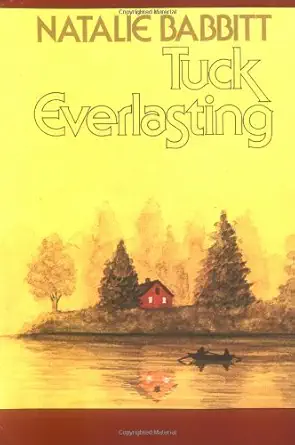
Tuck Everlasting, by Natalie Babbitt (1975)
Ten-year-old Winnie Foster meets the Tuck family, who drank from a spring that granted them immortality and have been living outside of time ever since. Mae Tuck, her sons Jesse and Miles, and their father Angus have been lonely forever, and Jesse wants Winnie to drink from the spring and join them.
Babbitt wrote a philosophical fantasy about the nature of life and death that is clear and honest enough to be given to a ten-year-old. The novel's central argument — that immortality would be a trap rather than a gift, that life derives its meaning from its ending — is made with a simplicity that does not condescend.
From the Mixed-Up Files of Mrs. Basil E. Frankweiler, by E.L. Konigsburg (1967)
Claudia Kincaid, feeling unappreciated at home, decides to run away — but to the Metropolitan Museum of Art in New York, where she and her brother Jamie sleep in antique beds and bathe in the fountain's coins. They become obsessed with a mystery surrounding a beautiful statue that might be by Michelangelo.
Konigsburg won the Newbery Medal for this in 1968 and it remains one of the finest adventure novels in children's literature. The setting — the secret life of a child-sized person inside the museum — is irresistibly specific, and the mystery of the statue is a genuine puzzle with a satisfying solution.

Mrs. Frisby and the Rats of NIMH, by Robert C. O'Brien (1971)
Mrs. Frisby, a widowed mouse, needs to move her family before the farmer's plow destroys their home. She is directed to the rats of NIMH — laboratory rats who were given enhanced intelligence and can read and build machines — who live in a sophisticated community beneath a rose bush.
O'Brien wrote one of the great animal fantasies in children's literature — one in which the intelligence of the animals is grounded in a plausible scientific premise rather than magic, and where the ethical questions raised by the experiment are genuinely considered. The rats of NIMH are planning their own society, and the question of whether intelligent animals have the same rights as humans is one the novel does not shy away from.

The Indian in the Cupboard, by Lynne Reid Banks (1980)
Omri receives a small plastic Native American toy for his birthday and a key for a magic cupboard. When he puts the toy in the cupboard and locks it, the plastic figure becomes a real, three-inch-tall Iroquois warrior named Little Bear, and Omri must learn what responsibility to living things means.
Banks wrote this in response to her son's request for a story about his plastic toy collection. The magic cupboard is a thought experiment about what it would mean to actually be responsible for a human life reduced to your scale, and the novel takes the ethical implications of Little Bear's situation seriously in a way children's fiction rarely does.
The Buried Giant, by Kazuo Ishiguro (2015)
Axl and Beatrice, an elderly British couple, set out across a landscape of post-Arthurian Britain shrouded in a mysterious collective forgetting. No one can remember the recent past — not their years together, not the wars, not their children. They travel to find their son, accompanied by a warrior and the knight Sir Gawain.
Ishiguro uses Arthurian myth and magical realism to write a novel about memory, marriage, and the painful necessity of forgetting. The mist that blankets the land is both a narrative device and a metaphysical argument: what happens to communities — and to couples — when they choose to remember what they did to each other?
When We Were Orphans, by Kazuo Ishiguro (2000)
Christopher Banks, English-born and raised in Shanghai, is Britain's most celebrated detective. He returns to Shanghai in 1937, as the Japanese army closes in, to find his parents, who disappeared when he was a child. What he discovers about his own past is not what he expected.
Ishiguro's strangest novel uses the detective form to examine the nature of self-delusion. Banks's investigation is conducted with complete confidence and the reader gradually understands that the confidence is a performance, a protection against the truth of his history. The Shanghai sequences are among Ishiguro's most disorienting and brilliant.
Olive Kitteridge, by Elizabeth Strout (2008)
Thirteen linked stories set in the small coastal town of Crosby, Maine, all connected by the figure of Olive Kitteridge — a retired schoolteacher of immense force and formidable impatience whose effect on those around her ranges from inadvertent cruelty to unexpected grace.
Strout won the Pulitzer Prize for this and the recognition was deserved. Olive is one of the most complex characters in contemporary American fiction — genuinely difficult, genuinely necessary, capable of both harm and healing — and the linked story structure allows Strout to approach her from different angles without ever quite catching her fully.
My Name is Lucy Barton, by Elizabeth Strout (2016)
Lucy Barton is recovering from a serious illness in a New York hospital when her mother, from whom she has been estranged for many years, arrives unexpectedly and stays for five days. During those days, they talk without saying anything directly — a conversation about the family's poverty, silences, and damage.
Strout writes about the poverty of feeling — the inability to express what one feels to those one loves — with extraordinary compression. My Name is Lucy Barton is a very short novel that contains everything about the parent-child relationship that cannot be said directly, rendered in a prose of luminous restraint.
Bel Canto, by Ann Patchett (2001)
At a birthday party for a Japanese industrialist in a South American country, a terrorist group takes everyone hostage — including the world-famous soprano who was performing that evening. During the months that follow, as negotiations stall, the hostages and their captors form bonds of music, friendship, and love.
Patchett wrote this as an argument that beauty — specifically the beauty of music — has the power to transform even the most violent situation. The novel is both a credible portrait of the Stockholm syndrome and a fable about what human beings have in common when all other claims are suspended.
The Notebook, by Nicholas Sparks (1996)
Noah Calhoun, a poor boy from the Carolinas, falls in love with Allie Hamilton, a rich girl, during the summer of 1940. Separated by her family and years of war and distance, Noah builds the house he promised her and waits. Years later, an old man reads the story to an old woman with dementia.
Sparks established the template for his career with this first novel — the time-lapse romance, the irreversible loss, the ending that refuses to soften. The framing device is one of the most effective in popular fiction: the relationship between the present-day couple transforms the reading of the past story in a way that earns the emotion it produces.
The Bourne Identity, by Robert Ludlum (1980)
A man with multiple gunshot wounds is fished from the Mediterranean with no memory of who he is — only the skills of a trained killer and a series of identities embedded in a microfilm capsule in his hip. He gradually pieces together that he is Jason Bourne, an American intelligence operative, and that both sides want him dead.
Ludlum invented the amnesiac assassin thriller with this novel, and it remains the finest in the subgenre he created. The plot — the peeling away of Jason Bourne's identities — is both a spy thriller and a philosophical investigation: who are you if you have no memory, and what happens to your morality when only your body remembers what your mind has forgotten?

The Hunt for Red October, by Tom Clancy (1984)
Soviet submarine captain Marko Ramius takes the Soviet Navy's most advanced submarine — a nearly silent vessel called the Red October — and steers it toward the United States. CIA analyst Jack Ryan must determine whether Ramius plans to defect or to launch a nuclear strike.
Clancy published this novel with a small press and the CIA reportedly bought copies by the case. The Hunt for Red October is the finest techno-thriller ever written — the submarine procedures are described with complete accuracy, and the tension of two navies trying to solve the same puzzle simultaneously is as good as any thriller that followed.
Ulysses, by James Joyce (1922)
One day in Dublin, June 16, 1904. Leopold Bloom, a Jewish advertising canvasser, moves through the city on a series of errands, counterpointed by the wanderings of Stephen Dedalus and the interior monologue of Bloom's wife Molly. Each chapter parodies a different literary style and corresponds to an episode of the Odyssey.
Ulysses is the most discussed novel in the English language, and the most avoided. It is also the most formally innovative — Joyce invented stream of consciousness, rewrote the rules of novelistic prose, and proved that an ordinary day in an ordinary life is a subject worthy of the greatest literary ambition. The effort it demands of its reader is not arbitrary; it is the novel's argument about how consciousness actually works.
A Portrait of the Artist as a Young Man, by James Joyce (1916)
Stephen Dedalus — the character who will reappear in Ulysses — grows up in Catholic Ireland: his schooling by Jesuits, his sexual awakening, his crisis of religious faith, and his final decision to leave Ireland and forge his identity through art alone, flying by the nets of nationality, language, and religion.
Joyce's first novel is his most accessible and his most personal. The famous sermon on Hell — the fire, the stench, the never-ending suffering — is one of the most effective pieces of rhetorical prose in English, and Stephen's rejection of it is the founding act of Joyce's entire career.

Dead Souls, by Nikolai Gogol (1842)
Chichikov, a low-ranking government official, travels the Russian countryside buying ‘dead souls' — serfs who have died since the last census and are still counted for tax purposes. His plan is to mortgage these legal fictions for cash. The novel follows his encounters with the landowners — each a comic masterpiece of a different type of folly.
Gogol wrote one of the great satirical novels in European literature. Each landowner Chichikov visits represents a different variety of human stupidity and self-deception, rendered with a comedy that barely conceals fury. Gogol called it a poem, and the description is right: Dead Souls has the structure and the scope of an epic, even though it was never finished.
Animal Farm, by George Orwell (1945)
The animals of Manor Farm, inspired by the pig Old Major's vision of freedom from human oppression, drive out their farmer and establish a self-governing community. The pigs take charge of organisation, and gradually the principles of Animalism — ‘All animals are equal' — are rewritten to serve the pigs' own interests.
Orwell wrote this as a fable about the Soviet Revolution and the corruption of socialist ideals, and it reads both as the allegory and as a standalone story of simple, devastating power. Animal Farm is the most widely read political fable in the English language. The rewriting of the commandments is the most precise satirical image of how totalitarian systems rewrite their own histories.
Watership Down, by Richard Adams (1972)
A group of rabbits, warned by the clairvoyant Fiver that their warren is about to be destroyed, leave their home and search for a new one across the English countryside. The novel follows their journey, the establishing of a new warren, and their dangerous conflict with the militaristic warren of Efrafa.
Adams wrote this to tell his daughters a story on a long car journey and then spent two years being rejected by publishers. Watership Down is simultaneously a gripping adventure, a study of political systems, and a genuinely moving meditation on community, heroism, and the relationship between humans and the natural world. The rabbit society, with its own mythology and language, is one of the most complete secondary worlds in fiction.
Invisible Cities, by Italo Calvino (1972)
Kublai Khan, aging and despairing of his vast empire, listens as the young Marco Polo describes the cities he has visited. Each city is brief — a meditation on memory, desire, signs, the dead, the eyes, names, trading, the sky, the continuous, the hidden — and together they form a cartography of imagination and longing.
Calvino wrote the most formally inventive novel of the Italian postwar period. Invisible Cities is not really a novel at all but a poem arranged in prose — each city a thought experiment about what cities are and what we project onto them. It is the book most likely to change how you see the places you live and the places you visit.
If on a winter's night a traveler, by Italo Calvino (1979)
You begin to read a novel called If on a winter's night a traveler and discover that the copy you have is imperfect — the same signature printed over and over. You exchange it and begin a different novel, which also breaks off. The novel follows you, the Reader, through a series of beginnings that never complete themselves.
Calvino addresses the reader directly, in the second person, throughout this novel about the experience of reading — what we hope for, what we are denied, and why we keep going. It is one of the most technically brilliant novels of the twentieth century and, paradoxically, one of the most fun to read.

The Leopard, by Giuseppe Tomasi di Lampedusa (1958)
Fabrizio Corbera, Prince of Salina, watches the old Sicilian aristocratic order collapse during Garibaldi's invasion of 1860. His favourite nephew, Tancredi, joins the revolution and summarises the situation: ‘If we want everything to stay as it is, everything has to change.' The Leopard's famous dictum defines the transformation of power.
Lampedusa wrote this in the last years of his life and it was rejected by two publishers before being accepted by the third and winning the Strega Prize. The prose — rendered in magnificent English by Archibald Colquhoun — is unlike anything else in the Italian tradition: philosophical, elegiac, and shot through with a sardonic clarity about human self-deception.
A Hero of Our Time, by Mikhail Lermontov (1840)
Pechorin, a young Russian officer in the Caucasus, is the hero of five interlocking stories narrated from different perspectives. He seduces women, manipulates men, and pursues dangerous situations with complete indifference to the suffering he causes — not from villainy but from a fundamental emptiness of purpose.
Lermontov wrote the first Russian psychological novel, and Pechorin — the superfluous man, the Byronic hero who cannot find a use for his own intelligence — established a type that runs from Turgenev's Bazarov to Chekhov's characters. The structure — each narrator seeing Pechorin differently — is a modernist device avant la lettre.
Petals of Blood, by Ngũgĩ wa Thiong'o (1977)
Four citizens of a small Kenyan village — Munira, Karega, Wanja, and Abdulla — walk to the capital city together. Years later, when three businessmen are burned to death, all four are suspects. The novel uses the police investigation to explore Kenya's post-independence disillusionment and the betrayal of the freedom movement by a new elite.
Ngũgĩ's most ambitious novel draws on the full range of modernist technique — multiple time lines, multiple perspectives, shifts between memory and present — to portray the specific disappointment of Kenyan independence. He was arrested after its publication and detained without trial for a year.

Season of Migration to the North, by Tayeb Salih (1966)
A Sudanese narrator returns to his village from Europe and befriends Mustafa Sa'eed, another man who studied in London and seduced and destroyed European women before returning to Africa. The novel inverts Heart of Darkness: the African man is the educated, dangerous ‘other' who penetrates the European world.
Salih wrote the finest Arabic novel of the twentieth century — not despite its direct engagement with Conrad but because of it. Season of Migration to the North is simultaneously a response to colonialism, a study of sexual power, and one of the most unsettling meditations on identity in world literature.
The Rosie Project, by Graeme Simsion (2013)
Don Tillman, a genetics professor with undiagnosed Asperger's, decides to find a wife using a sixteen-page questionnaire designed to eliminate unsuitable candidates. Rosie Jarman is entirely unsuitable — she smokes, she drinks, she is late for everything — and is therefore the person he falls in love with.
Simsion wrote this as a screenplay before converting it to a novel, and the comic structure is airtight. The Rosie Project is a romantic comedy of ideas — the joke is partly that Don's logic is both completely wrong and completely right about human relationships — and its heart is in the right place.
The House of Mirth, by Edith Wharton (1905)
Lily Bart, beautiful, charming, and nearly thirty, navigates the narrow corridors of New York's Gilded Age society. She needs a wealthy husband but keeps failing to secure one through a combination of genuine feeling and social principle. As the options close around her, the world's indifference becomes a sentence.
Wharton wrote one of the most devastating social novels in American literature. Lily Bart's decline is not a moral failure but a social one — she understands the rules of her world perfectly and cannot quite bring herself to follow them completely. The ending is one of the most unflinching in American fiction.
The Age of Innocence, by Edith Wharton (1920)
Newland Archer, engaged to the respectable May Welland in Old New York of the 1870s, falls in love with her cousin Ellen Olenska, a woman who has returned from Europe after a scandalous separation from her husband. He is caught between his desire for Ellen and his compliance with the rules of the society he inhabits.
Wharton won the Pulitzer Prize for this in 1921 — the first woman to do so — and it remains her masterpiece. The Age of Innocence is a meditation on what people sacrifice for the sake of society's good opinion, and on the specific cruelty of polite society when it closes ranks against someone who has stepped outside the lines.
Ethan Frome, by Edith Wharton (1911)
Ethan Frome is a farmer in a bleak Massachusetts village, trapped in a marriage to the sickly, querulous Zeena. When Zeena's cousin Mattie Silver comes to help in the house, Ethan falls in love with her, and the two of them are drawn toward a decision that will destroy three lives in a single night.
Wharton wrote this as a study of tragic irony: the outcome of Ethan and Mattie's flight is the precise opposite of what they intended. Ethan Frome is the darkest of her novels, a vision of rural entrapment with the compression and inevitability of classical tragedy. The prologue and epilogue, in which the narrator learns what happened, are some of her finest prose.

Fathers and Sons, by Ivan Turgenev (1862)
Arkady brings his university friend Bazarov home to his father's estate. Bazarov is a nihilist — he believes in nothing but science and the rejection of conventional authority — and his effect on the various members of the older generation is both comical and devastating.
Turgenev coined the term nihilist with this novel and was condemned by both the political left (for mocking Bazarov) and the political right (for taking him seriously). Bazarov is one of the great characters of nineteenth-century Russian literature: fully convinced that his rejection of emotion is rational, but destroyed by the emotion he cannot control.

Howards End, by E.M. Forster (1910)
Three families in Edwardian England: the Schlegels, cultivated intellectuals with a liberal cosmopolitan outlook; the Wilcoxes, practical capitalists; and the Basts, a lower-middle-class couple trying to reach the cultural world of the Schlegels. ‘Only connect' — the novel's epigraph — is Forster's instruction for how to bridge these worlds.
Forster's finest novel is a complete portrait of a society on the edge of transformation. The house — Howards End, an old English property that passes between the families — is England itself: who inherits it, who deserves it, and what gets lost in the succession. The tragedy of Leonard Bast, destroyed by the class system that the Schlegels claim to oppose, is Forster at his most unflinching.
A Room with a View, by E.M. Forster (1908)
Lucy Honeychurch, a young Englishwoman touring Florence with her cousin Charlotte, is given a room with a view of the Arno by the eccentric Mr Emerson and his son George. George kisses her in a field of violets, and the question of whether Lucy will choose the conventional Cecil Vyse or the spontaneous George Emerson drives the novel's comedy.
Forster's lightest and most charming novel is also a serious argument: that the life of convention and suppression is less human than the life of feeling, and that the English middle class's terror of emotion is a kind of death. A Room with a View is still the most attractive argument for following one's feelings in English fiction.

A Passage to India, by E.M. Forster (1924)
Adela Quested and Mrs Moore arrive in the Indian city of Chandrapore to visit the young magistrate Ronny Heaslop, Adela's intended. After a trip to the mysterious Marabar Caves with the Indian doctor Aziz, Adela accuses him of assault. The trial tears apart whatever was fragile and hopeful in the relationship between the British and Indians.
Forster's last and greatest novel is one of the few sympathetic accounts of colonial India written from inside the colonial system. The Marabar Caves — where something undefinable happened, or did not happen — are one of the great symbols in English fiction: the mystery that destroys certainty.
Austerlitz, by W.G. Sebald (2001)
Jacques Austerlitz, an architectural historian who has suppressed all memory of his own origins, gradually uncovers the truth: that he was sent from Czechoslovakia to England as a child refugee in 1939, and that his parents were lost in the Holocaust. The discovery dismantles the identity he has constructed in ignorance.
Sebald writes in long, unbroken paragraphs accompanied by grey photographs that blur the line between documentation and dream. Austerlitz is his most sustained narrative and his most moving — a meditation on memory, identity, and what the human mind does when it cannot bear to know what it knows. It is unlike any other novel in the language.

Stoner, by John Williams (1965)
William Stoner, the son of Missouri farmers, discovers his love for literature at the University of Missouri and becomes an English professor there, spending his entire life in the same institution. His marriage is a disaster, his career is undermined by a petty administrative rival, and he has one brief affair. Nothing dramatic happens.
Williams published this in 1965 to no notice whatsoever. It was rediscovered sixty years later and recognised as one of the finest American novels of the twentieth century. Stoner is a book about the quiet nobility of an ordinary life — about how a person who loves one thing can find it sufficient — and its final pages are among the most quietly devastating in American literature.

A Canticle for Leibowitz, by Walter M. Miller Jr. (1960)
In three sections separated by centuries, the novel follows a Catholic monastery in the American Southwest that preserves human knowledge through multiple dark ages following nuclear war. The monks copy technical documents they cannot understand, gradually rediscover science, and then watch civilisation repeat its catastrophic mistake.
Miller wrote this novel in the 1950s, during the first years of the nuclear age, and the despair it embodies — the certainty that intelligence and knowledge do not prevent the same destruction — has proven impossible to argue away. A Canticle for Leibowitz is the most theologically serious science fiction novel ever written.

The Lathe of Heaven, by Ursula K. Le Guin (1971)
George Orr's dreams change reality — when he wakes, the world has always been the way he dreamed it. His therapist, Dr. Haber, realises this and begins directing Orr's dreams to improve the world. Each improvement creates a new catastrophe, and the novel becomes a meditation on the dangers of benevolent power.
Le Guin wrote this in part as a response to Philip K. Dick's explorations of subjective reality — it reads like a conversation between the two writers. The Lathe of Heaven is her most accessible novel and one of her most politically pointed: the argument that ‘improving' the world by force of will always makes things worse is directed at every utopian project in history.
The Day of the Triffids, by John Wyndham (1951)
A meteor shower blinds most of the world's population in a single night. Bill Masen, who missed the spectacle while in hospital, wakes to find London nearly empty. The triffids — tall, carnivorous plants that can move and have a whip-like sting — which were previously managed, are now free to hunt the helpless sighted survivors.
Wyndham wrote British disaster fiction that is quiet rather than spectacular, and the quietness is the point: the horror is not the aliens or the plants but the collapse of society itself. The Day of the Triffids is the template for every zombie apocalypse narrative that followed it — the walking dead replaced by walking plants, but the social collapse is identical.
Lord of Light, by Roger Zelazny (1967)
On a distant planet, the crew of the original colonising ship have used advanced technology to make themselves into gods — specifically the gods of the Hindu pantheon. Sam, who was once the Buddha, opposes their monopoly on technological enlightenment and fights to bring the tools of the gods to the ordinary people.
Zelazny won the Hugo Award for this, and it is the finest science fiction exploration of religion in the genre. The novel works simultaneously as SF — the technology is consistent and the future history is coherent — and as theology — the argument about whether gods who use their power benevolently are better than gods who withhold it is genuinely conducted.
The Stars My Destination, by Alfred Bester (1956)
In a future where teleportation — ‘jaunting' — is the normal means of travel, Gully Foyle is the sole survivor of a wrecked spaceship, abandoned in deep space. He survives for 170 days on hatred alone, and when he is finally rescued, his only motivation is revenge on the ship that passed him by.
Bester remade science fiction with this novel — the kinetic prose, the typographical experimentation, and the amoral protagonist were all unprecedented. Gully Foyle, who begins as pure id and is transformed by revenge into something more complex, is one of the great anti-heroes of the genre. The Stars My Destination is the template for cyberpunk, forty years before Gibson coined the word.
The Meditations, by Marcus Aurelius (175 AD)
The private journal of the Roman Emperor Marcus Aurelius, written in Greek during his military campaigns in the 170s AD. He writes reminders to himself about how to maintain equanimity, how to treat others with justice, how to face death, and how to remain the person he wants to be despite the pressures of absolute power.
The Meditations was never intended to be published — it is a private conversation between a man and his ideal self. That intimacy is what makes it so powerful: the most powerful man in the world, writing in secret to remind himself not to be seduced by power. It is the foundational text of Stoic philosophy and one of the most useful books ever written.
The Republic, by Plato (approx. 380 BC)
Socrates conducts an extended dialogue about the nature of justice — what it is, whether it is better to be just than unjust, and what a just city would look like. The latter leads to the vision of the philosopher-king and to the famous allegory of the Cave, in which prisoners mistake shadows for reality.
The Republic is the foundational text of Western political philosophy and one of the most influential books in the history of thought. The allegory of the Cave — people chained in darkness, mistaking shadows for the real world — is the most powerful image of philosophical liberation ever devised, and two and a half thousand years of philosophy can be understood as a response to Plato's questions.

The Prince, by Niccolò Machiavelli (1513)
Machiavelli addresses a new prince and advises him on how to acquire and maintain power. He draws on historical examples — Caesar Borgia, ancient Rome, the Italian city-states — to argue that effective rule requires flexibility about morality: a prince must be both lion and fox, and must not be bound by promises that no longer serve his interests.
‘Machiavellian' entered the language as a synonym for political immorality, which misrepresents the book. Machiavelli was not recommending evil but describing reality — how power actually works rather than how it should work. The Prince is the most honest book about politics ever written, and the most shocking for its honesty.
Thus Spoke Zarathustra, by Friedrich Nietzsche (1883)
Zarathustra, a prophet who has spent ten years alone in the mountains, descends to teach humanity his doctrines: the death of God, the will to power, the Übermensch, and the eternal recurrence. The book is written in a biblical style, part poetry and part philosophical argument, and meant to be a new kind of scripture for a post-Christian age.
Nietzsche wrote his most famous work as a challenge to the philosophical tradition and to what he saw as the life-denying values of both Christianity and secular humanism. Zarathustra is not primarily an argument — it is a mood, a set of provocations, a new style of thought. It has been misused more than any other philosophical text and is more interesting than its misuses.

Beyond Good and Evil, by Friedrich Nietzsche (1886)
Nietzsche attacks previous philosophers for their pretence of objectivity, argues that morality is a construction reflecting the interests of the strong or the weak, and develops his concepts of the will to power, perspectivism, and the revaluation of values. Part critique, part vision, it is his most systematic philosophical work.
Beyond Good and Evil is the most accessible entry point to Nietzsche's mature philosophy — more organised than Zarathustra, less aphoristic than The Gay Science. His critique of slave morality and his vision of higher humanity remain the most challenging and most misunderstood ideas in Western philosophy.
On Liberty, by John Stuart Mill (1859)
Mill argues for the principle that society can only legitimately restrict individual liberty when an action harms others — never merely on the grounds that the action is considered immoral or harmful to the person themselves. He defends freedom of thought, freedom of speech, and freedom of action with specific arguments against paternalism and tyranny of majority opinion.
On Liberty is the philosophical foundation of liberal democracy, and its central principle — the harm principle — is still the primary justification for civil liberties in democratic societies. Mill wrote it with his partner Harriet Taylor and it is both clearer and more radical than most philosophical arguments for freedom.

The Structure of Scientific Revolutions, by Thomas Kuhn (1962)
Kuhn argues that science does not progress by the gradual accumulation of knowledge but through revolutionary ‘paradigm shifts' — periods of normal science punctuated by crises when anomalous findings cannot be explained, leading to a complete reconceptualisation of the field.
Kuhn gave the world the concept of the paradigm shift, and the concept has become so fundamental to how we think about intellectual change that it is difficult to remember it was an idea someone had. The Structure of Scientific Revolutions is the most influential book about science written in the twentieth century.

Surely You're Joking, Mr. Feynman!, by Richard P. Feynman (1985)
The memoir of physicist Richard Feynman, one of the twentieth century's greatest scientists, told as a series of anecdotes: his childhood in Far Rockaway, his time at Los Alamos during the Manhattan Project, his Nobel Prize work on quantum electrodynamics, and his adventures in safecracking, bongo drumming, and strip clubs.
Feynman is one of the most entertaining scientific minds that ever existed, and this memoir captures both the curiosity and the showmanship. Surely You're Joking is the best argument ever made that science and pleasure are the same thing — that genuine curiosity, rigorously applied, is the most fun you can have with your clothes on.
The Double Helix, by James Watson (1968)
Watson's personal account of the discovery of the structure of DNA in 1953, told with a frankness that scandalized the scientific community. He describes the competition with Linus Pauling, the crucial role of Rosalind Franklin's X-ray data, and the moment when the model finally clicked into place.
Watson's memoir is controversial because it is honest about the politics and petty rivalries of scientific discovery, and because its treatment of Franklin — whose data was essential to the discovery and who was never given full credit — is a document of casual sexism. Reading it alongside the later scholarship about Franklin is one of the more instructive exercises in the history of science.
The Demon-Haunted World: Science as a Candle in the Dark, by Carl Sagan (1995)
Sagan's defence of scientific thinking against pseudoscience, superstition, and political manipulation of evidence. He argues that critical thinking — what he calls the ‘baloney detection kit' — is not just a scientific method but a democratic necessity, and that the public's inability to evaluate claims makes it vulnerable to exploitation.
Sagan wrote this in the last year of his life, and the urgency is palpable. The Demon-Haunted World is the finest argument for scientific literacy ever published for a general audience. In an era of misinformation and conspiracy theories, it has become more essential than when it was written.

Cosmos, by Carl Sagan (1980)
The companion to the television series, Cosmos traces the history of science and the nature of the universe: from the Big Bang through the formation of stars and planets, the origin and evolution of life, the nature of time, the possibility of extraterrestrial intelligence, and the responsibilities of a technological civilisation.
Sagan wrote with a sense of wonder that is entirely genuine and entirely infectious. Cosmos sold over five million copies and changed how a generation thought about science, the universe, and what it means to be a conscious being in an indifferent cosmos. It is the most successful popular science book ever published.

Astrophysics for People in a Hurry, by Neil deGrasse Tyson (2017)
Tyson explains the essential concepts of astrophysics — dark matter, dark energy, the Big Bang, the cosmic microwave background, the periodic table's stellar origins — in chapters short enough to read on a commute. Each chapter distils one of the major ideas of the field into an accessible, elegant explanation.
Tyson writes about the universe with the enthusiasm of someone who has never gotten over the fact that atoms forged in dying stars are the atoms in our bodies. Astrophysics for People in a Hurry is not a comprehensive introduction to the field but a series of the most beautiful and surprising ideas in it, selected and presented by its finest populariser.
Americanah, by Chimamanda Ngozi Adichie (2013)
Ifemelu, a young Nigerian woman, comes to the United States for university and observes the peculiarities of race in America — a country where she is, for the first time, ‘Black' rather than simply Nigerian. She writes a popular blog about being an African in America. Her first love, Obinze, is refused a visa and ends up in England illegally.
Adichie's finest novel is both a love story and a sustained, sharp-eyed examination of race in America, Britain, and Nigeria. The blog posts that appear throughout the novel — Ifemelu's observations about American racial performance — are some of the most astute cultural commentary in contemporary fiction.

We Need to Talk About Kevin, by Lionel Shriver (2003)
Eva Khatchadourian writes a series of letters to her husband Franklin about the years leading up to the day their son Kevin walked into his high school and killed nine people. She attempts to determine whether she failed him, or whether he was always what he became.
Shriver writes the most unflinching examination of maternal ambivalence in contemporary fiction. The question the novel poses — whether a child can be bad, or whether every bad child is a parental failure — is one that cannot be comfortably answered, and Shriver refuses to comfort us. We Need to Talk About Kevin is one of the most disturbing and necessary novels of the past twenty years.

Home, by Marilynne Robinson (2008)
The second Gilead novel returns to the same period from the perspective of the Boughton family. Jack Boughton, the prodigal son, returns to Gilead after twenty years away — still unable to make himself worthy of his dying father's love, still carrying secrets. His sister Glory tends the house and watches the reconciliation that cannot quite happen.
Robinson writes at the intersection of theology and psychology, and Home is her most emotionally immediate novel. Jack's situation — a man who has given up on himself but cannot stop hoping — is rendered with a compassion that does not sentimentalise. The ending, in which very little is resolved and everything is understood, is one of Robinson's finest achievements.

Lila, by Marilynne Robinson (2014)
The third Gilead novel, told from the perspective of the old preacher John Ames's young wife, Lila — a woman who spent her childhood as a migrant worker, who has drifted through the country in poverty, and who cannot quite believe that the stable life she has found is real or permanent.
Robinson writes Lila's voice from inside a consciousness that has never had the education to articulate its own intelligence, and the result is her most stylistically adventurous novel. Lila is a meditation on grace — the theological concept and the human one — and on whether people who have been damaged beyond reason can accept the kindness of others.
The ABC Murders, by Agatha Christie (1936)
An anonymous letter predicts a murder to be committed in the order of the alphabet — first A, then B, then C. Hercule Poirot receives the letters and races to prevent each murder. A railway guide accompanies each body, and the motive behind the alphabetical series is more cunning than it first appears.
Christie uses the serial killer format to misdirect the reader so comprehensively that the revelation is one of her cleverest. The ABC Murders is constructed around a double bluff — the apparent motive is the concealment of the real motive — and the execution is flawless.

Death on the Nile, by Agatha Christie (1937)
On a cruise of the Nile, Linnet Ridgeway — beautiful, wealthy, recently married to the man who stole from her best friend — is shot through the head. Hercule Poirot, also on the cruise, investigates a cast of suspects that includes a spurned woman, a communist, a blackmailer, and several people with complicated financial relationships.
Christie's most glamorous setting — the Nile cruise, the ancient temples, the colonial wealth on display — makes this one of her most beloved novels. The solution is one of her most audacious, requiring the reader to have paid close attention to what seemed like a moment of simple comedy early in the novel.
The Witness for the Prosecution, by Agatha Christie (1925)
Leonard Vole is charged with the murder of a rich widow who had recently changed her will in his favour. His counsel believes the case is unwinnable — until Vole's wife Romaine comes forward as a surprise witness. The story has three reversals, each of which reframes everything that came before.
Christie's most celebrated short story was adapted for stage and screen multiple times, and the stage version ran for years in the West End. It is the purest example of her method: every statement in the story is precisely true, and the reader understands less with each truth they learn.

Spark: The Revolutionary New Science of Exercise and the Brain, by John J. Ratey (2008)
Harvard psychiatrist Ratey presents the scientific evidence for the relationship between exercise and brain function: that regular cardiovascular exercise builds new neurons, reduces anxiety and depression, improves learning and memory, and is the single most effective thing a person can do for their mental health.
Ratey wrote the book that changed the American conversation about exercise from weight loss to mental performance. Spark is the scientific foundation for the entire industry of exercise-for-mood, and its argument — that our sedentary lifestyle is causing the mental health crisis, not just accompanying it — is rigorously supported.

Ikigai: The Japanese Secret to a Long and Happy Life, by Héctor García and Francesc Miralles (2016)
The authors travelled to Okinawa — one of the world's blue zones, where people live longest — to discover the secret of longevity. The concept of ikigai — the reason to get up in the morning, the intersection of what you love, what you are good at, what the world needs, and what you can be paid for — is the foundation of their findings.
García and Miralles translated an ancient Japanese concept for a Western audience at exactly the moment when Western audiences were asking the questions it answers. Ikigai is not a self-help book in the usual sense — it is more a philosophy of daily life — and its gentleness is part of its argument.
The 5 AM Club: Own Your Morning, Elevate Your Life, by Robin Sharma (2018)
Through a parable about a billionaire who mentors an entrepreneur and an artist, Sharma argues that rising at five in the morning and spending the first hour in the pattern 20/20/20 — twenty minutes of intense exercise, twenty minutes of reflection and planning, twenty minutes of learning — is the single most powerful productivity habit.
Sharma made the five AM club concept famous in a genre full of morning routine books, and this one has the clearest framework. The parable format makes the ideas accessible if slightly repetitive, and the core argument — that how you begin the day determines the day — is ancient wisdom dressed in new packaging.
The Sword of Kaigen, by M.L. Wang (2019)
Misaki Tsusano, the wife of a samurai warrior in a fantasy version of feudal Japan, has suppressed everything she was before her marriage to become the perfect Shirojima mother. When her son returns from school with questions that challenge the official history of the empire, everything begins to unravel.
Wang self-published this and it became one of the most acclaimed fantasy debuts in years — a novel that takes the fantasy setting completely seriously while using it to examine gender, political lies, and the specific violence done to women who are taught to make themselves small. The action sequences are some of the finest in contemporary fantasy.

Behind Closed Doors, by B.A. Paris (2016)
Grace and Jack Angel appear to have the perfect marriage. Every house on their street knows them as the perfect couple. Nobody knows what goes on behind closed doors. The novel alternates between the present and the past to reveal the truth of what Grace's ‘perfect' life actually is.
Paris writes psychological suspense with a precise understanding of how control operates in an abusive relationship — how it presents itself as love, how it seals off avenues of escape, how it operates in plain sight. Behind Closed Doors is a thriller that is also a detailed portrait of coercive control.
The Night Manager, by John le Carré (1993)
Jonathan Pine, a hotel night manager, helps pass information about a British arms dealer to British Intelligence, then goes deep undercover as the dealer's personal assistant, insinuating himself into an arms deal of extraordinary scale. He also falls in love with the dealer's mistress.
Le Carré returns to the moral complexity of his earlier work after a period of more conventional thrillers. The Night Manager is his most romantic novel — Pine is a more romantic figure than George Smiley — but it retains his central preoccupation: the institutions that protect us require us to become what they claim to oppose.
Lord of the Flies, by William Golding (1954)
A group of British schoolboys are stranded on an uninhabited island after their plane is shot down. They attempt to establish order and governance, but Ralph's democratic impulses are steadily overwhelmed by Jack's appeal to violence and tribalism. The boys' devolution from civilization to savagery is watched over by the beast they themselves have created.
Golding wrote this as a direct response to the comfortable adventure stories of Coral Island, in which civilised boys triumph over adversity. Lord of the Flies is the argument that civilization is a thin veneer over human violence, not an achievement, and that given the right conditions any group of children — or people — will revert. It won Golding the Nobel Prize.

Harry Potter and the Goblet of Fire, by J.K. Rowling (2000)
Harry's fourth year begins with the Quidditch World Cup and culminates in the Triwizard Tournament — a deadly competition between three schools. Harry is entered against his will and faces a dragon, a lake full of merpeople, and a maze. The tournament's end brings Voldemort back to life and the series' tone changes permanently.
The Goblet of Fire is the hinge of the series — the point at which the children's adventures become something darker and more serious. The final chapter, in which Harry returns with the body of a classmate, is one of the most affecting sequences Rowling wrote.
Harry Potter and the Order of the Phoenix, by J.K. Rowling (2003)
Harry's fifth year brings the Ministry of Magic's denial of Voldemort's return, a new professor who is a government spy, the discovery of the Order of the Phoenix, and a vision that leads to catastrophe. The novel is the longest and darkest in the series, with a loss that permanently changes Harry.
Rowling deepens the political themes of the series — an authoritarian government suppressing truth — in this volume, and the anger and frustration Harry feels throughout gives the novel an adolescent authenticity that her earlier books achieved more lightly.

Harry Potter and the Half-Blood Prince, by J.K. Rowling (2005)
Harry's sixth year involves private lessons with Dumbledore exploring Voldemort's past, a mysterious annotated Potions textbook, the revelation of the Horcruxes — objects in which Voldemort has hidden pieces of his soul — and the death of someone irreplaceable.
Rowling wrote this as a novel about knowledge and its limits — what Dumbledore knows about Voldemort, what Harry knows about himself, and what neither of them knows yet. The death at the end remains one of the most discussed in popular fiction.
Harry Potter and the Deathly Hallows, by J.K. Rowling (2007)
Harry, Ron, and Hermione abandon Hogwarts to search for and destroy the remaining Horcruxes. The quest takes them to Godric's Hollow, the Ministry of Magic, and finally to the Battle of Hogwarts — the final confrontation with Voldemort for which the entire series has been building.
Rowling ended her series with a novel that is partly a war story, partly a meditation on death — the Deathly Hallows themselves are instruments for cheating death — and partly a return to the fairy tale origins of the whole enterprise. The epilogue has divided readers for nearly two decades, but the final confrontation is exactly right.
The BFG, by Roald Dahl (1982)
Sophie is snatched from her orphanage bed at midnight by the BFG — a Big Friendly Giant who is smaller and kinder than the other giants, who eat children. The BFG collects dreams in a jar and blows them through children's windows. Sophie and the BFG devise a plan to stop the child-eating giants, involving the Queen of England.
Dahl wrote this in honour of his friend Roald Dahl — wait, he wrote it for his daughter Olivia, who died of measles, and dedicated it to her. The friendship between Sophie and the BFG — a small girl and an enormous, gentle creature who uses language creatively and hates violence — is one of the most affecting in all of Dahl's work.
James and the Giant Peach, by Roald Dahl (1961)
James Henry Trotter, orphaned at four and living miserably with his horrible aunts Sponge and Spiker, is given a bag of magic crocodile tongues by an old man. When he drops them, a peach on the old tree begins to grow to enormous size. Inside, James finds giant insect companions and the means of escape.
Dahl wrote this for his own children and the relish he takes in the aunts' nastiness is evident in every description. James and the Giant Peach is a fantasy of escape from the adults who make childhood miserable, and James's companions — the Earthworm, the Grasshopper, the Centipede — are among Dahl's most charming creations.
The Nightingale, by Kristin Hannah (2015)
Two sisters in occupied France during World War II take radically different paths of resistance. Vianne hides Jewish children in her farmhouse and risks her family's safety; her younger sister Isabelle joins the French Resistance and guides downed Allied airmen over the Pyrenees.
Hannah spent five years researching this novel, and the period detail is impeccable. The Nightingale is the most successful American novel about women in World War II, and its achievement is to make both sisters' choices completely comprehensible. The revelation of the narrator's identity in the final pages is the one structural decision that fully earns its weight.

The Light Between Oceans, by M.L. Stedman (2012)
Tom Sherbourne, a World War I veteran, becomes lighthouse keeper on a remote island off Western Australia. When his wife Isabelle suffers two miscarriages, a boat washes up with a dead man and a living baby. They decide to keep the baby. Four years later, they discover that the baby's real mother is still searching for her daughter.
Stedman wrote her first novel with the confidence of someone who has thought every moral dimension through. The Light Between Oceans is a novel about guilt, love, and the impossibility of an act that is both right and wrong simultaneously — and it is entirely fair to all its characters, which is very hard to achieve.

Water for Elephants, by Sara Gruen (2006)
Jacob Jankowski, a veterinary student whose parents die in a car crash the night before his final exams, jumps a freight train and lands on the Benzini Brothers Most Spectacular Show on Earth, a Depression-era circus. He falls in love with the performer Marlena and cares for Rosie the elephant.
Gruen researched Depression-era circus culture for years and the specificity shows — the labour hierarchy, the camaraderie, the violence — are all precisely right. Water for Elephants is a love story and an adventure story, and the elderly Jacob's narrative frame gives it a melancholy depth that lifts it above the genre.
Wolf Hall, by Hilary Mantel (2009)
Thomas Cromwell, a blacksmith's son from Putney, rises from obscurity to become Henry VIII's chief minister. Mantel follows him through the years of the king's pursuit of Anne Boleyn's hand, the break with Rome, and the fall of Cardinal Wolsey. The prose, written in the present tense and narrated in a shifting second-person ‘he', is unlike anything in historical fiction.
Mantel won the Booker Prize with this and wrote what is widely regarded as the finest historical novel of the twenty-first century. Her Cromwell — intelligent, compassionate, ruthless, and more fully human than any previous fictional version — is a creation of extraordinary depth. The prose is technically demanding and entirely worth the effort.
Bring Up the Bodies, by Hilary Mantel (2012)
The sequel to Wolf Hall follows Cromwell's management of the fall of Anne Boleyn — her prosecution on charges of adultery and treason that Cromwell himself engineers to satisfy the king and his own private agenda of revenge for the death of his patron Wolsey.
Mantel won a second Booker Prize for this — the only writer to win the prize twice — and Bring Up the Bodies is arguably the better novel: tighter, darker, and more explicit about the violence that lurks beneath Cromwell's competence. The trial sequence is a masterpiece of legal and political fiction.
The Other Boleyn Girl, by Philippa Gregory (2001)
Mary Boleyn, younger sister of Anne, narrates the story of their family's years at the court of Henry VIII. Mary becomes the king's mistress and bears him two children; her family then pushes Anne forward to take her place, with consequences that change the history of England.
Gregory mixed meticulous historical research with the energy of a popular novel to create one of the most successful historical fiction novels of the century. The Other Boleyn Girl presents the Tudor court as a place of brutal familial competition, and Mary's perspective — complicit but not calculating — gives the reader a more intimate access than the usual focus on Anne.

If This Is a Man, by Primo Levi (1947)
Levi, a chemist, was deported to Auschwitz in 1944 and spent ten months as a prisoner before the camp was liberated. This memoir is an attempt to understand and describe, in the precise language of a scientist, what he witnessed: the selections, the hunger, the organisation, and the specific forms that human degradation takes.
Levi wrote one of the most morally serious responses to the Holocaust — not furious, like Wiesel, but analytical. His insistence on understanding rather than condemning, on the ‘grey zone' between collaboration and resistance, makes this a more demanding and more durable document than straightforward testimony.

The Periodic Table, by Primo Levi (1975)
Twenty-one stories, each named for a chemical element, trace Levi's life: his Jewish childhood in Turin, his years in Auschwitz, his return to chemistry, and his work as an industrial chemist. Carbon, iron, argon, gold — each element is a lens through which a different aspect of his experience is examined.
The Periodic Table is Levi's masterpiece, and one of the finest books in any language. His combination of scientific precision and literary imagination produces a memoir unlike any other: the chemistry is real, the autobiographical content is real, and the intersection between them is Levi's unique vision of a coherent, meaningful world.

The Bridges of Madison County, by Robert James Waller (1992)
Francesca Johnson, an Italian woman married to an Iowa farmer, is briefly and intensely in love with National Geographic photographer Robert Kincaid during a four-day period in 1965 when her family is away. The novel is framed as her children's discovery of their mother's story after her death.
Waller wrote this as a slim novel that critics savaged and readers adored: it sold over twelve million copies and spent three years on the best-seller list. The Bridges of Madison County is a story about the road not taken, the love that transforms rather than consumes, and the specific sadness of a life that was good but not what you chose.
West with the Night, by Beryl Markham (1942)
Beryl Markham grew up in Kenya, trained racehorses, and became the first person to fly solo across the Atlantic from east to west — against the prevailing winds, the harder direction. This memoir covers her African childhood, her years as a horse trainer, and the 1936 flight that took her from England to crash-land in Nova Scotia.
Hemingway wrote to Maxwell Perkins that West with the Night ‘really is a bloody wonderful book' and that Markham ‘can write rings around all of us.' The prose is extraordinary — spare, precise, and capable of rendering the African landscape and the experience of solo flight with equal vividness.
Out of Africa, by Isak Dinesen (1937)
Karen Blixen — writing as Isak Dinesen — spent seventeen years farming in Kenya and this is her elegy for that life, written after drought, disease, and falling coffee prices forced her to sell and return to Denmark. It is not a narrative but a series of portraits, meditations, and memories of a place and a time that no longer exist.
Dinesen wrote the most beautiful prose memoir about Africa that exists, and the beauty serves her deepest subject: the relationship between a woman from the north and a continent that was not hers by birth but became hers by love. The Ngong Hills passage — ‘I had a farm in Africa, at the foot of the Ngong Hills' — is the most famous opening in memoir.
The Snow Leopard, by Peter Matthiessen (1978)
Matthiessen travels to the Dolpo region of Nepal with biologist George Schaller to study the Himalayan blue sheep. The journey is also a spiritual one: Matthiessen is recently widowed, is a Zen practitioner, and is hoping for a glimpse of the elusive snow leopard. He achieves the journey but not the glimpse.
Matthiessen won the National Book Award for this. The Snow Leopard is the finest American travel memoir — not because of the destination but because of what Matthiessen makes of not reaching it. The absence of the snow leopard is the spiritual lesson. He applies Zen thinking to the experience of wanting with a consistency that earns the result.

Touching the Void, by Joe Simpson (1988)
In 1985, Joe Simpson and Simon Yates made the first ascent of the west face of Siula Grande in the Peruvian Andes. On the descent, Simpson broke his leg. Yates, trying to lower him down a cliff, cut the rope. Simpson fell into a crevasse. Then he crawled out of the crevasse and back to base camp, over four days, on a broken leg.
Simpson writes with the flat directness of someone describing what he actually saw and felt — no heroics, no dramatisation. That directness makes the story more incredible than any dramatisation could. Touching the Void answers the question of what human beings can endure and answers it with: more than you can imagine.
Titanic: An Illustrated History, by Don Lynch (1992)
A detailed account using first-hand accounts, contemporary photographs, and detailed illustrations of the RMS Titanic and the disaster of April 1912. Lynch draws on survivor testimonies and contemporary documents to reconstruct the design, voyage, collision, sinking, and rescue operations.
Lynch produced the most illustrated and detailed account of the Titanic disaster for a general audience, and the combination of precise technical information and personal testimony makes it one of the most readable books about the event.
Inferno, by Dan Brown (2013)
Robert Langdon wakes in a Florentine hospital with no memory of the past two days and a head wound. He is being hunted, and the clues he has left himself point toward a bioterrorism plot inspired by Dante's Inferno — a modified pathogen that could alter the human population, concealed somewhere in the cultural treasures of Italy.
Brown's most literary novel uses Dante and the Florentine Renaissance as its backdrop, and the cultural detail is genuinely interesting. Inferno is his best Langdon novel since The Da Vinci Code — the stakes are more urgent and the setting is more resonant.
Digital Fortress, by Dan Brown (2004)
The NSA's unbreakable decryption machine — capable of cracking any code — encounters a message it cannot decrypt. Cryptographer Susan Fletcher and her fiancé David Becker are separately pulled into a race against digital Armageddon when the creator of the unbreakable code is found dead.
Brown wrote this before The Da Vinci Code made him famous, and the cyber-thriller premise is tighter than his later religious mysteries. Digital Fortress is a genuine thriller about encryption and privacy that was ahead of its time in understanding the stakes of government surveillance of digital communications.
The Intelligent Investor: The Definitive Book on Value Investing, by Benjamin Graham (1949)
Graham, Warren Buffett's teacher, presents his theory of value investing: buying stocks that trade below their intrinsic value, maintaining a margin of safety, distinguishing between investing and speculation, and taking advantage of Mr. Market's emotional fluctuations rather than being governed by them.
Buffett has called this the best book about investing ever written. The Intelligent Investor is not a get-rich-quick scheme but a philosophy of patient, rational capital allocation that has compounded wealth for its practitioners for seventy years. The concept of Mr. Market — a bipolar business partner whose moods you should exploit rather than follow — is the most useful single idea in investment.
Liar's Poker, by Michael Lewis (1989)
Lewis joined Salomon Brothers in the mid-1980s and his memoir of life as a bond trader during the height of the firm's dominance is the founding text of Wall Street literature. He describes the training programme, the trading floor, the culture of macho aggression, and the financial products — mortgage bonds — that would eventually bring the system down.
Lewis wrote this expecting it to end his Wall Street career — he thought exposing the absurdity of the bond market would be a scandal. Instead, it became a recruiting document. Liar's Poker is the most honest account of investment banking ever written by someone who was inside it.
Barbarians at the Gate: The Fall of RJR Nabisco, by Bryan Burrough and John Helyar (1989)
The leveraged buyout of RJR Nabisco in 1988 — the largest in history at the time, at $25 billion — is told through the competing egos and appetites of the men who fought over it: the CEO who wanted to buy the company himself, the private equity firms that outbid each other, and the bankers who took their fees.
Burrough and Helyar spent years on this project and produced the definitive account of the greed of the 1980s. Barbarians at the Gate is the best business narrative ever written — it has the pace of a thriller and the moral weight of a serious examination of what happens when the financial system is used to enrich a small number of people at the expense of everyone else.
Linchpin: Are You Indispensable?, by Seth Godin (2010)
Godin argues that the industrial economy's model — compliant workers following instructions — is ending, and that the future belongs to those who bring creativity, generosity, and emotional intelligence to their work. The linchpin is the person who cannot be replaced by a cheaper worker or a machine, because they bring something unmechanisable.
Godin's books are manifestos rather than analyses, and Linchpin is his most passionate. His argument — that the safest path in the modern economy is becoming indispensable, which means becoming genuinely creative — is both an accurate description of labour market trends and a motivating challenge to individuals.
The Awakening, by Kate Chopin (1899)
Edna Pontellier, the wife of a New Orleans businessman, spends a summer on Grand Isle and gradually awakens to her own desires — first for the sea, then for art, then for a young man who is not her husband. She returns to New Orleans and attempts to construct a life based on her own needs rather than her social obligations.
Chopin published this in 1899 to immediate condemnation and it was effectively suppressed for sixty years. The Awakening is the first great feminist novel in American literature — not because it makes an argument but because it takes Edna's inner life with complete seriousness. The ending — ambiguous, underwater — has been debated ever since.
My Ántonia, by Willa Cather (1918)
Jim Burden, an orphan from Virginia, arrives on the Nebraska frontier as a boy and grows up alongside Ántonia Shimerda, a Bohemian immigrant girl who embodies everything vital about pioneer life. The novel follows their parallel lives, told from Jim's perspective decades later.
Cather wrote the finest elegies for the American frontier, and My Ántonia is her masterpiece. Ántonia herself — joyful, physical, enduring — is one of the great portraits of an immigrant woman in American fiction. The Nebraska landscape, with its infinite sky and endless grass, is rendered with a precision that derives from Cather's own childhood.
Death Comes for the Archbishop, by Willa Cather (1927)
Bishop Jean Marie Latour arrives in New Mexico in the 1840s to reorganise the Catholic church in the newly acquired American territory. The novel follows his years of travel through the high desert landscape, his friendship with the trader Kit Carson, and his relationship with his vicar, Father Vaillant.
Cather called this a narrative in the style of a legendary legend — a book without a plot, in which the landscape and the people's relationship to it is the subject. Death Comes for the Archbishop is her most formally adventurous novel and, to many readers, her finest achievement.
Demian, by Hermann Hesse (1919)
Emil Sinclair, a schoolboy in Wilhelmine Germany, is befriended by the mysterious Max Demian, who offers him a new interpretation of morality and the world that shatters the conventional Christian ethics of his upbringing. The novel follows Sinclair's spiritual development through adolescence and into the war.
Hesse published this under a pseudonym and it was immediately taken as the work of a real young man — so convincing is the adolescent inner experience. Demian is the novel that made Hesse famous in Germany, and its Jungian vision of the self as a site of warring principles — the world of light and the world of darkness — is presented with a conviction that is not diminished by familiarity.
The Glass Bead Game (Magister Ludi), by Hermann Hesse (1943)
In a future century, a province called Castalia has been established where the intellectual and artistic elite withdraw from the world to play the Glass Bead Game — a game that synthesises music, mathematics, and all the other fields of human knowledge. Joseph Knecht, a master of the game, becomes its supreme player and begins to doubt whether withdrawal from the world is justified.
Hesse won the Nobel Prize the year after this was published, in part for this novel. The Glass Bead Game is his most ambitious work: a meditation on the relationship between culture and life, between the life of the mind and the life of the body, and on whether art and thought can justify themselves by their own standards alone.
The House of Leaves, by Mark Z. Danielewski (2000)
A house on Ash Tree Lane turns out to be larger on the inside than the outside. A documentary filmmaker, Will Navidson, investigates the impossible rooms that keep appearing; his story is annotated by a blind old man named Zampano and then by a young man named Johnny Truant, who found Zampano's manuscript after his death.
Danielewski published this as a self-produced project that became a cult phenomenon. House of Leaves is the first genuinely experimental novel to achieve mass cult status — the footnotes, the multiple typefaces, the pages designed to reflect their content, the nested narratives — are not postmodern decoration but formal arguments about how horror works.
White Fang, by Jack London (1906)
Buck's counterpart story: White Fang is born in the Yukon wilderness, the offspring of a half-dog, half-wolf mother. He is raised by wolves, domesticated by a cruel sled dog handler, then trained as a fighting dog, before being saved by a kind Californian named Weedon Scott who brings out his capacity for loyalty and love.
London follows White Fang from wild animal to beloved companion — the reverse arc of The Call of the Wild — and the two novels together form a complete exploration of the relationship between nature, nurture, and character. White Fang's transformation under the influence of kindness is a more optimistic vision than the reverse journey of Buck, and no less convincing.
The Adventures of Sherlock Holmes, by Arthur Conan Doyle (1892)
The first collection of twelve Sherlock Holmes short stories, including A Scandal in Bohemia, The Red-Headed League, The Adventure of the Speckled Band, and The Final Problem. Together they established the detective's method — observation, deduction, the explanation of the impossible — as the template for crime fiction.
Conan Doyle created the most famous character in British fiction in this collection. Holmes's method — ‘When you have eliminated the impossible, whatever remains, however improbable, must be the truth' — is not just a detective technique but a philosophy of knowledge. The stories are as formally perfect as any in the genre.
The Jungle Book, by Rudyard Kipling (1894)
Mowgli, a man-cub, is raised by wolves in the Indian jungle and taught the law of the jungle by Baloo the bear, Bagheera the panther, and Kaa the python. His enemy is the tiger Shere Khan. The collection also includes the stories of Rikki-tikki-tavi, the mongoose, and the white seal.
Kipling wrote these as stories for his daughter and the voice — direct, authoritative, intimate — is perfectly calibrated for reading aloud. The Jungle Book has been read as a parable of colonial administration, a natural history fantasy, and a bildungsroman, and it works as all three. Mowgli's dual nature — part animal, part human — is one of the enduring figures of English children's literature.
Just So Stories, by Rudyard Kipling (1902)
How the elephant got its trunk, how the camel got its hump, how the leopard got its spots — Kipling wrote these as bedtime stories for his daughter Josephine, who died of pneumonia aged six, and the tenderness of that origin is present in every sentence.
Kipling's Just So Stories are the finest examples of the explanatory fable in English — stories that account for natural phenomena in terms of animal character and cosmic justice. The prose rhythms — designed for reading aloud — are as musical as poetry, and the phrases (‘the great grey-green, greasy Limpopo River') are part of the shared linguistic inheritance of childhood.
What Maisie Knew, by Henry James (1897)
Maisie Farange, the young daughter of divorced parents who hate each other, is passed between them and their respective new partners — each of whom uses her as a pawn. The novel is told entirely from Maisie's perspective: she observes everything, understands less than she observes, and gradually understands more than the adults suspect.
James uses a child's limited understanding as a formal device for social satire: everything the adults do appears in an unflattering light precisely because it is seen by someone who has no vocabulary for its motivations. Maisie's growing intelligence — the novel follows her moral education as much as her social one — makes this his most morally interesting novel.
Oblomov, by Ivan Goncharov (1859)
Ilya Ilyich Oblomov, a Russian landowner of great charm and intelligence, cannot get out of bed. His inertia is absolute: he cannot manage his estate, cannot answer his mail, cannot act on his love for Olga Ilyinskaya. His friend Stoltz, a practical German-Russian, tries to rouse him to life.
Goncharov's novel gave Russian literature its great anti-hero: the man of potential who cannot act, whose passivity is both individual failure and cultural critique. Oblomov was immediately recognised as a portrait of the Russian landed gentry — ‘Oblomovism' entered the language as the name for a specific kind of privileged inertia that has outlived its historical conditions.


My profession is online marketing and development (10+ years experience), check my latest mobile app called Upcoming or my Chrome extensions for ChatGPT. But my real passion is reading books both fiction and non-fiction. I have several favorite authors like James Redfield or Daniel Keyes. If I read a book I always want to find the best part of it, every book has its unique value.








 English (US) ·