
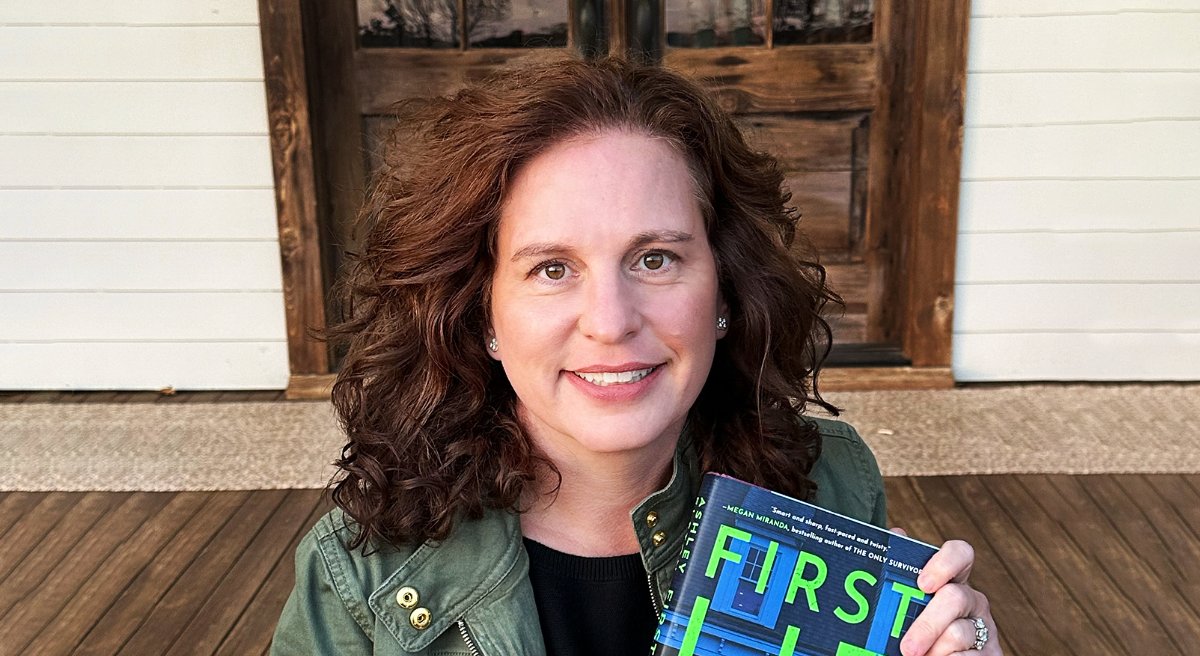
Sara Hamdan is the author of What Will People Think?, out this week from Holt Paperbacks. Below, she recommends three books by Arab American writers that influenced her work.
When times are difficult, I find myself turning to the arts—not for escape, exactly, but for recognition. There’s a particular kind of relief in seeing your inner world reflected back at you, in being reminded that even in uncertainty or distress, creativity can offer clarity, humor, and even joy. Writing What Will People Think? felt, in many ways, like an extension of that instinct: a way to explore the complexities of family and love with both honesty and lightness.
As a Palestinian American woman, I’ve always been drawn to stories that capture the duality of family life: the tenderness and the tension, the expectations and the humor we use to survive them. So many Arab American writers do this beautifully, offering portraits that feel specific yet universally resonant. Here are three books I love that explore those themes with heart, nuance, and, often, a welcome sense of wit.
The Other Americans by Laila Lalami is, at its core, a family story. While it begins with a tragedy, what unfolds is a layered exploration of grief, identity, and the bonds that hold a family together even as secrets and misunderstandings threaten to pull them apart. Lalami captures the emotional texture of immigrant family life with remarkable clarity and compassion.
In A Woman Is No Man, Etaf Rum examines the lives of three generations of Palestinian women, tracing how love and duty can become entangled in ways that are both sustaining and suffocating. It’s a powerful, intimate look at the weight of expectation, and the courage it takes to imagine a different life.
Salt Houses by Hala Alyan offers a sweeping, deeply human portrait of a Palestinian family across generations and geographies. With warmth and precision, Alyan captures how love persists through displacement, how humor and memory anchor us, and how family (no matter how fractured) remains a kind of home.
I’ll add a bonus book: Mona Awad’s Bunny is darkly funny and removes cultural identity from the central sphere of the story.
Together, these books reflect the many ways we carry our families with us: through laughter, conflict, and, always, love.







 English (US) ·