
For Authors
For many authors, the hardest editor to overcome is not a publisher, reviewer, or even a reader. It is the quiet voice in the back of their own mind asking whether a scene goes too far, whether a character will offend someone, or whether a bold creative choice is worth the potential backlash. We live in an age where what we write is scrutinized more closely than ever before, and many authors have quietly begun censoring themselves long before a reader ever sees the page.
In this week’s blog, Ginger explores whether modern storytelling has become overly restrained and what may be lost when authors begin sanding down the rough edges of their work. Drawing on examples from film, television, publishing, and the surprising success of the dark romance genre, he examines the difference between thoughtful storytelling and self-censorship, why readers are often more capable of handling difficult material than we assume, and how trusting your audience may be one of the most important creative decisions a writer can make.
The other night, I sat down with my kids to watch Neon Genesis Evangelion, the landmark 1990s anime series that is, depending on who you ask, either a profound meditation on identity and trauma or the most unhinged thing ever committed to animation. We had to drag out the old PlayStation 2 to watch it on DVD, which added a certain archaeological quality to the experience. What we were not prepared for was the content.
Scenes that the creators apparently thought were perfectly acceptable to broadcast to a mainstream Japanese audience in 1995 had my kids and me exchanging wide-eyed glances. Suggestive moments, provocative imagery, and a casualness about the human body that, viewed through the lens of 2026, felt almost transgressive. I wasn’t necessarily offended, but I was startled. And then I started thinking: When did we get so cautious?
The Boldness We Left Behind
Think back to mainstream films and television from the 1990s and early 2000s. Not exploitation films, not adult cinema, just ordinary, widely-released, critically lauded work. Movies that won Oscars. Cable dramas that won Emmys. Think Basic Instinct in 1992, Titanic from 1997, and American Beauty from 1999. The sexuality and nudity in those movies would, in many cases, never make it to screen today. Not because audiences have become more sensitive, necessarily, but because the people making the content have become more nervous.
Compare that to a modern-day show like The Boys which is, by any measure, a deliberately provocative piece of television. It is gleefully, almost aggressively violent. It will show you things that will make you put down your dinner. And yet, for all its transgression, the sexuality is largely implied, the nudity is minimal, and the show is in many ways more conservative in that regard than a mid-budget drama from 1997 would have been. The shock currency has changed. Gore is apparently fine. A body, apparently, is not.
Something shifted. And I think a lot of us—as authors, as storytellers—have shifted with it, often without even noticing.
The Self-Censorship Trap
There is a voice that many writers know well. It sits just behind the creative instinct, and it asks uncomfortable questions. Is this too much? Will people find this offensive? Could this get me in trouble? It is the voice of caution, and in small doses, it serves a purpose as part of the editorial conscience. But when that voice starts drowning out the creative one, we have a problem.
We live in an era of heightened social accountability, and much of that is genuinely good. We are more thoughtful about representation. We are more aware of the way stories can harm as well as heal. We try, in good faith, to write with empathy and care. These are not small things. They reflect a genuine moral evolution in how we think about storytelling and its impact on real people.
But empathy, taken to its anxious extreme, becomes paralysis. The fear of being called “problematic,” the dread of a pile-on, the worry that one scene or one character or one narrative choice will define how the world sees us—these fears are quietly flattening our work. We sand off the rough edges. We soften the confrontations. We imply rather than show. And in doing so, we sometimes lose the very rawness that made the story worth telling in the first place.
Great literature has never been comfortable. It has always pressed against the edges of what its audience was prepared to feel. The books that stay with us—that genuinely change us—are rarely the ones that were careful. They are the ones that trusted us enough to be difficult.
Something Was Lost
I want to be careful here, because this is not an argument for gratuitousness. There is a difference between boldness and shock for its own sake, between authentic creative daring and mere provocation. The sexuality in older films was not always handled well, some of it reflected attitudes about gender and power that we are right to have moved past. Ace Ventura: Pet Detective is a perfect example in the way it handled a transsexual character, which is wildly offensive to modern audiences. Progress is real.
But there is a version of sexual frankness in storytelling that is not exploitative and instead is, in fact, humanizing. That treats desire and the body and intimacy as natural parts of the human experience worth examining on the page or screen. And that version has become increasingly rare, crowded out not by thoughtful editorial decisions but by fear. By the anticipation of criticism. By the internalized voice of a potential detractor who may not even exist.
When we remove the full complexity of human experience from our stories because we are afraid of how it will be received, we are not being responsible. We are being cowardly. And our readers can feel it.
The Dark Romance Exception
Here is the fascinating thing: while much of mainstream publishing and media has been pulling back, one corner of the literary world has been doing the exact opposite, and thriving because of it.
Dark romance is, by design, a genre that does not flinch. It goes to places that would make most mainstream editors reach for the smelling salts. Violence, moral ambiguity, explicit sexuality, deeply uncomfortable power dynamics: this genre leans into all of it with cheerful purpose. And it has one of the most passionate, loyal, and rapidly growing readerships in publishing.
The secret, I think, is the implicit contract between author and reader. Dark romance operates on a foundation of honesty. Trigger warnings in this genre are not apologies. They are, as many readers describe them, an ingredient list. A reader scanning a trigger warning page is not being warned away from the book. They are checking to see if it has everything they came for. The author and the reader enter into an agreement: I will not protect you from this story, and you will not punish me for telling it.
That is a model worth examining. Not necessarily to transplant trigger warnings into every genre, but to think about what it means to trust your audience. Dark romance authors understand something that the rest of the literary world seems to be forgetting: readers are adults. They are capable of encountering difficult, raw, and provocative material and making their own judgments about it. They do not need to be protected from bold storytelling. They need to be found by it.
Write the Difficult Thing
If you are a self-published author, you have something that traditionally published authors often do not: Genuine creative freedom. No acquisitions committee. No marketing department. No publicist nervously scanning your manuscript for anything that might generate bad press. You answer to your readers, and if your readers are anything like the voracious, thoughtful, emotionally intelligent people most of us have found on the other side of our books, they can handle more than you might think.
The self-censorship impulse is understandable. But resist it. Write the scene that makes you nervous. Keep the chapter that you have been circling, wondering if it is too much. Trust that the discomfort you feel in writing it is a signal that you are doing something real. The smoothed-over, safety-checked version of your story is not the one that will matter to someone. The true version is.
Now I want to hear from you. Do you think mainstream media and publishing have become more prudish over the past few decades? Have you caught yourself self-censoring your own work out of fear of criticism? And if so, did it make the work better or worse? Leave a comment below. This is a conversation worth having.
Share this blog
About the Author
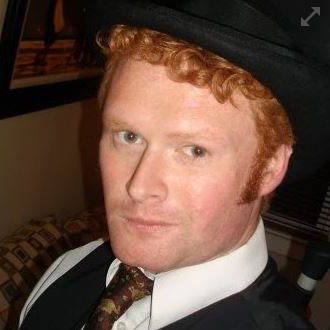
Ginger is also known as Roland Hulme - a digital Don Draper with a Hemingway complex. Under a penname, he's sold 65,000+ copies of his romance novels, and reached more than 320,000 readers through Kindle Unlimited - using his background in marketing, advertising, and social media to reach an ever-expanding audience.










 English (US) ·