
For Authors
The explosive success of Freida McFadden’s The Housemaid proves that indie authors are no longer on the outside looking in when it comes to film and television adaptations, and that the gap between a manuscript and a movie deal has become far smaller than many writers realize. After years of self-publishing, McFadden saw one of her stories become a major theatrical hit in almost record time, and understanding how that happened is essential for anyone hoping to follow a similar path.
From its high-concept hook to its cinematic structure and visual storytelling, Ginger breaks down what gave this story such strong film potential, not just as inspiration, but as strategy. If you’re an indie author wondering how to write stories that go beyond the page, attract larger audiences, and potentially catch Hollywood’s eye, this article serves as a practical blueprint for applying Freida McFadden’s lessons to your own work.
About a year ago, I wrote an article about what writers can learn from reading Freida McFadden. A massively successful author who started in self-publishing, McFadden captured the imagination of millions with her 2022 thriller The Housemaid and to prove just how good the book was, it’s now been made into a successful Hollywood movie!
Grossing over $133 million worldwide on a $35 million budget, the success of The Housemaid isn’t just a win for Lionsgate studio. It’s also a massive victory for the indie and digital-first author community.
Directed by Paul Feig and starring Sydney Sweeney and Amanda Seyfried, The Housemaid proves that the distance between a Kindle upload and a Hollywood red carpet is now shorter than ever before—and for self-published authors, that should be incredibly inspiring!
That’s because the journey of Freida McFadden isn’t an unrealistic fantasy for indie authors, but rather a hopeful roadmap for those of us willing to put in the time and effort to make our books successful. The Housemaid demonstrates that you don’t need a six-figure legacy publishing deal to capture the attention of major film producers. You just need a hook, a dedicated audience, and a story that translates into the visual language of cinema.
With that in mind, I wanted to focus this week’s article on diving a little deeper into the story of how The Housemaid made the journey from printed page to silver screen, and identify some of the elements that self-published authors could use to elevate their own publishing careers and potential give their stories film potential of their own.
The Physician with a Secret Life
Long before she became a household name in psychological thrillers, Freida McFadden was (and still is) a practicing physician specializing in brain injury medicine. Her writing career began not with a splashy agent, but with a series of self-published novels on Amazon’s Kindle Direct Publishing (KDP) platform.
McFadden’s first book, The Devil Wears Scrubs from 2013, drew from her medical experiences. For nearly a decade, she worked in the trenches of indie publishing, mastering the nuances of the Amazon algorithm and the demands of the “rapid release” cycle. She didn’t wait for permission to be an author; she built her kingdom one eBook at a time.
While The Housemaid was ultimately released through Bookouture (a digital-first imprint of Hachette UK), its success was built entirely on the foundation McFadden laid as an indie author. After years of self-publishing, Bookouture approached her with an offer to publish one of her books and promote it on their mailing list. McFadden had actually written The Housemaid back in 2019 but had shelved it, thinking it was “a little too dark.” She decided to give it to Bookouture, and they published it in April 2022. She brought her existing fanbase, her mastery of the “cliffhanger” chapter, and her sharp, accessible prose to a story that would eventually define her career.
The Phenomenon of The Housemaid
The book’s rise was nothing short of meteoric. While it initially gained traction through McFadden’s loyal newsletter subscribers, it found its second, much larger life on BookTok. Readers couldn’t stop talking about Millie Calloway, the parolee who takes a job as a live-in maid for the wealthy Nina and Andrew Winchester, only to realize that the locked attic room isn’t for storage—it’s for her.
The book stayed on the New York Times bestseller list for over 70 weeks, fueled by a relentless stream of organic social media recommendations. Its reception was consistent. Reviews of the book included statements like “I read it in one sitting” and “That twist broke me”. It consistently received the kind of praise that blurb writers like me absolutely live for.
And that sort of visceral, emotional reader response is exactly what Hollywood scouts look for. They aren’t just buying a story, they’re hoping to buy a proven emotional reaction.
By mid-2024, The Housemaid had sold over two million copies and had been on Amazon’s best-seller list for 83 weeks. The book’s commercial appeal was undeniable, and Hollywood took notice quickly.
The Road to Production
Once The Housemaid was on Hollywood’s radar, the path to the screen moved remarkably fast. In July 2022—just months after the book’s April release—producer Todd Lieberman’s newly formed production company Hidden Pictures won a four-way auction for the film rights, in partnership with Lionsgate. This early acquisition signaled Hollywood’s recognition of the book’s massive potential.
In April 2023, Rebecca Sonnenshine, known for her work on The Boys and The Vampire Diaries, was announced as the screenwriter. Then, in October 2024, the project gained major momentum when Paul Feig was confirmed to direct. Feig, known for Bridesmaids and the twisty thriller A Simple Favor, was the perfect choice to balance the story’s dark psychological depth with the high-stakes drama needed for a theatrical hit.
The casting was the final piece of the puzzle. Sydney Sweeney (Millie) and Amanda Seyfried (Nina) signed on as both lead actresses and executive producers, alongside McFadden and Alex Young. Brandon Sklenar, fresh off his success in It Ends With Us (and having broken our hearts with 1923,) joined as Andrew Winchester, with Michele Morrone cast as Enzo, the Italian groundskeeper, and Elizabeth Perkins as Andrew’s mother, Evelyn.
Principal photography began on January 3, 2025, right here in my home state of New Jersey, and wrapped in March 2025. Composer Theodore Shapiro scored the film, marking his eighth collaboration with Feig. The rapid production timeline—from script to screen in under two years—reflected both the property’s commercial potential and the streamlined nature of thriller filmmaking. You’ve heard the term “development hell”? Well, this appears to have been the complete opposite!
From Page to Screen: Key Changes and Why They Happened
While production happened remarkably quickly, that shouldn’t suggest that it was easy or straightforward. Adapting a book as internal as The Housemaid—which relies heavily on Millie’s and Nina’s conflicting perspectives—required significant shifts to work as a two-hour film.
Here are the major differences I identified, and why I think Rebecca Sonnenshine made them (spoilers ahead):
1. The Inciting Incident: Books vs. China
In the novel, Andrew’s “snap” occurs when Millie leaves books on the dining table, a seemingly innocuous mistake that triggers his rage.
In the film, this was changed to Millie accidentally breaking a set of irreplaceable family china that belonged to Andrew’s mother when Enzo startles her.
The Why: Film is a visual medium. A stack of books is mental clutter; shattered, expensive plates provide an immediate, visceral “crack” and a visual representation of a broken domestic facade. It allowed the director to use sharp shards as a recurring motif of danger and set up the brutal punishment that follows. It’s a result of cinema being a more visual medium than literature.
2. The Punishment
In the book, Andrew forces Millie to balance three heavy textbooks on her stomach for hours while he watches through a hidden camera, a form of psychological and physical endurance. When she doesn’t complete the task to his liking, he makes her start again.
The movie amplified the brutality: He forces her to make 21 deep cuts on her stomach with the broken china shards, one for each year of their age difference.
The Why: Cinematic tension often requires immediate physical stakes that the audience can viscerally feel. The visual of blood and glass creates a higher level of horror that translates better to an R-rated thriller audience. As director Paul Feig explained, movie audiences need something more “bloodthirsty” and immediate than the slow psychological torture of the book.
3. Enzo’s Role
In the book, the Italian groundskeeper Enzo is a major ally for Millie and has a romantic and sexual relationship with Nina. He’s the one who convinces Nina to go back and rescue Millie, and he later helps set up Millie’s next housemaid position. Their relationship is a significant subplot.
The film reduced Enzo to a more atmospheric, watchful figure. While there are hints of romance between him and Nina, their relationship is never consummated on screen, and his role is significantly diminished.
The Why: Movies often “streamline” the cast to keep focus on the central triangle. By reducing Enzo’s screen time, the film kept the tension squarely between Millie, Nina, and Andrew, preventing the subplot from diluting the primary “cat-and-mouse” game. It also allowed Nina’s daughter Cecelia to serve as the catalyst for Nina’s return to save Millie, rather than Enzo.
4. The Ending: Dehydration vs. The Showdown
The book’s ending is a slow burn: Millie locks Andrew in the attic and leaves him there without food or water. By the time Nina returns to rescue Millie, Andrew is already dead from dehydration—a poetic, lingering death that mirrors the isolation he inflicted on Nina. Nina tells the police Andrew accidentally locked himself in and they rule it an accidental death (and if the Charlie Kirk assassination has proven anything, it’s that real-life police don’t like asking too many difficult questions.)
The movie opted for a final physical confrontation: When Nina returns, she accidentally releases Andrew while trying to free Millie. A violent struggle ensues where Andrew throws Nina down the stairs and pleads for forgiveness. When Nina refuses him, he lunges to attack again. Millie pushes him over the spiral staircase bannister, and he falls several stories to his death. The women frame it as an accident, Andrew changing a lightbulb in the chandelier when he slipped.
The Why: As Feig told People magazine, “The book ends very satisfyingly for a book, but not satisfyingly enough for a movie.” A protagonist waiting for someone to die of dehydration doesn’t provide the active climax that cinema demands. Movies need a “ticking clock” and physical confrontation. Having Millie actively push Andrew gives Sydney Sweeney a powerful character moment and provides the audience with an immediate, cathartic “cheer moment.” The staircase fall delivers the dopamine hit of a final showdown while the framing as an “accident” maintains the story’s themes about how abusers escape consequences—until they don’t.
5. The Detective’s Connection
In the book, the investigating officer is a man whose daughter was previously engaged to Andrew.
In the film, the detective is a woman whose sister was engaged to Andrew.
The Why: Given that Andrew’s victims are all women, having a female detective deliver justice adds poetic resonance. It reinforces the film’s themes of female solidarity and ensures that Andrew’s downfall comes at the hands of the women he tried to control and destroy. I don’t normally like arbitrary gender swaps, but Paul Feig is not just known for them, it also seems to work in this instance (hence why it didn’t get the same complaints as his 2016 remake of Ghostbusters.)
Advice for Self-Published Authors: Writing for the Screen
If you want your novel to have real film potential, you need to think beyond the page and consider how your story functions as a visual and emotional experience. In other words, think like a producer while you write.
Here are four strategies to make your work “adaptable”:
1. The “High-Concept” Hook
The Housemaid can be pitched in one sentence: “A housemaid with a secret past is hired by a woman who is far more dangerous than she seems.”
The Lesson: If your book requires three paragraphs to explain the plot, it’s a hard sell for film. Aim for a “hook” that is immediate and intriguing. Hollywood executives make decisions in seconds, so give them a concept they can visualize instantly (I wrote a pretty good article on this mindset here.)
2. Limit Your Locations (The “Bottle” Story)
The majority of the movie takes place inside the Winchester mansion, with only brief excursions to New York City. This makes the film relatively inexpensive to produce compared to sprawling epics.
The Lesson: Large-scale stories with 50 locations are expensive risks. A high-stakes thriller in a single, atmospheric house is a “budget-friendly” dream for producers scouting adaptable material. Think of your settings as characters themselves. Make them memorable and contained.
3. Write “Visual” Conflict
In The Housemaid, secrets are revealed through objects: a locked door, a hidden key, a strange attic room, a broken plate, a tracking phone. The story unfolds through what characters do and discover, not just what they think.
The Lesson: Don’t rely solely on internal monologues. Create physical objects or actions that represent conflict. If a character is lying, show them hiding something in a drawer rather than just telling us they feel guilty. Film is a “show, don’t tell” medium, so your prose should reflect that visual thinking.
4. The “POV” Flip or Mid-Point Reversal
One of the reasons the book was so successful was the mid-point switch from Millie’s perspective to Nina’s perspective, completely recontextualizing everything readers thought they knew. This provides a natural “Act 2” transition for a screenplay and creates the kind of twist that generates word-of-mouth buzz.
The Lesson: Structure your book with a clear “before” and “after” moment—a revelation that changes everything. Film thrives on mid-point reversals that upend audience expectations. The more jaw-dropping your twist, the more “Did you see that?” conversations your story will generate, which translates directly to both book sales and Hollywood interest.
The Future is Indie
The success of The Housemaid in theaters—grossing over $133 million worldwide so far—is proof that the “gatekeepers” are no longer the only ones in charge. Hollywood is increasingly looking to Kindle charts and TikTok trends to find their next hits. The film has even been nominated for Best Book to Screen Adaptation at the 9th Astra Film Awards.
What makes McFadden’s journey particularly instructive is the timeline: her book was published in April 2022, film rights were sold by July 2022, and the movie was in theaters by December 2025. That’s less than four years from publication to premiere, lightning speed in Hollywood terms. This rapid trajectory was possible because McFadden had already built her audience, proven her commercial viability, and written a story with inherent cinematic appeal.
If you’re an indie author focused on tight pacing, high stakes, cinematic visuals, and emotionally resonant twists, you’re already writing the future of film. The success of The Housemaid proves that great storytelling, strategic platform-building, and understanding your market can turn a self-published eBook into a Hollywood blockbuster.
Writing with film potential in mind does not mean chasing trends, but understanding how strong concepts, visual conflict, and emotional payoff translate across mediums. The red carpet isn’t reserved for legacy authors anymore, it’s waiting for anyone bold enough to write a story the world can’t stop talking about.
Share this blog
About the Author
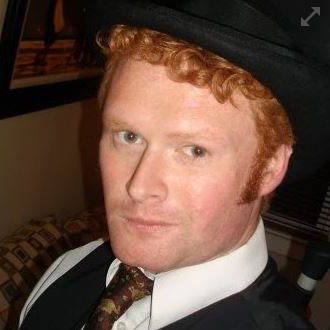
Ginger is also known as Roland Hulme - a digital Don Draper with a Hemingway complex. Under a penname, he's sold 65,000+ copies of his romance novels, and reached more than 320,000 readers through Kindle Unlimited - using his background in marketing, advertising, and social media to reach an ever-expanding audience.







 English (US) ·