
For Authors
Humor is one of the most powerful tools a writer can use, yet it is also one of the most misunderstood. Many authors assume being funny requires a natural gift or stand-up-level wit, so they either avoid humor entirely or force jokes that fall flat. In reality, adding a bit of levity can significantly increase the effectiveness of your book by creating a stronger bond with readers and making your story far more memorable.
In today’s article, Ginger goes into detail as to why humor works in the first place, where it belongs in your writing, and how any author can learn to use it effectively without turning their novel into a comedy. From subtle character quirks to well-timed irony and exaggeration, humor can strengthen a story rather than undermine it. Regardless of genre, a few well-placed laughs may be the missing ingredient that makes readers remember your book and come back for more.
I’m a funny guy.
It’s something people have told me all my life, and I’m afraid I know where it stems from. As a dorky ginger kid growing up in England, I was the target of relentless bullying and quickly learned to use humor as a way to protect myself. It made people like me, it helped defuse tense situations, and—if worst came to worst—I could use humor to utterly demolish a would-be bully without ever having to physically protect myself from them.
Humor is powerful. The ability to make somebody laugh is like a superpower. Being funny makes you more attractive to women, demonstrates your intelligence without showing off, and can make every interaction you have with people memorable to them.
As a self-published author, humor can also be a powerful tool to help make your work stand out in an increasingly crowded marketplace. While comedy books themselves aren’t necessarily a shortcut to the New York Times bestseller list, incorporating humor in your writing is actually one of the most powerful—yet underutilized—tools in your arsenal!
And here’s the best thing: you don’t need to be a stand-up comedian to add effective humor to your writing. Anybody can learn to incorporate humor that connects with readers and makes their work more memorable.
Why Humor Matters in Your Writing
Before diving into how to be funny, let’s quickly address why you’d want to be in the first place.
Authors have been using humor in writing for almost as long as writing has existed. In fact, the earliest recorded joke dates back to 1900 Sumeria. At least, we assume it was a joke, since time has eroded the context behind it:
“Something that has never occurred since time immemorial – a young woman did not fart on her husband’s lap.”
From Chaucer to Shakespeare, humor has served multiple critical functions in literature across the centuries, such as:
- Connection and Memorability: Humor creates an instant bond between you and your reader. Consider Super Bowl commercials. Advertisers pay millions for those precious seconds because they know humorous content connects with audiences and makes messages stick. The same principle applies to your book. When readers laugh, they engage more deeply with your work and are more likely to remember both your story and your name.
- Standing Out in a Crowded Market: Every self-published author faces fierce competition. Humor helps differentiate your work. A touch of humor can make your book the one readers choose over countless others.
- Enhanced Reader Experience: Even in serious genres, moments of levity provide relief and keep readers turning pages. Historical biographies, thrillers, and even horror novels benefit from well-placed humor. Consider Douglas Adams’ The Hitchhiker’s Guide to the Galaxy, which balances existential themes with absurdist comedy, or Terry Pratchett’s Discworld series, which uses humor to explore profound philosophical questions.
Whether it’s making you cry, get frightened, or even get turned on (I’m looking at you, romantasy) the most effective writing has always elicited a physical reaction. What could be more physical than making a reader laugh?
That’s not to say you should try to make your books as non-stop, rib-ticklingly funny as Naked Gun or Airplane!, but getting a belly laugh (or even a wry chuckle) from a reader is an achievement any author should be proud of.
Be True to Yourself to be Funny
Humor is often subjective, and what works for one author doesn’t necessarily work for another. That’s why you should never approach trying to be funny by copying other people’s jokes or style. As difficult as it might seem, your humor has to come from what you genuinely find funny.
If you think something’s funny, you’ll sell it, or at least enjoy writing it. That authenticity is crucial. Your genuine voice will resonate far more than forced attempts at comedy.
And the good news is that unless you’re selling a comedy book, readers won’t expect you to be a stand-up comedian with rapid-fire punchlines from your first chapter to the epilogue. They’ll simply appreciate the moments of levity, especially if they break up more intense or emotional scenes.
Part of good writing is taking your readers on an emotional journey, and humor can be used as a very deliberate way of shifting a reader from feeling one way, almost like a literary palette cleanser.
Practical Techniques for Adding Humor
What actually is humor? What are the elements that combine to wring a dry chuckle or a deep belly laugh out of a reader? Fortunately, authors have spent centuries studying humor and breaking down what makes it work (or makes it fall flat.) Here are some common ways to leverage humor in your writing.
1. Identify the Irony and Disconnects
One of the fastest ways to find humor is to look for things that don’t make sense or contradict each other. One of my favorites is the scene in Monty Python and the Holy Grail, in which King Arthur lops the arm off the Black Knight, who responds: “It’s just a flesh wound.” The more the Black Knight is dismembered, the more he continues threatening Arthur, making the scene increasingly ridiculous and hilarious.
In your writing, examine your scenes and situations for contradictions. If your character is a perfectionist detective, maybe their home is a complete mess. If you’re writing historical fiction, look for the absurdities in the period you’re depicting. A Confederacy of Dunces by John Kennedy Toole is a great example, brilliantly using the disconnect between protagonist Ignatius J. Reilly’s intellectual pretensions and his actual incompetence to create comedy gold.
2. Ask Questions and Provide Outrageous Answers
Comedians constantly ask questions about ordinary situations and come up with unexpected answers, and the same approach works effectively in writing. For example, there’s an episode of Parks & Rec in which well-intentioned Leslie Knope asks Tom Haverford where he moved to Indiana from, perhaps assuming he must have been born in another country because he has brown skin. Tom replies coolly: “From my mother’s uterus” to explain that he’s actually as American as she is.
You can apply a similar technique to your writing by questioning the normal and answering with the absurd. If your character enters a hospital with dead flowers as centerpieces, you might have them think, “How good is this hospital? They can’t even keep the plants alive!” The key is taking the familiar and pushing it to an extreme or asking the question that makes people see it differently.
3. Take Things to Extremes
One of the “Dad Jokes” that my kids groan the hardest at is: “I’ve told you twenty million times not to exaggerate!” But Dad jokes are funny for a reason. Comedians always exaggerate. Exaggeration amplifies humor. One of my favorite examples? In Good Omens by Terry Pratchett and Neil Gaiman, the demon Crowley doesn’t just cause minor inconveniences; he invents the M25 motorway as a sigil of demonic power. The extreme nature of using traffic as torture makes it hilarious.
When editing your manuscript, look for opportunities to exaggerate. Don’t have your character wait a long time; have them wait so long they’ve memorized every crack in the ceiling and named them. That being said, unless you’re writing truly absurdist comedy like The Hitchhiker’s Guide to the Galaxy, make the exaggeration still fit within believable expectation. The exaggeration should feel organic to your character’s voice, not forced.
4. Create Characters with Quirks
You don’t need to turn your entire book into a comedy to benefit from humor. Consider adding one character who serves as comic relief, someone with unique quirks or an unusual way of seeing the world. The Princess Bride by William Goldman balances adventure and romance with genuinely funny moments, largely through character interactions and the narrator’s witty asides.
Your humorous character doesn’t need to crack jokes constantly. They might simply have an unusual hobby, a habit of misunderstanding idioms, or a tendency to point out absurdities others ignore. These characters provide levity without derailing your plot.
5. Pull from Research and Real Details
Don’t try to create humor from thin air. If you’re writing about a specific location, visit its website and look at the facts and figures. If you’re writing about a profession, research its quirks and insider knowledge. There are probably existing jokes about almost everything on the planet, and the more niche the topic, the more that humor makes your writing immersive and believable.
As a Brit, I laughed especially hard reading Sour Sweet by Timothy Mo. Much of the comedy in that story comes from cultural misunderstandings based on real differences in perspective. For example, one character fears leaving home because she thinks the TV show Coronation Street represents typical British people. (God, what a nightmare that would be!) This grounded detail creates authentic humor.
What to Avoid
Don’t Go for Obvious Jokes
The reason people groan at Dad Jokes isn’t because they’re not funny, it’s because they’re tired, repetitive, or predictable. The low hanging fruit of comedy. You should avoid that level of humor in your writing. For example, if you’re writing about postal workers, skip the “going postal” jokes. If your character is a chef, avoid tired clichés about “too many cooks in the kitchen.”
Fresh humor requires looking beyond the first joke that comes to mind. Challenge yourself to dig deeper and find the unexpected angle.
Be Careful with Sensitive Topics
Unless your book specifically addresses controversial subjects, it might be a good idea to steer clear from hot-button issues like sex, drugs, politics, and religion, at least when you’re starting out. Know your audience and understand what they’ll find funny versus offensive.
Avoid Being Mean-Spirited
Similarly, there’s a difference between clever humor and cheap shots. Growing up in England, we used to have “Irish jokes” which implied all Irish people were dumb (they’re pretty much the same jokes Americans used to make about Polish people.) Jokes like that aren’t normally that funny, they’re just mean. Avoid using groups of people as the butt of your jokes. Smart humor punches up, not down.
Clean Versus Edgy
Another decision you’ll have to face when incorporating humor into your writing is whether to write “clean” or “edgy” humor. While it’s easier to make people laugh with raunchy humor, clean humor has the advantage of working anywhere, and being appropriate for all readers. Edgier content limits your audience.
And this doesn’t mean clean humor is less funny. Jerry Seinfeld built an empire on observational comedy without profanity. The key is matching your humor to your brand and target audience. If you’re writing gritty crime fiction, your humor will naturally be darker than if you’re writing cozy mysteries. The humor should fit your genre and character voices organically.
Testing and Refining Your Humor
The Danger of Feedback
I mentioned above how humor is subjective, and that’s something to bear in mind as you begin sharing your writing with test audiences and beta readers. What one person finds hilarious, another might hate, but that doesn’t necessarily mean you should remove it.
Trust your instincts. If you genuinely think something is funny and it fits your character and story, keep it. However, if multiple readers flag the same issue—not that they didn’t laugh, but that something felt wrong or offensive in the way you used humor—investigate further and consider making changes.
The Power of Small Changes
Speaking of changes, sometimes humor fails not because the concept is bad, but because the wording isn’t quite right. Comedians often explain how a joke can hit when one performer tells it, but flops when another comedian uses the gag, because “it’s the way you tell ‘em.”
When revising humorous passages, read them aloud. Try different word choices. Comedy often depends on rhythm and timing, even on the page, and sometimes just changing a single word can make the joke hit so much harder.
Examples from Popular Literature
Let’s examine how successful authors incorporate humor:
Self-Deprecating Humor: In P.G. Wodehouse’s Right Ho, Jeeves, the narrator describes a critique of himself: “Beginning with a critique of my own limbs, which she said, justly enough, were nothing to write home about, this girl went on to dissect my manners, morals, intellect, general physique, and method of eating asparagus.” The humor comes from the character’s acceptance of these insults.
Situational Humor: Anne Tyler’s The Accidental Tourist uses perspective-based humor: “Ever consider what pets must think of us? I mean, here we come back from a grocery store with the most amazing haul—chicken, pork, half a cow. They must think we’re the greatest hunters on earth!” The absurdity of how pets might view humans creates gentle comedy.
Absurdist Humor: Douglas Adams mastered finding humor in the mundane made strange. In The Hitchhiker’s Guide to the Galaxy, the plot revolves around supercomputer Deep Thought, which was built to calculates the answer to the “Ultimate Question of Life, the Universe, and Everything.” It reveals the answer to be the number 42, which suddenly forces everybody to ask what the “ultimate question” was so that they could understand the answer.
When to Add Humor
Humor is like seasoning, and should only be added as appropriate. One of the most effective ways to use it is to change the pacing of a segment, such as in deescalating tense or frightening scenes, which enables an author to ramp those emotions back up again. For example:
- Tense Moments: A brief flash of humor can provide relief and make subsequent tension more effective.
- Character Introduction: A humorous detail makes characters instantly memorable.
- Scene Transitions: A funny observation can smooth awkward transitions.
- Dialogue: Natural banter between characters adds realism and entertainment.
- Descriptions: An unexpected metaphor or comparison can transform mundane exposition.
Just be cautious about taking the approach the Marvel movies seem to have committed to, in which scenes that should have emotional gravitas to them are undermined by pointlessly witty quips.
The Bottom Line
You don’t need to transform your serious thriller into a laugh-out-loud comedy to benefit from using humor in your writing. Even a few well-placed moments of levity can make your book more engaging, memorable, and enjoyable.
To get started, you have to do exactly that—get started. Humor is a muscle you strengthen through practice. Start looking for ironies, disconnects, and absurdities in everyday life. Ask questions about the obvious. Take thoughts to their logical extremes.
Most importantly, be authentic. Write the humor you genuinely find funny, not what you think readers want. Your unique voice, combined with thoughtful humor, will help your book stand out in a crowded market and keep readers coming back for more.
Remember, if readers laugh while reading your book, they’re forming positive associations with your work—and in the competitive world of self-publishing, making readers feel good is perhaps the most powerful marketing tool you have.
So what’s the most memorable laugh you’ve ever got from a book? I’d love to find out in the comments section below. My personal favorite is The Hitchhiker’s Guide to the Galaxy, a book that my son has now read as well, meaning we can crack the same jokes together and bond over the time we each spent in a fantastical, absurdist fictional universe.
Share this blog
About the Author
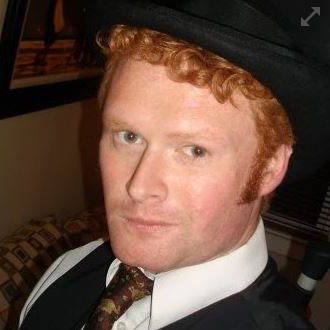
Ginger is also known as Roland Hulme - a digital Don Draper with a Hemingway complex. Under a penname, he's sold 65,000+ copies of his romance novels, and reached more than 320,000 readers through Kindle Unlimited - using his background in marketing, advertising, and social media to reach an ever-expanding audience.





 English (US) ·