
Back in 2022, I wrote the post 10 Authors I Haven’t Read, But Want To, and am now thinking that the second part is overdue. From my previous list, I have read seven out of ten authors I mentioned, including Molière, Cortázar and Llewellyn, the latter’s book How Green Was My Valley becoming one of my favourites. So, here is another list of authors I still have not read, but really want to:
I. Natalia Ginzburg
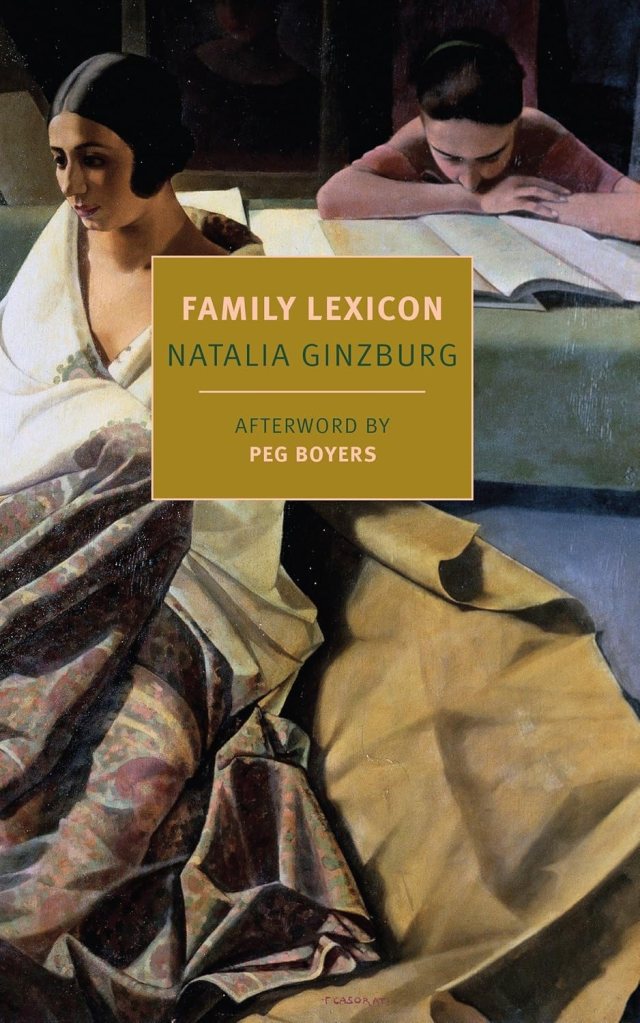
I cannot believe it, but I am still to read any Natalia Ginzburg (1916-1991), an Italian author whose fiction explores family, politics and the World War II events, and that is even after my Italia Reading Challenge, when I first earmarked this author as “to read”. I am particularly drawn to her novel Family Lexicon, which was reissued by NYRB publishing, and is said to be “intimate, enchanting and comedic”, “an unforgettable novel about language, memory, and the lasting power that family holds over all of us” (Daunt Books Publishing).
II. Elizabeth Bowen
I have heard great things about Anglo-Irish novelist Elizabeth Bowen and her books. I want to read The Death of the Heart, and The House in Paris, the former has been named one of the 100 best modern novels, while the latter has some intriguing themes, including time, motherhood, and betrayal and secrecy.
III. Nikos Kazantzakis
Considered a giant of modern Greek literature, Nikos Kazantzakis was nominated for the Nobel Prize in Literature in nine different years, and remains one of the most translated Greek authors. I want to read his novel Zorba the Greek. It is “the tale of a young Greek intellectual who ventures to escape his bookish life with the aid of the boisterous and mysterious Alexis Zorba” (wikipedia). I also want to fill the gaps in my knowledge of Greek literature in general. Alexandros Papadiamantis and Pétros Márkaris are other authors I want to try.
IV. Andrei Bely
In 1965, Vladimir Nabokov listed four greatest prose masterpieces of the 20th century: Kafka’s The Metamorphosis, Joyce’s Ulysses, Proust’s In Search of Lost Time (first half), and Bely’s Petersburg. I am now dying to read the last book on his list – Bely’s Petersburg. Bely (1880-1934) was a Russian and Soviet novelist and Symbolist poet, and Petersburg is set during the 1905 revolution, focusing on the peculiarities of the city and blending political thriller, dysfunctional family dynamics and psychological absurdities. It is great I can read it in the original language as well. Bely’s novel The Moscow Eccentric is also said to be really good.
V. Rebecca West
Rebecca West was a British author, journalist and literary critic, and at least two of her books have been on my TBR list for ages now: The Return of the Soldier [1918] and The Fountain Overflows [1956] (also reissued by NYRB). Given my interest in the First World War and the shell-shock syndrome, I am especially looking forward to reading The Return of the Soldier.
VI. Elizabeth von Arnim
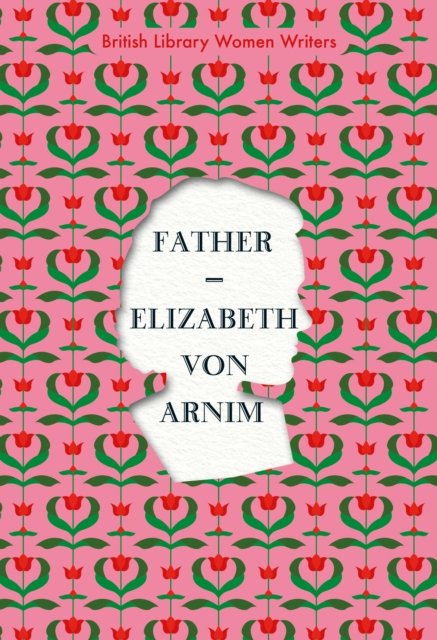
I have already put Elizabeth von Arnim’s The Enchanted April [1922] to read for my 10 Books of Summer reading challenge, but the author’s novel Father also intrigues me. It tells of Jennifer who up to the age of thirty-three did nothing but care for her father. When she finds out that her father is to be married and will have a young wife, she finally senses liberation. I have heard that von Arnim’s books are entertaining and have plenty of tongue-in-cheek humour moments.
VII. Raymond Roussel
I am intrigued by French poet and novelist Raymond Roussel (1877-1933), who was closely associated with the Surrealist movement in France, and was later rediscovered by the Oulipo group. I am eager to find out what his novel Locus Solus is all about, a book also championed by Michel Foucault.
VIII. Paul Lynch
I want to read Paul Lynch’s dystopian novel Prophet Song because it won the Booker Prize in 2023, though recent Booker Prize winners do not agree with me at all, and the last one I truly enjoyed was Eleanor Catton’s The Luminaries, the 2013 winner. Lynch’s novel Beyond the Sea also caught my eye because I love existential fiction. Goodreads says that it is “part gripping survival story, part fearless existential parable, [the novel] is a meditation on what it means to be a man, a friend, a father and a sinner in our fallen world.”
IX. Natsuhiko Kyogoku
Natsuhiko Kyogoku is a Japanese mystery writer, and three of his novels have already been turned into films. There are a number of his novels I want to try, including The Summer of the Ubume and Why Don’t You Just Die? In the latter novel, Kenya, a young man, comes looking for information on Asami, a young woman he met just before her death. Kenya visits six different people who knew Asami: her boss, her next-door neighbour, her yakuza boyfriend, her estranged mother, the detective assigned to her case, and a lawyer. It is a conundrum of a tale, and in each chapter, the person largely tells Kenya about themselves and not about Asami, hinting at a different version of Asami each time.
X. Jean Teulé
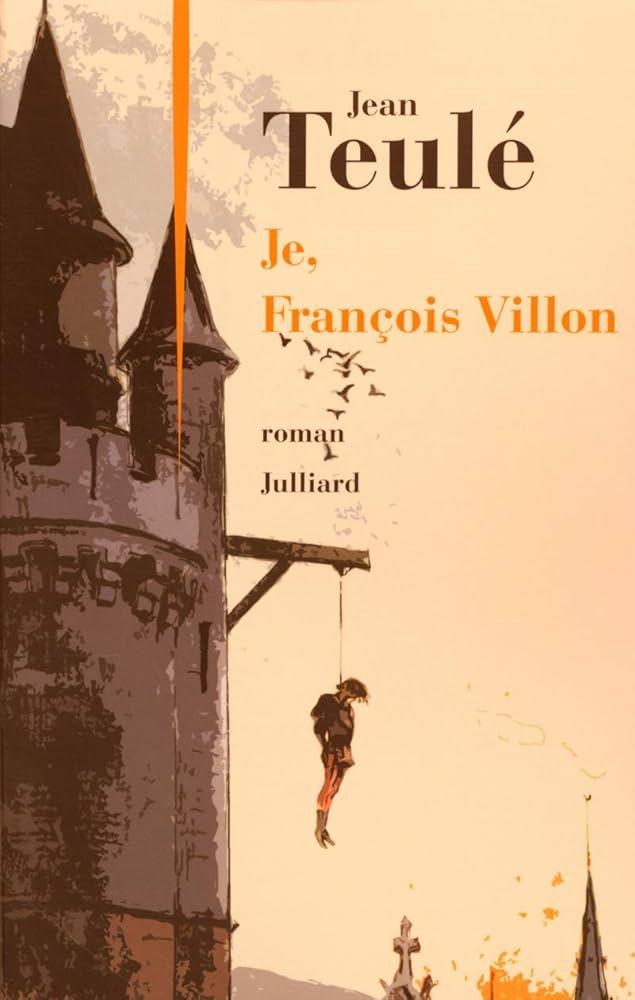
I love black comedy when it comes to films, and liked French adult animation The Suicide Shop (2012), based on Jean Teule’s graphic novel. However, I haven’t actually read anything by him yet, so am looking forward to exploring his work. Je, François Villon or The Hurlyburly’s Husband sounds fascinating. It says that “Teulé strips away any romanticism of the Middle Ages, focusing on the filth, cruelty, and crude reality of 15th-century urban life.”





 English (US) ·