
For Authors
There’s a particular kind of disappointment that comes from pouring time, effort, and skill into a story that should work, only to watch it fail to find an audience. It’s not necessarily a matter of bad writing or lack of polish. In many cases, the craft is solid and the effort is undeniable. And yet, readers don’t connect. When everything on the surface looks right, that kind of disconnect can be difficult to diagnose.
As Ginger explains in this week’s blog, the problem often isn’t execution, but something far more fundamental. Understanding what your audience expects, and recognizing the promise you’re making when you write within a specific genre, is critical to success, yet many authors underestimate its importance. That was the mistake behind the newest Star Trek show, Starfleet Academy, which ultimately led to its cancellation after airing only a single season. By breaking down how the show lost its audience, Ginger reminds us how knowing who you’re writing for, and delivering on those expectations, is just as important as the story itself.
I’ve been a Star Trek fan for as long as I can remember.
Growing up in a little town in England, I’d hound my mother for trips to the video rental store to borrow VHS cassettes of Star Trek: The Next Generation.
I devoured Star Trek paperback novels—dozens of them—because we only had four channels and only one of them regularly showed reruns featuring the crew of the Enterprise and their adventures.
I was glued to the TV when The Wrath of Khan was aired on a Bank Holiday weekend, and as a teenager I was entranced when I watched First Contact in the movie theater for the first time.
Star Trek inspired in me something that has never really left. Even today, it’s my “comfort show” when I need to have something on in the background while I’m doing the vacuuming or cooking dinner for the kids. Deep Space Nine remains one of the shows I talk about most with my writer friends, arguing that it’s one of the most sophisticated pieces of science fiction television ever produced, a slow-burn character epic that rewarded its patient audience richly.
Even though I wouldn’t describe myself as a “Trekkie” I fully acknowledge that Star Trek, at its best, is simply some of the finest storytelling in any medium.
So when I tell you that I genuinely couldn’t get into the most recent Star Trek show, Starfleet Academy, I want you to understand how much it pains me. What pains me even more is that I’m not alone in feeling this way. Now that the first season has concluded, the market has delivered its verdict in the most official way possible.
Paramount+ confirmed that Starfleet Academy will end with its upcoming second season—a second season that, in a rather poignant twist, had already been commissioned and filmed before the first had even aired.
It’s not all bad news. The show earned an 87% positive score from critics on Rotten Tomatoes. However, it got a mere 51% audience score, and it never once appeared in Nielsen’s weekly top ten streaming lists. That gap between critical appreciation and audience engagement tells the whole story. The people whose job it was to evaluate the craft admired it. The people who were simply meant to enjoy it just didn’t show up, and those of us who did found ourselves dropping off as the season continued.
For self-published authors, that split might be a familiar and sobering sight. Many of us have poured our heart and soul into writing something that quietly fails to find its readership, and we can learn a lot by dissecting the failure of Star Trek: Starfleet Academy.
A Show Full of Talent That Somehow Missed the Mark
Now, before we go any further, let’s recognize the elephant in the room (or the Klingon Targ if we want to stay on theme.) Back in February , and put forward a strong argument about how everything that was different about it (and got the nerds upset) was in keeping with the tradition of all new Star Trek shows promising to explore bold, new narrative worlds.
I meant every word of that, and wanted it so desperately to be true. I still love the idea of the show, and fully acknowledge that the talent involved in Starfleet Academy was just as exceptional as I’d argued they would be.
The cast were brilliant across the board, fully committed to their roles and bringing real heart to the material. Seeing Robert Picardo on screen again was a genuine pleasure. There’s a warmth and a wit to that man that can’t be manufactured (despite him playing a hologram!)
Seeing Helen Hunt on the small screen in a Star Trek show was also a treat. And Paul Giamatti? Extraordinary. He chewed the scenery with such relish that you could practically hear him enjoying every single moment. I loved watching all of them…
…and yet.
The honest truth is that watching Starfleet Academy felt to me very much like watching Wednesday with my teenage daughter. I could appreciate it on a technical level. I could see the craft. There were individual episodes I genuinely enjoyed. But after forcing myself to finish the first few episodes, I eventually had to admit to myself that I wouldn’t have chosen to watch this show on my own. It wasn’t made for me, and no amount of goodwill or loyalty to the franchise was going to change that.
Starfleet Academy felt, at its heart, more like a Disney Channel high school drama than a Star Trek show. The premise—a group of cadets navigating academy life—pulled the story away from the very thing that makes Star Trek work.
Because, you see, good Star Trek is a simple formula! You need a ship, a crew, and the vast unknown frontier waiting beyond the viewscreen. The incredible success of Seth Macfarlane’s The Orville is proof of that! And without those elements, you simply don’t have Star Trek. You have something else wearing Star Trek’s uniform.
You can see that when you contrast Academy with Strange New Worlds, which has become the most beloved of all the recent Trek output. That show has been successful because it went back to basics. There was the ship. A familiar crew of genuinely interesting characters. Self-contained stories driven by science fiction ideas. It gave its audience exactly what they’d always wanted, and the audience responded accordingly.
The creators of Star Trek: Starfleet Academy saw that success and decided: “Nah.”
The Pattern That Should Have Been a Warning
Starfleet Academy is not an isolated misstep. Star Trek: Discovery made a similar error in a different direction. Rather than being an ensemble show built around a ship and a crew—the fundamental unit of Star Trek storytelling—it became, essentially, Michael Burnham: A Star Trek Story. Every story was filtered through her emotional journey. The crew of the Discovery were supporting characters in their own ship. It was well-made television, and Sonequa Martin-Green is a wildly gifted actress, but it was not Star Trek in the way audiences understood and loved Star Trek to be.
Sadly, that’s been the pattern of recent Star Trek. The producers keep taking the name of something audiences love and then delivering something structurally different underneath it. Prequels. Distant futures. Academy dramas. Spin-offs. Each one asks the audience to adjust their expectations, to meet the show somewhere new, and each time, a portion of that audience simply doesn’t follow.
What This Has to Do With Your Books
Here’s why I’m writing about Star Trek in an article aimed at self-published authors.
Many of us—and I absolutely include myself in this—stumble not because we lack talent, but because we forget who we are actually writing for. We make the same mistake the producers of Star Trek did.
For example, romance is one of the most commercially successful genres in independent publishing. The readers are passionate, loyal, and prolific. They know what they want, and when you deliver it, they will reward you generously. Biker romance, for example, has an established and enthusiastic readership. The tropes are well understood. The emotional beats are expected. That isn’t a limitation, it’s a road map!
But I learned the hard way that you need to follow that map (preferably astride a roaring Harley Davidson.)
I’d built a solid readership with a string of successful biker romance novels—I’ve sold over 71,000 copies of them. The audience was there. The trust was there. But then I decided I wanted to follow my own creative instincts and write a paranormal romance instead of another story about my motorcycle club.
This was something I wanted to write, a story that excited me personally. I put the same effort into it. The craft was there. But my readers weren’t. The book landed flat, because I’d taken my established audience somewhere they hadn’t signed up to go.
I had, to borrow a phrase from the franchise we’ve been discussing, phasered myself in the foot!
The lesson is not that you shouldn’t experiment. Experimentation is the only way to learn and grow in your writing. The lesson is that experimentation has a cost, and you need to be willing to pay that cost with full awareness.
If you’ve built an audience in a specific corner of romance—or thriller, or cosy mystery, or any other genre with strong reader expectations—you’ve made an implicit promise to those readers. When you break that promise without warning, you don’t just lose a sale. You risk losing the relationship you worked so hard to create.
Effort Is Not Enough
One of the hardest truths in both publishing and television is that effort is not the same as value. At least, not from the audience’s perspective.
Starfleet Academy involved enormous effort. The production values were high. The writers clearly cared. The actors gave everything they could to the characters they played.
And yet, it still didn’t deliver what the audience wanted. All that talent, resource, and goodwill couldn’t compensate for a fundamental mismatch between what was offered and what was expected.
The same is true of our books. You can spend months on a novel. You can hire the best editors, commission a beautiful cover, and write prose that genuinely sings to you—but if you’re writing into a genre without understanding—and respecting—what readers of that genre actually want, you’re building something magnificent on a barren plot of land.
Now, don’t get me wrong. This isn’t a counsel of despair. It’s a call for intentionality. Before you start a project, ask yourself honestly: Who is this for?
If the answer is primarily me, that doesn’t necessarily mean you shouldn’t follow through on it. It’s just worth knowing what the consequences might be. Passion projects have their place, but if you’re hoping to build a readership and a sustainable career (or continue the success of a 60+ year old sci-fi franchise) you need to be able to answer that question with the name of a real, existing audience, and then have the discipline to serve that audience faithfully.
A Sad Goodbye to the Academy
I feel genuine guilt about the fate of Starfleet Academy, and partly because I myself failed in my efforts to support it. I wanted to support it. I wanted to love it. The cast deserved better than my drifting attention, and I say that with complete sincerity.
However, somewhere in the middle of the season, I realised I was watching out of obligation rather than joy, and that should be enough for anybody to give up on it (it’s the equivalent of confining a book to your DNF pile.)
The failure wasn’t down to the actors and cast as individuals. It was a failure of concept. A show that arrived at the wrong destination before a single frame was ever shot.
And here is the thing I keep coming back to, the awkward truth behind trying to create art that is commercially successful:
It was not my job to work harder at enjoying it.
That’s not how storytelling works. The audience doesn’t owe you their engagement. They owe you nothing, actually. They show up willingly and that makes it your responsibility—whether as a showrunner or as an author—to hold up your end of the bargain.
We have to give our audiences what we know they want, and when we fail to do that, we have to be honest with ourselves about why, rather than blaming the audience for not meeting us where we chose to stand. That accountability is uncomfortable, but it’s also, I think, the beginning of doing better work.
In my own writing career, I returned to the motorcycle club formula that gave me my original success and started to build back my audience. For Star Trek, that’s the remaining two seasons of Strange New Worlds; the iteration of the show that really delivers what audiences seem to love.
The stars are still out there. The frontier is still waiting. We just have to remember what kind of ships our readers actually want to board.
Share this blog
About the Author
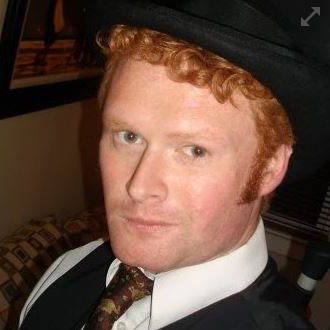
Ginger is also known as Roland Hulme - a digital Don Draper with a Hemingway complex. Under a penname, he's sold 65,000+ copies of his romance novels, and reached more than 320,000 readers through Kindle Unlimited - using his background in marketing, advertising, and social media to reach an ever-expanding audience.











 English (US) ·