
“I know two kinds of anti-Semites,” the unnamed narrator of For Two Thousand Years (1934), by the Romanian Jewish novelist Mihail Sebastian (born Iosif Mendel Hechter), tells a man he admires when unexpectedly confronted with his anti-Jewish prejudice. “Ordinary anti-Semites—and anti-Semites with arguments.” One of the most common anti-Jewish arguments in the West between the Russian Revolution and the fall of Nazi Germany was that Jews were an inherent component of the global spread of communism—the myth that became known as “Judeo-Bolshevism.”*Such claims ranged widely across geographical borders and political persuasions. Winston Churchill, writing in the Illustrated Sunday Herald in 1920, when he was the British secretary of state for war and air, warned about “the schemes of the International Jews,” whose “sinister confederacy” could be traced “from the days of Spartacus-Weishaupt to those of Karl Marx,” making up a “world-wide conspiracy for the overthrow of civilisation.” That same year Henry Ford’s The Dearborn Independent began publishing a series of articles arguing that in the confidence and secrecy of Jewish communication, or buried in the Yiddish dialect, or obscurely ...
Related

ON THEIR FRONTLINES
3 hours ago
1

Sittin’ on the Dock of the Bay
17 hours ago
2

Upstate
17 hours ago
2

‘The Jealousy Comes from Nowhere’
17 hours ago
2
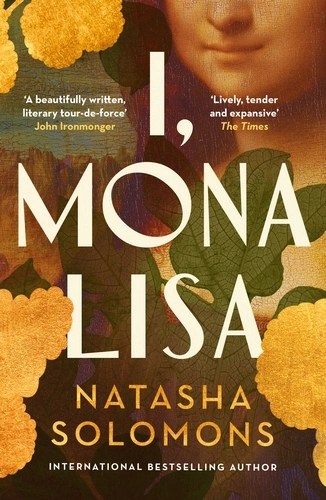
I, Mona Lisa by Natasha Solomons
1 day ago
5

EGE AND ÁVRA
1 day ago
6

Popular

SEASON OF THE SERPENT
2 weeks ago
59


The Best New YA Thrillers To End Summer With
3 weeks ago
57



A Mystery, Historical Romance, & More
3 weeks ago
55

24 New LGBTQ Books Out in August 2026
1 month ago
52

Fantasy Romance, a Cookbook, & More
3 weeks ago
51


PUMPKIN PATCH PANIC!
2 weeks ago
49
 English (US) ·
 © Clint's Books 2026. All rights are reserved
