
For Authors
For many genres, shorter and tighter books perform better in today’s distracted market than a single massive novel. But if you’re already sitting on a 200,000 word manuscript that feels impossible to shorten, what are your options? What seems like a problem at first glance may actually be a hidden opportunity.
In this week’s blog, Ginger shares how he split a 260,000 word draft into two separate books and why that decision led to a stronger story, a faster publishing timeline, and better reader response. From identifying natural structural break points to ensuring each installment delivers real narrative closure, he walks us through the practical and psychological factors that need to be considered. In many cases, turning one massive project into multiple satisfying novels is not just viable, it’s the smarter move.
In my previous posts, I’ve discussed the surprising power of shorter fiction in today’s market. Readers are busy, attention spans are fragmented, and a tightly-paced 80,000-word novel often performs better than its bloated 150,000-word cousin. But what if you’ve already written that massive manuscript? What if you’re staring at a 250,000-word behemoth and wondering if anyone will ever finish it?
I faced exactly this dilemma with my novel Nobody Rides for Free. The original draft clocked in at 260,000 words—a doorstop that would intimidate even dedicated readers!
But during the editing process, I made a discovery that changed everything. It turned out that the first 90,000 words comprised an entirely self-contained story that fit Dan Harmon’s Story Circle perfectly. It had its own beginning, middle, and end. The protagonists went on a complete journey, faced meaningful obstacles, experienced change, and returned transformed.
This realization was liberating. It meant I was able to publish those first 90,000 words as a standalone book, French Kiss & Flint, and suddenly I had a much more manageable 170,000-word manuscript remaining. More importantly, because I’d already “completed” one story, I felt free to make radical structural edits to what remained.
Without the psychological weight of that self-contained opening act, I could cut subplots, combine characters, and tighten pacing in ways I’d been reluctant to attempt before. The result was a 120,000-word novel that currently holds a 4.7 rating on Amazon.
But here’s the critical lesson I learned. Splitting your novels into multiple books isn’t as simple as just taking a cleaver to your manuscript and calling it a day.
The Self-Contained Story Imperative
Unless you’re explicitly marketing your work as a serialized story or as “Part One of Two,” each segment you publish must function as a complete, satisfying story in its own right.
This is non-negotiable.
Readers who pick up a book expect narrative closure, even if some threads remain open for future installments. They want to feel like their time investment paid off, that they experienced a complete arc, and that the book they just finished was worth reading on its own merits.
Think of it this way: Each book should answer the question it poses in its opening pages, even if it raises new questions for future volumes. If your protagonist sets out to rescue their kidnapped sister, that rescue needs to happen by the end of Book One, even if the mastermind behind the kidnapping escapes to threaten them in Book Two. If your detective is investigating a murder, they need to solve that murder, even if the solution reveals a larger conspiracy that will drive the next book.
The Story Circle framework I mentioned earlier (derived from Joseph Campbell’s Hero’s Journey) provides an excellent template for this. Your character needs to be in a zone of comfort, experience a want or need, enter an unfamiliar situation, adapt to it, get what they wanted, pay a heavy price, return to their familiar situation, and have changed as a result. If your manuscript section completes this circle, you likely have a viable standalone story.
When Splits Work and When They Don’t
The entertainment industry has experimented with splitting stories across multiple installments with varying degrees of success, and we can learn from both their triumphs and failures.
The most infamous example might be the final Harry Potter book, The Deathly Hallows, which was split into two films. This decision was primarily financial, but it actually worked from a storytelling perspective.
The first film had its own narrative momentum—the wedding attack, the infiltration of the Ministry, the discovery of the Sword of Gryffindor, and Dobby’s death provided emotional peaks and valleys that made the first installment feel substantive. It ended on a clear pivot point that changed the nature of the quest. You left the theater having experienced a complete chapter of the story, even though you knew the saga wasn’t finished.
Contrast this with The Twilight Saga: Breaking Dawn, which also split its final book into two films. Here, the division felt more arbitrary and mercenary. The first film ended mid-story, right when things were getting interesting, with little narrative closure. Fans felt cheated by the obvious cash grab because that first installment didn’t provide a satisfying viewing experience on its own. It was half a movie stretched to feature length, not a complete story that happened to be part of a larger whole.
In literature, we see successful examples in works like Frank Herbert’s Dune series or Brandon Sanderson’s Stormlight Archive. Each book is massive, yet each stands as a complete novel with its own central conflict, climax, and resolution. Yes, larger plot threads continue across books, but you never finish one of these novels feeling like you’ve only read half a story.
On the other hand, some authors have published what are essentially serialized chapters as separate books, leaving readers frustrated and feeling manipulated. These “books” end on cliffhangers without resolving the central question posed at the beginning, essentially functioning as the first third of a single novel chopped into pieces. Unless readers are told upfront that they’re getting a serialized story, this approach damages trust and results in poor reviews.
Practical Advice for Self-Published Authors
If you’re sitting on a massive manuscript and considering splitting it, here’s how to approach the process:
Step 1: Identify Natural Break Points
Look for places in your manuscript where significant story arcs conclude. Your protagonist should have achieved something meaningful, failed in a way that forces them to regroup, or undergone a transformation. These are potential ending points.
Step 2: Test It Against Story Structure
Map your potential first book against a recognized story structure like the Story Circle, the Hero’s Journey, or the three-act structure. Does it have all the necessary components? If you’re missing crucial elements—if there’s no low point, no moment of transformation, no climax—you don’t have a complete story yet.
Step 3: Evaluate Reader Satisfaction
Imagine a reader who will never pick up the second book. Will they feel cheated? Will they wonder why the story ended where it did? If someone reads only your Book One, they should come away feeling like they experienced a complete narrative, even if they’re curious about what happens next.
Step 4: Be Willing to Write New Material
Sometimes a natural break point exists, but it needs enhancement. You might need to write a new climactic scene, add an epilogue that provides closure, or strengthen the emotional arc so the ending feels earned. This isn’t about adding fluff, it’s about ensuring the story you’re publishing actually has a proper ending.
Step 5: Consider the Remaining Manuscript
Once you’ve carved out your first book, what’s left needs to be viable. Can the remaining material stand on its own? Does it need significant restructuring? In my case, removing the first 90,000 words freed me to reimagine what came after. I wasn’t editing the same book anymore, I was crafting a new one from existing material.
Step 6: Be Transparent with Readers
If your books are closely connected, make that clear in your marketing and author’s notes. Readers appreciate knowing what they’re getting into. There’s nothing wrong with writing books that form a continuous story, as long as each installment provides value and closure on its own terms.
The Benefits Beyond Page Count
Splitting my manuscript didn’t just give me two more manageable books, it made me a better editor. Once I’d published that first standalone story, I felt liberated to be ruthless with what remained. I killed darlings I’d been protecting, merged characters who served similar functions, and cut entire subplots that had only existed to justify the original book’s length.
The result was a tighter, more focused novel that readers responded to enthusiastically. That 4.7-star rating represents readers who felt their time was respected, who experienced a story that justified its length rather than one padded to seem more “substantial.”
For self-published authors, this approach offers another significant advantage: faster time to market. Instead of spending years perfecting your massive manuscript, you can publish a complete, polished book in a more reasonable timeframe, get it in front of readers, and build momentum while you’re finishing the next installment. You’re also testing the market—if readers love your first book, you know there’s an audience for the second. If they don’t, you can take their feedback into account before finalizing the remainder.
Your Manuscript, Your Choice
Not every long manuscript should be split. Some stories genuinely require their length, and cutting them apart would do violence to the narrative. But if you’re struggling with an unwieldy manuscript, if you’re drowning in subplots and losing sight of your core story, or if you’re intimidated by the editing process ahead of you, consider whether you might actually have two books hiding in that single document.
The question isn’t whether your book is too long, it’s whether every word serves the story you’re telling. Sometimes, the most loving thing you can do for an overlong manuscript is recognize that it’s actually two different stories that each deserve room to breathe.
Have you split a manuscript before, or are you considering it? I’d love to hear about your experiences and questions in the comments below. What challenges have you faced, and what did you learn in the process?
Share this blog
About the Author
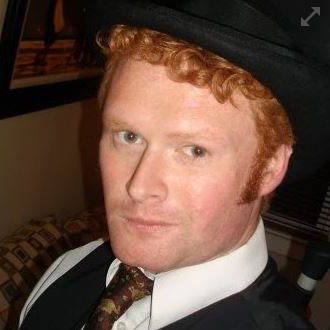
Ginger is also known as Roland Hulme - a digital Don Draper with a Hemingway complex. Under a penname, he's sold 65,000+ copies of his romance novels, and reached more than 320,000 readers through Kindle Unlimited - using his background in marketing, advertising, and social media to reach an ever-expanding audience.













 English (US) ·