
Religious philosophy asks the questions that hover behind every other question: is there a God, does that God have a plan for us, and if so, how would we even recognize his message among the world's competing scriptures? These six books take that challenge seriously, approaching it from science, logic, comparative religion, and lived faith rather than from slogans or assumptions.
Whether you're a skeptic looking for a fair hearing, a believer wanting sharper reasoning, or simply curious how serious thinkers have wrestled with God, freedom, and evil, this list has something for you. We start with a fresh 2026 release that tackles the atheism-to-faith journey head-on, then move through some of the most influential voices in the philosophy of religion.
What Are The Best Religious Philosophy Books?

Atheism to God, by Nadeem Ahmed (2026)
Ahmed builds his case step by step: is there a creator, does that creator have a plan for humanity, and if a message was sent, which of the world's two largest religions is more likely to carry it? He walks the reader from honest skepticism toward belief using plain logic rather than appeals to tradition, comparing the New Testament and the Quran directly along the way.
It's a short, accessible read aimed at truth-seeking atheists, agnostics, and Christian or Muslim readers alike, and it fills a gap other apologetics books have left untouched by tackling Islam's side of the conversation with the same rigor usually reserved for Christian apologetics.

Mere Christianity, by C.S. Lewis (1952)
Adapted from Lewis's wartime radio broadcasts, this is the book that turned a former atheist into one of the twentieth century's most quoted defenders of faith. Lewis builds his argument from the universal human sense of right and wrong, then moves outward into what Christians actually believe and why it matters.
Decades after publication, it remains the gateway book for readers who want their faith questions met with clarity and wit instead of dogma. Few writers make abstract theology feel this conversational.

The Language of God, by Francis S. Collins (2006)
Collins led the Human Genome Project, and he writes as a scientist who started out an atheist and ended up convinced that faith and reason aren't enemies. He walks through genetics, the Big Bang, and evolution, then explains why none of it pushed him away from belief in God.
For readers caught in the science-versus-faith debate, this is one of the most credible voices arguing that you don't have to choose sides. Collins writes with the patience of someone who has personally made the journey from doubt to conviction.

God, Freedom, and Evil, by Alvin Plantinga (1974)
Plantinga takes on the oldest objection to God's existence head-on: if God is good and all-powerful, why does evil exist at all? His free will defense, developed here, became one of the most influential responses to that question in modern philosophy.
The book is compact but dense, written for readers who want rigorous logic rather than comforting platitudes. It rewards a slow, careful read and has shaped how philosophers on both sides of the debate argue the problem of evil ever since.

A History of God, by Karen Armstrong (1993)
Armstrong traces how the idea of God has shifted across four thousand years of Judaism, Christianity, and Islam, showing that “God” has never meant one fixed thing to the people who worship him. It's a sweeping, scholarly tour through the mystics, philosophers, and reformers who shaped monotheism.
If the other books on this list argue for or against belief, Armstrong's contribution is to show how belief itself has evolved, which makes it essential reading for anyone trying to understand where today's religious debates actually come from.
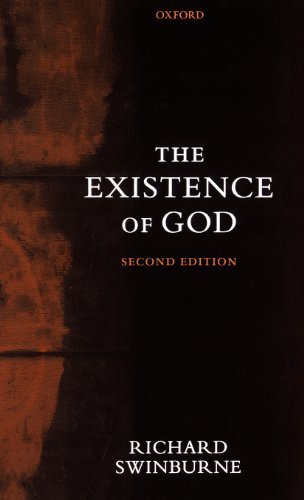
The Existence of God, by Richard Swinburne (2004)
Swinburne, a longtime Oxford philosopher of religion, builds a careful probability case for God's existence from the laws of nature, the fine-tuning of the universe, and the fact of human consciousness. He doesn't claim certainty, only that the evidence, taken together, makes God's existence more likely than not.
It's the most technical book on this list, written for readers who want the strongest possible analytic philosophy case rather than a popular introduction. Patient readers will come away with a genuinely rigorous framework for thinking about the question.
Final thoughts on religious philosophy books
What ties these six books together is a refusal to settle for easy answers on either side of the God question. From Ahmed's direct comparison of scripture to Armstrong's sweeping history and Plantinga's and Swinburne's analytic rigor, each writer takes the search for truth seriously. Pick whichever angle speaks to where you are right now, skeptic, seeker, or believer, and you'll come away with sharper questions and better answers.


My profession is online marketing and development (10+ years experience), check my latest mobile app called Upcoming or my Chrome extensions for ChatGPT. But my real passion is reading books both fiction and non-fiction. I have several favorite authors like James Redfield or Daniel Keyes. If I read a book I always want to find the best part of it, every book has its unique value.










 English (US) ·