
War leadership books (like On War by Carl von Clausewitz) can get weirdly clinical. A few frameworks, a few “steps,” then you’re back to your calendar feeling just as heavy. I like faith-based leadership books when they take the inner life seriously, because wisdom usually shows up after you slow down enough to notice what’s driving you.
The Missing Puzzle Piece: Faith
A lot of leadership advice assumes you already know what you are aiming for. It talks about influence, execution, culture, and decision-making, but it often skips the question underneath all of that. What is shaping you while you lead. That is where faith matters. Christian leadership is not a religious layer you add on top of competence. It is a different foundation. It starts with stewardship, not ownership. People are not tools to squeeze or pieces to move. They are made in God’s image, and that should change how you speak, correct, delegate, reward, and deal with disappointment.
In real organizations, leaders create ripple effects far beyond their role. The mood you bring into meetings does not stay in the meeting. A leader’s anxiety can become the team’s baseline. A leader’s hurry can teach everyone that rest is unsafe. A leader who avoids hard conversations trains the whole culture to tiptoe around truth. Even when you are not doing anything dramatic, you are still teaching people what is normal. People notice what you praise, what you ignore, who gets protected, and who gets blamed. Over time, those signals shape trust and whether people feel safe to do good work without living in survival mode.
Faith also gives leaders somewhere to put the weight. If everything depends on you, leadership turns into performance, and pressure turns into control. But if you believe God is present and wiser than you, you can lead with a steadier grip. Prayer becomes a way of returning your motives, fears, and timing back to God. Scripture becomes a mirror that exposes pride, bitterness, and self-protection before they harden into habit.
That is why faith can feel like the missing piece. It does not make leadership easy. It makes it honest. And honest leadership is often where wisdom starts.
The following list leans toward books that help you lead with steadiness, clear motives, and a real dependence on God.
What Are the Top Faith-Based Leadership Books?

Leading in the Spirit: Foundation for Leadership, by Linda Cureton (2025)
If you’ve ever felt the quiet strain of leadership, the kind that doesn’t look dramatic on the outside but keeps you up at night, this is built for that. It reads like a steady 30-day companion for leaders who want to stop muscling through and start listening again. The framing is devotional, but it’s also practical in the sense that it keeps bringing you back to alignment before action.
What I appreciate most is that Cureton comes at this as someone who has carried real organizational weight. Her background includes executive leadership in government and being Chief Information Officer at NASA, which gives the reflections a grounded feel rather than “leadership talk” in the abstract.
It’s a good fit when you want wisdom that shows up in decision-making, timing, and restraint. There’s a repeated invitation here: lead from presence, not from pressure.

The Emotionally Healthy Leader, by Peter Scazzero (2015)
This one is for the leader who’s “fine” on paper but running on fumes inside. Scazzero’s main point is simple and uncomfortable: your leadership will only be as healthy as your inner life. He connects that inner work to real leadership pressures like planning, decision-making, team dynamics, and culture.
If you’ve ever noticed yourself getting short with people, avoiding hard conversations, or over-functioning to keep things together, this book gives language for what’s happening and why. It doesn’t treat emotional maturity as optional, or as some side hobby for leaders who have spare time. It treats it as central to spiritual leadership.
It’s also the rare book that helps you name patterns without turning it into shame. That’s a big deal, because shame tends to create more control, not more wisdom.

Lead Like Jesus Revisited, by Ken Blanchard (2016)
This is a solid “reset” book when leadership has started to feel like image management. Blanchard and Hodges keep pointing back to Jesus as a leadership model, but not in a shallow way. The focus is on who you are becoming, then how your choices flow out of that, especially when you’re under stress.
What makes it useful for wisdom is that it pushes you toward leadership as stewardship rather than self-protection. That shift changes everything: how you handle conflict, how you respond to criticism, and how you share power. It also makes the “servant leadership” idea feel less like a slogan and more like an internal re-ordering.
If you’re leading in a workplace setting, a church setting, or both, this book bridges those worlds pretty naturally and keeps the application close to everyday leadership moments.

Strengthening the Soul of Your Leadership, by Ruth Haley Barton (2012)
Some leadership books teach you how to do more. Barton leans the other way and asks what’s happening in your soul while you lead. She uses the story of Moses as a mirror for leaders who feel alone, tired, or stuck, and she keeps returning to the idea that sustainable leadership grows from spiritual honesty.
A lot of people don’t need another productivity trick. They need a way to get back in touch with God in the middle of responsibility, expectation, and constant output. This book makes room for that. It also includes practices, which matters because insight alone rarely changes how we lead.
If you’re in a season where leadership has started to cost you your joy, this can be one of those books that helps you find your footing again.
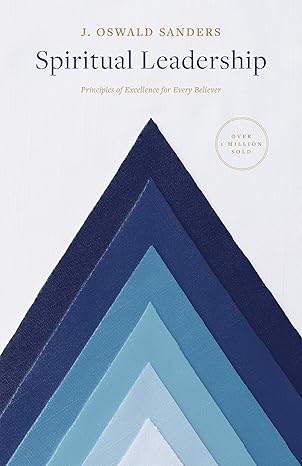
Spiritual Leadership, by J. Oswald Sanders (2017)
This is a classic for a reason. Sanders is direct about the cost of leadership, the formation of character, and the difference between natural ability and spiritual authority. It’s not trendy, and that’s part of why it still lands.
If you’re looking for leadership wisdom that feels rooted, this book has it. It spends real time on what leaders are tempted by, how motives get mixed, and why discipline matters. It also pulls examples from Scripture and historic Christian leaders, which gives the whole thing a long-view perspective that newer leadership books sometimes miss.
I’d hand this to someone who wants to build leadership that outlasts momentum, because that’s what it’s aiming for.

Overcoming the Dark Side of Leadership, by Gary L. McIntosh (2007)
This one is about the shadow side that leaders don’t like to admit they have. The authors look at common dysfunction patterns and the ways leadership pressure can amplify them, especially when expectations stay unspoken and boundaries get thin.
What makes it valuable for leading with wisdom is the honesty. Wisdom isn’t only about making good choices in public, it’s about noticing what’s happening in private before it spills over onto your team. The book brings this down to earth with examples and tools, including a self-assessment element in the revised edition.
If you’ve ever watched a talented leader derail, or felt warning signs in yourself, this is the kind of book that can help you respond early instead of explaining things later.
Final Thoughts
Faith-based leadership is at its best when it produces leaders who are calmer, clearer, and less reactive, not leaders who can quote more verses while still running on ego and fear. The books above keep circling the same core truth: your leadership life and your spiritual life are one life.
Christian faith matters because it answers the question most leadership books dodge. Who am I becoming while I’m building results, and what is shaping my motives when no one is watching. A leader can hit every metric and still quietly form a culture of fear, image management, and exhaustion. Faith pulls leadership back under God’s authority, which changes the goal from “prove yourself” to “steward what you’ve been given.” That shift sounds subtle, but it affects how you use power, how you treat people who cannot benefit you, and whether you can admit weakness without collapsing into shame.
In a workplace, leadership spreads farther than leaders realize. People do not only follow your words, they follow your nervous system. If you lead from anxiety, the organization learns anxiety. If you lead from control, people learn to hide mistakes. If you lead from hurry, people learn that rest is unsafe. And this is where Christian faith becomes practical. Practices like confession and Scripture-shaped humility are not “private spirituality,” they are the roots of wise leadership.
They make you slower to react, less addicted to approval, and more capable of telling the truth without crushing others. Over time, that becomes a culture where people can do good work without losing themselves.
If you are interested in this topic, check out our mainstream leadership books too, they also include the core values of this list.


My profession is online marketing and development (10+ years experience), check my latest mobile app called Upcoming or my Chrome extensions for ChatGPT. But my real passion is reading books both fiction and non-fiction. I have several favorite authors like James Redfield or Daniel Keyes. If I read a book I always want to find the best part of it, every book has its unique value.

















 English (US) ·