
There's a particular kind of dread that only grows in an office with a view. Not the fear of being fired – but the slow realization that the system rewarding you was actually designed to own you. Corporate psychological thrillers tap into exactly that anxiety: the moment a dream job reveals itself as a trap, when a mentor turns out to be a manipulator, and when ambition quietly becomes someone else's weapon. These are the books that make you look at your inbox differently.
The list below spans Wall Street in the 1980s, a Silicon Valley tech giant built on surveillance, a Memphis law firm with lethal secrets, and a present-day powerbroker who recruits people the way a chess master places pieces. What unites them is the psychology of control – and the unsettling question of how much of yourself you would trade for a seat at the right table.
What Are The Best Corporate Psychological Thrillers?

The King of Business: Power Has a Price, by Bob Finkle (2025)
Scott has spent his life doing everything right – working hard, staying loyal, playing by the rules – only to watch less deserving people rise around him. Then Danger arrives: wealthy, magnetic, and offering Scott a life he never believed he could touch. But what looks like a golden opportunity is something far more calculated. Danger's world isn't built on luck – it's built on influence, manipulation, and a system designed to reshape the people inside it.
As Scott is renamed “2,” he begins to sense the terrifying truth: he wasn't chosen for his skills, but for his mind – the way it sees patterns, the way it bends under pressure, the way it can be guided. A gripping debut that captures the seductive danger of ambition when someone else is holding the reins. Perfect for readers who want their thrillers to feel unsettlingly close to real life. The author does a great job of making you feel Scott's growing unease as the truth quietly closes in.

Molka, by Monika Kim (2026)
In a Seoul office building, IT technician Junyoung has access to every entrance, lobby, and corridor on the network – and he uses it. From behind his screens he monitors, catalogs, and ranks the women he works alongside, building a private map of who holds power and who doesn't. When Dahye catches his attention – a romantic who has spent years living in the shadow of her perfect older sister – she becomes the focal point of an obsession that neither of them can escape.
Monika Kim writes with the same unflinching precision that made The Eyes Are the Best Part a cult sensation, and Molka goes further into the architecture of workplace power. It asks how surveillance becomes control, and how the digital systems we trust can be turned into weapons against the people inside them. A harrowing, compulsive read set at the intersection of corporate hierarchy, gendered power, and modern horror.

Paranoia, by Joseph Finder (2004)
Adam Cassidy is twenty-six, underpaid, and going nowhere at Wyatt Telecommunications – until one costly mistake gives corporate security all the leverage they need. The choice they offer is simple: go to prison, or infiltrate Trion Systems, Wyatt's chief rival, as a corporate spy. Armed with a manufactured identity and a crash course in executive presence, Adam rises through Trion faster than anyone expected.
The deeper he goes, the more dangerous his double life becomes – with both companies tightening their grip and nothing around him being what it seems. Finder writes with the precision of someone who understands exactly how corporate power works, and Paranoia delivers on every level: a high-voltage page-turner about identity, loyalty, and the suffocating logic of institutions that never let go.

The Firm, by John Grisham (1991)
Mitch McDeere graduates near the top of his Harvard Law class with offers from every major firm in the country. He chooses Bendini, Lambert & Locke – a small Memphis outfit that pays more than anyone else, throws in a Mercedes, and clears his student loans without being asked. The catch reveals itself slowly: no associate has ever left the firm, and the FBI is already watching from the outside.
Grisham's breakthrough novel is the template for the entire corporate thriller genre – a story about a man who thought he was building a life only to discover he was being built into someone else's machine. The pacing is relentless, the trap is elegantly designed, and McDeere's attempts to outmaneuver both sides make it one of the most propulsive thrillers ever written.

The Circle, by Dave Eggers (2013)
Mae Holland lands a coveted job at the Circle, the Silicon Valley tech behemoth that has unified email, social media, banking, and personal identity into one seamless platform. The campus is beautiful, the culture is warm and progressive, and Mae's career rises with remarkable speed. But the Circle's philosophy – radical transparency, total connectivity, no secrets – starts to feel less like liberation and more like coercion.
Eggers' prescient novel is a slow-burn psychological thriller about the erosion of self when surveillance is repackaged as community. As Mae is drawn deeper into the Circle's ecosystem, the novel asks how much identity a person can surrender before there's nothing left to give. Chilling, eerily accurate about our digital present, and one of the most relevant thrillers of the last decade.

Disclosure, by Michael Crichton (1994)
Tom Sanders is a senior executive at DigiCom, a cutting-edge Seattle tech company, and the obvious choice for a coveted promotion – until the job goes to his former lover, Meredith Johnson. Their first closed-door meeting ends with Johnson making aggressive advances; Sanders refuses. The next morning, she files sexual harassment charges against him. What follows is a corporate war fought with rumors, lawyers, and the company's own surveillance systems.
Crichton turns the closed world of a tech company into a masterclass in psychological pressure, showing how institutions can be weaponized to bury the truth and isolate the people who know it. It's an uncomfortable, compulsive read about power, perception, and how easily a corporation can rewrite reality when it has the resources to do so.
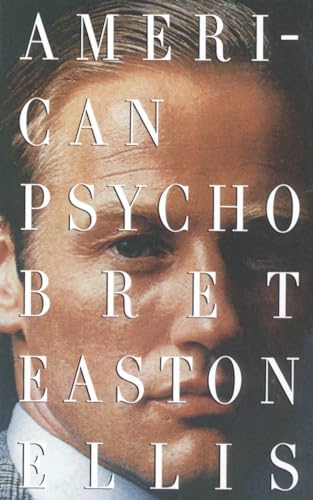
American Psycho, by Bret Easton Ellis (1991)
Patrick Bateman has everything 1980s Manhattan measures success by: a Harvard degree, a corner office on Wall Street, perfectly tailored suits, and a Rolodex full of the right names. He is also, he casually informs us, a serial killer. Ellis's infamous novel blurs the line between Bateman's documented acts and the possibility that everything is fantasy – a product of a mind hollowed out entirely by status obsession.
American Psycho is the all-time classic of corporate psychological horror: a savage, darkly comic dissection of a world where image is everything and human beings are assets to be consumed. No other novel in the genre cuts as deep or stays with the reader as long. It is not comfortable reading – but it is essential reading for anyone who wants to understand what the corporate thriller is truly about at its most extreme.
Final thoughts on corporate psychological thrillers
What makes corporate psychological thrillers so gripping isn't the boardroom politics or the plot twists – it's the creeping realization that the systems we put our faith in don't always have our best interests at heart. From Bob Finkle's debut about a man who didn't know he was being recruited, to Ellis's portrait of Wall Street as a machine for making monsters, each of these books uses the corporate world as a pressure cooker for identity, power, and moral compromise. If you've ever sensed that an opportunity was too perfectly designed, pick one of these up – you'll start looking at your next job offer very differently.


My profession is online marketing and development (10+ years experience), check my latest mobile app called Upcoming or my Chrome extensions for ChatGPT. But my real passion is reading books both fiction and non-fiction. I have several favorite authors like James Redfield or Daniel Keyes. If I read a book I always want to find the best part of it, every book has its unique value.











 English (US) ·