
Kelly is a former librarian and a long-time blogger at STACKED. She's the editor/author of (DON'T) CALL ME CRAZY: 33 VOICES START THE CONVERSATION ABOUT MENTAL HEALTH and the editor/author of HERE WE ARE: FEMINISM FOR THE REAL WORLD. Her next book, BODY TALK, will publish in Fall 2020. Follow her on Instagram @heykellyjensen.
Kelly is a former librarian and a long-time blogger at STACKED. She's the editor/author of (DON'T) CALL ME CRAZY: 33 VOICES START THE CONVERSATION ABOUT MENTAL HEALTH and the editor/author of HERE WE ARE: FEMINISM FOR THE REAL WORLD. Her next book, BODY TALK, will publish in Fall 2020. Follow her on Instagram @heykellyjensen.
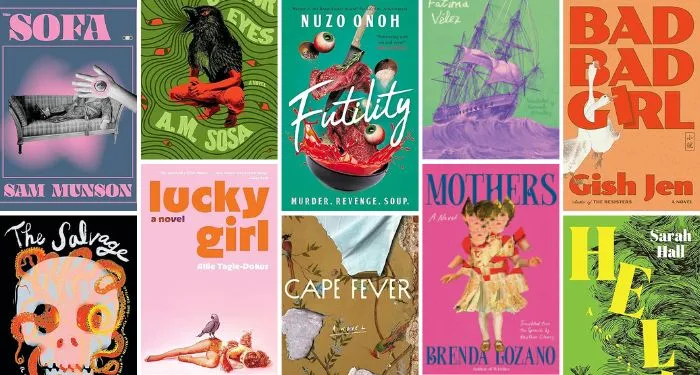
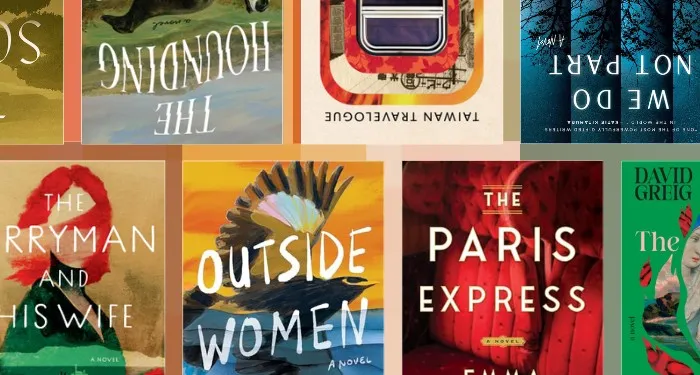
We’ve reached the end of 2025, which means it’s time to celebrate the best in book covers from our final months of the year. Every quarter so far, I’ve pulled together the most interesting, unique, and eye-catching book covers. It might be a quieter time in publishing, especially in November and December, but there are so many great cover designs to spotlight from the fourth quarter.
Book cover design is interesting because it’s got to play to some trends, got to play to some conventions of genre and age category, and because it’s got to play to consumer tastes. We need book covers to sell a book—it’s the number one marketing opportunity for any title. But we need those covers to also give insight into the story and to be nice to look at and to be easy to render on mobile.
Important to all of this is the team behind the cover’s creation. For too long—and still to this day—cover designers and artists are rarely credited for their work. The time it takes to find this information is embarrassing in 2025, and still, many of the covers you’ll see below don’t have this information available. Publishers still don’t put it on the landing pages for these books, so it takes good Googling and a lot of luck to dig up names to credit. Unfortunately, this also makes it easier for AI-generated art to get through to book covers (which we started to see last year). This quarter may be one of the worst ones in a long time for finding this information, which is a shame because last quarter was one of the best.
One of the other fun things to notice throughout the year are the trends we see in cover design. Something other book outlets have pointed out in cover design is the trend to use works of art as the background for cover design. This won’t be slowing down into the rest of the year or into 2026, either.
Find below a number of the most interesting, visually surprising, and best book covers of 2025 from the fourth quarter of this year. These covers are for adult fiction only, as there are entire posts’ worth of covers for nonfiction, YA, middle grade, and children’s books. Because my earlier roundup of the best book covers for 2025’s new and forthcoming short story collections didn’t capture some of the books that hit shelves in the second half of the year, you’ll see short story collections here, too.
All of the covers featured here are for books published between October 1 and December 31, 2025. I’ve done my best to track down credit. You can and should check out the best book covers from the first quarter of this year, the second quarter of this year, and the third quarter of this year.
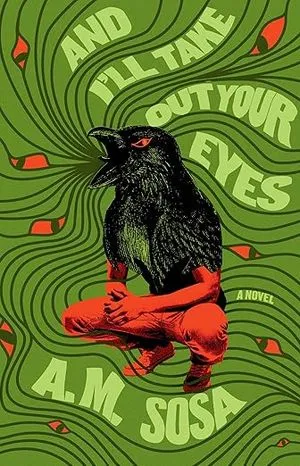
And I’ll Take Out Your Eyes by A. M. Sosa
Is there anything more unsettling than an animal that has human body parts? The answer is possibly, but that such animal-human hybrids are pretty dang unsettling. The cover for this book features a black bird of some sort with a ferocious looking expression, conjoined with the relaxed arms and legs posture of a human. That would be enough to make this a cool cover. But it’s the enegetic background and clashing green and red colors, grounded with black, that take it up a notch. There’s nothing Christmas feeling here, despite the color combination. The title and author font and wavy setting get bonus points.
All Access Members, your exclusive content begins below.
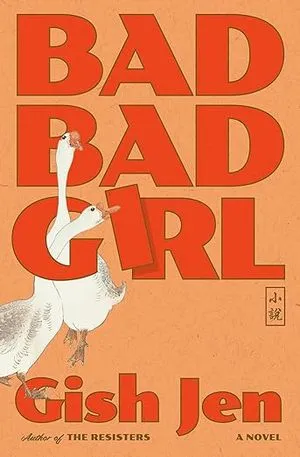
Bad Bad Girl by Gish Jen
The muted, vintage-feeling orange and red, mixed with the font-driven design, stand out here. But really, it’s the swans–or potentially white geese, as it’s a little hard to tell–that take the show on this cover. They’re positioned in a unique place on the cover, and one of our naughty birds is trying to steal the “I” of Girl. One of the little details that’s especially tickling is seeing the bird’s foot resting on the arm of the “G” in the author’s name.
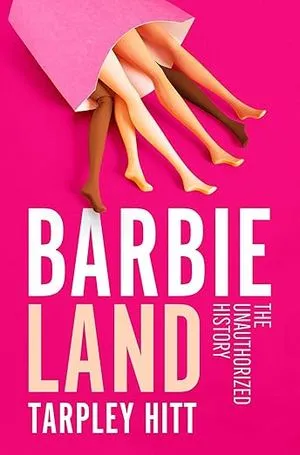
Barbieland by Tarpley Hitt, Cover design by Ciare Sullivan
I’ll be honest. This is a good cover design, but it is not my favorite of the options that were possible for this book. Sullivan shared the ones that landed on the cutting room floor on Instagram and they’re worth a gander.
That said, there is a lot to like on this. The font type is pretty standard stuff, but the placement of “The Unauthorized History” adds some pizazz. Truly it’s the bright pink cover and the use of space for the carton of doll legs that give this cover a placement on this list. Big bonus points for an array of Barbie skin colors for those disembodied legs.
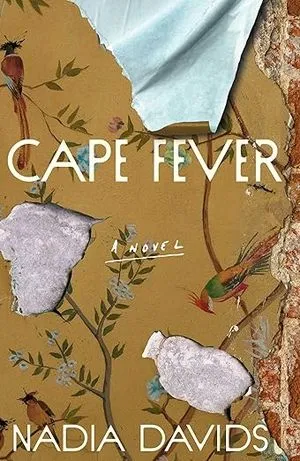
Cape Fever by Nadia Davids
Simple is sometimes–oftentimes–best. In the case of Cape Fever, this is a gothic psychological thriller and the cover is giving all of those vibes all at once. Torn wallpaper with art reminiscent of the 1920s? This feels like The Yellow Wallpaper, and its comps to Silvia Moreno-Garcia and Daphne DuMaurier only further justify how good this cover conveys what’s inside.
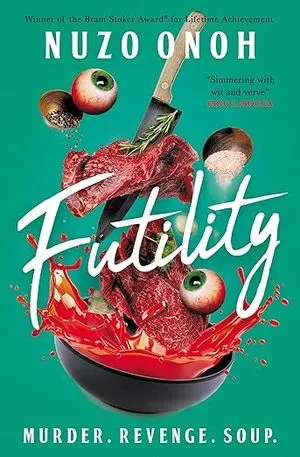
Futility by Nuzo Onoh
The pitch for this book is the cover and the cover alone, but if you’re wanting more than that, know it’s a story about hot pepper soup and revenge. This cover is spicy, and the floating eyeballs are reminiscent of Monika Kim’s The Eyes Are The Best Part. Is it a little outlandish and a little cartoonish? Yes, but in only the best ways.
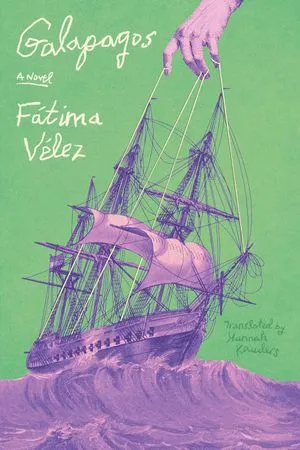
Galapagos by Fátima Vélez, translated by Hannah Kauders; cover design by Rodrigo Corral
Purple and green kind of clash, but they marry well in Corral’s cover design. There’s a lightness and a heaviness with the colors, as well as the lines throughout the image, and everything strikes a nice balance. The shaky font feels right in contrast to the tall–but smooth–waves. The hand holding the ship like a marionnette is clever as well.
Look at this cover and the previous for Futility together. For being very different covers and designs, they have an odd sort of harmony with one another, don’t they?
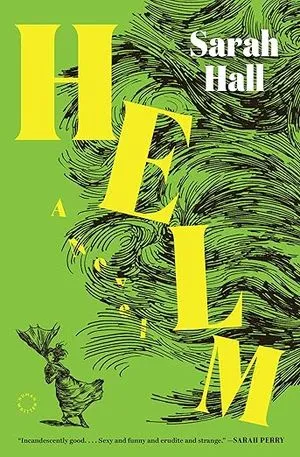
Helm by Sarah Hall
Helm is a mischievous wind and one that’s earned itself a place in long time legends and folklore. It makes sense that the cover would feature a big wind, with a title font that looks windswept.
Anchoring this cover, though, is the woman in the bottom left corner. Yes, she’s being blown by the wind, hair and umbrella and skirt all messy. Yet her stance is one of confidence, not fear–she’s staring down the helm with as much force as she can.
This US cover is so much more interesting than the Very Literary cover in the UK.

I Deliver Parcels in Beijing by Hu AnYan, translated by Jack Hargreaves; design by Rodrigo Corral; illustration by Klaus Kremmerz
Not only is that title amazing, the cover matches it nicely. There’s nothing secret here: it’s a person who delivers parcels out doing their thing. Corral and Kremmerz bring energy in their color choices and in the way they focus on the image instead of the font–we’re still in an era where font drives so many designs.
The other thing that really makes this cover magic is what might be most unexpected for US readers: this is a work of nonfiction. Rarely does adult nonfiction or memoir see an illustrated cover outside of comics. This bucks so many conventions and does it well.
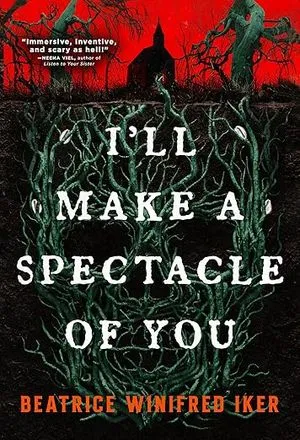
I’ll Make a Spectacle of You by Beatrice Winifred Iker; Cover design by Lisa Marie Pompilio and cover illustration by Mike Heath
It’s creepy.
Then you look closer.
It gets creepier.
The color choices, the tangly roots, the skull, and the church? A+ horror cover art.
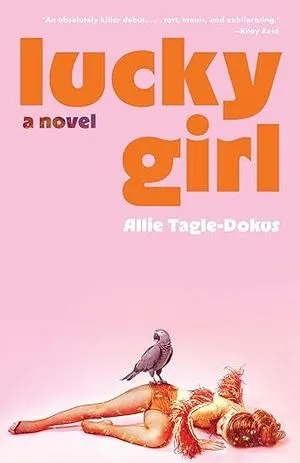
Lucky Girl by Allie Tagle-Dokus, Cover design by Beth Steidle
Another cover that feels vintage and also unsettling. The title not using any capital letters is noteworthy as is the child/young adolescent–the story’s main character is 12–collapsed in a heap with a gray parrot on top of her. There’s a lot of shape at play here and the use of negative is so good. Had the girl’s legs both been bent or straight, it would not have the same energy as it does here. Small details like that, as well as the mirroring of the title font’s color in the girl’s outfit, take a good cover to a great cover.

Minor Black Figures by Brandon Taylor; cover design by Grace Han
Though font-driven cover design has been THE story of cover design over the last decade or more, it can still be done in really evocative ways. This is one such example. There are so many layers to the font here, even though it is all the same color. Who knew a black and cream cover, in a sea of black and cream covers, could pop so much?
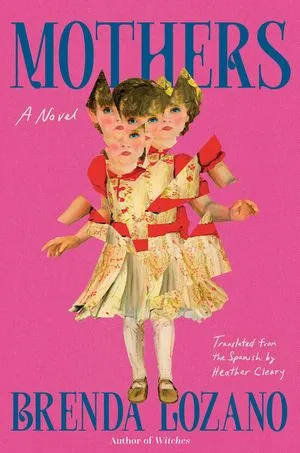
Mothers by Brenda Lozano, translated by Heather Cleary; cover design by Jaya Miceli
Set in 1940s Mexico, everything about this cover is evocative of that time and that place. There’s the stylized font, the vintage-looking girl on the cover, and the bright background that is slightly faded by age.
Though it might be historical, something about the image also feels extremely relatable to modern motherhood.
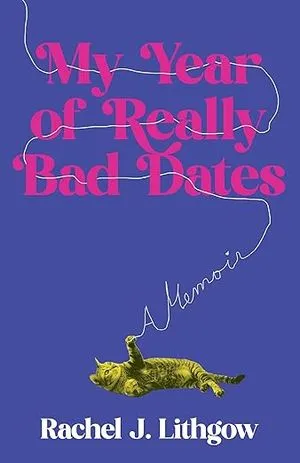
My Year of Really Bad Dates by Rachel Lithgow
The joke throughout Lithgow’s book is that she’s going to become the so-called cat lady, so seeing a cat unraveling a thread from the top of the book through the title of the book is not only clever, it’s thematic.
The juxtaposition of pink, purple, white, and slightly-yellow (the cat) with the use of negative space works really well, too.
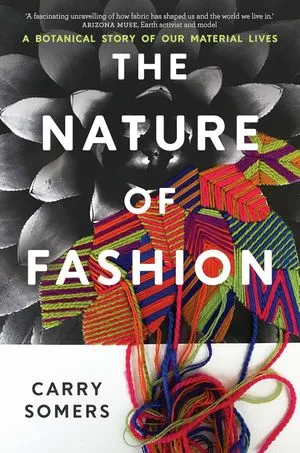
The Nature of Fashion by Carry Somers; Cover art by Victoria Villasana
There aren’t enough nonfiction books doing really creative things with covers. Though there are a few on this list, they’re rare; rarer still are the clever covers done for nonfiction that isn’t memoir.
What works so well on this cover is that it describes exactly what the book is about: this is a story of how nature and fashion intersect. It makes sense to have just that be the focus of the design. We have our flower, we have artistic renderings of the petals of that flower–part of a larger work of art by Mexican artist Victoria Villasana–and they’re all connected to the thread that gives those petals color. The cover itself is nicely broken into three distinct pieces and in an unexpected manner.

The Salvage by Anbara Salam; design by Beth Steidle
Skulls! Snakes!
This cover could’ve left it at that and been fine. But those snakes and that skull have been made into ART.
Steidle uses color so well here, but my favorite part is how the pertinent information about the book, including its title, author, and a blurb, are woven around the main image. It’s a cover bursting with electricity.
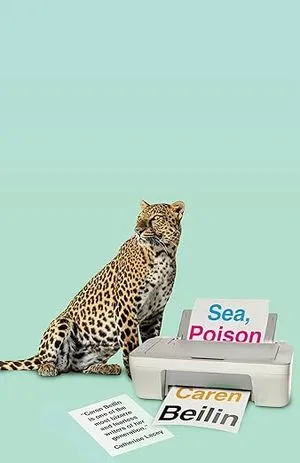
Sea, Poison by Caren Beilin; design by Jamie Keenan
Sea, Poison earns its best cover design honor for so many things. You would first not even know this were a book cover, as the placement of the title and author are not the focus. They’re in a printer beside what IS the main focus: our leopard. Just what is a creature representative of the wild doing beside a piece of technology representative of being chained indoors? That’s not to mention the great use of space here. If you think about the rule of thirds, it’s really clear here–our image isn’t until the bottom third of the design, creating a lot of interest for the eye.
All of the colors are used well, and I am really digging how many covers are re-thinking where and how they place blurbs. This one’s on one of the bonus sheets of paper from the printer and does not distract at all from what’s going on.

The Sofa by Sam Munson; Cover design by
Jean Claude van Randy
Pinks and purples are with us again, as is a vintage font for our title and author. That gray patterned sofa smack in the middle of the cover pops, and the mysterious hand covering the face (but not the eye!) of the person on the couch is begging readers to pick up the book for answers.
The grayscale image works really well because there is so much pattern and texture here. You don’t need to know how that couch feels because you instinctually know, just as you can imagine how the robe that the person lounging on the couch feels.
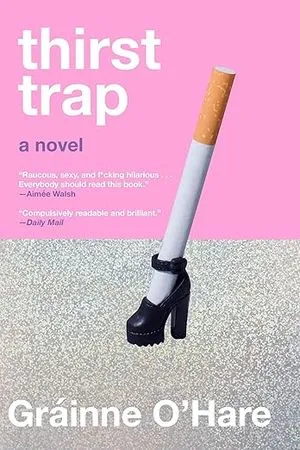
Thirst Trap by Gráinne O’Hare; Cover design by Daisy B; Cover art by Vanessa McKeown
It’s a cigarette wearing a platform heel. The end.
Get access to exclusive content and features with an All Access subscription on Book Riot.Join All Access to read this article








 English (US) ·
