
For Authors
These days, writers have to contend with readers whose attention spans have been shaped by endless entertainment options, with something new always just a swipe away. If a book fails to grab hold from page one and maintain that momentum, readers are far more likely to put it down and move on.
But this challenge is nothing new. The original pulp fiction authors faced the same problem, needing to keep readers hooked long enough to buy the next issue. In the process, they became masters of pace, tension, and irresistible storytelling. In this article, Ginger breaks down the techniques worth stealing, showing how indie authors can apply them today to turn their own books into true page-turners.
A few months ago, Craig and I recorded an episode of the Hidden Gems Books podcast called “Return of Pocket-Sized Adventure Fiction” and I can’t stop thinking about it. Returning guest Terrance Layhew joined us to spend an hour geeking out over short, punchy, high-stakes stories, the kind that grab you by the collar and don’t let go until the final page. It makes me wonder if indie authors could be working towards a glorious second “Golden Age” of pulp fiction.
Think about it. The 1930s had pulp magazines. We have Kindle Unlimited. Back then, readers wanted fast, cheap escapes from the Great Depression. Today’s readers want the same thing, just on their phones or Kindles during their lunch break. Whether it’s salacious romance for a female reader, or absurd escapist adventure for a male audience, the modern day “pulp” is targeting the same audiences, just on a different medium.
After that episode, I went down a rabbit hole revisiting the legends of Pulp Fiction—the authors my father encouraged me to read when I was growing up—even if he admitted that some of their beliefs were “typical of their time” or even just outright offensive. Think Dashiel Hammett, H.P. Lovecraft, and Edgar Rice Burroughs. Back in their prime, these weren’t just writers cranking out stories. They were tactical geniuses who knew exactly how to keep readers feeding nickels into the newsstand. Whatever we might think of their beliefs now, the writing tricks they employed work just as well today for getting readers to click “next chapter” at 2 AM.
Here are 10 storytelling secrets from the contentious pulp masters of their day that I believe help us write better books that readers won’t be able to put down.
1. Master the Snap-Back (Thanks, Hammett)
Who was Dashiel Hammett? The godfather of hard-boiled detective fiction, Hammett gave us Sam Spade in The Maltese Falcon and Nick and Nora Charles in The Thin Man. He wrote lean, mean prose that influenced everyone from Raymond Chandler to modern crime writers.
Hammett knew that great dialogue isn’t just conversation, it’s a verbal sword fight. He called it the “riposte,” but I just think of it as the snap-back. It’s when a character flips a line back on someone with style.
In The Thin Man, when Nora asks Nick, “How do you feel?” he doesn’t say “tired” or give some boring answer. He says: “Terrible. I must have gone to bed sober.”
Why this matters for you: Skip the paragraph-long character descriptions. Show us who has power in the room through dialogue that crackles. Your first few chapters should establish your protagonist’s personality through comebacks, not exposition. It keeps the pace tight and prevents your story from feeling like a talking heads scene.
2. Shorter Hits Harder
Hammett also taught us that less is always more in dialogue. When someone says to Sam Spade, “I could have shot you, Mr. Spade,” he doesn’t launch into some speech about mortality. He just says: “You could have tried.”
Three words. Devastating.
Why this matters for you: Your readers are on their phones. On the train. In bed. Punchy dialogue is easier to read and packs more emotional punch. If you can say it in five words instead of twenty, do it. Brevity makes your protagonist feel confident and bold.
3. Mood Trumps Plot (Lovecraft Was Right)
Who was H.P. Lovecraft? The controversial master of cosmic horror who created the Cthulhu Mythos, Lovecraft wrote stories like The Call of Cthulhu, At the Mountains of Madness, and The Shadow over Innsmouth. Despite his troublesome opinions about race, his influence on modern horror, from Stephen King to video games like Bloodborne, cannot be denied.
We get so obsessed with plot mechanics, such as making sure every thread ties up perfectly. But Lovecraft argued that what really matters isn’t whether your plot is airtight; it’s whether you create a specific feeling.
In The Call of Cthulhu, he spends whole paragraphs describing a New Orleans voodoo ceremony with “malformed trees” and a “reddish glare.” The plot isn’t moving forward in those moments. He’s drowning you in dread.
Why this matters for you: Especially if you write horror, sci-fi, or fantasy, atmosphere can carry a scene even when the plot slows down. If your reader feels the danger or the wonder, they’ll forgive minor plot wobbles. Don’t just tell us the basement is creepy, make us smell the mold and feel the cold seeping through the floorboards.
4. Hook ‘Em on Page One (Max Brand Style)
Who was Max Brand? The pen name of Frederick Faust, Max Brand was one of the most prolific pulp writers ever, churning out over 500 novels and stories, mostly Westerns like Destry Rides Again. He could write 10,000 words a day and knew exactly how to grab readers instantly.
Brand was a master of the opening line. He knew that in a magazine packed with stories, you had maybe two sentences to grab someone. He never did slow burns.
His novel Range Jester starts: “Three men came over the horizon. All three were headed for Lumis, and one of them was to die before morning.”
Boom. I’m in.
Why this matters for you: Your Look Inside preview on Amazon is your newsstand rack. You’ve got maybe three sentences to convince someone to buy or download. Start with a ticking clock. Start with danger. Don’t start with someone waking up or looking out a window at the weather.
5. Tell Them What’s Coming (But Not How)
That Max Brand example also shows the power of specific foreshadowing versus vague foreboding. Foreboding is just a spooky feeling. Foreshadowing tells you something will happen, but keeps the details a mystery.
Walking into a creepy house = foreboding. Knowing “one of these three men will die tonight” = foreshadowing.
Why this matters for you: Use both together. Foreboding sets the mood. Foreshadowing creates the “I need to know what happens” itch. Tell your reader early what the stakes are, then make them sweat over how it’ll all go down.
6. Go to Level 11 (Doc Smith Energy)
Who was E.E. “Doc” Smith? The father of space opera, Smith wrote the Lensman series and Skylark series that basically invented large-scale sci-fi action. His Galactic Patrol books featured universe-spanning conflicts that made Star Wars look small.
Smith wrote like his keyboard was on fire. He didn’t just raise the stakes, he obliterated them. In Galactic Patrol, he used over 500 exclamation points and described weapons with “indescribable power.”
Was it subtle? No. Was it exciting? Absolutely.
Why this matters for you: Okay, maybe don’t use 500 exclamation points. But don’t be afraid of raw energy in your prose. Readers in genres like LitRPG, thrillers, and action fantasy want sentences that vibrate with life. When you think the stakes are high enough, push them one more notch. Make your “this is the biggest crisis ever” moment even bigger.
7. Let Your Characters Trade Insults (Robert E. Howard)
Who was Robert E. Howard? The creator of Conan the Barbarian, Howard wrote dozens of stories for Weird Tales magazine featuring heroes like Conan, Kull, and Solomon Kane. He basically invented the “sword and sorcery” subgenre and died tragically young at 30.
Howard loved something called “flyting”—basically the medieval version of a rap battle. His characters didn’t just fight physically; they fought verbally.
In The Frost Giant’s Daughter, Conan trades poetic insults with his enemies before the swords come out. The verbal warfare makes the conflict more entertaining.
Why this matters for you: Conflict shouldn’t just be punches or internal angst. Let your characters verbally spar. A hero who can out-talk a villain is often more memorable than one who just out-fights them. It lets readers enjoy the drama instead of just witnessing it.
8. Mix Your Genres Fearlessly (C.L. Moore)
Who was C.L. Moore? One of the first major female writers in sci-fi and fantasy, Moore created the groundbreaking character Northwest Smith (a Han Solo prototype) and wrote stories for Weird Tales in the 1930s. Her work like Shambleau and Jirel of Joiry blended genres decades before it was trendy.
Moore treated genres like paint colors, not locked boxes. She blended sci-fi, fantasy, horror, and romance when editors wanted everything kept separate.
In Shambleau, she drops a space traveler on Mars (sci-fi) but adds eroticism, cosmic horror, and mythic vibes. It shouldn’t work. It absolutely does.
Why this matters for you: The hottest indie niches right now are hybrids—paranormal romance, cozy mystery with ghosts, military sci-fi with horror. Don’t worry so much about genre rules. If a scene needs to be eerie, let horror bleed into your romance. Readers love “fresh but familiar.”
9. Describe Things Like No One Else (Chandler’s Secret)
Who was Raymond Chandler? The other titan of hard-boiled detective fiction, Chandler created Philip Marlowe and wrote classics like The Big Sleep and Farewell, My Lovely. His prose style—mixing tough-guy dialogue with poetic descriptions—defined an entire genre.
Chandler is famous for hard-boiled detective fiction, but his real superpower was description. He described ordinary things in extraordinary ways.
He didn’t just write “someone smiled.” He wrote about a smile that was “dry, tight, withered… a smile that would turn to dust if you touched it.” Or one that looked like “the executioner’s smile.”
Why this matters for you: Unique descriptions are how you build a voice that readers will follow across twenty books. Don’t say a character was happy, say their smile looked like it was “using up a whole week’s supply of joy.” Those vivid, specific metaphors make your prose stick.
10. End Every Chapter with a Bang (Burroughs Style)
Who was Edgar Rice Burroughs? The creator of Tarzan and John Carter of Mars, Burroughs was a pulp powerhouse who wrote over 80 novels. His Barsoom series (starting with A Princess of Mars) and Tarzan books sold millions and spawned countless adaptations.
Burroughs was obsessed with keeping readers hooked. He ended nearly every chapter with a surprise or cliffhanger.
In A Princess of Mars, chapter 4 ends with a monster showing up. Chapter 14 ends with the hero getting stabbed in the chest. Will he survive? Turn the page to find out.
Why this matters for you: In the age of TikTok and Netflix, your competition isn’t just other books, it’s everything. If a reader finishes a chapter and feels like they can safely put your book down, you’ve lost them. End on a revelation. End on a question. End on a “wait, WHAT?” moment. Force them into the “just one more chapter” loop.
We’re Living in Pulp 2.0
Here’s the thing we kept coming back to on the podcast: we’re in a new pulp era. The gatekeepers are gone. Whether you’re writing romance or adventure, the connection between a self-published author and their readers is direct. No editors telling you to slow down or follow the rules.
By stealing from the masters—Hammett’s sharp dialogue, Lovecraft’s suffocating atmosphere, Burroughs’s relentless pacing—you can write better stories that don’t just sit on a digital shelf gathering dust. You can write books that grab readers and refuse to let go. Don’t write for critics who’ll never read your work anyway. Write for the reader who stays up until 3 AM because they absolutely have to know what happens next. That’s the real legacy of pulp fiction, and that’s one potential secret to making a bigger impact as an indie author in 2025.
Share this blog
About the Author
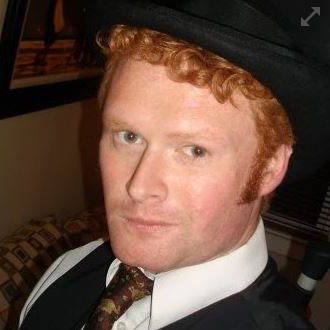
Ginger is also known as Roland Hulme - a digital Don Draper with a Hemingway complex. Under a penname, he's sold 65,000+ copies of his romance novels, and reached more than 320,000 readers through Kindle Unlimited - using his background in marketing, advertising, and social media to reach an ever-expanding audience.











 English (US) ·